


Hard to get right on the first try! A quiz you’re guaranteed to get tripped up by.

A trick quiz that’s hard to get right just by reading the question as is.
In this article, we’ll introduce some of the trickiest riddles—ones so difficult you’re almost guaranteed to get tripped up.
Many of the quizzes have simple wording, but even when you think you’ve figured out the answer, you might find yourself saying, “I thought I got it right, but I got tricked!” So it’s important to think carefully.
With flexible thinking and a rich imagination, you can reach the correct answer.
Try to find the hidden hints in the question text and think carefully about the meanings of the words as you give it a try.
Hard to get right on the first try! A quiz you’ll definitely get snagged by (1–10)
Aimi practiced the piano every day. However, no matter how much she practiced, she didn’t get any better. Why on earth was that?

See the answer
Because I had only been practicing 'Do' and 'Re'.
From the word “dore dake” (meaning “how much/how many”), you can tell they were only practicing the notes Do and Re. It’s a trick question you can solve by noticing the hidden hint in the problem statement.

A person swam from one end of a 25-meter pool to the other in 5 seconds. However, why was no one surprised?

See the answer
Because (someone) swam across the course.
When you hear that someone swam in a pool, you probably imagine they swam a full 25 meters. However, if it’s just crossing the pool widthwise, you can get across in five seconds. The key is to pay attention to the phrase “from end to end” in the problem statement.
Who was the first one Momotaro, who fights demons with three animal companions, met?

See the answer
Grandfather and grandmother
Momotaro, who was born from a peach, first meets the old man and the old woman. He doesn’t meet the dog, monkey, and pheasant who become his companions until after he sets out to defeat the ogres, so they are not the first ones he encounters.
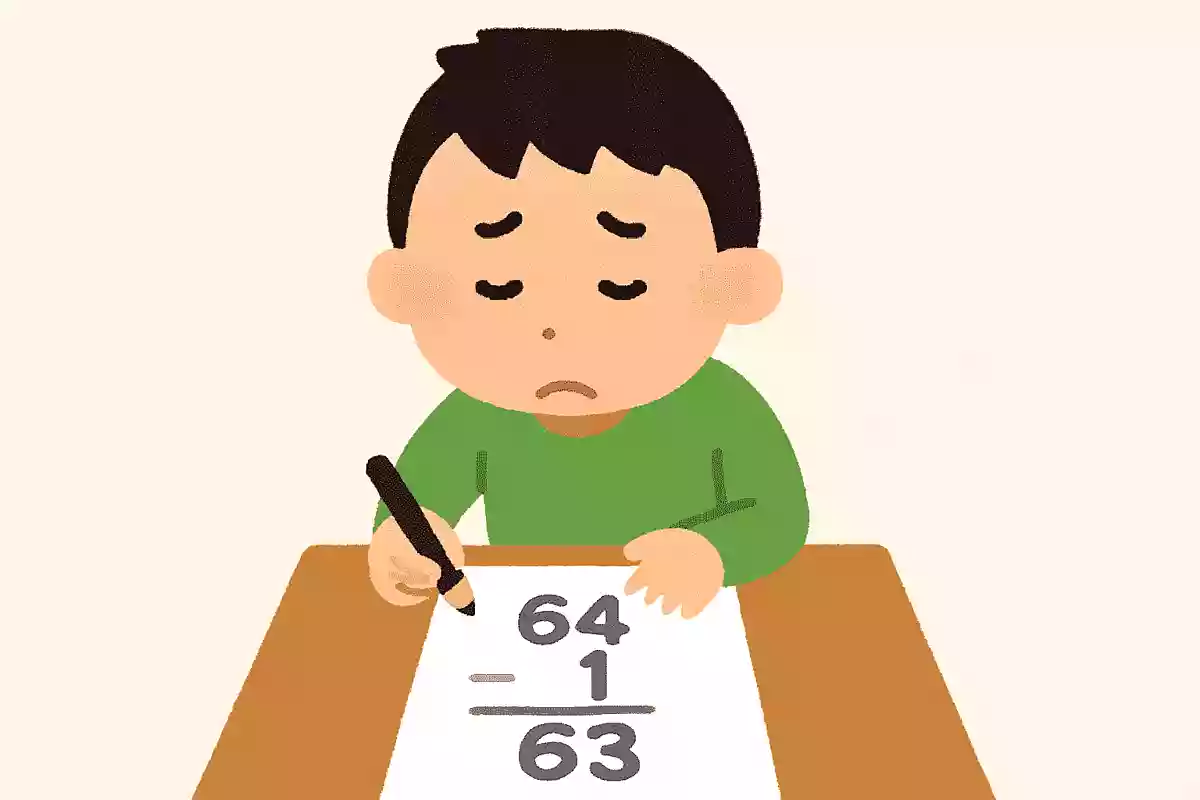
How many times can you subtract 1 from 64?
See the answer
one time
When you see the phrase “subtract a number from XX,” it’s easy to assume you can keep subtracting until you reach zero. However, you can only subtract 1 from the same number once, so the correct answer is one time.
A truck carrying apples, melons, and bananas dropped something on a curve. What was it?

See the answer
speed
Because a truck slows down when it goes around a curve. Many of you might think that one of the fruits it’s carrying fell off. It becomes easier to solve if you imagine how the truck actually turns.
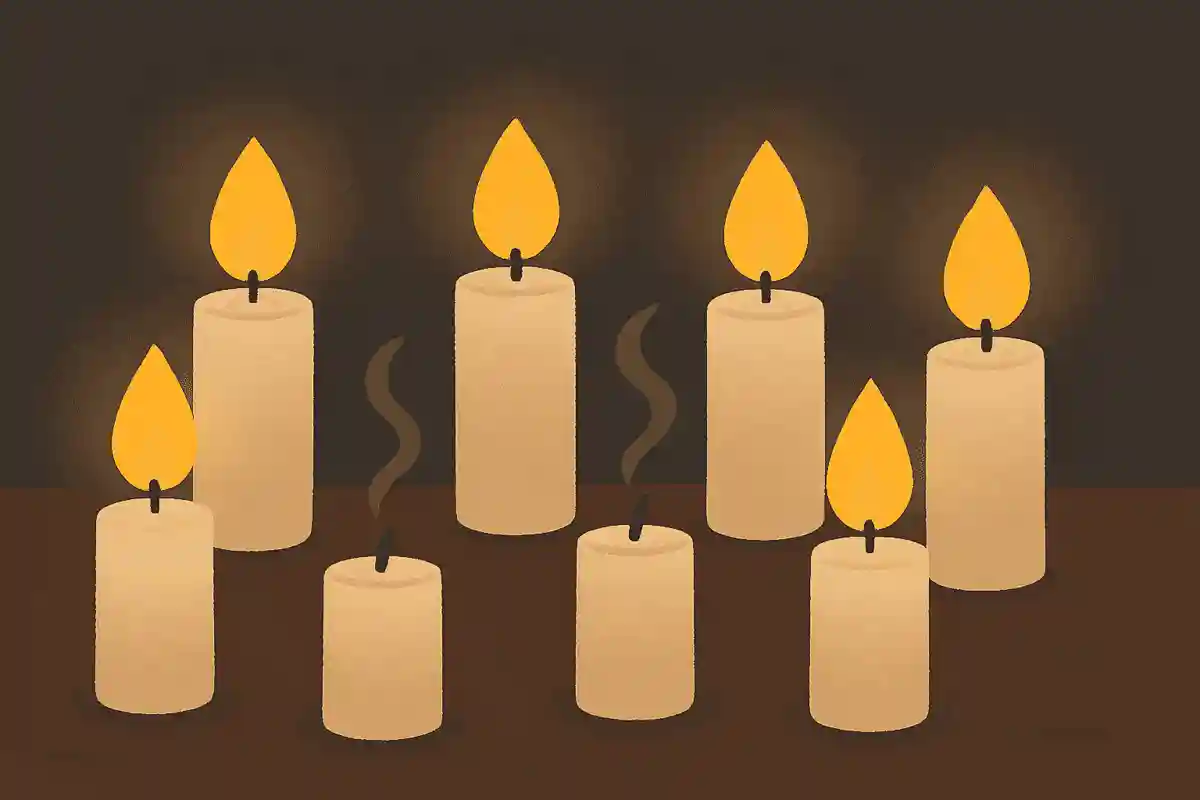
There was a power outage, so I lit eight candles. However, the wind blew and two went out. How many candles were left the next day?
See the answer
two (long cylindrical objects)
The correct answer is two candles, because the candles whose flames went out remain and don’t disappear the next day. Some people might picture six candles remaining from the phrase “two went out.” It’s a trick question that requires you to imagine the real-life situation to solve it.
Harvest eight daikon radishes. If you harvest five, how many will be left?

See the answer
five
Since 'ato' can mean 'trace/mark,' the question is asking for the number of marks left after pulling out the daikon radishes. Instead of thinking, “We harvested five, so three remain,” try to picture how many 'marks' there are. The trick to solving the problem is whether you can convert the hiragana into the correct kanji.