

![[Sports Day] How to Win at “Rawhide”! Tips and Practice Points Summary](https://i.ytimg.com/vi/Lmw4GMpr-2k/sddefault.jpg)


If you’ve come to this page, you might be wondering, “What exactly is ‘Rawhide’?”
As times change, more and more new events are being added to school sports days.
Among them, one that has been gaining popularity in recent years is “Rawhide.”
In this article, we’ll introduce what kind of event Rawhide is, its origins, why it’s drawing attention, and how to practice for it!
We hope it will be a helpful reference when you’re thinking, “We want to add a new event to our sports day!”
- Coloring the drama of youth! Heartwarming songs perfect for school sports days and athletic festivals
- [Sports Festival Hair Arrangements] Irresistible to Guys! A Selection of Recommended Hairstyles
- A funny athletes’ oath to liven up the start of the sports day
- [Unique] Fun sports day events that both kids and adults can enjoy
- [Sports Day] A roundup of exhilarating, fast-paced tracks perfect for relay race BGM!
- [Blazing] Carefully selected tracks perfect as BGM for cavalry battles at sports festivals!
- [Sports Day] Recommended songs for tug-of-war: powerful BGM that ignites your fighting spirit
- Recommended exit songs for sports day: A collection of tracks that are perfect for a brisk, quick-march exit.
- Popular songs recommended for nursery school sports days! A roundup of classic crowd-pleasers and the latest hits
- [Childcare] Recommended for sports day performances and dances! A collection of classic and popular songs
- [Sports Day Cheer Songs] A roundup of classic cheer songs and recommended tracks for parody versions
- Pump Up the Sports Day! A Collection of Cool Flag Dance Song Ideas with Flags
- [Sports Day] Songs for footraces: tracks that make kids want to run [classics & J-pop]
What is rawhide?
Relay-style competition in horseback-riding format
Lowhide is a relay-style team event performed in groups of four.
Three people lock arms and shoulders to form a “horse,” and one person rides on top—so it’s very similar to a mock cavalry battle.
The rider holds a rope with a ball tied to the end.
At the signal, the team runs in the horse formation toward a distant target, and the rider, like a cowboy, swings and throws the ball on the rope to hit the target.
Once they hit it, they return to their side and switch to the next group.
The team whose final group finishes first wins!
The origin of ‘Rawhide’

Now, a bit about the origin of the name “Rawhide.” It’s a distinctive event name, and it comes from the American TV drama Rawhide, produced by CBS and broadcast starting in 1959.
It was also aired in Japan at the time and became quite popular.
It was a classic Western, with cowboys as the protagonists.
And speaking of cowboys—as I touched on earlier—there’s that whole sequence where they ride on horseback, whirl a lasso, throw it at cattle, and rope them.
Because this event resembles that action, it was given the name “Rawhide.”
The difference from a cavalry battle is its safety.
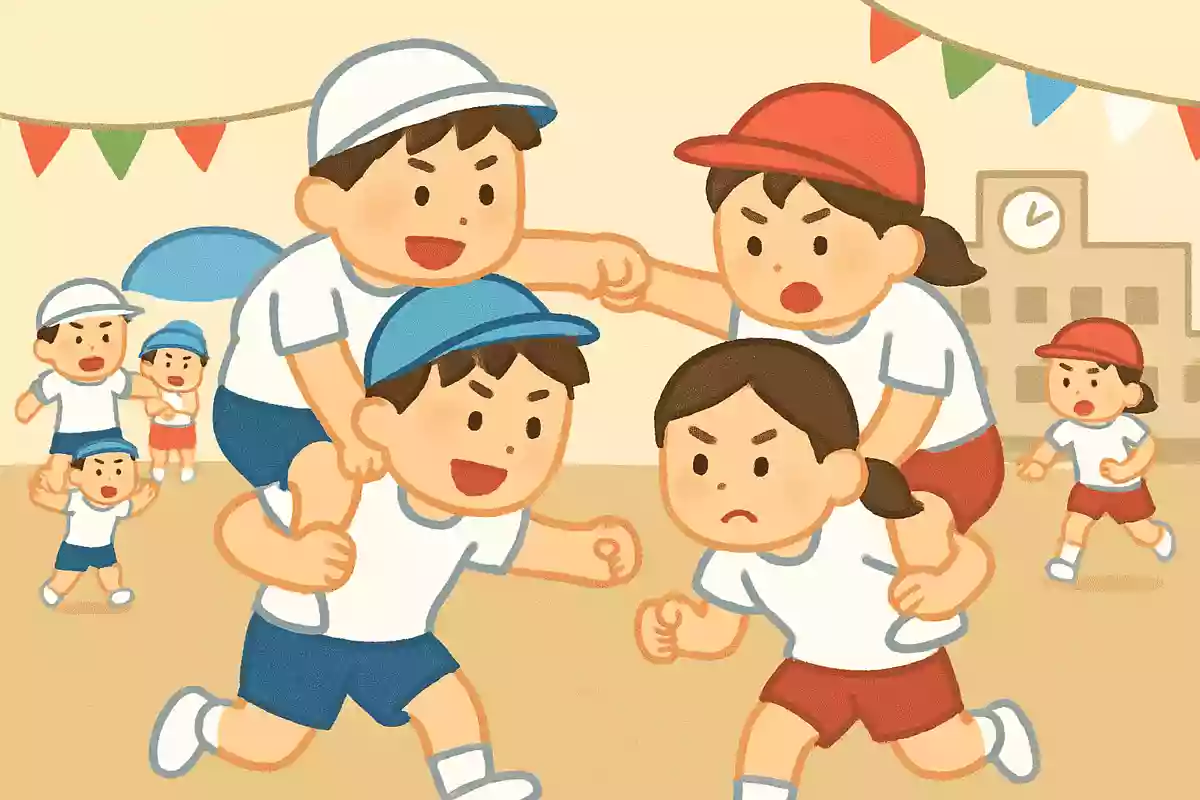
First of all, I introduced Rawhide as “one of the competitions that has grown in popularity in recent years.” Why has it been gaining popularity? The reason lies in its differences from the traditional sports day event, the cavalry battle.
Although they look similar, the biggest difference is that, in Rawhide, you don’t collide with the opposing team’s ‘horse.’ In other words, the risk of injury is low, making it a safer competition.
We’ve all probably had moments when the desire to win makes us overheated.
Of course, that intensity is part of what makes cavalry battles so thrilling and fun, but it’s also undeniable that there are dangers—hands being swung around can hit someone, or the ‘horse’ formation can collapse.
In contrast, with Rawhide, you can compete without directly confronting your opponent.
Teamwork is the key to victory!
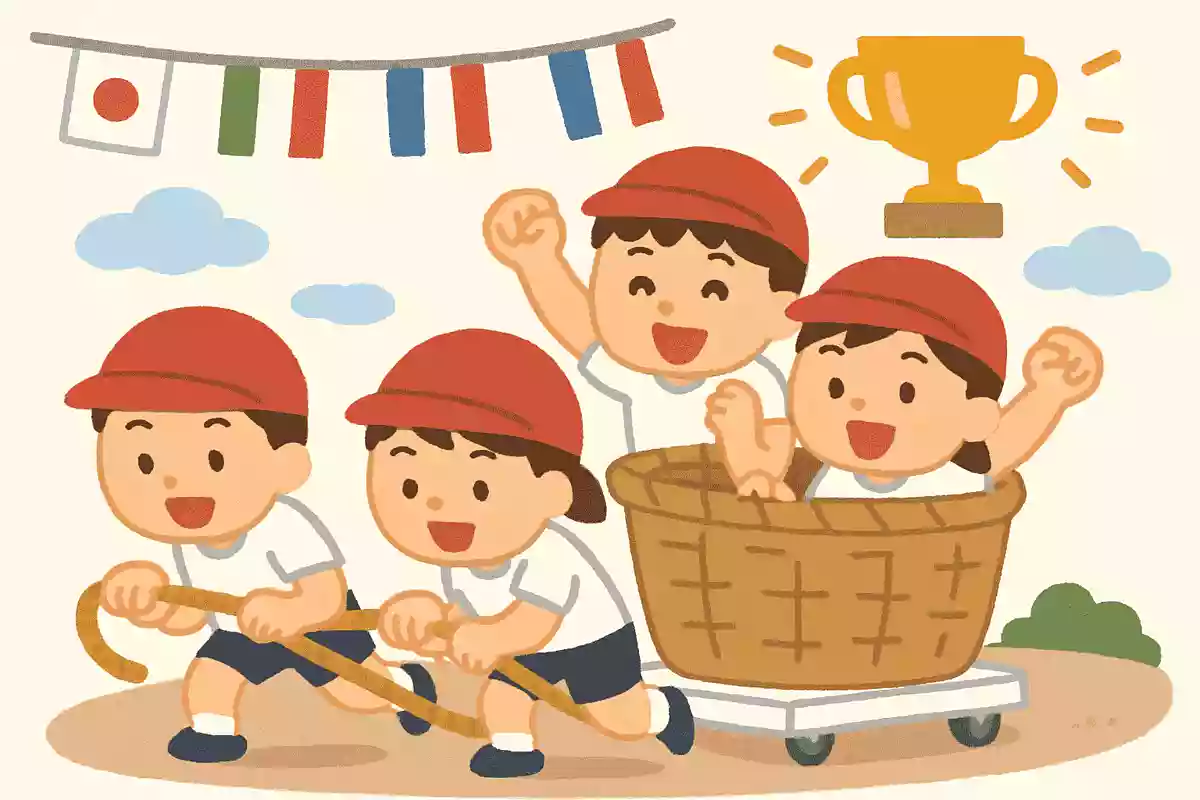
So far, we’ve covered how rawhide works, its origins, and how it differs from cavalry-style matches.
Next, we’ll get into concrete tips—like how to form the riding formation and how to move during competition.
But above all, with rawhide, teamwork is everything! You can probably tell just from the rule of “a four-person relay format” how important it is.
The secret to winning lies in how much you can care for your teammates and synchronize your breathing with theirs!
How to form a mounted unit and tips for moving
A stable and secure riding posture
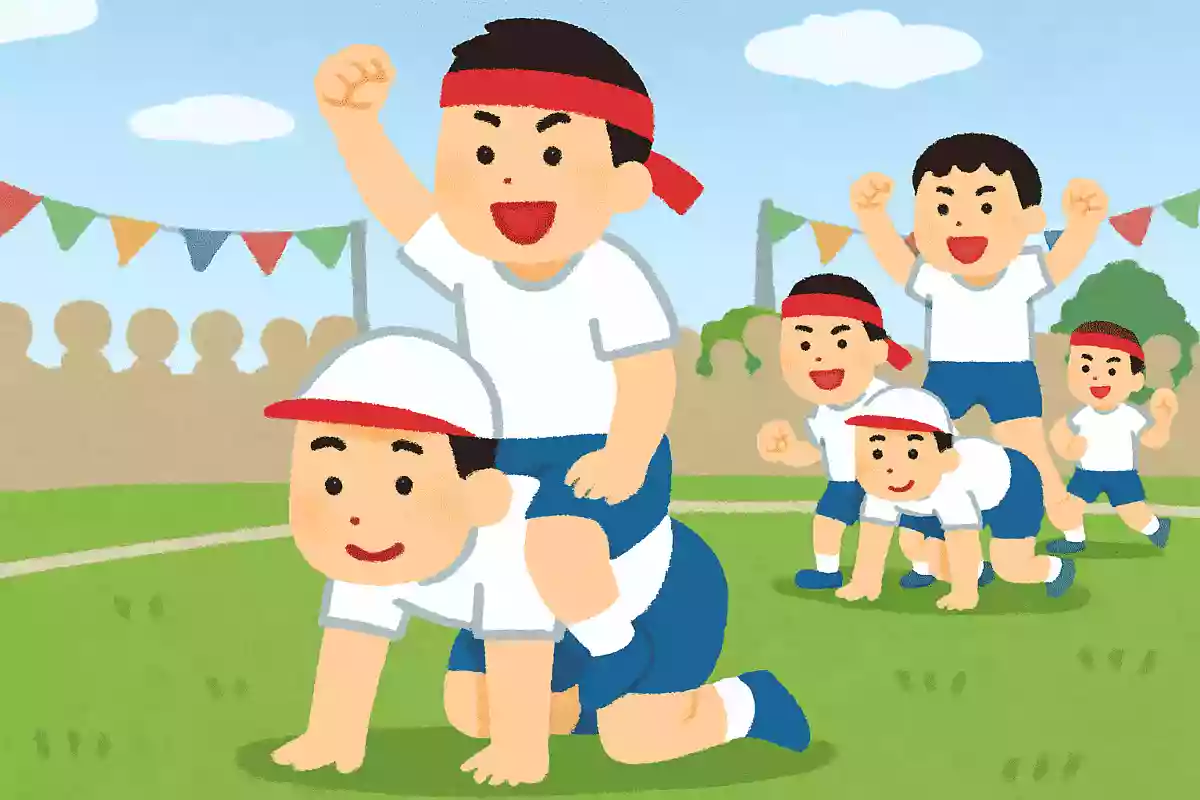
First, let’s decide on the three people in charge of the horse formation.
A team with little to no height difference is recommended.
If there’s a big difference, the rider’s sitting position and foot placement tend to become unbalanced.
Of course, with some ingenuity it’s manageable, but if you want stability while moving, keeping “no height difference” is a key point to remember.
The person who gets on top should be light.
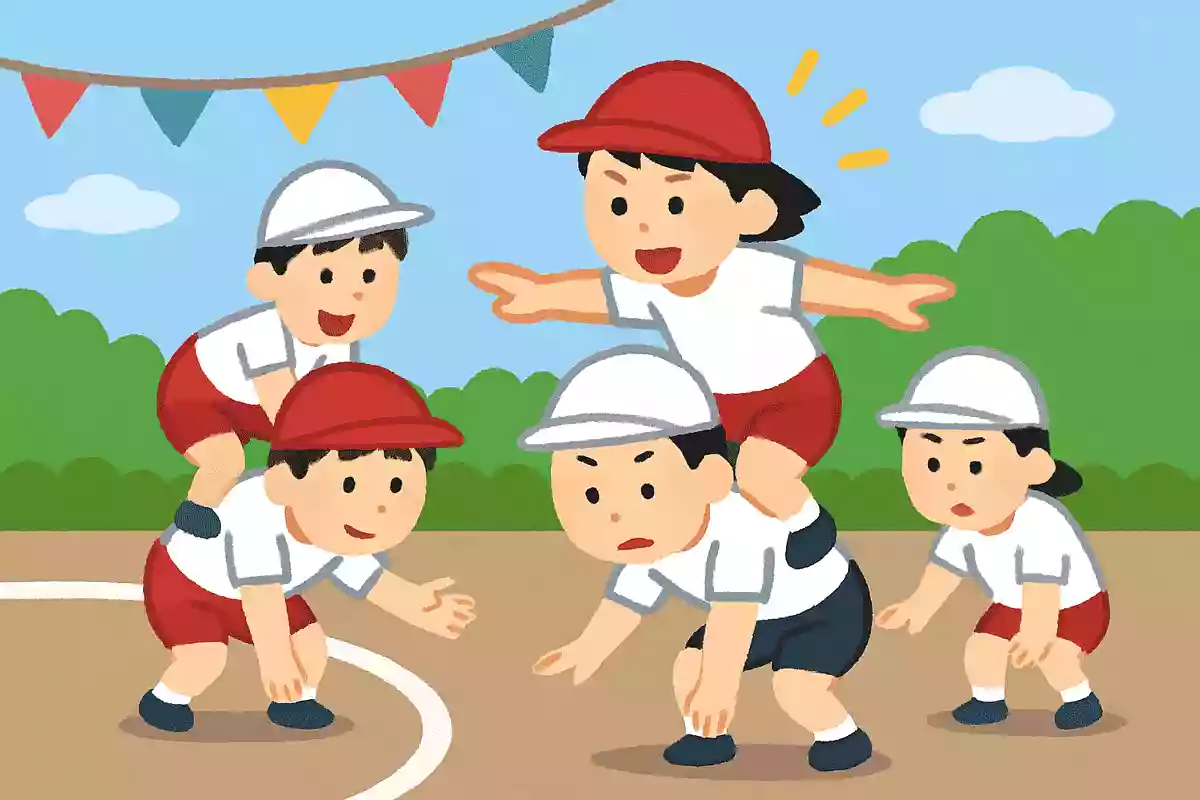
Naturally, the person on top should be someone lightweight.
Since you’ll be moving toward the target and back to your teammates, it’s best to keep the team as light and nimble as possible.
In a cavalry battle, it becomes a head-to-head contest, so being strong or having long limbs can sometimes be an advantage.
However, as I mentioned earlier, Low Hide is similar to a cavalry battle but fundamentally different.
Be sure to think carefully about how you allocate people across the entire team!
Practice points
Get a feel for ‘tossing it around’
Next, let’s look at key practice points! In Low Hide, there’s a rule where the rider swings and throws a rope with a ball on the end to hit a target.
The focus here is on the “swinging throw.” You’re not throwing a ball pinpoint like in baseball with a pitching form.
Instead, like a cowboy, you whirl the rope above your head and use the centrifugal force to aim at the target.
So you should practice gauging “how much rope to let out.” Don’t let it all out at once—gradually feed out the rope in time with the rotation, closing the distance between the ball and the target as you go!