

Simple mini-games that liven up a party


Are you looking for mini-games you can enjoy at a party without any special preparation? In this article, we’ll introduce simple mini-games that everyone can enjoy and that are easy to fit into your schedule.
No elaborate setup or complicated explanations needed! We’ll focus on games that both drinkers and non-drinkers can enjoy together.
We’ve gathered a variety of games, including ones that work with both small and large groups, and ones you can play in teams.
Try customizing them to match the number of participants and have fun!
- Simple yet exciting! Recommended games and activities for year-end parties
- A fun, everyone-joins-in game that gets everyone excited!
- Party games collection that get everyone excited in a big group
- Ideas for team-based games to enliven a party
- Games and activities everyone can enjoy together. A collection of fun play ideas.
- Roundup of easy party tricks. A collection of ideas that require no preparation.
- Drinking party crowd-pleasers: party and banquet games
- Elementary School Fun Day a Big Hit! Indoor Game Idea Collection
- Party-Pumping Games and Party Games for Banquets [2026]
- Office party games that get everyone excited
- [For Women] Recommended Party Entertainment, Games, and Performances
- [Talk] Interesting! Hilarious! A Collection of Silly Questions
- Party Games That Will Liven Up Your Workplace [2026]
Simple mini-games that liven up a party (21–30)
Perfect Coke-Only Game

The “Cut the meat to exactly 300g” challenge segment on the midday variety show Pokapoka is so simple, yet it always gets everyone excited.
Maybe that active participation mindset boosts the fun even more.
So how about a game where you drink a beverage to exactly the designated line? Since some people aren’t fond of carbonated drinks, everyone can prepare their favorite juice and give it a try.
If it’s a drink in a clear bottle, you could even draw the line directly on the bottle!
Earphone Loud Telephone Game

You often see this game on variety shows too, right? I think the classic “telephone game” format is fun for all ages.
Preparing the music device is easy nowadays since we have smartphones.
If you don’t have headphones, earphones will do just fine.
For older participants, pick prompts about trends among young people; for younger participants, choose prompts with a Showa-retro vibe—add a little twist in how you select the topics.
The limit might be around 20 characters that people can memorize at once.
Getting some bitter tea ready as a penalty could make it even more exciting!
Simple mini-games that liven up a party (31–40)
Tasting Game

Kirin, Asahi, Suntory—just hearing those names is irresistible to beer lovers, right? So instead of a sake tasting, how about a beer tasting or even a juice tasting competition to liven things up? Even the same orange juice can taste subtly different depending on the brand.
And that canned coffee you sip without thinking—if you taste it seriously, you’ll find it’s completely different from others.
At a party with lots of dishes, you could even do blindfolded tastings and try to guess the foods—that’s sure to get everyone excited.
If you usually act like a gourmet, make sure not to show any uncool moments!
100-character shiritori

Let me introduce the “100-Character Shiritori.” The rule of this game is to play shiritori according to a chosen theme, and the game ends when the total number of characters exceeds 100.
By the way, the number of characters in the word you say becomes your score, so using longer words gives you an advantage.
As in the classic version, anyone who says a word ending in “n” or a word that doesn’t match the theme is out.
Be sure to decide on someone to count the characters before you start.
With multiple rules, the difficulty goes up and the excitement builds, making it perfect for performances or party entertainment!

Who am I? game

How about a “Who am I?” quiz where you deduce the answer from hints? It’s a simple game: after giving three hints, you guess the answer.
In the video, the hints are: “Active at work or school,” “Before it was born, the abacus was used,” and “Compact and good at calculations.” The answer is, of course, “calculator.” It seems fun to structure the hints so the first one is a bit difficult and the second and third get progressively closer to the answer.
Letting people raise their hands as they figure it out would make it even more enjoyable!
YES/NO Quiz
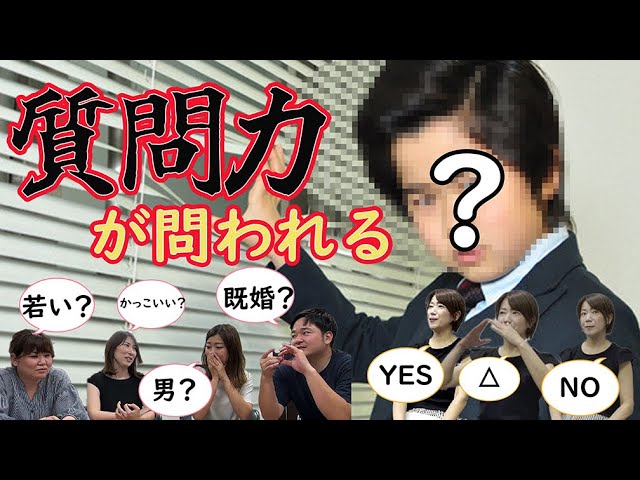
A key point of “Yes/No Quiz,” where you work toward finding the answer, is that it’s a game enjoyed by splitting into a question master and questioners.
The question master chooses a topic and answers the questioners’ questions with only “Yes” or “No.” The questioners listen to the answers and try to figure out what the topic is.
To narrow down the answer, it’s important for the questioners to think carefully as they ask their questions.
It’s also a great game for team competitions, so let’s all have fun together.

Pedometer rapid-shake game
@laviena_himeji [Laviena Himeji] This performance was so much fun! ✨ The couple incorporated a “pedometer speed-shake game” into their wedding 👀 Everyone competed to see who could rack up the most steps 💪 It turned into an exciting highlight that energized the whole venue! —————————————————— For inquiries about weddings or photo weddings, please call ☎︎0120-708-122 or send us a DM 🕊️🌱 @laviena_himeji .#RaveenaHimeji#HyogoWeddingVenueHimeji wedding venue#KansaiBride#HyogoBride#hyogo#KansaiPreBrideI’ve graduated from being a bride. (Commonly used to mean: I’m married now.)#mydressWeddingWedding venueWedding Preparation#prebrideWedding Report#Wedding#weddingWedding productionWedding Reception ProductionPedometer GameGuest-participation performanceentertainmentGame Direction
♬ Original Song – Lavina Himeji Wedding Venue – Lavina Himeji Wedding Venue
Some of you may be using pedometers for your health.
Since many smartphones now come with a built-in pedometer function, there may even be young people who have never seen a standalone pedometer.
This little game using pedometers seems like something people of all ages can get really into.
You might even see your department head or manager going all out, mindlessly shaking a pedometer or their phone! There are lots of variations: time-attack challenges, matching a target count exactly, shaking two at once, and more.
Just be careful not to get too carried away and accidentally throw the pedometer.