

![[2026] Active in the enka and kayō world! A roundup of beautiful enka singers](https://i.ytimg.com/vi/9jmy8qJ5Ui8/hqdefault.jpg)

Among female enka singers who, with exceptional vocal prowess, draw out the full charm of a song—sometimes seductively, sometimes sweetly—there are many who are also celebrated for their beauty and enjoy great popularity.
If you remember the late Showa to early Heisei era, you may know the term “endoru,” coined to describe enka singers who enjoyed idol-like popularity at the time.
In this article, we researched and introduce singers who are reputed to be beautiful enka performers.
Of course, standards of beauty vary from person to person, but we hope this is an opportunity to discover the appeal of various beautiful enka singers—from the legendary divas of the Showa era to the young talents born in the 2000s who are active today in the Reiwa era.
- A roundup of leading female enka singers representing the Showa era
- [2026] Amazing if you can sing them! Enka Masterpieces [Women Singers Edition]
- [2026] Idol-Worthy! A Roundup of Handsome Male Enka Singers
- [2026] A roundup of female enka singers in their 60s: Artists who support Japanese enka
- [2026] Enka’s Seventh Generation! A roundup of young enka singers
- [Female Singers Edition] The face of New Year’s Eve! Enka singers who appeared on the Kōhaku Uta Gassen
- A roundup of male enka singers who represent the Showa era
- [2026] Compilation of Enka Singers from Hokkaido
- [2026] A roundup of enka singers from Niigata
- A roundup of female enka singers in their 20s: The young divas of the enka world
- [Enka] Songs that are easy to sing even for those who are tone-deaf [Female singers edition]
- [2026] Enka Singer from Tohoku
- [Mysterious Enka] A Collection of Easy-to-Sing Songs by Midori Oka [2026]
[2026] Active in the enka and kayō world! A roundup of beautiful enka singers (1–10)
Northern land, coastlineOka Midori
Midori Oka is an enka singer from Himeji, Hyogo Prefecture, who has drawn significant attention for her beauty and vocal prowess.
She began studying folk music at the age of five and, as a child, was even called a “folk song prodigy.” Although she once debuted as an idol, she restarted her career to pursue her dream of enka, officially launching her path as an enka singer in 2005 with the single “Okesa Wataridori.” After moving to Tokyo in 2016, her release “Kiri no Kawa” won the Excellence Award at the Japan Lyricist Awards, and starting in 2017 she appeared on NHK’s Kōhaku Uta Gassen for three consecutive years.
With the motto “perform and captivate,” her soaring, folk-trained high notes and dramatic, audience-entrancing stage presence are truly breathtaking.
hay feverIchikawa Yukino

A powerhouse vocalist who captivates fans with her expansive voice and dignified beauty, Yukino Ichikawa.
She debuted in 1993 with “Onna no Matsuri.” Though she temporarily paused her career for medical treatment, she has continued to shine at the forefront of the enka world.
In 2016, she achieved her long-held dream of appearing on the NHK Kouhaku Uta Gassen for the first time, and in December 2019 she won the Japan Record Awards’ Best Vocal Performance for “Yukikoi-bana,” cementing her reputation beyond doubt.
Carrying on the teachings of her mentor, Shosuke Ichikawa, her expressive range—spanning classic enka to kayōkyoku—is nothing short of breathtaking.
The way she embodies a different female persona in each song is truly that of an actress who sings.
Keiko’s Dream Opens at NightFuji Keiko
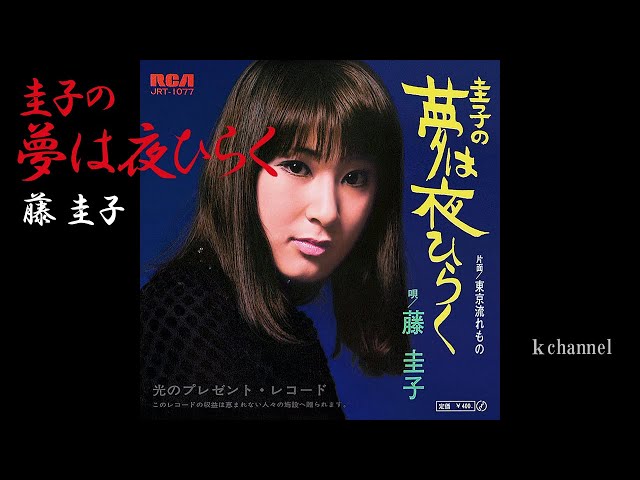
Keiko Fuji, also known as the mother of Hikaru Utada, left an indelible mark on the history of Showa-era popular music.
She debuted in 1969 with “Shinjuku no Onna,” followed by massive hits like “Onna no Blues” and “Keiko no Yume wa Yoru Hiraku.” In 1970, she won the inaugural Japan Record Grand Prize, and famously set an astonishing record of 42 consecutive weeks at No.
1 on the album charts.
The contrast between her husky, forceful voice and her striking beauty became a social phenomenon, and she established a style that infused enka with the spirit of blues and rock.
Although she passed away in 2013, her passionately charged singing continues to move listeners to this day.
Trace/Regret BridgeMochizuki Ruka

Ruka Mochizuki, who hails from Kanagawa Prefecture, blossomed as an enka singer after her time in an idol group.
She made her solo debut in July 2020 with the single “Shitsuren Bojo,” which entered at No.
1 on the Oricon Weekly Enka/Kayō Singles Chart.
She has continued to build solid credentials, including winning the New Artist Award at the 63rd Japan Record Awards in December 2021.
Her greatest appeal lies in her flexible approach that transcends genre boundaries.
While drawing attention as an “enka singer who can also do gravure,” she has continued to expand the possibilities of enka through collaborations with Vocaloid producers and by joining a unit produced by Tetsuya Komuro.
KoishunkaHayama Mizuki

Mizuki Hayama is an enka singer from Tsuruoka City in Yamagata Prefecture.
She has a unique background, having served as a shrine maiden at the Dewa Sanzan Shrine for six years, and won the Grand Prix at the Nippon Crown Newcomer Audition in 2015.
She made her debut the following April 2016 with the single “Benibana Bojō / Orizuru Kaikyō.” She later received the Japan Record Award for New Artist and has continued to sing about the spirit of Tohoku in songs such as “Yukinko Kazeuta.” Her greatest appeal is, above all, her clear, expansive voice known as the “healing kobushi” (a gentle, expressive enka vocal ornament).
The poised presence shaped by her shrine maiden experience, contrasted with her sweet smile, is truly captivating.
Heart SakeFuji Ayako

Hailing from Akita Prefecture, Ayako Fuji has long been beloved as the “Flower of Enka,” known for her assured, folk-song-honed vocals and elegant kimono style.
After re-debuting under her current stage name in 1989, her 1992 single Kokoro-zake became a massive hit, selling over one million copies in total.
She has performed at the NHK Kōhaku Uta Gassen 21 times and swept major awards including the Japan Cable Radio Awards, attesting to her proven artistry.
In recent years, her life with rescued cats Maru and Oreo has drawn attention on social media, and in January 2025 she welcomed a new family member, Jakoten-kun, which also made headlines.
Whether you want to experience the charm of traditional enka or are interested in animal welfare and a mindful lifestyle, Fuji’s songs and warm personality are sure to resonate with you.
Still in YokohamaKadamatsu Miyuki

Miyuki Kadomatsu is an enka singer from Odawara, Kanagawa Prefecture.
She discovered enka at the age of two after seeing Saburo Kitajima’s show, and at sixteen she passed the audition program “Uta Sta!!,” becoming a disciple of Ryunosuke Fuji.
After a long apprenticeship of about ten years, she achieved her long-awaited major debut in 2019 with the single “Michinoku Bōkyō Uta.” Her greatest appeal is, above all, her powerful, expansive voice.
The rich, robust mid-to-low register—unexpected from her petite frame—and her soaring, sky-piercing high notes are truly breathtaking.
If you want to enjoy authentic enka infused with a modern sensibility, be sure to check her out.