

What’s the surefire way to win a centipede race? From lineup order to basic posture and training methods


Centipede racing is one of the most popular sports day events where participants line up in a single file and run with their ankles tied together with a rope.
As you might imagine, centipede racing is quite challenging, and among sports day events, it’s one where practice is especially crucial to winning.
In this article, we’ll start by explaining the rules and then cover comprehensive winning strategies for centipede racing! We’ll go over everything from the optimal lineup order and basic posture to effective practice methods, so read this article and get plenty of practice!
- Top Songs to Hype Up Sports Day and Athletic Festivals [2026]
- Recommended for sports festivals! Examples of funny slogans and how to come up with them
- Sports Day/Athletics Festival: Crowd-Pleasing Cheer Battle Ideas and Performances
- [Blazing] Carefully selected tracks perfect as BGM for cavalry battles at sports festivals!
- Popular Dance Songs Ranking [2026]
- [Dancing Tamaire] A fun song for the beanbag-toss game, perfect for sports day
- [Sports Day] A roundup of exhilarating, fast-paced tracks perfect for relay race BGM!
- A roundup of recommended obstacle ideas for obstacle courses
- [Sports Day] Recommended Songs for Tug-of-War: A curated selection of powerful BGM to fire up your fighting spirit!
- [Sports Day] Entrance songs that will hype the crowd! A comprehensive roundup from classics to the latest hits
- [Unique] Fun sports day events that both kids and adults can enjoy
- [Challenge the Guinness World Records!] A list of easy-to-try Guinness records
- [Sports Day Cheer Songs] A roundup of classic cheer anthems and recommended parody-song picks [2026]
Posture for running fast and stable (1–10)
lean forward
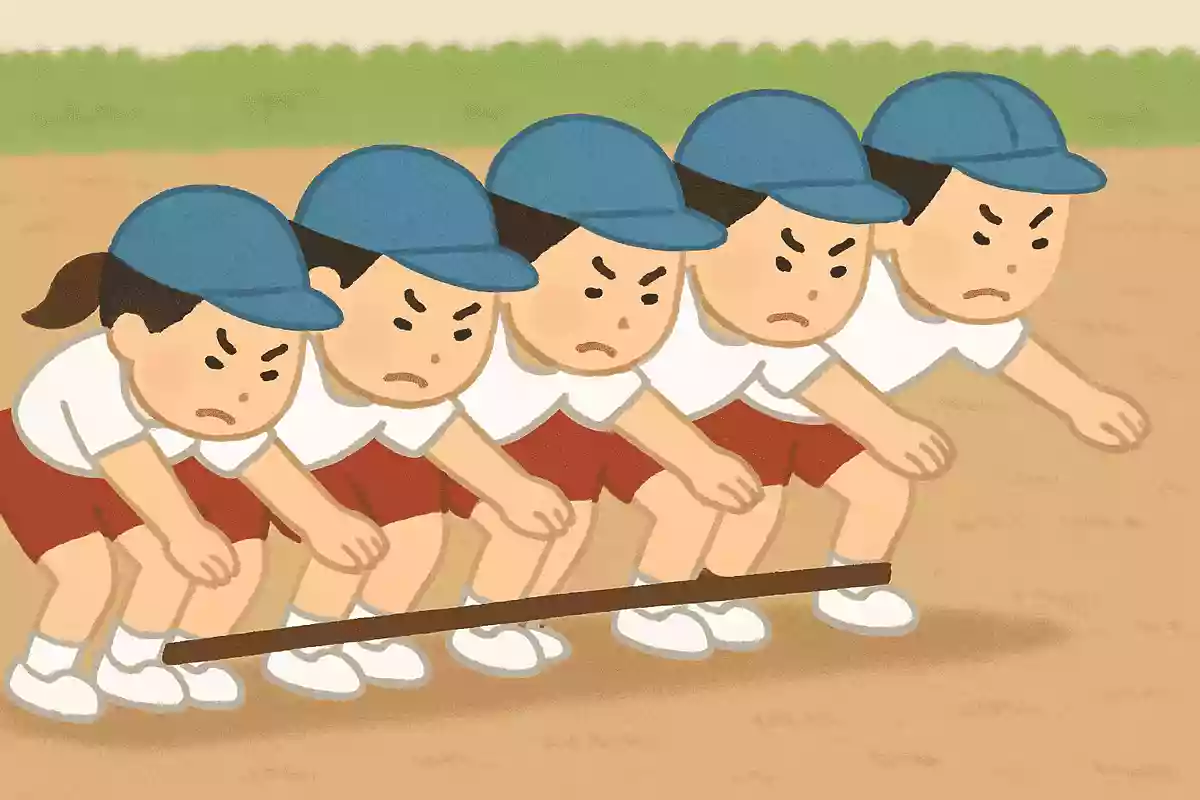
The second key point of basic posture for running fast is to lean forward.
If you watch videos of teams that run fast in the centipede race, you’ll wonder, “Are their legs really tied together with a rope?” They’re that fast.
Their form looks almost like they’re just running normally.
In fact, when you run normally, you naturally lean forward a bit, which helps reduce wind resistance.
However, in a centipede race, if you focus too much on leaning forward, you might end up pitching forward, so decide as a team on the optimal forward-lean angle.
Eyes forward

This may be a slight tangent from basic posture, but your line of sight is also important for running steadily.
In a centipede race where teammates’ legs are tied together, you tend to look down at your feet, thinking, “We all have to match our steps!” But doing so makes it harder to see what’s around you and increases the risk of falling.
Along with the calls described below, if you decide in advance which foot to step off with, you can keep your steps in sync without looking at your feet, so keep your gaze straight ahead.
Looking in the direction of travel also makes it easier to maintain your balance.
Chant in unison (1 to 10)
Synchronize the starting call
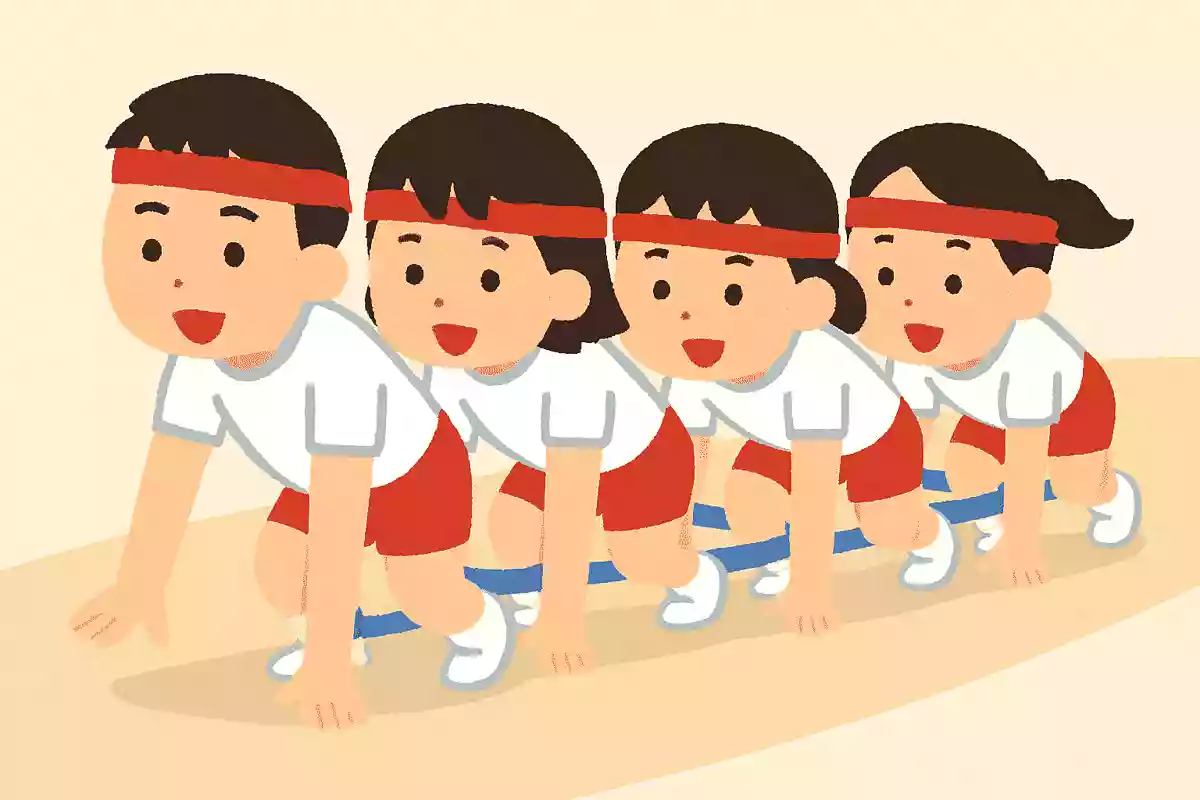
In a centipede race, the most reliable thing during the event is the chant.
The starting chant is especially important.
When teams have practiced a lot, there usually isn’t much difference in speed, so the team that gets a clean start often wins.
To do that, have the person in the very back shout loudly, “Ready—go!” right as the starting signal sounds, and everyone should take their first step in unison with that call.
And of course, make sure you decide—through plenty of practice—which foot to step with first!
While running, use a four-beat chant.
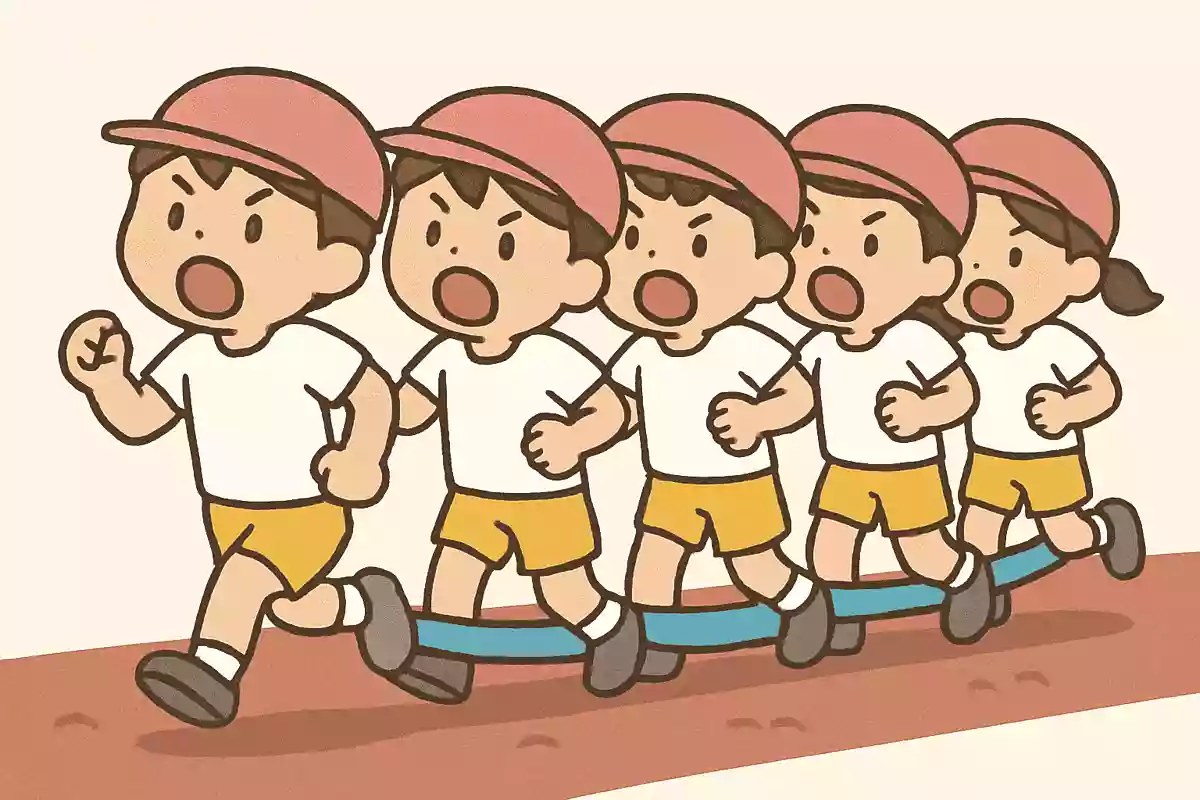
Once you get off to a good start, all that’s left is to run at the pace you’ve practiced.
To do that, you’ll definitely need a chant.
I recommend using a four-beat chant—“One! Two! Three! Four!”—instead of a two-beat “One! Two!” The reason is that with a two-beat chant, the tempo tends to speed up gradually, which can throw off your pace.
Also, with the standard “One! Two! Three! Four!” there’s a chance it will overlap with other teams’ chants and be hard to hear.
If you can, it’s a good idea to come up with an original chant.
Some teams even run while singing a four-beat song!
What is the spacing between the laces? (1–10)
with spacing about like ‘small forward alignment’ (i.e., standing close together, just a small gap between people)
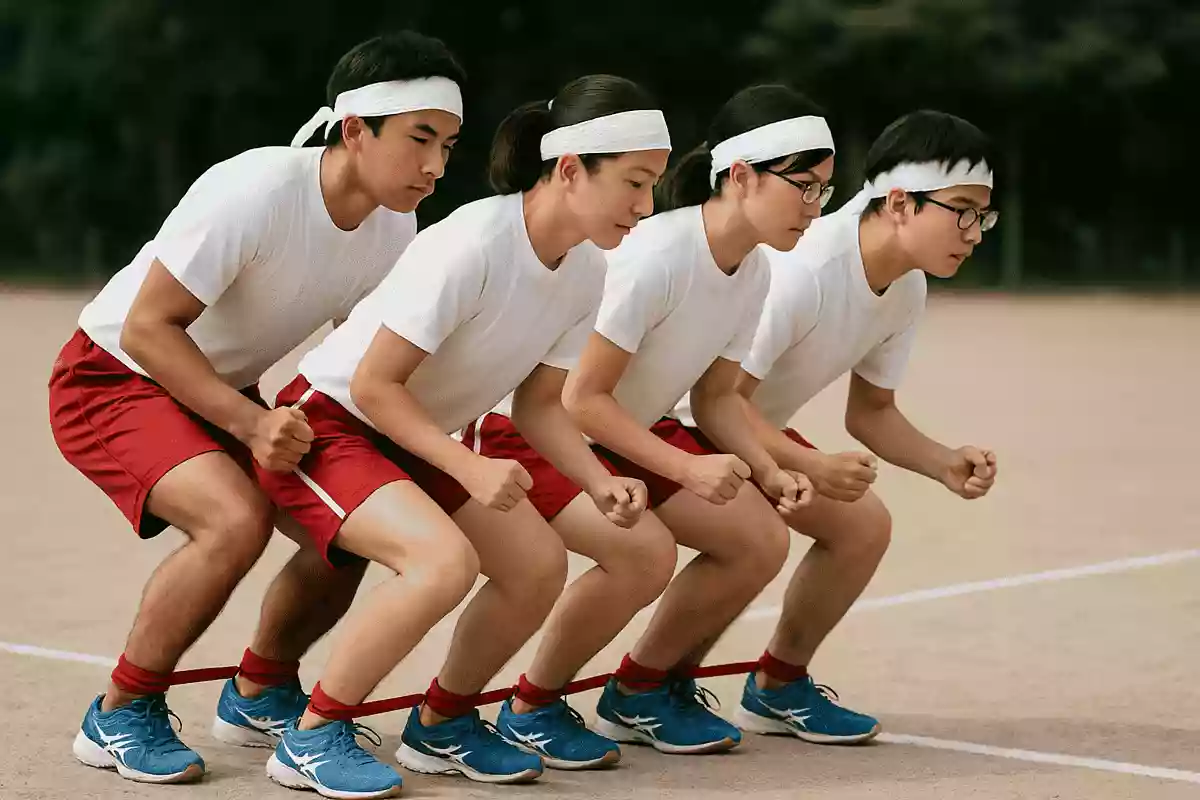
The distance between people in front and behind when tying their legs together with a rope is also one of the important factors for running steadily.
It’s recommended to tie the rope using a distance roughly equivalent to “small front alignment” (arms slightly extended forward) as a guideline.
The reason is that it prevents the rope from sagging and being stepped on, while also not being so close that it makes it hard to move your legs—resulting in an appropriate distance.
Tips for Turning Back (1–10)
The person in front slows down while making sure the person behind turns back.

In a centipede race, the most difficult part is the turnaround.
If you’re just running laps on a track you won’t need it, but if a turnaround is required, be sure to practice it well.
In the turnaround movement, the key in the first half is the person at the front.
Once the front runner makes the turn, they should slow down while checking the back of the line.
The reason is to eliminate the speed difference between the front and the back of the line.
After turning, the front runner can go straight, but at that point the people in the back are still in the middle of their turn.
As a result, the front goes fast and the back goes slow, and that speed gap can throw off the balance and cause a fall.
Placing someone with leadership at the front of the line is also important for executing the turnaround well.
Once everyone has turned back, the person at the end calls out and we restart.
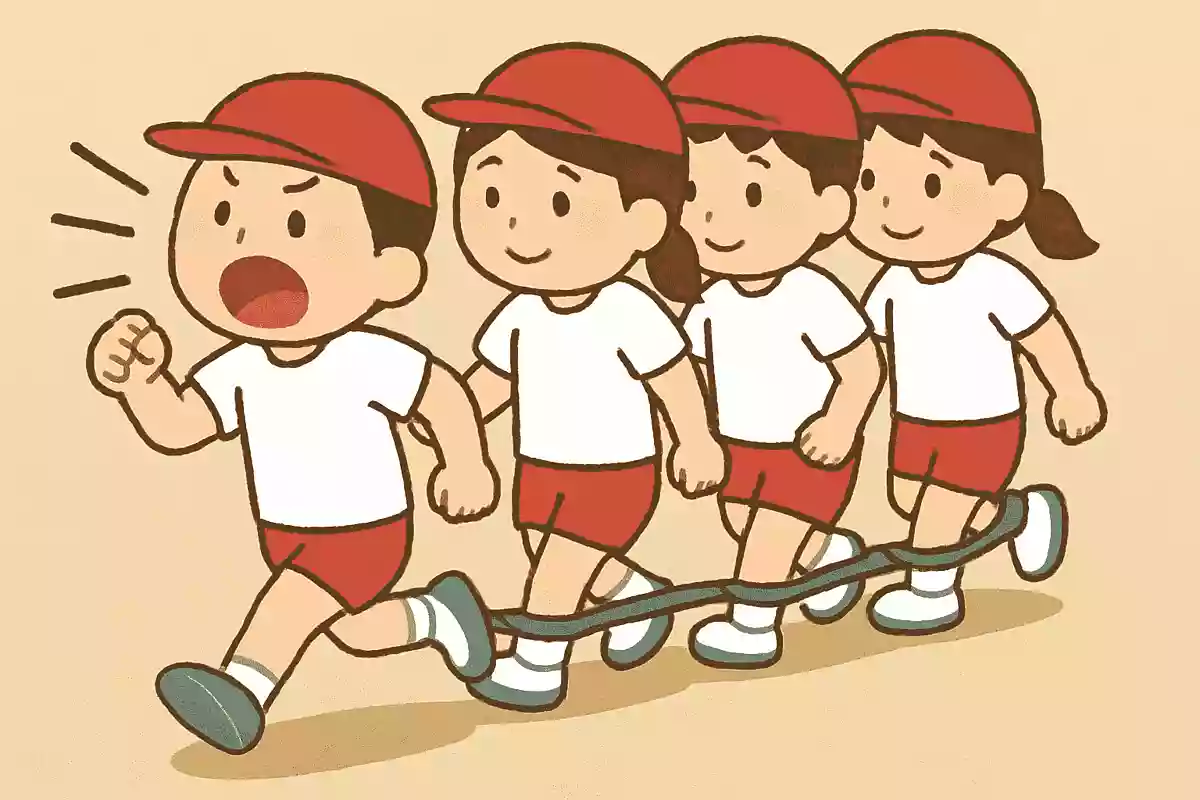
Here’s a recommended method for a centipede race.
Once everyone has made the turnaround, have the person at the back give a loud call to restart! Use that call as the cue to bring everyone’s energy back to the max and regain the speed that dropped during the turn.