

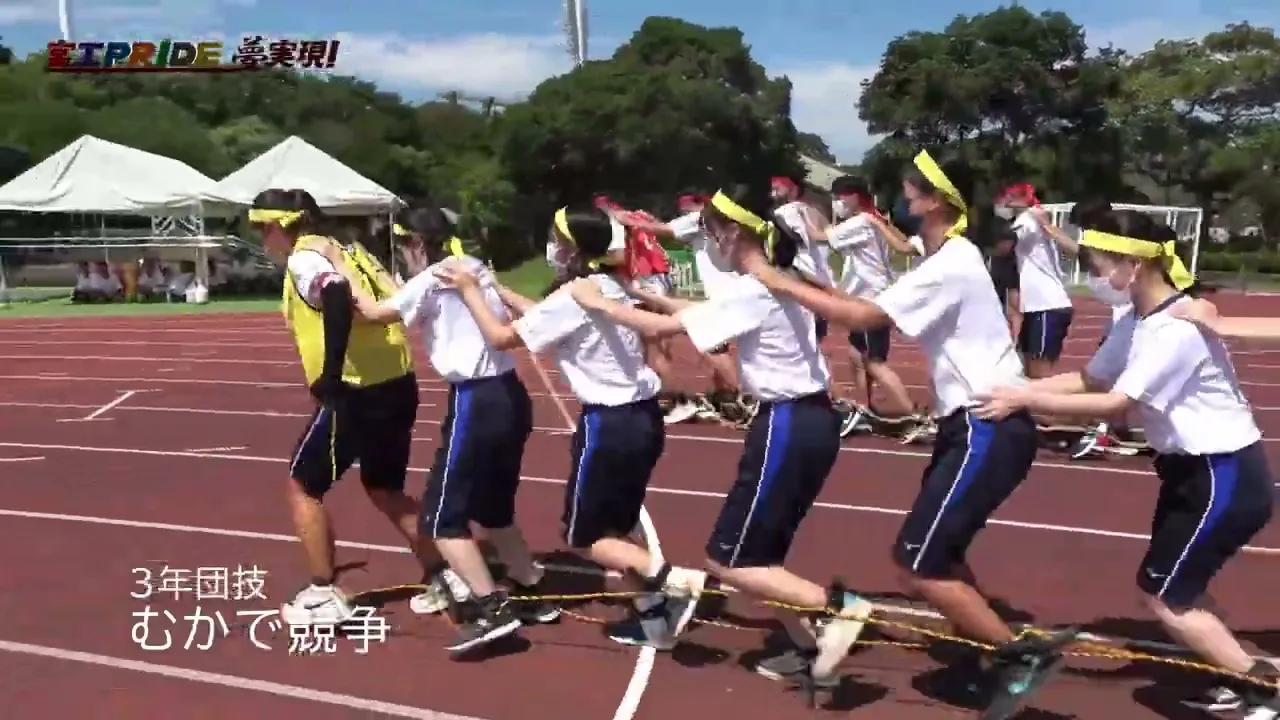


Centipede racing is one of the most popular sports day events where participants line up in a single file and run with their ankles tied together with a rope.
As you might imagine, centipede racing is quite challenging, and among sports day events, it’s one where practice is especially crucial to winning.
In this article, we’ll start by explaining the rules and then cover comprehensive winning strategies for centipede racing! We’ll go over everything from the optimal lineup order and basic posture to effective practice methods, so read this article and get plenty of practice!
- Top Songs to Hype Up Sports Day and Athletic Festivals [2026]
- Recommended for sports festivals! Examples of funny slogans and how to come up with them
- Sports Day/Athletics Festival: Crowd-Pleasing Cheer Battle Ideas and Performances
- [Blazing] Carefully selected tracks perfect as BGM for cavalry battles at sports festivals!
- Popular Dance Songs Ranking [2026]
- [Dancing Tamaire] A fun song for the beanbag-toss game, perfect for sports day
- [Sports Day] A roundup of exhilarating, fast-paced tracks perfect for relay race BGM!
- A roundup of recommended obstacle ideas for obstacle courses
- [Sports Day] Recommended Songs for Tug-of-War: A curated selection of powerful BGM to fire up your fighting spirit!
- [Sports Day] Entrance songs that will hype the crowd! A comprehensive roundup from classics to the latest hits
- [Unique] Fun sports day events that both kids and adults can enjoy
- [Challenge the Guinness World Records!] A list of easy-to-try Guinness records
- [Sports Day Cheer Songs] A roundup of classic cheer anthems and recommended parody-song picks [2026]
Rules of the Centipede Race (1–10)
Basic forms and number of people

In a centipede race, the participants line up in a straight line and run with their feet tied together with a cord.
Besides tying with a cord, there’s also a pattern where their feet are fixed to long boards like skis.
Typically, a centipede team consists of 4 to 5 people, but in some cases more than 20 people can be linked together.
However, the risk of injuries and accidents increases as the number of participants grows, so extra caution is needed when attempting it with a large group.
Running courses and race formats
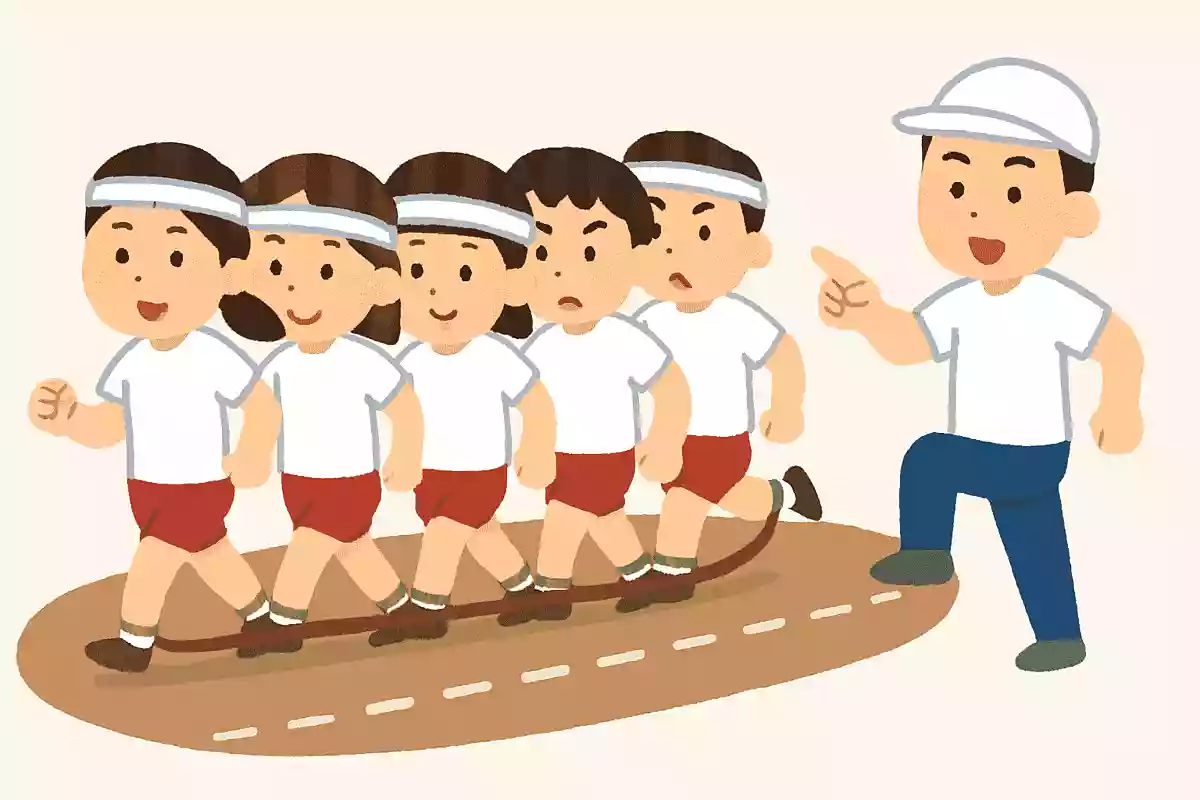
In a centipede race, participants may either run laps around a track or sprint along a straight course like a footrace.
In some cases, they run back and forth on a straight course; the turnaround is the highlight of the event, where each team’s skill is put to the test.
Races can be held in a format where a single centipede team runs from start to finish, or in a relay format with multiple centipede teams.
Goal judgment
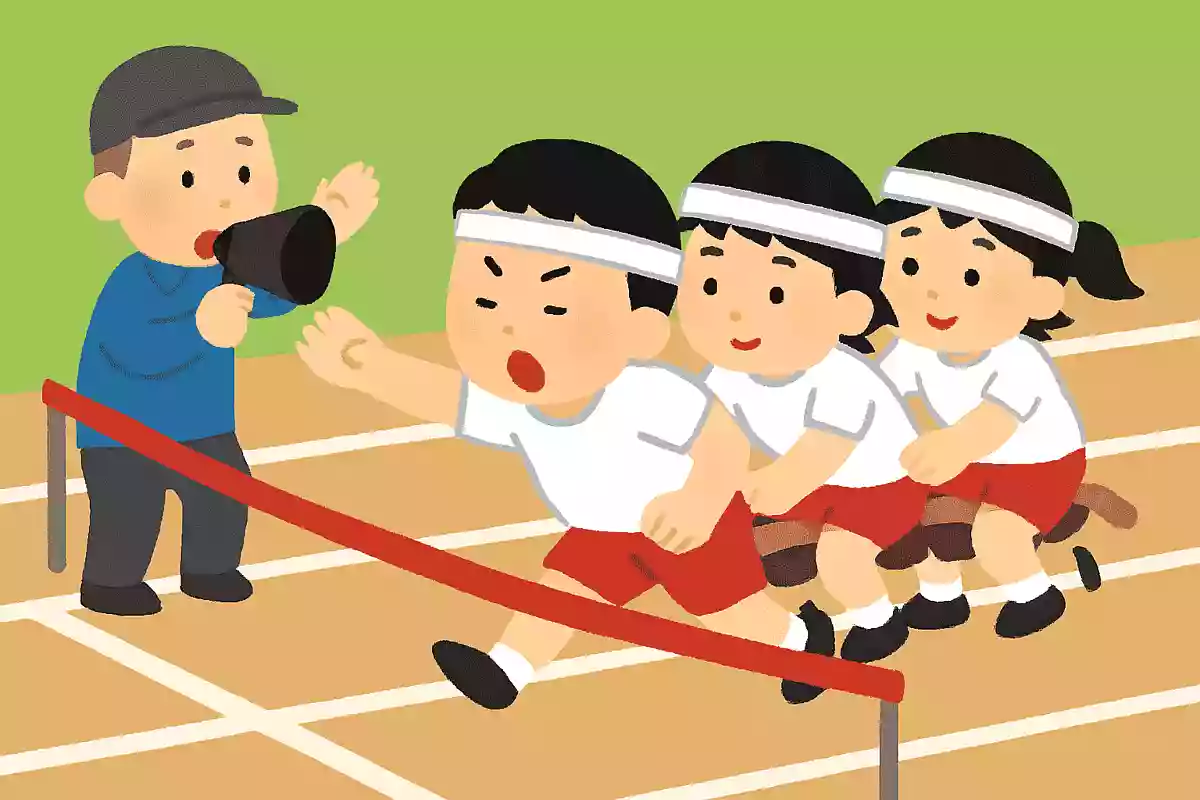
In regular relays or footraces, it’s judged as a finish when the runner’s chest crosses the line, right? However, in a centipede race, it’s generally judged as a finish when the last runner crosses the line.
It’s important for the lead runner to stay focused and run hard all the way to the end!
Recommended lineup order for the centipede race (1–10)
Line up in order of height (from tallest to shortest)

In a centipede race, it’s considered standard practice to line up from the front in order of height, starting with the tallest.
This lineup is crucial for running fast and steadily.
One reason for arranging by height is that it minimizes the height differences between adjacent people.
Reducing the height gap between front and back increases stability when grabbing the person’s waist in front.
Conversely, putting taller people in the back can cause posture to break down, so it’s not recommended.
If they’re about the same height, put the sturdier person or the faster runner in front.

While it’s standard practice to line up from tallest to shortest, if there are people of similar height, put the sturdier or faster runners at the front.
Having a sturdier person up front makes it less likely to topple forward and helps the whole line run more stably.
In a centipede race, the person at the front leads and sets the pace.
Therefore, placing a fast runner at the front helps pull the entire line and results in faster running.
Loud people in front and behind

This is also one of the essential factors for running well in a centipede race.
Because everyone needs to move in sync in a centipede race, call-and-response chants are indispensable.
If there are people at the front and back of the line whose voices carry well, their chants will reach the entire line and make it easier to run.
In particular, it’s recommended to place someone with leadership at the front—someone who can watch the whole line and call out the rhythm accordingly.
Posture for running fast and stable (1–10)
Grab the waist, not the shoulder.

In a centipede race, it’s common to run while grabbing the person in front of you, but the best recommendation for stable running is to hold the waist of the person ahead.
Grabbing the waist lowers the center of gravity compared to holding the shoulders, which improves stability for the whole line.
That said, in practice, posture varies by team—some hold the shoulders, while others thread their arms under the person in front like a full nelson to keep bodies closely aligned.
Practice repeatedly and find the form that lets your team run most comfortably.