

Masterpieces of the bolero. Recommended popular pieces in bolero form and outstanding performances.

When people hear “Boléro,” most think of the piece by the French composer Maurice Ravel, but in fact it is also a genre of dance music with Spanish origins.
Of course, Ravel’s Boléro is the most famous and has become synonymous with the genre, influencing many composers.
For example, the theme of the period drama Mito Kōmon uses the bolero rhythm, and the style of building grandeur by repeating the same melody with evolving arrangements is used to great effect in Time to Say Goodbye and in the orchestral arrangement of Hikari from Kingdom Hearts by Hikaru Utada.
Given the bolero’s powerful influence, you might be surprised to find that some of these pieces are boleros too!
We’ve gathered such works and outstanding performances by various artists.
By all means, listen beyond just Ravel’s Boléro and discover other pieces in this vein.
- Introducing Maurice Ravel’s Famous and Representative Works
- Cool classical masterpieces. Recommended classical music.
- Masterpieces of Ballet Music: Introducing Classic Favorites
- Classical Masterpieces: Recommended Works You Should Hear at Least Once
- [Classic] Masterpieces of Contemporary Music
- Vivaldi’s masterpiece. Popular classical music.
- Handel’s Masterpieces | A Comprehensive Introduction to His Popular Works
- Berlioz’s famous piece. Popular classical music.
- Gabriel Fauré | Introduction to His Famous and Representative Works
- Rachmaninoff’s masterpieces. Recommended pieces by Rachmaninoff.
- Jacques Ibert Popular Song Ranking [2026]
- Debussy’s masterpiece. Popular classical music.
- A masterpiece by Alexander Borodin. Popular classical music.
A masterpiece of bolero. Recommended popular pieces in bolero form and outstanding performances (21–30)
tristezaBaden Powell

That song you often hear as TV background music, Tristeza, is actually a piece in the form known as Cuban bolero.
It is said to have been established in Cuba in the 1860s by José “Pepe” Sánchez, an Afro-Cuban singer-songwriter and one of the many trovadores who emerged across Cuba in the 19th century.
Its content differs completely from the rhythm of Maurice Ravel’s Boléro; the mainstream features include Black-influenced duple meter with strong accents.
Later, the style gradually declined in Cuba, and the center of its popularity shifted to Mexico.
「Bolero」Maurice RavelMaurice Ravel/Denmāku Kokuritsu Hōsō Kōkyōgakudan Seruju Cheribidakke shiki

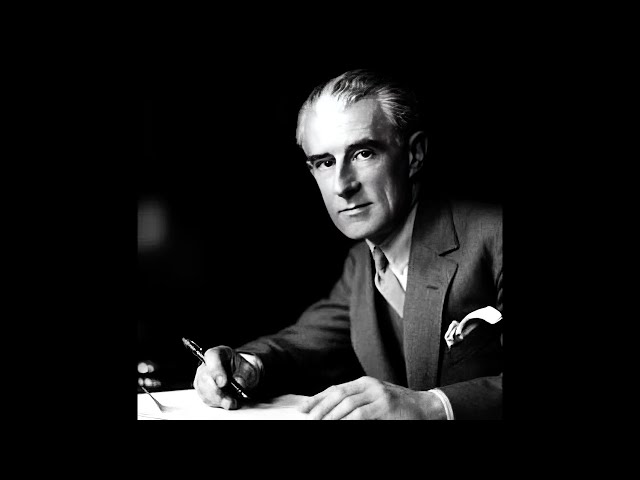
Beginning with the regular melody of this Boléro, he was a composer who paid extraordinary attention to detail, was highly rational, and yet possessed remarkable expressive power—traits that have led to him being called an “exemplary composer.” He has also been dubbed a “genius of orchestration” and a “magician of the orchestra,” and Igor Stravinsky, the contemporary Russian composer known for The Rite of Spring and The Firebird, referred to him as a “Swiss watchmaker.” This is a slightly older performance from 1971.
「Bolero」Maurice RavelMaurice Ravel/Roshia Borishoi Kōkyō Gakudan Nishimoto Tomomi Shiki

Tomomi Nishimoto, who is currently drawing attention as one of the most charming female conductors in the world.
There are scenes of her performing with the Russian Bolshoi Symphony Orchestra.
Reactions will vary, but within a very relaxed, composed atmosphere, there are rounded tones scattered throughout—it might be a Boléro that makes you want to hear it in Russia.
In my personal opinion, the snare drummer is producing a really great sound!
「Bolero」Maurice RavelMaurice Ravel/NHK kōkyōgakudan Rorin Mazēru shiki

Among Japanese symphony orchestras, the NHK Symphony Orchestra (N-Kyō) has an especially large fan base.
Known for a uniquely clear, crystal-like tone that reflects its Japanese roots, it also enjoys a strong following overseas, making it truly one of the country’s top ensembles.
Their performance of Ravel’s Boléro is conducted by Lorin Maazel, a maestro with a huge international following across major orchestral recordings.
The result is a piece that is highly refined yet, in the middle sections, features some of Maazel’s signature, brisk driving—an elegant yet playfully surprising rendition.
「Bolero」Maurice RavelMaurice Ravel/Fransu Kokkuri Kagengakudan Rorin Mazeeru shiki

Maurice Ravel’s ballet music Boléro by the French composer.
While an unchanging triple-meter rhythm is maintained throughout, two types of melodies are repeated and layered as the instrumentation changes, creating a distinctive sound structure reminiscent of ocean waves.
Premiered in 1928, it remains widely loved not only by ballet enthusiasts but as a classic masterpiece.
Boléro can differ greatly depending on the performer.
First, we will introduce Ravel’s Boléro in various interpretations by different performers, followed by related works.
Here is a performance by the Orchestre National de France under the baton of Lorin Maazel—renowned for his delicate yet dynamic conducting that evokes vast landscapes—recorded in September 1981.
..
「Bolero」Maurice RavelMaurice Ravel/berurin firuhāmonī kangengakudan heruberuto fon karayan shiki

The exhilaration that Boléro brings to its audience is known to be exceptionally high—especially compared to other works—thanks to its regular repetition of phrases, its steady rhythmic recurrence, and the finely crafted design of the overall sound.
This is powerfully and dynamically performed by the Berlin Philharmonic under Herbert von Karajan in the New Year’s Eve Concert 1985.
Please enjoy this performance from the very heartland of classical music: December 31, 1985, at the Berlin Philharmonie.
「Bolero」Maurice RavelMaurice Ravel/Pari Kangengakudan Kurisutofo Esshenbaha shiki
There are many different kinds of conductors, each offering performances that make full use of their individuality.
Christoph Eschenbach is a German pianist and conductor.
He has served simultaneously as music director for two top-tier orchestras—The Philadelphia Orchestra in the United States and the Orchestre de Paris in France—and at one point even led three ensembles concurrently during his final season with the NDR Symphony Orchestra, making him a highly popular figure in the heartlands of classical music.
When he visited Japan for the 2007 NHK Music Festival, he delivered many outstanding performances, and the final piece he chose was Boléro.
It’s a must-hear rendition.
Personally, I would also highly recommend the orchestral version of La Valse, which was performed alongside it—an exceptional performance.