


Introducing Maurice Ravel’s Famous and Representative Works

Maurice Ravel, one of the most important figures in Impressionist music.
His works are meticulously crafted down to the finest details, grounded firmly in classical forms while blending in Impressionist expression.
As a result, his music has a uniquely singular character that only he could create.
He also arranged works by other composers for orchestra, and his outstanding orchestration earned him the nicknames “genius of orchestration” and “magician of the orchestra.”
In this article, we introduce Ravel’s masterpieces and signature works.
Even if you’re not familiar with classical music, there are pieces you have probably heard somewhere at least once.
Enjoy the many wonderful masterpieces of Ravel!
Introducing Maurice Ravel’s masterpieces and signature works (1–10)
Mirror No. 4: “The Jester’s Morning Song”NEW!Maurice Ravel

The masterpiece “La vallée des cloches,” the core of the piano cycle Miroirs, was premiered in January 1906.
Its Spanish rhythms and colors are distilled within intricately designed harmonies.
This formidable piece demands advanced technique, including rapid repeated notes, sharp guitar-like staccatos, and hand-crossing passages.
While it projects an extroverted, hard-edged humor, the middle section introduces an expressive, wistful melody, creating a striking contrast of light and shade.
It was later orchestrated and has become a widely loved concert piece.
In addition to high technical proficiency, it requires crisp rhythmic precision, transparent tone color, and the ability to convey dry humor—making it ideal for performers looking to broaden their expressive range.
Sonatina in F-sharp minor, First MovementNEW!Maurice Ravel

This work by Maurice Ravel, a leading composer of French modern music, shines with transparent sonorities and meticulous construction.
Premiered in March 1906, it was originally composed for a magazine competition with the requirement of “a first movement of a sonatina within 75 measures.” While preserving a classical sense of form, its great appeal lies in the beautiful layering of modern harmonic shadings.
Rather than flaunting dazzling virtuosity, it calls for delicate tone design, an even touch, and refined pedaling, making it ideal for those who wish to further hone their expressive abilities.
Within its restraint, noble melodies unfold, allowing performers to engage deeply with Ravel’s unique aesthetic through performance.
La ValseMaurice Ravel
A ballet piece composed between 1919 and 1920.
The title means “waltz” in French.
It features phrases that evoke the Viennese waltz.
When Ravel had Diaghilev—who was enjoying great success in Paris—listen to the work, Diaghilev reportedly said, “It’s a masterpiece, but unsuitable for ballet.
It’s merely a ballet painting,” and declined to accept it.
There is a somewhat ominous atmosphere, and it ends in an explosive finale.
SonatinaMaurice Ravel

A solo piano work composed between 1903 and 1905.
Consisting of three movements, this piece was written for a composition competition; though modest in scale, it distills captivating melodies and delicate sonorities.
The first movement is marked by a lyrical melody.
The second features graceful, charming lines and includes a section that Ravel himself described as “a bow after the dance.” The third movement brims with lively passages.
While adhering to classical forms, it shines with Ravel’s characteristic finesse, making it a masterpiece.
Piano Concerto in G majorMaurice Ravel

Completed in 1931, this work is known as one of his late masterpieces.
It strongly reflects his encounters with jazz during a concert tour in America and the influence of Basque folk music from his mother’s homeland.
Structured in three movements, the first has a bright, playful character; the second is a lyrical sarabande-like movement; and the third unfolds with the bustling energy reminiscent of a circus or parade—resulting in a richly varied and captivating musical trajectory.
While evoking a return to Ravel’s musical roots, it also expands upon his unique sound world.
Ravel wrote only two piano concertos; this is one of them.
Be sure to give it a listen.
Pavane for a Dead PrincessMaurice Ravel
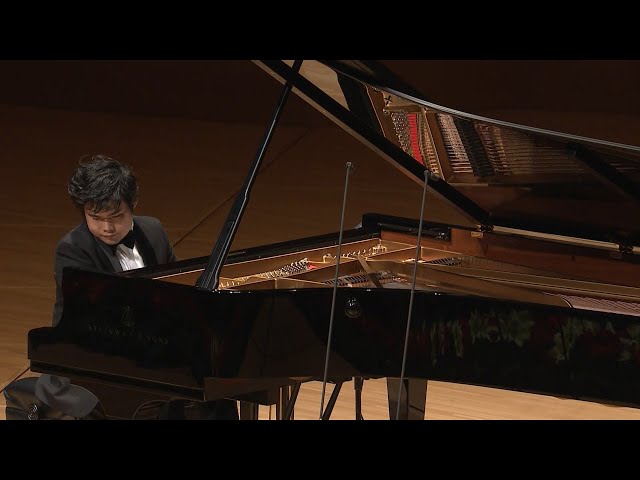
A graceful masterpiece by the French composer Maurice Ravel.
Born in 1899 as a piano piece and later orchestrated, it captivates listeners with its quiet beauty.
It has been used in TV commercials and as insert music in films, and is still loved by a wide audience today.
The delicate melodies woven into its roughly seven-minute duration evoke the elegance of an old courtly dance.
With Ravel’s signature refined tone colors and restrained expression, it is an appealing piece that allows even first-time listeners to comfortably immerse themselves in its world.
Recommended for those who want to become familiar with classical music or are seeking graceful music.
BoleroMaurice Ravel

The most well-known piece among Ravel’s works.
Composed in 1928 as a ballet, it is an orchestral piece about 15 minutes long.
It is a unique work in which the same rhythm continues throughout, there are only two melodies, and the dynamics consist of a single crescendo from beginning to end.
Although it might seem monotonous, the variations in instrumentation create striking changes in timbre, making it a masterpiece.