

![[François Couperin] Introducing famous and popular pieces by the composer who loved the harpsichord](https://i.ytimg.com/vi/AO5fePJBwqI/sddefault.jpg)
[François Couperin] Introducing famous and popular pieces by the composer who loved the harpsichord

François Couperin, a French composer of the Baroque era.
He grew up in the illustrious musical Couperin family and became the most famous member of his lineage.
Among French musicians he was a unique talent; it is said that the famous German composer Brahms—despite his strong dislike of French music—showed considerable interest in Couperin’s works.
In this article, we introduce some of François Couperin’s masterpieces and popular pieces.
Among his works, the Pièces de clavecin—over 200 pieces—hold a central place.
From these, we’ve selected some of the most renowned pieces, so please enjoy the elegant, evocative music played on the harpsichord.
[François Couperin] Introducing masterpieces and popular pieces by the composer who loved the harpsichord (1–10)
From the Third Book of Harpsichord Pieces, Suite No. 14, No. 2: “The Nightingale in Love”François Couperin
A piece distinguished by the graceful resonance of the harpsichord.
Its melody imitates the charming song of the nightingale, and, combined with delicate emotional expression, creates a beauty that truly touches the heart.
Beneath its gentle character lies deep feeling, and the effective use of Baroque-style ornamentation adds to its appeal.
Included as part of a collection published in 1722, it conveys the atmosphere of music beloved at the French court to this day.
Highly recommended for those who enjoy music that depicts natural scenes and subtle emotions.
From Pièces de clavecin, Book III, Suite No. 13: No. 2 ‘The Reeds’François Couperin

Composed in B minor, this piece is characterized by its supple and graceful melody.
It expresses delicate motions—like reeds swaying in the wind—through music, skillfully depicting the beauty of nature.
Included in the third book of the Pièces de clavecin, published in 1722, it remains a valuable work that conveys the culture of the French court of the time.
The harpsichord’s rich timbre and ornamentation vividly evoke waterside scenes, and within its calm, introspective atmosphere lies a depth that suggests human flexibility and harmony with nature.
It’s recommended for those who wish to savor the elegance of Baroque music or enjoy depictions of nature through sound.
From Pièces de clavecin, Book IV, Suite No. 25: No. 2François Couperin

One of the most popular pieces in the harpsichord collections.
Its elegant, evocative musical character is captivating and calls to mind the culture of the French court of the time.
As the title “The Mysterious Woman” suggests, the music portrays the enigmatic character and aura of a woman.
Intricate ornamentation and shifting rhythms are interwoven, demanding advanced technique and expressive nuance from the performer.
Included in the fourth book published in 1730, it runs about 5 minutes and 40 seconds, stimulating the listener’s imagination and leaving room for varied interpretations.
It’s recommended not only for classical music enthusiasts but also for anyone interested in Baroque music.
Royal Concert – Concerto No. 2 in D majorFrançois Couperin

The Royal Concerts, known as one of Couperin’s masterpieces.
Comprising five movements, this work is brimming with elegance and refinement.
Particularly striking is the “Echo” movement, which employs techniques that imitate the reverberation of sound, captivating the listener.
Composed around 1714–1715 for performances at the Palace of Versailles, there is also an anecdote that it was written late in Louis XIV’s reign to ease his melancholy.
Noble yet introspective, this piece is highly recommended for anyone interested in Baroque music.
From ‘Pièces de clavecin’ Book II, Suite No. 6, No. 5François Couperin
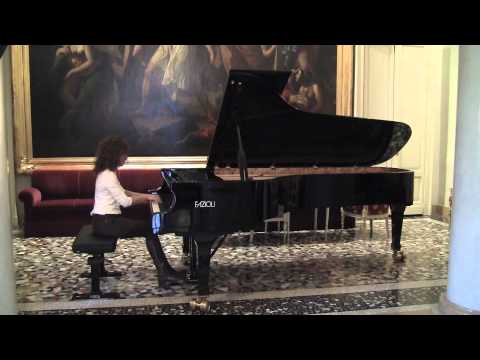
A mysterious world woven by the harpsichord’s elegant timbre.
This is one of the most popular pieces among Couperin’s Pièces de clavecin.
Included in the second book published in 1717, it is characterized by simple figures repeated within a narrow range, creating a mystical atmosphere where light and shadow seem to flicker.
Written in B-flat major and rich in intricate ornamentation, it demands a high level of technique from the performer.
The meaning of the title “Les Barricades Mystérieuses” is unclear, but it may be enjoyable to listen while imagining the composer’s intentions behind it.
Fusion of Hobbies – Concerto No. 7 in G minorFrançois Couperin

Fusion of Tastes – Concerto No.
7 in G Minor (Les goûts réunis: Concerto No.
7 in G Minor).
Performed by El Concierto Ilustrado.
Baroque violin: Mr.
Carlos Jaime; cello: Mr.
Joseba Beloki; harpsichord: Mr.
Denis de la Herrán.
Suite Collection ‘Peoples of Various Countries’ – Suite No. 3 ‘Peoples of the Holy Roman Empire’François Couperin

A collection of suites for chamber ensemble composed by Couperin in his final years.
Published in 1726, the work reflects the cultural exchange and musical diversity of Europe at the time and serves as an important piece showcasing Couperin’s compositional technique and creativity.
While drawing on Baroque dance forms, it masterfully blends French and Italian musical styles.
Combining a variety of dances—such as the stately allemande, the graceful sarabande, and the lively gigue—it offers a musical depiction of the dignity and diversity of the Holy Roman Empire.
Highly recommended for those who want to fully savor the allure of Baroque music.