

A masterpiece by Jean-Philippe Rameau. Popular classical music.

When it comes to great French composers of the Baroque era, Jean-Philippe Rameau stands out.
Rameau earned high acclaim for the grand motet—a church vocal form featuring a rich, relatively large ensemble—and for his opera Les Indes galantes.
His music naturally fits the movements of ballet, and he is hailed as the greatest composer of ballet music before Stravinsky.
This time, I have gathered quintessentially Baroque pieces by Rameau, including harpsichord (clavecin) masterpieces and selections from his operas.
I hope you will give them a listen.
Jean-Philippe Rameau’s masterpiece. Popular classical music (1–10)
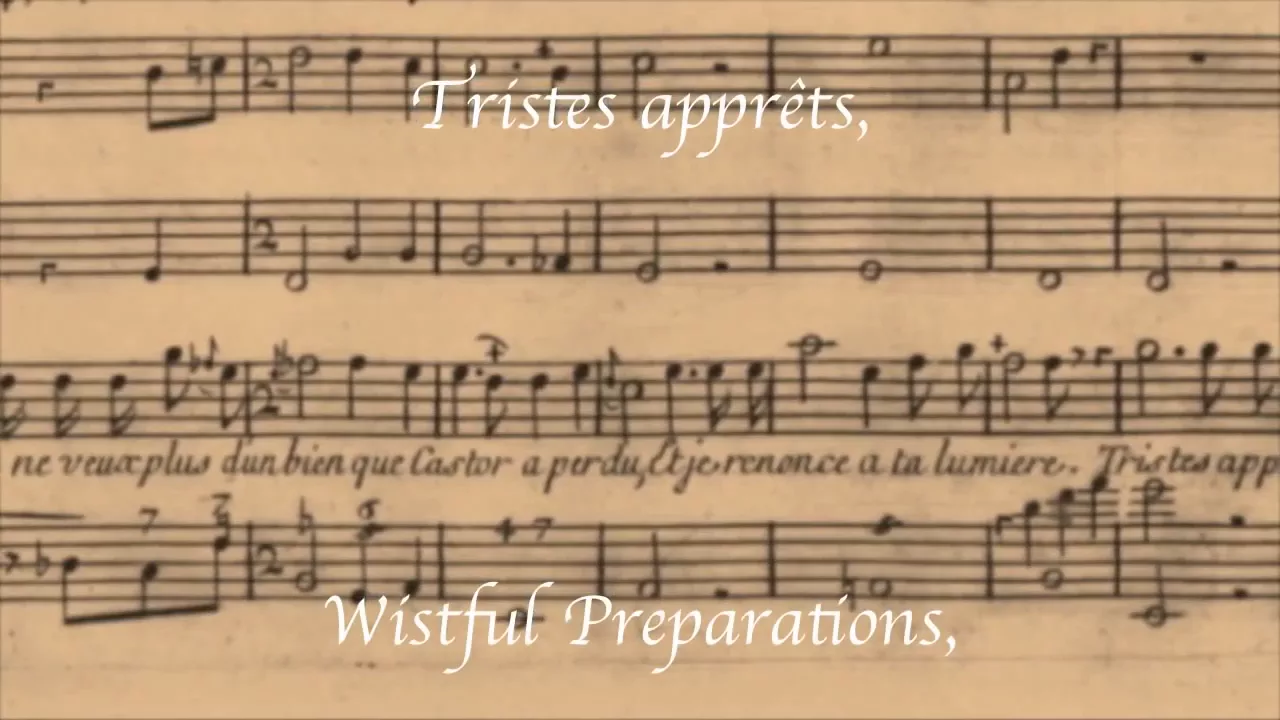
Preparations of sorrow (Tristes apprêts)Jean-Philippe Rameau

Castor et Pollux is an opera by the French Baroque composer Jean-Philippe Rameau, based on a Greek tragedy and regarded as a masterpiece.
The 1737 version did not attract much acclaim, but the 1754 revised version—written as Rameau’s music matured—was reborn as a seminal work of French opera.
Among its highlights is the aria “Tristes apprêts” (“Preparations of sorrow”), a celebrated piece in which the queen of Baroque opera, Agnès Mellon, beautifully conveys the profound grief of Télaïre, who has lost her beloved.
Harpsichord Suite 1728 — Suite in A minorJean-Philippe Rameau

This piece, which embodies the very essence of French Baroque music, brings out the full allure of the harpsichord.
While grounded in traditional dance forms, it captivates listeners through inventive variations and harmonic writing.
In particular, movements such as “Les Trois Mains” and “La Fanfairinette” showcase Rameau’s distinctive virtuosity.
Published in 1728, this suite is perfect for those who wish to savor the depth of Baroque music or explore the expressive capabilities of the harpsichord.
Some movements exude an exotic flavor, offering a glimpse of the splendor of 18th-century courtly culture through music.
PlatéeJean-Philippe Rameau

A Baroque masterpiece that was highly acclaimed in 18th-century France.
The opera Platée is a unique work that deftly satirizes the jealousy of the gods and premiered at the Palace of Versailles in 1745.
Centered on the uncomely water nymph Platée, its tale of divine scheming and human folly envelops the audience in laughter.
The music is marked by lively, dazzling dances and rich harmonies, with quirky rhythms that strikingly symbolize Platée’s delusions.
Blending comic elements with musical beauty, this work is highly recommended for anyone who wants to fully savor the allure of Baroque opera.
The Lord is our refuge (Deus noster refugium)Jean-Philippe Rameau

The Lord Is Our Refuge (around 1716) is a work in the French Baroque church vocal genre known as the grand motet—choral music accompanied by a relatively large ensemble—first composed by Jean-Philippe Rameau.
Setting Psalm 46 from the Old Testament, it is a sacred piece that expresses gratitude and praise for God as a refuge in times of trouble.
It harmonizes a delicately colored period-instrument ensemble with choir to create a sacred elegance.
Rameau, who was also an organist, went on to compose several more substantial grand motets; even in this work one can hear the rich talent that foreshadows his later blossoming.
Suite Les BoréadesJean-Philippe Rameau

A magnificent Baroque masterpiece is reborn.
This final work by Jean-Philippe Rameau expresses a grand myth-inspired tale through music that is both delicate and bold.
Its rich orchestration and deeply emotive melodies weave together to portray a compelling human drama of love and destiny.
Although composed in 1763, it had to wait until 1964 for its premiere.
Considered the pinnacle of Baroque music, this work is recommended not only for classical music enthusiasts but also for anyone who enjoys dramatic stories and music.
Gavotte and VariationsJean-Philippe Rameau

This is a beautiful piece that captures the essence of Baroque music.
It unfolds through six variations based on the dance form known as the gavotte, distinguished by intricate harmonies and rich expressiveness.
Beginning with a concise melody and gradually increasing in complexity, its structure keeps the listener engaged.
The virtuosic performance—making full use of the qualities of the harpsichord or piano—is another highlight, and since its publication in the 1720s, it has continued to be beloved by many performers up to the present day.
It’s a recommended piece not only for those interested in Baroque music but also for students of piano and classical music.
Listening to a dazzling performance can’t help but deepen one’s admiration for pianists.
Harpsichord Pieces for Concert, No. 1 (Suite in C Minor)Jean-Philippe Rameau

Here is a masterpiece of French Baroque music.
This collection consists of works intended for harpsichord in collaboration with other instruments, characterized by an exotic atmosphere and elegant melodies.
It comprises three movements, each with a unique title, evoking a sense of the foreign and refined expression.
Demanding both advanced technique and rich expressivity, it remains a beloved classic among harpsichord repertoire for many music enthusiasts.
Published in 1741, the collection enjoyed great popularity in court music and high society of the time.
It is highly recommended for those who wish to fully savor the allure of Baroque music.