

Introducing Maurice Ravel’s Famous and Representative Works

Maurice Ravel, one of the most important figures in Impressionist music.
His works are meticulously crafted down to the finest details, grounded firmly in classical forms while blending in Impressionist expression.
As a result, his music has a uniquely singular character that only he could create.
He also arranged works by other composers for orchestra, and his outstanding orchestration earned him the nicknames “genius of orchestration” and “magician of the orchestra.”
In this article, we introduce Ravel’s masterpieces and signature works.
Even if you’re not familiar with classical music, there are pieces you have probably heard somewhere at least once.
Enjoy the many wonderful masterpieces of Ravel!
- Masterpieces of the bolero. Recommended popular pieces in bolero form and outstanding performances.
- [Masterpiece Classics] A special showcase of gem-like masterpieces so beautiful they’ll move you to tears
- Timelessly beautiful classical masterpieces. Recommended classical music.
- Gabriel Fauré | Introduction to His Famous and Representative Works
- [Orchestra] Introducing famous and popular pieces
- Debussy’s masterpiece. Popular classical music.
- Masterpieces of Ballet Music: Introducing Classic Favorites
- Impressionist Music: A Comprehensive Introduction to Masterpieces of the Impressionist Movement That Enliven Classical Music History
- [François Couperin] Introducing famous and popular pieces by the composer who loved the harpsichord
- Mendelssohn’s Masterpieces | Popular Classical Music
- Recommended for advanced players: Classical masterpieces to challenge at a piano recital
- [Impressionist Music] A Selection of Classical Works That Evoke the Japanese Spirit
- Mussorgsky’s masterpiece. Popular classical music.
[Maurice Ravel] Introducing Masterpieces and Signature Works (11–20)
Scheherazade OvertureMaurice Ravel

This early orchestral work by Ravel was inspired by his fascination with Scheherazade, the heroine of the Arabian Nights.
With its distinctive harmony and orchestration, it exemplifies Ravel’s impressionistic musical style.
The delicate sense of color and the way he conjures fantastical scenes through combinations of instruments foreshadow techniques found in his later works.
As an early testament to Ravel’s musical talent and innovation, it still holds an important place today.
It’s also a recommended piece for those interested in the mystical world of the East.
Piano Concerto for the Left HandMaurice Ravel

Composed at the request of the Austrian pianist Paul Wittgenstein, who had lost his right arm in World War I.
It has since become an important part of the repertoire for pianists with limited use of their right hand, but it is also frequently performed by pianists without such limitations.
In the second section of the three-part work, music reminiscent of jazz appears.
The piece demands virtuoso technique from the soloist.
An old-fashioned minuetMaurice Ravel

A piano solo piece from 1895, when Ravel was still 20.
It is still somewhat a study, and you don’t hear the impressionistic sonorities that would emerge later.
Ravel himself considered it “immature,” yet the fact that he arranged it for orchestra in 1929 suggests he still felt an affection for the work.
Sonatina, Movement II: Mouvement de MenuetMaurice Ravel

Premiered in March 1906, Sonatine is one of Maurice Ravel’s works that distills his refined aesthetic sensibility.
The second movement, while borrowing the form of an old-fashioned minuet, is a memorable gem whose D-flat major sonority evokes the gentle sunlight of spring.
It was also used in George Balanchine’s ballet The Night Shadow, and though it suggests the steps of an elegant dance, it leaves a lingering trace of wistfulness.
The key to performance is to align the “grains” of sound beautifully and to value inner resonance over overt emotional display.
It may not be flashy, but for those who wish to savor the piano’s delicate timbres, it will be a lovely piece that deeply touches the heart.
Vocalise in Habanera FormMaurice Ravel
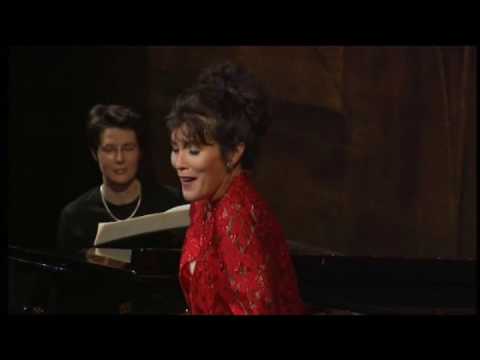
A vocal piece by Ravel.
It prominently features the habanera rhythm, deeply influenced by Spain, creating a sensuous atmosphere.
Written in the “vocalise” style—sung on vowels alone—it has no lyrics, which all the more highlights the beauty of its melody.
Ravel’s delicate harmonies and smooth voice-leading captivate listeners and won’t let go.
Although composed for voice, it has been arranged for various instruments and is still widely performed today.
Combining exotic allure with technical intrigue, this song is well worth a listen.
Berceuse on the Name of FauréMaurice Ravel

Composed as a homage to Ravel’s esteemed senior colleague, Gabriel Fauré, this is an elegant piece of chamber music.
Premiered in Milan in October 1922, the work is a short piece for violin and piano.
Drawing cleverly on pitch material derived from Fauré’s full name, it shapes a gentle, lullaby-like melody.
The music unfolds a beautiful sound world where Ravel’s characteristic delicacy of technique fuses with profound respect for Fauré.
You may find it even more captivating if you listen to a few of Fauré’s works beforehand.
Please do give it a listen.
Introducing Maurice Ravel’s Famous and Representative Works (21–30)
Song Cycle “Shéhérazade”Maurice Ravel

Ravel’s song cycle published in 1903 is a remarkable fusion of Eastern elements and Western music.
Comprised of three songs set to poems by Tristan Klingsor, it strongly reflects Orientalism and Impressionism.
It delicately portrays an exotic world: mystical Asian landscapes, the feelings of a girl listening to her lover’s flute, and the perspective of a woman gazing at an indifferent young man.
Ravel’s meticulous orchestration and richly colored music lead listeners into a fantastical Eastern realm.
It’s a highly recommended piece for those interested in foreign cultures or who enjoy finely nuanced emotional expression.