

Introducing Maurice Ravel’s Famous and Representative Works

Maurice Ravel, one of the most important figures in Impressionist music.
His works are meticulously crafted down to the finest details, grounded firmly in classical forms while blending in Impressionist expression.
As a result, his music has a uniquely singular character that only he could create.
He also arranged works by other composers for orchestra, and his outstanding orchestration earned him the nicknames “genius of orchestration” and “magician of the orchestra.”
In this article, we introduce Ravel’s masterpieces and signature works.
Even if you’re not familiar with classical music, there are pieces you have probably heard somewhere at least once.
Enjoy the many wonderful masterpieces of Ravel!
- Masterpieces of the bolero. Recommended popular pieces in bolero form and outstanding performances.
- [Masterpiece Classics] A special showcase of gem-like masterpieces so beautiful they’ll move you to tears
- Timelessly beautiful classical masterpieces. Recommended classical music.
- Gabriel Fauré | Introduction to His Famous and Representative Works
- [Orchestra] Introducing famous and popular pieces
- Debussy’s masterpiece. Popular classical music.
- Masterpieces of Ballet Music: Introducing Classic Favorites
- Impressionist Music: A Comprehensive Introduction to Masterpieces of the Impressionist Movement That Enliven Classical Music History
- [François Couperin] Introducing famous and popular pieces by the composer who loved the harpsichord
- Mendelssohn’s Masterpieces | Popular Classical Music
- Recommended for advanced players: Classical masterpieces to challenge at a piano recital
- [Impressionist Music] A Selection of Classical Works That Evoke the Japanese Spirit
- Mussorgsky’s masterpiece. Popular classical music.
[Maurice Ravel] Introducing Famous and Representative Works (41–50)
ParadeMaurice Ravel
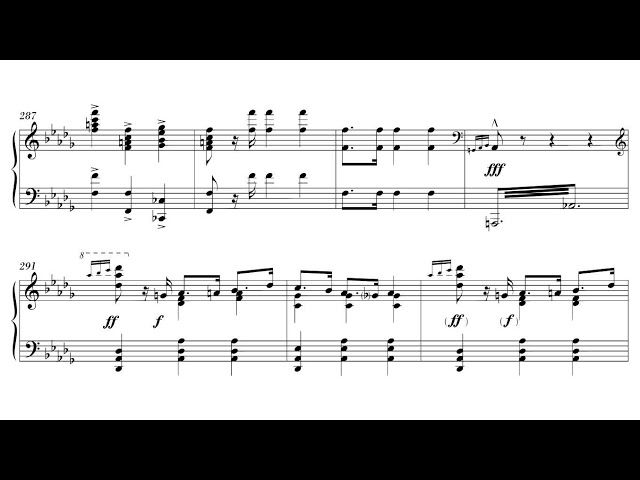
A piece whose powerful, dramatic sound stirs the listener’s heart, as if heralding the beginning of a grand tale.
It is a work by Toshio Horiuchi, who teaches in Hiroshima Prefecture and has composed numerous band pieces.
From the delicate interplay of sounds in the quiet sections to the breathtaking build toward a climax where the full ensemble charges forward as one, the piece offers a deeply immersive experience—like living through the prologue of a legend in music.
Composed in 2006 as a set piece for the All Japan Band Competition, it is featured in the album “Reference Performances of Set Pieces for the All Japan Band Competition 2005‑2008.” Demanding not only individual technique but the expressive power of the entire band, this masterpiece is one you’ll want to perform when you and your ensemble wish to weave a single, sweeping story together.
Suite ‘Miroirs’ No. 2 – Sad BirdsMaurice Ravel

The five-piece suite Miroirs, dedicated to pianist Ricardo Viñes—a fellow artist—includes this work as its second piece, first performed by Viñes in January 1906.
Maurice Ravel based it on the scene of “birds lost in a dark forest on a hot summer day,” drawing listeners into a fantastical world where plaintive birdsong resonates through the silence.
This piece is perfect for those who want to explore a wide palette of timbres with a delicate touch.
It also offers valuable practice in richly evoking imagery by artfully controlling resonance with the pedal, so take your time engaging with Ravel’s painterly music.
Suite ‘Miroirs’ No. 4 – Alborada del graciosoMaurice Ravel
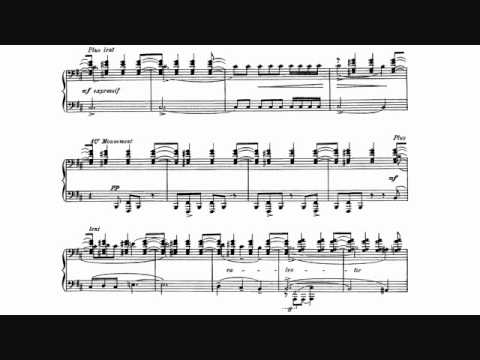
The suite Miroirs, dedicated to the members of the artist group Les Apaches.
Its fourth piece is set in a Spanish morning, a varied work that conjures the image of a jester.
Dry, guitar-like rhythms intersect with passionate melodies, brilliantly portraying the jester’s cheerfulness and the melancholy hidden beneath it.
The piece was later orchestrated and reportedly used in a ballet staged in London in 1919.
Though by no means easy, it is dotted with moments where lyrical singing emerges amid virtuosic passages.
It’s perfect for those who wish to immerse themselves in the richly expressive world of Spanish music or broaden their expressive range through technique.
Emphasize the contrast between the fiery sections and the plaintive middle part, and perform as if telling a story.
Suite ‘Mirrors’ No. 5 – The Valley of the BellsMaurice Ravel

Composed in 1905, the final piece of the suite Miroirs is a fantastical work said to have been inspired by the sound of church bells resonating through the streets of Paris, as heard by Maurice Ravel.
At its premiere in January 1906, its originality and unique sound world were highly praised.
The piece blends the sonorous tolling of bells evoked by the weighty low register with shimmering, delicate high tones, drawing listeners into a dreamlike, meditative realm.
It is an ideal work for those wishing to refine richly colored expression through skillful pedal use and to develop a sense of controlling tone while imagining vivid scenes.
Perform it with an emphasis on the image of sound dissolving into space.
Noble and Sentimental Waltzes: No. 1, Modéré (Moderato), G majorMaurice Ravel
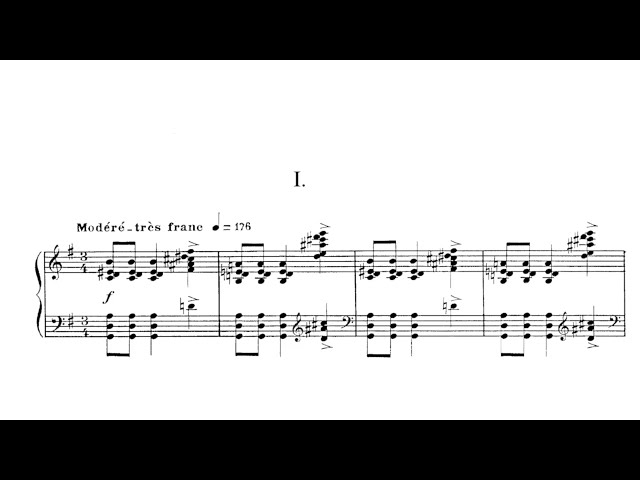
The suite Valses nobles et sentimentales fuses traditional waltz forms with Maurice Ravel’s characteristically modern sonorities.
Its opening piece is graceful yet tinged with melancholy, evoking a curious, elusive mood.
At its premiere in May 1911, the composer’s name was withheld, and the work astonished audiences with its originality.
One can almost picture a glittering ballroom where, amid the dancing, a secret, fleeting thought crosses the heart.
The work is also known in its ballet incarnation as Adélaïde, ou le langage des fleurs.
It’s perfect for those who want to experience the intriguing rhythms and harmonies that overturn conventional images of the waltz.
Aim for a rounded, gentle tone to convey the wistfulness that lies beneath the brilliance.
Noble and Sentimental Waltzes: Waltz No. 2, Assez lent (fairly slow), G minorMaurice Ravel

A work with an introspective atmosphere that feels like peering into the depths of the heart, it is included in Maurice Ravel’s suite Valses nobles et sentimentales.
There’s an anecdote that it was performed at a private concert in 1911 with the composer’s identity kept secret.
Within the gently flowing time, noble yet sentimental melodies emerge, as if quietly staying close to the listener’s heart.
The traditional waltz rhythm hides some unexpectedly piquant sonorities that seem to express unspoken, complex emotions.
It’s a perfect piece for those who want to learn about subtle changes in tone color and long-breathed phrasing.
The key is to play as if breathing, imbuing each note with intention so as not to break the work’s mysterious atmosphere.
Noble and Sentimental Waltzes: No. 3 Waltz, Modéré in G majorMaurice Ravel

Maurice Ravel’s suite Valses nobles et sentimentales, modeled after Schubert’s waltzes, was introduced to the world in 1911 as a piano work and staged the following year as ballet music.
Of the eight pieces that make up the suite, the third waltz is a beautiful number in which a faintly wistful expression emerges from within a calm and orderly surface.
In this work, the two spirits of “nobility” and “sentiment” are expressed in exquisite balance.
Its slightly intricate, transparent harmonies carried by a flowing triple meter evoke the subtle play of pale light and shadow in the heart.
Rather than flaunting virtuosity, the key is to carefully draw out the fine nuances embedded in the score.
Aim for an elegant atmosphere by playing with a rounded, gentle tone free of harsh edges.