


Mussorgsky’s masterpiece. Popular classical music.

We’ll introduce masterpieces by Modest Mussorgsky, famous for Pictures at an Exhibition and Night on Bald Mountain (St.
John’s Eve on the Bare Mountain).
Isn’t Pictures at an Exhibition by Ravel?
Many people may say they’ve heard Night on Bald Mountain, but the original is of course by Mussorgsky; it became famous through performances of various arrangements.
Contrary to what you might expect, Mussorgsky actually wrote relatively few standalone orchestral pieces, leaving many songs and piano works instead.
I want you to get to know Mussorgsky’s original music, so this time I’ll be introducing some of his masterworks.
Mussorgsky’s masterpieces. Popular classical music (1–10)
Great Gate of Kyiv, from the suite Pictures at an ExhibitionModest Petrovich Mussorgsky

It is the most representative masterpiece in the suite Pictures at an Exhibition.
Many people may recognize parts of it because it is used as the background music to introduce surprising or shocking scenes on TV Asahi’s program “Nanikore Chin Hyakkei,” which discovers the charms of Japan through astonishing sights.
The Great Gate of Kyiv, also called the Golden Gate, refers to a historic site in the historic district of Kyiv, the capital of Ukraine—the main city gate from the era of the Kyivan Rus.
While the original is for piano, Ravel’s orchestral arrangement is also well known, and the power of the long, sustained tones in full ensemble is overwhelming.
It is said that Modest Mussorgsky composed the work inspired by ten paintings; if you actually visit the locations of those paintings, you might even encounter some “rare sights” yourself.
As the final piece of the suite, listening all the way through is sure to be deeply moving.
Aria of Shaklovity from the opera KhovanshchinaModest Petrovich Mussorgsky
Here is the aria of Shaklovity lamenting Russia’s fate from the opera Khovanshchina.
Set against the turmoil of 17th-century Russia, this piece conveys profound anxiety about the nation’s future.
Its low vocal range and heavy orchestration vividly depict a sense of despair.
Brimming with the allure of Russian music, this work is recommended for those who enjoy historical drama or wish to savor the grandeur of opera.
Since its premiere in 1886, it has remained a jewel that continues to stir the hearts of many listeners.
Pimen’s Aria from the opera Boris GodunovModest Petrovich Mussorgsky
Among string quartets, this piece is renowned as a masterpiece and originates from a scene in an opera.
The deep insight and religious reflection of the monk Pimen are expressed alongside a weighty melody.
Within its unhurried progression, one can glimpse the spirituality of the Russian Orthodox tradition, resulting in a magnificent tone.
Premiered in St.
Petersburg in January 1874, the work is strongly influenced by Russian folk music and leaves a profound impression on listeners.
It is recommended not only for those interested in classical music, but also for anyone drawn to the human interior and to history.
Scherzo in B-flat majorModest Petrovich Mussorgsky
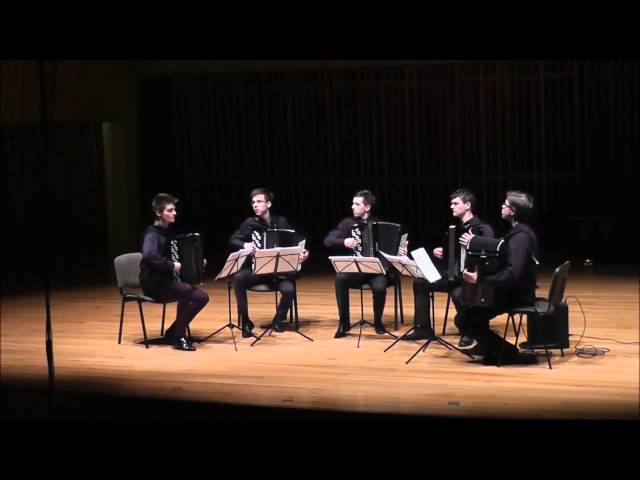
This is a representative masterpiece of Russia’s proud classical music.
This short piece, with its lively and cheerful atmosphere, is characterized by an opening rhythm reminiscent of a waltz and progresses with lightness.
In the middle, there is a trio section that unfolds in a gentle tone, offering a sense of calm and warmth in contrast to the bustling first half.
Overall, it is very spirited and notable as a work from Modest Mussorgsky’s youth.
It is a highly recommended piece for those interested in classical music or wishing to discover the charm of Russian music.
Premiered in Saint Petersburg in 1860 to great acclaim, this work is regarded as an important piece that demonstrates Mussorgsky’s musical growth.
The Fall of Sennacherib (The Destruction of Sennacherib) (1866–67)Modest Petrovich Mussorgsky

This is a masterpiece that depicts the Assyrian army perishing in the midst of glory.
It brilliantly contrasts war with divine power, warning of the futility of overconfidence in military might.
The powerful chorus and orchestral sonorities leave a deep impression on the listener.
Composed between 1866 and 1867, this work can be regarded as a gem that showcases the innovative spirit of Russian music.
It is recommended not only for those interested in classical music, but also for anyone who enjoys music with grand, narrative sweep.
Through this work, one can sense both the limits of human strength and the importance of faith.
Symphonic Poem ‘Night on Bald Mountain’Modest Petrovich Mussorgsky
The symphonic poem “A Night on the Bare Mountain.” Based on a folk tale in which, on the eve of St.
John’s Day, demons and spirits appear on a bare mountain and raise a great commotion, only to vanish with the break of dawn.
The original version bore the title “St.
John’s Night on the Bare Mountain,” while the widely known name “A Night on the Bare Mountain,” as in the video presented, is from the revision by Nikolai Rimsky-Korsakov, one of the composers known as The Mighty Handful.
In recent years the original version has also been performed, but during the lifetime of its composer, Modest Mussorgsky, it was never performed and was shelved multiple times.
With Rimsky-Korsakov’s revival of the work, Mussorgsky’s reputation also grew.
Today it exists in orchestral concert repertoire as well as wind band arrangements, and is a renowned piece performed at wind band competitions and regular concerts.
Tears in G minor (Une larme g-moll)Modest Petrovich Mussorgsky

It is a simple yet emotionally rich piano solo.
Though only a few minutes long, it conveys deep feelings and resonates powerfully with listeners.
Characterized by a melody and harmonies tinged with the melancholy of G minor, it beautifully portrays both the weight and the transience of a single tear.
The harmonic instability and minor-key flow within the piece seem to express inner conflict.
It is a recommended piece for performers who prioritize emotional expression and for those seeking profound impact within quietude.
Composed around 1880, it is a gem that reflects the spirit of innovation in Russian music of the time.