

Mussorgsky’s masterpiece. Popular classical music.

We’ll introduce masterpieces by Modest Mussorgsky, famous for Pictures at an Exhibition and Night on Bald Mountain (St.
John’s Eve on the Bare Mountain).
Isn’t Pictures at an Exhibition by Ravel?
Many people may say they’ve heard Night on Bald Mountain, but the original is of course by Mussorgsky; it became famous through performances of various arrangements.
Contrary to what you might expect, Mussorgsky actually wrote relatively few standalone orchestral pieces, leaving many songs and piano works instead.
I want you to get to know Mussorgsky’s original music, so this time I’ll be introducing some of his masterworks.
- A gem of a masterpiece by the composer of the piano suite Pictures at an Exhibition by Mussorgsky.
- Dvořák’s masterpiece. Popular classical music.
- Rimsky-Korsakov’s Masterpieces | The Vividly Colorful World of Russian Music
- Classical masterpieces. Recommended classical music.
- Masterpieces of the bolero. Recommended popular pieces in bolero form and outstanding performances.
- Masterpiece Rhapsodies: A Curated Selection of Brilliant Rhapsodies That Illuminate Classical Music History
- [Masterpiece Classics] A special showcase of gem-like masterpieces so beautiful they’ll move you to tears
- Introducing Maurice Ravel’s Famous and Representative Works
- Stravinsky’s masterpiece. Popular classical music.
- A masterpiece by Alexander Borodin. Popular classical music.
- Mily Balakirev Popular Songs Ranking [2026]
- [Orchestra] Introducing famous and popular pieces
- Highlighting the masterpieces and popular works of Mikhail Glinka, the pioneering composer of Russian music
Mussorgsky’s masterpieces. Popular classical music (21–30)
Hopak from the opera The Fair at SorochyntsiModest Petrovich Mussorgsky
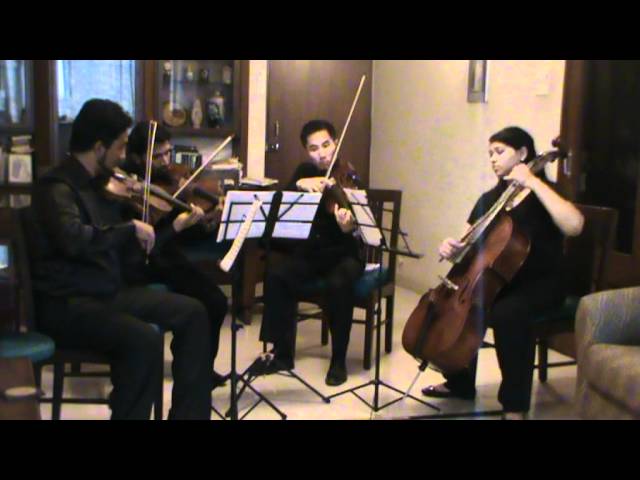
“Hopak” from Act 3, Scene 2 of the opera Sorochintsi Fair.
The string quartet is performed by: violins – Shirish Malhotra and Carol George; viola – Yumin Chiu; cello – Bianca Mendonça.
From the opera Khovanshchina: Prelude “Dawn on the Moscow River”Modest Petrovich Mussorgsky

From the opera Khovanshchina, the prelude Dawn on the Moscow River.
This unfinished opera is a work based on the historical Russian event known as the Khovansky Affair.
Performed by the Mariinsky Theatre Orchestra, conducted by Pavel Smelkov.
From the opera Boris Godunov, Simpleton’s ariaModest Petrovich Mussorgsky
From the opera Boris Godunov, the Simpleton’s aria “Flow, flow, bitter tears!” It is sung in Act IV: the scene at St.
Basil’s Cathedral and the scene of the uprising.
Performed by tenor James Krischuk and pianist Jamison Lybsey.
From the opera Boris Godunov, PrologueModest Petrovich Mussorgsky

Prologue from the opera Boris Godunov.
In the opera, it is the scene in the courtyard of the Novodevichy Convent near Moscow, featuring the chorus of the people, “Why do you abandon us, our Father?” Performed by the International Philharmonic Orchestra and Chorus.
From the opera Boris Godunov: Boris’s deathModest Petrovich Mussorgsky

From the opera Boris Godunov: the death scene of Boris, “Boris’s Farewell” and “Boris’s Death.” Performed by bass Barseg Tumanyan, the Armenian Philharmonic Orchestra, the Hover Chamber Choir, conducted by Eduard Topchjan.
Marina’s aria from the opera Boris GodunovModest Petrovich Mussorgsky
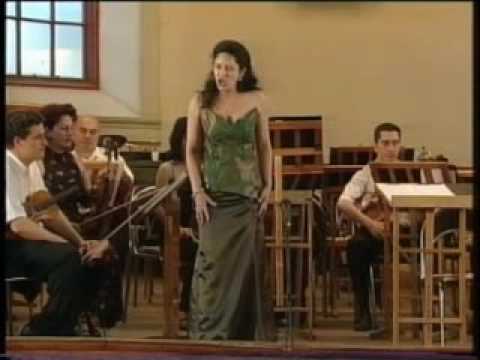
From the opera Boris Godunov, Marina’s aria “How Tormented and Listless.” In the opera, this scene takes place in Marina’s room in Sandomierz Castle, Poland.
Performed by mezzo-soprano Liliana Seyid-Bussonville and pianist Lima Zimin.
From the opera Boris Godunov: Coronation SceneModest Petrovich Mussorgsky
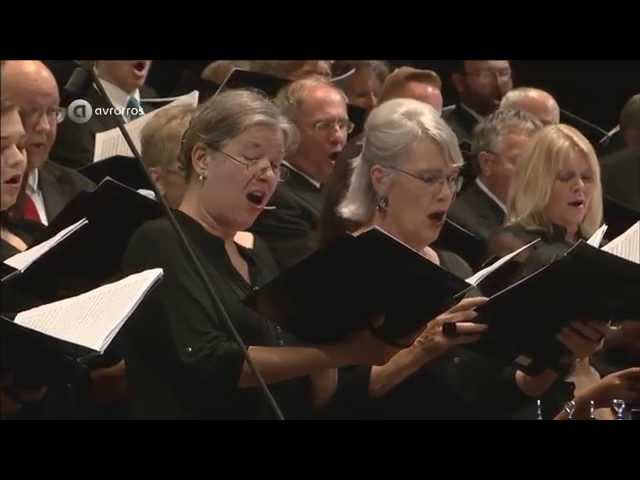
From the opera Boris Godunov: the Coronation scene.
In the opera, this is Prologue, Scene 2: the Cathedral Square in the Moscow Kremlin, including the chorus of the people “Already the sun shines in the sky,” among others.
Performed by the Netherlands Radio Philharmonic Orchestra and the Netherlands Radio Choir.