

Mussorgsky’s masterpiece. Popular classical music.

We’ll introduce masterpieces by Modest Mussorgsky, famous for Pictures at an Exhibition and Night on Bald Mountain (St.
John’s Eve on the Bare Mountain).
Isn’t Pictures at an Exhibition by Ravel?
Many people may say they’ve heard Night on Bald Mountain, but the original is of course by Mussorgsky; it became famous through performances of various arrangements.
Contrary to what you might expect, Mussorgsky actually wrote relatively few standalone orchestral pieces, leaving many songs and piano works instead.
I want you to get to know Mussorgsky’s original music, so this time I’ll be introducing some of his masterworks.
- A gem of a masterpiece by the composer of the piano suite Pictures at an Exhibition by Mussorgsky.
- Dvořák’s masterpiece. Popular classical music.
- Rimsky-Korsakov’s Masterpieces | The Vividly Colorful World of Russian Music
- Classical masterpieces. Recommended classical music.
- Masterpieces of the bolero. Recommended popular pieces in bolero form and outstanding performances.
- Masterpiece Rhapsodies: A Curated Selection of Brilliant Rhapsodies That Illuminate Classical Music History
- [Masterpiece Classics] A special showcase of gem-like masterpieces so beautiful they’ll move you to tears
- Introducing Maurice Ravel’s Famous and Representative Works
- Stravinsky’s masterpiece. Popular classical music.
- A masterpiece by Alexander Borodin. Popular classical music.
- Mily Balakirev Popular Songs Ranking [2026]
- [Orchestra] Introducing famous and popular pieces
- Highlighting the masterpieces and popular works of Mikhail Glinka, the pioneering composer of Russian music
Mussorgsky’s masterpieces. Popular classical music (21–30)
From the opera Boris Godunov, the Clock SceneModest Petrovich Mussorgsky

From the opera Boris Godunov: the Clock Scene.
In the opera, it appears in Act II, set in the Tsar’s chambers in the Terem Palace of the Moscow Kremlin.
Performed by bass Nikita Storoïev and pianist Tatiana Storozheva.
From the song collection “Children’s Room”: “With a Doll,” “Evening Prayer,” “Riding a Rocking Horse”Modest Petrovich Mussorgsky
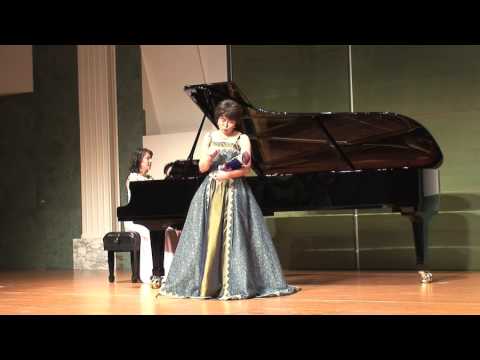
From the song cycle “The Nursery”: No.
4: With the Doll, No.
5: At Bedtime, No.
6: Riding on a Hobby-Horse.
Japanese translation and soprano solo: Mao Tamayama; piano: Takako Shimo.
Mussorgsky’s masterpieces: Popular classical music (31–40)
From the suite Pictures at an Exhibition: Samuel Goldenberg and SchmuÿleModest Petrovich Mussorgsky

From the suite Pictures at an Exhibition: Samuel Goldenberg and Schmuyle.
Hartmann’s original drawing depicts two Jewish men sketched in Sandomierz, Poland.
Performed by the Mishima Philharmonic Orchestra of Shizuoka Prefecture.
From the suite ‘Pictures at an Exhibition’, The Market at LimogesModest Petrovich Mussorgsky
From the suite ‘Pictures at an Exhibition’: Limoges – The Market; Catacombs – Sepulchrum Romanum; With the Dead in a Dead Language; The Hut on Fowl’s Legs.
Performed by the Japan Maritime Self-Defense Force Tokyo Band, conducted by Hiroyuki Kumazaki.
Ballet of the Unhatched Chicks from the suite ‘Pictures at an Exhibition’Modest Petrovich Mussorgsky
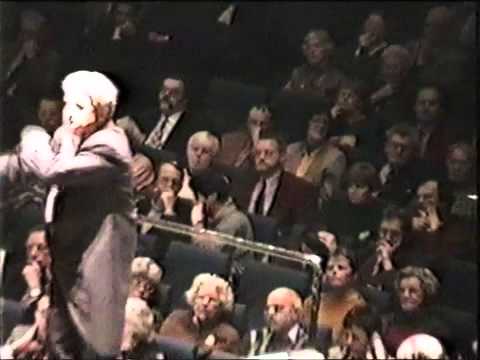
From the suite Pictures at an Exhibition: Ballet of Unhatched Chicks (Ballet des poussins dans leurs coques).
The original picture was apparently drawn as a costume design for a ballet performed at the Mariinsky Theatre.
Performed by the Szeged Symphony Orchestra, conducted by Ervin Acél.
The Old Castle, from the suite Pictures at an ExhibitionModest Petrovich Mussorgsky

From the suite “Pictures at an Exhibition,” The Old Castle (Il Vecchio Castello).
Performed by I Pomeriggi Musicali, based in Milan, Italy.
Alto saxophone solo: Marco Albonetti; bassoon: Lorenzo Lumachi; conductor: Aldo Ceccato.
Dance of the Persian Slaves from the opera KhovanshchinaModest Petrovich Mussorgsky

“Dance of the Persian Slaves” from Act IV, Scene 1 of the opera Khovanshchina.
This piece accompanies the dance scene set in Prince Ivan Khovansky’s residence.
Performed by the Orchestre de la Suisse Romande, based in Geneva, conducted by Emmanuel Krivine.