

Fostering Cooperation: Recommended Games to Enjoy in the Boy Scouts

The Boy Scouts is an organization that aims to help children grow into healthy, wonderful adults by connecting with nature and interacting with friends from various generations.
Within the Boy Scouts, games are sometimes played as part of various activities.
In this article, we’ll introduce recommended games that you can enjoy in the Boy Scouts!
We’ve gathered a variety of games, including ones that use the knowledge and skills gained through contact with nature, as well as games that foster cooperation.
If you’re not sure which games to choose, be sure to use this as a reference!
- Recommended outdoor games and recreational activities for lower elementary school children
- Play ideas kids can enjoy from 1st to 6th grade [indoors & outdoors]
- A simple and fun co-op game that enhances teamwork
- Recommended for upper elementary grades! Exciting indoor recreation and games
- Great for camping! Recreation games for kids
- Recommended outdoor recreation for junior high school students: A roundup of fun outdoor activities
- Outdoor games and recreational activities recommended for children
- Fun activities for junior high school students. Recreation games.
- [Play Right Away!] Exciting Recreation Games Recommended for Elementary School Students
- [For Kids] Outdoor Recreation Games: Fun Outdoor Play
- Fun nature activities that children will love. Recreational games.
- [Elementary School] Quick and Easy! Indoor Recreational Activities Perfect for Lower Grades
- [For Kids] Have Fun at After-School Day Service! A Special Feature on Indoor Game Ideas
[Fostering Cooperation] Recommended Games to Enjoy in the Boy Scouts (11–20)
Tail tag
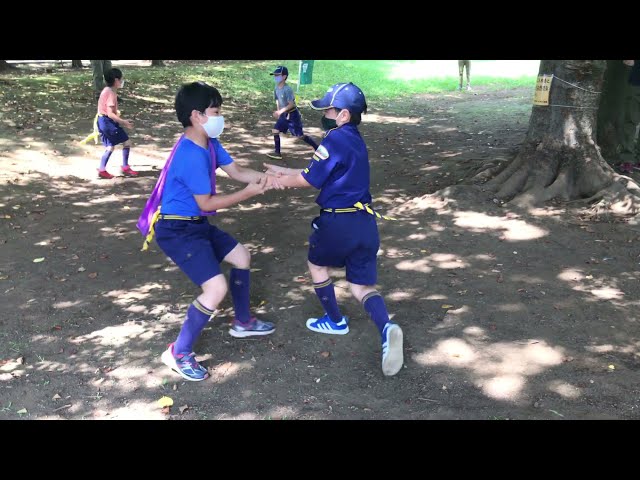
A game similar to tag where players grab towels or other “tails” attached to each other’s backs is called “tail catching.” To keep your tail from being taken, you’ll need to maneuver so you don’t show your back to the chaser and look for less conspicuous positions—so it’s surprisingly strategic.
Since you’re running around, it’s great for building stamina, and by looking for people who let their guard down, you can sharpen your powers of observation.
Calling temporary truces and forming teams to strengthen defense can also help develop communication skills.
It’s a recreational activity that even adults can enjoy!

soap bubble

Playing outside, the all-time classic: soap bubbles.
I’m sure everyone has played with them at least once.
Dip the wand in the liquid, blow a gentle fuuuu… Just imagining it can make adults feel nostalgic.
As for these soap bubbles, why not try buying ones that let you make super giant bubbles or an electric bubble machine? Since there’s no competitive element, I think all the members of the Boy Scouts can form a circle and enjoy it together.
It’s also a play activity that can help foster creativity!
log pulling

For those looking for outdoorsy activities with a Boy Scout vibe, “log pulling” is a great pick.
It’s a very simple game: you run while pulling a log with a rope.
But the log bangs into bumps in the ground and veers right and left, which really shakes you around and makes it hard to run.
If you split into teams and do it as a relay, it should turn into an exciting competition.
To avoid injuries from the log, it’s best to play in as wide an area as possible.
Stone Stacking Game

If you’re looking for a recreational activity to do at a riverside campsite, a “stone stacking game” might be a great choice.
As the name suggests, you stack stones you find along the riverbank to see how high you can build.
It requires no equipment at all, so it’s super easy to get started.
Rather than each person stacking alone, taking turns to add stones in a group can spark more conversation and help everyone bond.
Just be careful not to get hurt if the stack collapses! Even preschool-aged children can enjoy it.
ring toss

How about keeping it simple with a classic ring toss? All you do is throw rings at a target, but maybe because of the tension, you end up getting really into it.
If you’re doing it with the Boy Scouts, it’ll basically be outdoors, right? If so, it might be fun to make your own targets using stones or twigs you find on the spot to add to the atmosphere.
And of course, to really heat things up, you’ll want prizes.
Let’s all get excited and compete for snacks, drinks, and small toys!
cardboard caterpillar
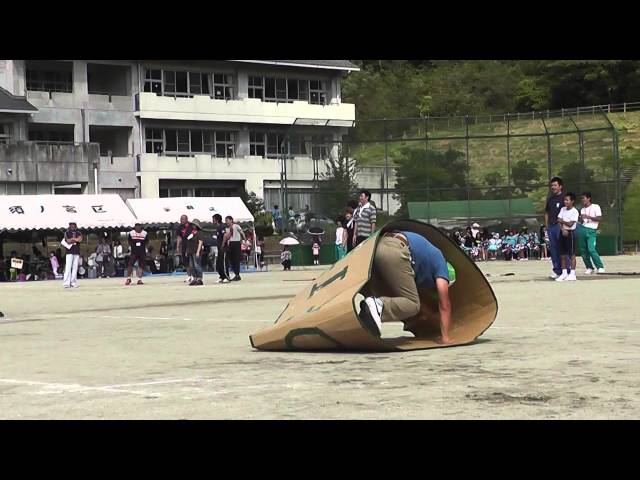
The “cardboard caterpillar” involves getting inside a loop of cardboard and moving forward by rolling it along like an excavator’s tracks.
It’s a race you often see at sports days.
It looks easy when you’re just watching, but actually doing it on all fours is pretty tough.
Still, that kind of challenge is one of the things that makes the game exciting.
Besides making it a team competition, if you can prepare large cardboard loops, having two people inside each one will help foster even better teamwork.
[Fostering Cooperation] Recommended Games to Enjoy in the Boy Scouts (21–30)
Air-reading game

Let’s read the room so we don’t overlap with our friends! Here’s an idea for a “reading the room” game.
It’s a unique game that helps elementary school students develop the ability to act while watching the timing and what’s happening around them.
In a group of 4–5 players sitting in a circle, you take turns standing up while calling out numbers.
The rule is simple, but what matters is avoiding overlapping timing with your friends.
Through the game, kids can build awareness of others and quick decision-making skills.
The atmosphere is tense at the start, but when two people stand up at the same time, everyone can’t help bursting into laughter!