

[Hand Play] Popular with kids! A collection of trendy hand-play songs and nostalgic traditional children’s songs


Hand-play songs that you can sing and play are hugely popular with children, aren’t they?
As times change, lots of new hand-play songs have appeared, and through these songs you can really feel children’s interests and curiosity.
Trendy songs are fun, but we also want to cherish the traditional warabe-uta that have been sung for generations.
Their melodies are warm, the back-and-forth of the words is amusing, and the fact that you can sing them without a piano is also very appealing.
This time, we’ll introduce plenty of hand-play songs that are favorites with kids!
From trending hits popular in childcare settings to traditional warabe-uta, we’ve got a full lineup of hand-play games that will bring smiles to children’s faces.
Be sure to join in and play along!
- Get excited! A list of popular and fun hand games that captivate children
- Kids go wild! Popular hand games and fun sing-alongs
- [Parenting] Parent-child bonding! Hand-play songs and traditional nursery rhymes collection
- Japanese counting songs: nostalgic temari (handball) songs and children’s folk songs
- [For 1-year-olds] Fun Together! Recommended Songs and Hand Play Collection
- Baby massage song. A touch-and-play song that parents and children can enjoy together.
- December children's songs, folk songs, and nursery rhymes: fun winter hand-play songs
- Nursery rhymes to sing to your baby! Recommended songs enjoyable from 0 months
- [Children's Songs] Cute songs recommended for childcare. List of popular nursery rhymes.
- [February Songs] Introducing children's songs, folk songs, nursery rhymes, and hand-play songs about Setsubun and winter!
- Nostalgic Children’s Songs, Folk Songs, and Nursery Rhymes: The Heart of Japan Passed Down Through Song
- Useful for childcare! Today’s recommended recreational activities, including fingerplay and games!
- Popular hand games and hand game songs for toddlers and children! Full of ideas for childcare/early childhood education.
[Hand Play] Popular with Kids! Trendy Hand-Play Songs & Nostalgic Traditional Nursery Rhymes (31–40)
egg egg

It’s the hand game “Tamago Tamago” that gets kids excited as they wonder, “What will come out when the egg goes pop?” Using both hands to show the egg cracking, children can join in and have a great time imitating the motions.
It starts with the familiar chick, then levels up to a snake, a penguin, a monster, and more—kids will have lots of fun as the eggs keep changing! It might also be fun to ask the children, “What will be born next?” to keep them engaged.

Ipponbashi Nihonbashi
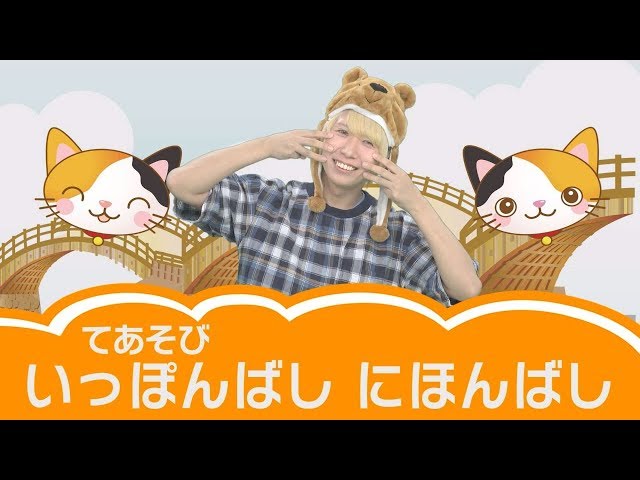
The finger-made bridge that transforms into all sorts of things, “Ipponbashi Nihonbashi.” Using both hands, you make each number one by one.
The numbers form a bridge, but depending on the shape of the number, it turns into things like glasses or a jellyfish.
The lyrics for one to five are the most well-known, but there are actually lyrics up to ten.
Thinking about how to use both hands to make each shape as you sing may help develop thinking skills! It’s also fun to come up with your own original ideas for what you can make with your fingers and sing along.

One-bridge tickle-tickle

This is the hand-play song “Ippon-bashi Kocho-kocho,” where you pretend an arm is a narrow bridge and walk your fingers across it.
Some kids start twisting their bodies and bursting into laughter just from hearing the word “kocho-kocho” (tickle-tickle), right? In this song, you ask, “Is it okay?” before tickling them—do you think they’ll actually answer “Yes”? (Haha)

Piglet-raccoon dog-fox-catSakushi: Yamamoto Naosumi / Sakkyoku: Yamamoto Naosumi

The wordplay-filled song “Kobutanuki Taneko” moves along as you imitate each animal.
It’s a very simple song, but the actions that mimic the animals are so fun that kids will sing with great enthusiasm.
As they get used to the moves, gradually speed it up.
You’ll find yourself chuckling at the sight of children earnestly copying the motions.
It’s also fun to make animal ears and turn it into a full-on pretend-play activity.
This song really brings out the kids’ cuteness, so be sure to give it a try!

The Spinning Song

Ito Maki no Uta is a song that describes making tiny shoes using thread.
Try acting it out with your hands to match the lyrics—pulling the thread, hammering with a little mallet, and so on.
The part up to when the shoes are finished is well known, but there are additional lyrics in which the completed shoes are taken to the little people.
There are also versions with the same melody that describe sowing seeds, digging holes, and building a fire.
Feel free to add your own hand motions to match each set of lyrics and have fun!
[Hand Games] Popular with kids! A collection of trendy hand-clapping songs and nostalgic traditional children’s songs (41–50)
five melon breads

The hand game “Five Melon Breads,” derived from an English nursery rhyme, captivates children with its regular rhythm and playful actions.
The phrases that use the numbers from one to five, repeated many times, seem to naturally help children learn how to count.
Also, the frequently appearing melon bread carries its own storyline, allowing children to enjoy using their imaginations! By changing your tone of voice and exaggerating your gestures, you can have fun together with the children.
Denden parent-and-child thumb

It’s a fingerplay song with lots of fun variations: the “Denden Parent-and-Child Thumb Exercise.” Make fists with both hands and hold them out in front.
To the tune of the children’s song “Denden-Mushi,” alternately stick out the thumb and pinky of your right and left hands.
When your right hand shows the pinky, your left hand shows the thumb, so it might be a bit confusing at first.
Try it slowly while singing.
Start by showing the right, then the left in sequence with a fist in between each.
Once you get used to it, try doing right-left without returning to a fist, or speed up the tempo a little to add variety and have more fun!