

![[Christmas Songs] Christmas songs you can play on the piano. A comprehensive introduction along with recommended sheet music!](https://i.ytimg.com/vi/QaDWijdFzB0/sddefault.jpg)
[Christmas Songs] Christmas songs you can play on the piano. A comprehensive introduction along with recommended sheet music!

“Is it that time of year already…?” Christmas songs that announce the arrival of Christmas and the year’s end every year.
This year, why not enjoy those timeless gems—tunes that soothe your heart the moment you hear them—on the piano?In this article, we’ve carefully selected classic Christmas standards and popular tracks from a wide range of genres! We’ll introduce them in depth along with recommended piano sheet music and performance videos.All the videos feature sheet music you can purchase or download from the site, so you can start practicing right away.
Find your favorite piece and give it a try!
[Christmas Songs] Christmas songs you can play on the piano: a comprehensive introduction with recommended sheet music (1–10)
Mommy Kissed Santa ClausTommie Conner
On Christmas Eve night, a child comes downstairs and witnesses Mom kissing Santa under the mistletoe.
This song humorously captures that fleeting moment, overflowing with family love.
Of course, Santa is actually Dad.
The child’s innocent surprise and the thrill of “What would happen if I told Dad?” ride on a breezy melody, beautifully conveying the warmth of home and a joyful atmosphere.
Sung by Jimmy Boyd in 1952, it reached No.
1 in the U.S., and has since been covered by many artists, including the Ronettes and the Jackson 5.
Its arrangement—adorned with sleigh bells and chorus—is easy to recreate on the piano, and it’s the kind of piece that will bring smiles to everyone’s faces when performed at home with children or at a Christmas party.
Christmas Time Is HereVince Guaraldi
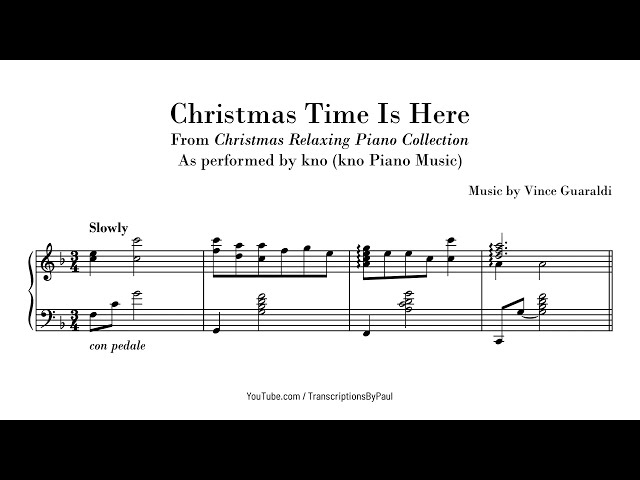
This piece portrays a snowy landscape and a gentle festive atmosphere, set to a three-beat waltz.
Written for the December 1965 TV special “A Charlie Brown Christmas,” it has captivated many with its unique world where the transparent harmonies of a children’s choir intertwine with the language of jazz.
The lyrics describe the quiet and hope of Christmas from a child’s perspective, and their simple, unadorned word choice—eschewing excessive virtuosity—speaks directly to the listener’s heart.
The piano’s soft arpeggios and resonant use of silence evoke both the chill and the warmth of winter.
It’s a perfect song for those who seek inner tranquility over flashiness, and for anyone wishing to color moments with family or loved ones through music.
The Son of God, this very nightJohn Francis Wade

The Latin hymn “Adeste Fideles,” sung since the 18th century, became widely known in English as “O Come, All Ye Faithful,” and in Japan it has long been beloved under the translation “Izaya tomo yo, morotomo ni, isogi yukite ogamazu ya.” Its majestic melody and the powerful refrain calling “Come, let us adore Him” vividly proclaim the joy of Christmas.
Since its score was first printed in 1751, it has been performed in a variety of settings—chorus, organ, brass band—and has become indispensable to Christmas services.
Played on piano, it offers a warm resonance within a solemn atmosphere.
It is well suited not only for church performances, but will also be welcomed at home gatherings with family and friends.
Shepherds, keeping their flocksJohn Gardner
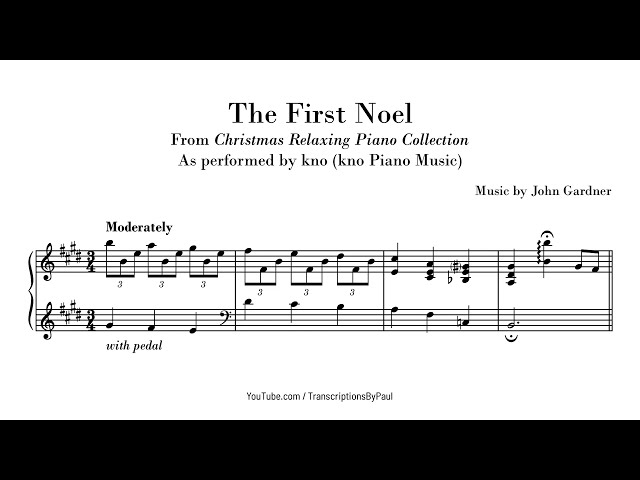
An angel announcing the birth of Jesus Christ to shepherds, and Magi journeying from the East guided by a star—this arrangement refines a traditional English carol that has long passed down this biblical story in a simple melody, using the fresh harmonies of 20th-century British choral writing and the propulsive power of the organ.
Included in the choral collection “Sing Nowell,” published by Novello in 1963, this version is scored for SATB and organ, and features a well-balanced style suitable for both liturgical use and concert performance.
Built on a chorale-like presentation of the traditional tune, it employs harmonic progressions that heighten the sense of festivity, making it a beloved staple of choral repertoire.
Even when played on the piano, the piece is highly recommended for Christmas services or moments at home, as the repetition of the simple melody and the recurring calls form the core of the work.
The Christmas SongMel Tormé&Robert Wells

Chestnuts roasting over a campfire, a nip of cold brushing the tip of your nose, people bundled up like Eskimos…
Gently weaving together winter scenes, this is a warmly intimate ballad that whispers, “The words are simple, but I want to send you a Merry Christmas from the heart.” Popularized by Nat King Cole in 1946, it remains a beloved standard around the world.
In 2023, it entered the U.S.
charts’ Top 10 for the first time, proving itself a timeless classic.
Beginning with calm, broken piano chords and tender strings that settle like falling snow, its understated elegance shuns excessive flash.
It’s the perfect piece for those who want to linger in a quiet Christmas night—or to play with heartfelt sincerity for someone dear.
The Nutcracker: Waltz of the FlowersPyotr Tchaikovsky

Introducing the waltz that symbolizes the festive spirit of Christmas from The Nutcracker, one of the three great ballets.
When the suite version premiered in March 1892, it achieved rapturous success thanks to its brilliant orchestration and clear, beautiful melodies.
Highlights of this piece include the introduction that begins with a horn call and a harp cadenza, leading into a graceful, lilting three-beat waltz carried by the strings and woodwinds.
Start by practicing with a simple accompaniment score so you can play while riding the waltz rhythm.
Performing it at a Christmas concert or recital will transport every listener into a fantastical dream world.
With careful, repeated practice to internalize the rhythm, shape it into a dazzling waltz as if flowers were dancing in bloom.
Let It Go ~As I Am~Robert Lopez,Kristen Anderson-Lopez

When it comes to the most memorable song from Frozen, most people probably think of this piece.
Since its release in Japan in March 2014, it sparked a social phenomenon, and the lyrics—depicting Elsa’s emotions as she breaks free from repression and accepts herself—along with the sweeping melody, remain etched in many people’s memories.
The piece is set in A-flat major overall, and its powerful development spans a wide vocal range from F3 to E5.
The right hand may feel like it requires large position shifts on the piano, but it becomes easier to play if you start with a simple arrangement with fewer notes and gradually add more elaborate ornaments.
Be sure to try recreating this unforgettable classic—paired in the film with the scene of building the ice palace—on your piano at home!