

The golden age of Japanese comic bands: A historical journey to enjoy the masterpieces once more.

A Japanese comic band where music and comedy are exquisitely harmonized.
From Hachiji Hana and the Crazy Cats, through Frankie Sakai & The City Slickers, to The Drifters, the golden era captivated many with solid musicianship and skillful gags.
A history of comic bands that expanded their stage from vaudeville and variety halls to television and the record market, achieving a unique evolution.
Alongside nostalgic classics, we invite you into a special world woven from laughter and music.
- A Compilation of Hilariously Silly Songs [Humor]
- [Representative Comic Songs] Hilarious! Recommended Songs That Will Give You Energy
- [Gag Songs] Laugh-Out-Loud! A Roundup of Japanese Comic Songs
- [Hilarious] Funny Songs: Tracks That Kill at Karaoke and Make You Smile [2026]
- [Ska Punk / Ska Core] A Roundup of Japanese Ska Bands
- Popular female vocal band [2026]
- Band songs that get the crowd going by genre
- [2026] Charm Explosion! A Roundup of Japanese Three-Piece Bands [Plenty of Young Acts Included]
- A melancholic “yami” song that was a hit in the 2000s. A bittersweet track.
- A song with a bright vibe but heartbreaking lyrics—a moving track that really hits you with its contrast.
- Get the Laughs! Funny Karaoke Songs That Hype Up the Crowd
- The Drifters’ Popular Songs Ranking [2026]
- A special feature on classic and hit songs by bands that were active in the 1980s
Japan’s golden age of comic bands: a historical journey to enjoy the masterpieces once more (1–10)
The Blue Idiot of CaliforniaOshima Nagisa
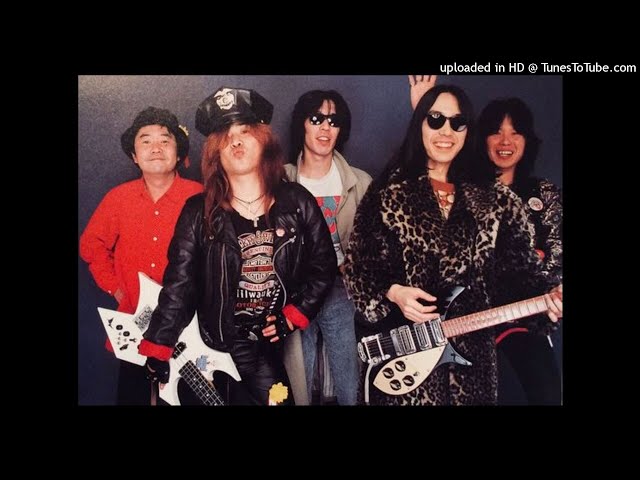
The amateur band program Ikasu Band Tengoku (commonly known as Ikaten), which began airing in 1989, brought many bands into the spotlight.
Among the most talked-about at the time was a band led by Jun Miura called “Nagisa Oshima.” The director Nagisa Oshima himself did not participate.
Student SongHana Hajime to Kureēji Kyattsu

While it was the traditional vaudeville entertainment world that first fused musical instruments and comedy in Japan, it was likely the Crazy Cats who first established the format of the comic band.
This song was their eighth single, released in 1963.
They did not perform instruments on it; the style features only vocals and chorus.
I thought it was a café, but it was a hair salon.Chōnōryoku Senshi Dorian

If you happen to hear it in passing, you might burst out laughing on the spot—that’s “I Thought It Was a Café, But It Was a Hair Salon” by Psychic Warrior Dorian.
Just like the title says, this song captures the all-too-relatable moment of spotting a shop in the city and mistaking a stylish hair salon for a trendy café, all set to dance rock.
The snappy lyrics, breezy sound, and irresistibly catchy melody work together to make it a blast.
It’s perfect if you want to add a bit of humor to your daily routine or need a fun conversation starter with friends!
The golden age of Japanese comedy bands: A historical journey to enjoy masterpieces once more (11–20)
Bai Yai Yai ~Obocchama-kun Theme~ingurimonguri

Ingurimonguri transformed from a Yokohama-born student band into a comedic pop sensation that made waves on television.
In 1985, they won the Grand Prix at the YOKOHAMA HIGH SCHOOL HOT WAVE FESTIVAL and debuted the same year with their first single “Joshi Kōsei” on Philips Records.
Following the release of their album “Sotsugyō Kinen,” they were active on two fronts—music and variety—appearing regularly on a TBS variety show and serving as hosts on Nippon Broadcasting System’s All Night Nippon.
In 1989, they performed the opening theme for a TV anime and successfully headlined a concert at Nippon Budokan the same year.
Rooted in rock yet brimming with comedic, youthful energy, their performances are recommended for anyone who wants to enjoy a fusion of laughter and music.
Swimmer’s Themesuimāzu

On Ikaten, while there were bands whose performance techniques could rival professionals and impressed the judges, there were also bands that focused solely on performance, like the Swimmers.
Even so, they drew a strong response from viewers and became stars born from the show.
Trouble ~ The Drifters’ Zundoko SongZa Dorifutāzu

In the 1960s and ’70s, during their comic band era, The Drifters were popular for their parodies of Western music and Kato Cha’s character.
In this video, Ken Shimura is unusually on keyboards.
“Trouble” is a hit number by Elvis Presley.
Ben-chan of RoppongiKobayashi Katsuya & Za Nanbā Wan Bando

Included on the 1991 album “Momo” released by radio DJ Katsuya Kobayashi’s band.
Yūzō Kamon, credited as co-lyricist and composer, is a pseudonym of Keisuke Kuwata, who appears as a duet partner in this song.
Its upbeat sound and wistful lyrics are a perfect match.