

[Class T-Shirt] Recommended Back Name Ideas for Class T-Shirts at the School Culture Festival


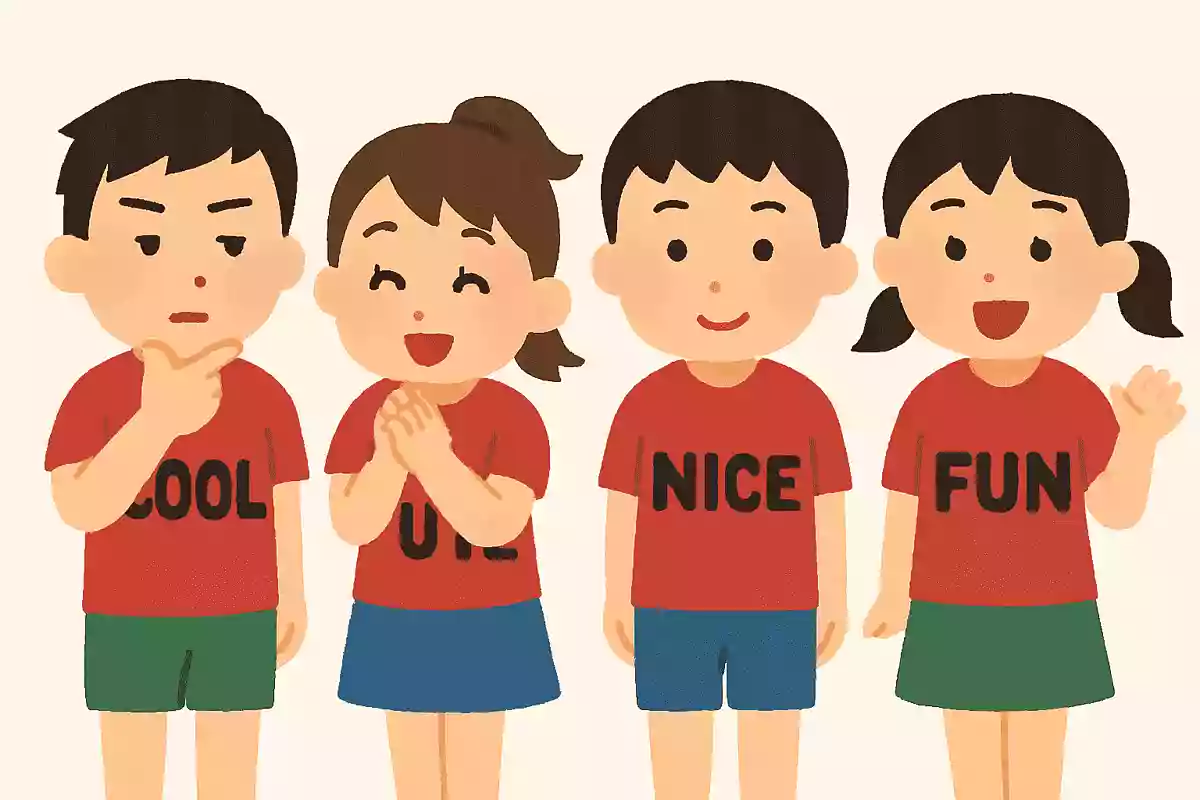
At school culture festivals, it’s common for each class to make matching T-shirts.
Recently popular “back names” actually originated from sports uniforms—it’s the part where the player’s name goes.
Here, we’re sharing lots of ideas for those back names.
Of course, you can simply put your name, but adding a funny one-liner is also recommended.
Use these ideas as inspiration to come up with fun back names that will liven up your culture festival!
- Costume and cosplay ideas to heat up your school cultural festival
- Design ideas for class T-shirts recommended for the school festival
- Ideas for class projects at the school festival: A roundup of popular attractions
- Summary of design ideas for the school festival poster
- A roundup of fun slogan ideas perfect for a school festival
- [Cultural Festival / School Festival Theme] Carefully Selected High-Impact Recommended Phrases!
- [School Festival] Dance Group Name Ideas: Tips on How to Create Them
- Stylish, cute, and attention-grabbing! Signboard ideas that will stand out at school festivals and culture festivals
- Recommended ideas for student council projects at a school festival, such as recreational activities and stage events.
- A roundup of stylish slogan ideas perfect for school festivals
- Recommended slogans for a high school cultural festival: A roundup of school festival themes
- Ideas for exhibits recommended for school culture festivals. Film screenings, too.
- Recommended for school cultural festivals! Stall ideas that let you enjoy a traditional fair atmosphere
Class T-shirts: Recommended Back Name Ideas for the School Festival (31–40)
Past life: ◯◯
Back name prints not only express the bond of a group, but also serve as a chance to showcase your individuality, right? To convey both, the idea is to create a sense of unity with the shared phrase “In my past life,” while freely filling in the “___” to boldly express your desires and personality.
Although it sounds like a serious statement about what you were reborn from, let’s deliberately make it comical by depicting desires like being a part of someone, and so on.
The key is to think from various angles about asserting who you are—what you like, what you think, and more.

Only ◯◯ for the win
How about using the phrase “XX shika katan,” which has been popular on social media in recent years? “XX shika katan” comes from “oshi shika katan” (only my fave wins), and you put something you like in the XX.
For example, “Baseball shika katan” or “Chocolate shika katan.” It really shows your personality, doesn’t it? It would also be great to put your homeroom teacher’s name or your school’s name in the XX.
In any case, it’ll make for a T-shirt overflowing with love! Plus, it can be used as a prompt when you want to coordinate a theme among several people.

XX-type guy (girl)
You often see expressions like “XX-kei danshi” or “XX-kei joshi” in online news, right? How about trying those out? Fill in the XX freely to match each person’s personality or preferences.
Words of about two kanji characters fit nicely—for example, “sōshoku-kei danshi” (herbivore-type guy).
If possible, you can also make it longer, like “bunkasai daisuki-kei joshi” (culture-festival-loving girl).
Using words people haven’t heard much will likely make a stronger impact.
Shut up.
Ado’s first major single “Usseewa.” Released in 2020, it made big waves with its provocative lyrics and melody.
In particular, the chorus phrase “Usseewa” is great because it’s easy to use in a casual, student-y way—like when a friend says, “I didn’t study at all but got a perfect score,” you can snap back with, “Usseewa! (lol).” Also, the distinctive font is memorable, so if you mimic it in your designs, you can make an even stronger impact!

so wholesome
The phrase “teetee” evolved from the word “toutoi” (precious).
It’s used with a nuance similar to “moe” or “absolutely the best,” so using it as a back-name could be fun.
If you want to stand out from friends with impactful back-names, it might be a good idea to deliberately use this slightly disarming word written entirely in hiragana with the small ‘e’.
It’s especially great for people who have an idol or actor they stan—using this back-name can express your personality even more.
[Class T-Shirts] Recommended back-name ideas for class T-shirts at the school festival (41–50)
Anyone chickening out?
The word “hiyoru,” which carries meanings like “to chicken out” or “to get timid,” originates from the manga Tokyo Revengers, serialized in Weekly Shonen Magazine from 2017 to 2022.
It spread thanks to a line by Manjiro Sano, the leader of the Tokyo Manji Gang, in chapter 11: “Hiyorutteru yatsu iru? Inē yo naa!?” (roughly, “Anyone chickening out? Didn’t think so!”).
This phrase has also become a go-to pick for back-print slogans, as it sends a message like “There’s nothing to be afraid of!” that gives your friends a push.
self-proclaimed ◯◯

There are people who tell their friends, “I’m a musician,” but from the outside it doesn’t really look like they’re doing anything serious with music… In cases like that, we sometimes sarcastically call them a “self-proclaimed musician.” Originally, “self-proclaimed X” was used to bad-mouth someone, but lately people even use it to poke fun at themselves, saying things like “self-proclaimed number one”! At a school festival, a phrase like “the school’s self-proclaimed top mood-maker” might get some laughs (lol).
Try coming up with your own self-deprecating, funny phrases!