




When you’re feeling unwell emotionally, don’t you sometimes prefer to sink into sadness for a while rather than forcing yourself to be positive? Spending time in a sentimental mood can help you naturally process the painful events inside yourself and eventually feel ready to move forward.
This time, I’d like to introduce some darkly shaded piano pieces from among recommended classical works that are perfect for those moments when you want to fully immerse yourself in sorrow.
They aren’t merely dark—each is a masterpiece that lets you savor the piano’s delicacy and beauty—so by the time you finish listening, your heart will likely feel a little lighter.
- Poignant and beautiful! A collection of recommended piano pieces
- [Classical Piano Masterpieces] A carefully selected collection of moving pieces that will bring you to tears
- Piano Masterpieces: Surprisingly Easy Despite Sounding Difficult!? A Curated Selection Perfect for Recitals
- [Advanced] Super cool if you can play it! Selection of famous piano pieces
- [Masterpiece Classics] A special showcase of gem-like masterpieces so beautiful they’ll move you to tears
- Masterpieces of classical piano that are too beautiful for words. A gathering of delicate tones that cleanse the soul.
- [Calming Classics] Soothing masterpieces whose piano melodies gently touch the heart
- [For Advanced Players] A Curated Selection of Classical Masterpieces to Tackle at Piano Recitals
- Beginner to Intermediate: Chopin pieces with relatively low difficulty. Recommended works by Chopin.
- [For Piano Recitals] Simple yet Cool Classical Pieces
- Cool jazz piano: from classic favorites to hidden gems.
- [Low Difficulty] Recommended Tchaikovsky Piano Pieces [Intermediate]
- Compilation of Sad BGM You've Heard Somewhere [Famous]
Piano × Dark Pieces: Classic Masterworks to Immerse Yourself in Sorrow (1–10)
Piano Sonata No. 14 in C-sharp minor, Op. 27 No. 2 “Moonlight,” I. AllegrettoLudwig van Beethoven
Ludwig van Beethoven’s Piano Sonata No.
14 in C-sharp minor, Op.
27, No.
2—widely known as the “Moonlight Sonata.” In particular, the first movement, which proceeds at a gentle pace as if expressing profound sorrow, is a masterpiece almost invariably cited as a “beautiful piano work.” The nickname “Moonlight Sonata” was taken from a remark by a music critic after Beethoven’s death.
We do not know what the composer himself envisioned, but is there any word more fitting for this piece than “moonlight”?

Etude-Tableaux, Op. 39 No. 2 in A minor “The Sea and the Seagull”Sergei Rachmaninov

Let me introduce a deeply affecting, slightly melancholic piano piece.
It’s one of the works from a set of études that Sergei Rachmaninoff composed between 1916 and 1917.
There is also an orchestral version, and it’s known for the evocative subtitle Ottorino Respighi gave it—“The Sea and the Seagull.” Its desolate melody seems to paint gray skies and sea, along with a solitary seagull.
In the middle section, the music suddenly turns passionate, powerfully stirring the listener’s emotions.
It’s a perfect piece for those who want to feel a profound story and vivid imagery—why not take your time and savor this dramatic tone painting?
Nocturne No. 19 in E minor, Op. 72 No. 1, “Posthumous”Frederic Chopin

Composed around 1827, this nocturne is imbued with a depth of melancholy that seems far beyond the work of a mere seventeen-year-old.
The left hand’s unceasing triplet arpeggios convey the tremors of the heart, while the simple, plaintive melody in the right hand gently voices feelings kept hidden within.
Although the piece begins in E minor, it is notable for closing quietly in a warm major key, suggesting a calm solace after tears.
It was also used in the TV drama Fringe.
It’s a piece that accompanies those moods when you want to spend a sentimental night in quiet contemplation.
Piano Sonata No. 2, Third Movement “Funeral March”Frederic Chopin

This is a movement from Frédéric Chopin’s piano sonata that opens with chords reminiscent of a solemn tolling bell.
A deeply sinking melody follows, gripping the listener’s heart and refusing to let go.
In the middle section, a celestial and sweet melody unfolds, as if gently enveloping the darkness that preceded it.
This very contrast is the source of the work’s irresistible allure.
This movement was also performed in October 1849 at Chopin’s funeral, and its majestic resonance has been used at many ceremonies for prominent figures.
It is a celebrated movement to hear when you wish to be close to profound sorrow and to feel the quiet beauty and prayer that dwell within it.
Nocturne No. 20 in C-sharp minor, KK. IVa/16 “Posthumous”Frederic Chopin

Set against a left-hand arpeggiated accompaniment, the right hand sings a sweet, sentimental melody—an outstanding example of the talent of Chopin, known as the “poet of the piano.” Around the time he composed this piece, Chopin was deeply in love with a young soprano, Konstancja Gładkowska.
However, because she was the daughter of a palace official and of high social standing, he never confessed his feelings, and his first love is said to have come to an end.
This work captures the tenderness and poignancy of unrequited love.

Vocalise, Op. 34 No. 14Sergei Rakhmaninov

Sergei Rachmaninoff, the great Russian composer known for his many dark works.
Among them, the piece I especially recommend this time is Vocalise, Op.
34 No.
14.
Its structure—featuring harmonies and counter-melodies—is striking, offering a steady, understated darkness.
While many of Rachmaninoff’s compositions tend to be dark yet flashy and grand, partly due to his large hands, I think this one differs from that typical image of him.
If you’d like to discover a new side of Rachmaninoff, be sure to check it out.

Piano Sonata No. 8 in C minor, Op. 13 “Pathétique,” 1st movementLudwig van Beethoven
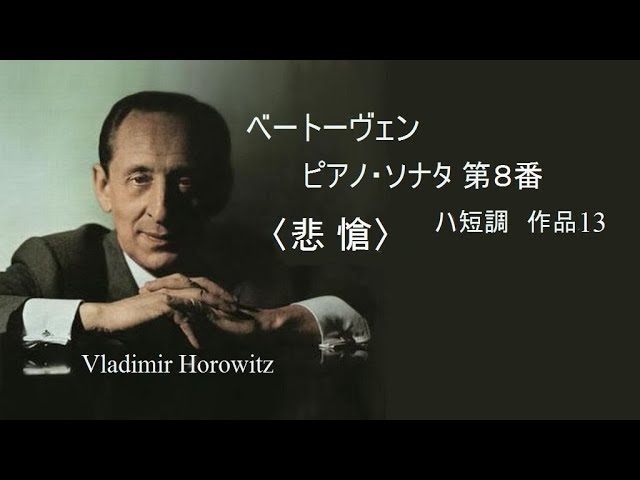
Ludwig van Beethoven’s masterpiece, Piano Sonata No.
8 in C minor, Op.
13 “Pathétique,” First Movement.
Known as a classic for intermediate players, this Beethoven work is frequently performed at piano recitals.
Its greatest appeal is, above all, the heavy, dark melody—an unmistakably Beethoven-esque weight.
It’s a highly effective piece in performance and is played by many pianists, so be sure to check it out.