

Piano is easy! A selection of sheet music that beginners can play with both hands

One reason people feel that “the piano is hard…” is that they often try to tackle pieces or arrangements that are too difficult from the start.
Even YouTuber pianists who play freely and professional performers began by carefully reading simple scores and practicing slowly with one hand.
In other words, no one can suddenly play difficult pieces smoothly from the get-go!
So this time, we’re introducing easy arrangements of famous pieces that beginners can use to challenge hands-together playing without overexerting themselves.
We’ve selected a wide range—from classical to film music to pop—so pick a piece you like and give it a try!
- [Easy to Play Even If You're Not Good with Both Hands!] Simple piano pieces for absolute beginners. Recommended piano songs.
- [Super Easy] Piano Sheet Music Beginners Can Play | Available for Immediate Download!
- Recommended for piano beginners! 10 sheet music picks that adults can enjoy too
- For Beginners: Easy to Play and Sounds Impressive! Pieces That Shine at Piano Recitals
- [For Piano Beginners] Play Right Now with Free Sheet Music! A Roundup of Recommended Practice Pieces
- [Piano Beginners] J-POP That Looks Hard but Is Surprisingly Playable [2026]
- Piano Masterpieces: Surprisingly Easy Despite Sounding Difficult!? A Curated Selection Perfect for Recitals
- Even beginners can play them easily on the piano! A curated selection of popular and latest J-POP songs.
- [Beginner] Recommended for adult piano beginners! Beautiful & stylish piano pieces
- [Anisong] Easy for Piano Beginners! Recommended Practice Pieces
- [Beginner] Also great for piano recitals! Classical pieces that look cool when you can play them
- [Piano Pieces] Easy for Children to Play! A Roundup of Simple Classical Works
- [Piano Sheet Music] Free downloads available! A roundup of easy-to-play pieces
Piano is easy! A selection of sheet music beginners can play with both hands (21–30)
againHisaishi Joe
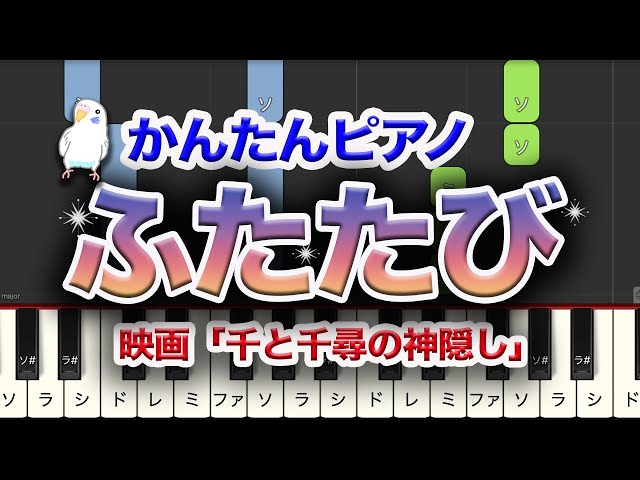

It’s a grand and beautiful piece that plays during the climactic, dreamlike flying scene in the film Spirited Away.
Beginning with a quiet melody and gradually building in emotion, it evokes the hope that lies beyond hardship and the strong bonds with those we hold dear.
A later version with lyrics also exists, expressing a bittersweet yet warm longing for reunion.
This piece was included on the album Spirited Away Soundtrack, released in July 2001.
It’s a perfect choice for those who want to bring this sweeping world to life with their own hands.
As you recall the story’s moving moments, aim for a performance that richly shapes dynamics and stirs the hearts of listeners.
Village in MayHisaishi Joe


It’s a captivating piece with a buoyant melody that conjures up lush, green countryside scenes.
It’s that song from the 1988 film My Neighbor Totoro, played as the sisters, thrilled about their new life, appear on screen.
What’s wonderful about this piece is its brisk, jazz-like rhythm, which adds a stylish, cheerful touch to Japan’s tranquil landscapes.
When playing it on the piano, the key is to bring out a skipping, bouncy sense of rhythm.
If you play energetically and with joy, you’ll surely capture the piece’s sense of excitement.
Try to bounce lightly across the keys as if you were the story’s protagonist.
Piano is easy! A selection of sheet music that even beginners can play with both hands (31–40)
Main themehoshikatsu


This is the music from the film Only Yesterday that evokes memories from long ago, as if they spring vividly to life in the protagonist’s heart.
Released in July 1991, the film uses this beautiful melody to accompany the inner landscapes of a 27-year-old woman as she recalls her 10-year-old self.
Featured on the album Only Yesterday Original Soundtrack, the piece is characterized by a quiet, nostalgic tone centered on piano arpeggios.
With its relaxed tempo and gentle movement, it’s approachable even for those new to the piano.
Cherish the clear, shimmering resonance—as if fragments of memory are sparkling—and play each note with care.
Ojamajo Carnivalike takeshi
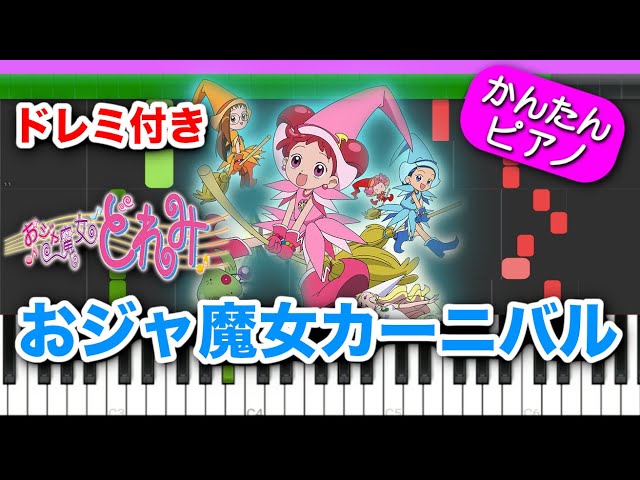
When it comes to the first opening theme of the TV anime series Ojamajo Doremi, produced by Toei Animation since 1999, it’s undoubtedly Ojamajo Carnival!! Even after the show ended, this song has remained enormously popular, and many beginner pianists surely want to try playing it.
As the saying goes, “What one likes, one will do well,” and there’s nothing quite like the joy of improving by practicing a song you love.
It may be difficult to play at full uptempo right away, but the piece is packed with many musical fundamentals: frequent flats, numerous developments, and combinations of complex rhythms.
It also modulates smoothly—such as shifting from the main key to its parallel key—without feeling out of place.
As you become more comfortable reading sheet music, you’ll start to sense the musical seasoning directly from the score and rediscover how wonderful the piece is.
It’s a fun song, so practice little by little and work your way up to playing it!

French Suite No. 5, BWV 816: SarabandeJ.S.Bach

For those who want to take on classical music or try playing an elegant dance, how about a beautiful sarabande excerpted from a Baroque suite? The third movement of the French Suite No.
5 in G major, BWV 816, is one of the most approachable works among the six suites composed between 1722 and 1725.
Written in a gentle triple meter, it features an ornate right-hand melody interwoven beautifully with a left-hand accompaniment.
Although originally a dance of Spanish origin, it exemplifies the sarabande as a refined form that took shape in France and Germany during the Baroque era.
With its deep expressiveness and serene beauty, this movement is recommended for those looking to refine their musicality, as it calls for thoughtful interpretation of ornaments and careful phrasing.
“Butterflies” Op. 2, IntroductionRobert Schumann

The introduction depicting a masked ball is a short piece characterized by gently undulating melodies and delicate harmonies.
Completed in 1831, it was inspired by Jean Paul’s novel “Flegeljahre,” and it exudes a quintessentially Romantic, fantastical atmosphere.
Though brief, the work is rich in narrative quality, making it approachable for intermediate pianists and ideal for cultivating a sensitive touch and expressive nuance.
With relatively few sharps, it’s also accessible for beginners to practice.
Classical music can seem daunting, but by gradually mastering this piece while exploring its background, you can savor the joy of expressing an elegant ambiance at the piano.
“Butterflies,” Op. 2, No. 3: “Waltz”Robert Schumann

From Robert Schumann’s early collection Papillons, Op.
2, I would like to introduce No.
3, “Waltz,” written in E-flat major.
Completed in 1831, this piece was inspired by the masquerade scene in Jean Paul’s novel Flegeljahre.
It features a light, lively rhythm and brilliant melodies, vividly evoking the atmosphere of a ball.
Schumann’s poetic and delicate expressiveness shines through, and it is a piece approachable even for beginner pianists.
Recommended for those who wish to enjoy the fusion of literature and music, or to experience Schumann’s characteristically warm Romantic style, this work remains an important part of the classical repertoire and continues to be loved by many pianists today.