

Easy-to-sing songs recommended for men in their 80s: Showa-era classics to perform at karaoke

There are many men in their 80s who love karaoke, aren’t there?
I’m sure you enjoy singing your favorite songs, but there are times when choosing what to sing can be tricky.
So in this article, I’ll introduce some recommended songs to help you pick your karaoke set.
This time, I’ve selected easy-to-sing tracks especially recommended for men in their 80s.
There are plenty of hits from the Showa era, so I hope you’ll find songs you want to try and give them a go!
- [Karaoke] Recommended Songs for Men in Their 80s: A Collection of Showa-Era Classics You’ll Want to Belt Out
- Lively songs recommended for people in their 80s: A collection of nostalgic enka and kayōkyoku
- Energizing songs recommended for men in their 80s: A collection of nostalgic tracks that give you strength
- Easy-to-sing songs recommended for men in their 70s: A collection of classic hits you’ll want to sing at karaoke
- Easy-to-sing songs recommended for women in their 80s: a reference for choosing karaoke tracks!
- [For men in their 70s] A collection of easy-to-sing songs even for people who are tone-deaf
- Songs that get men in their 90s excited: A roundup of classic karaoke recommendations
- Easy-to-sing songs recommended for men in their 90s: A roundup of tracks to sing at karaoke
- Recommended youth songs for people in their 80s: A collection of nostalgic classics
- [For Seniors] Recommended Karaoke Songs for Women in Their 80s
- Songs I want men in their 70s to sing: a roundup of tracks I'd like to hear at karaoke
- Songs that get women in their 80s excited: A roundup of tracks also great for karaoke
- Karaoke songs you’ll want to sing for men in their 70s: Enka and nostalgic Showa-era pop
Easy-to-sing songs recommended for men in their 80s: Showa-era classics to perform at karaoke (1–10)
Waltz of StarlightSen Masao

Hoshikage no Waltz is a classic song released in 1966 that has continued to be loved by many.
Its lyrics, which depict the heartache of choosing to part ways, pair beautifully with the three-beat waltz rhythm.
As Masao Sen’s debut single, the song initially struggled in sales, but thanks to persistent promotion, it ultimately became a long-running hit, selling over 2.5 million copies.
With a relatively narrow vocal range and a catchy melody, it’s an easy song to sing at karaoke, especially for people in their 80s.
Why not sing this memory-filled tune with heartfelt affection for someone special?
draft (cold air seeping through gaps)Sugi Ryōtarō

Ryotaro Sugi’s signature song “Sukima Kaze.” This classic celebrates the importance of overcoming life’s hardships and trials to find happiness.
Released in October 1976 and used as the ending theme for the period drama “Toyama no Kinsan,” the song enjoyed an unusually long run on the Oricon charts.
It has been covered by various artists and continues to be loved by many.
With a relatively narrow vocal range and simple rhythm, it’s an easy choice for karaoke.
This representative number from Ryotaro Sugi reminds us that every life experience helps us grow and leads us to true happiness—so try expressing it with your own voice!
Parting Cedar (Farewell Cedar)Kasuga Hachirō

This is a quintessential Showa-era masterpiece that sings of the bittersweet feelings of someone leaving their hometown.
Hachiro Kasuga’s clear, beautiful voice resonates deep in the heart.
Released in December 1955, it became a massive hit with 500,000 copies sold.
The following year, a film of the same title was produced, turning it into a social phenomenon.
The melody, inspired by Bizet’s opera Carmen, is memorable and easy to sing.
Why not hum it while thinking of your hometown? Its relaxed tempo makes it easy to sing.
Easy-to-Sing Songs Recommended for Men in Their 80s: Showa-Era Karaoke Classics to Perform (11–20)
Yokohama TwilightItsuki Hiroshi

Yokohama Twilight is a celebrated classic known as one of Hiroshi Itsuki’s signature songs.
Set in a small hotel room in Yokohama, the lyrics depict the poignant scene of a man and woman parting, beautifully expressing the fragility of human relationships and a deep sense of loneliness.
Released in March 1971, the song won numerous awards, including the Vocal Performance Award at that year’s Japan Record Awards, and marked a turning point in Itsuki’s career.
With its relatively simple rhythm and melody, it’s easy to sing and a recommended choice for karaoke.
Gardenia blossomWatanabe Tetsuya

This song, cherished by many as a classic from the Showa era, continues to be loved.
The poignant longing for a lost love is layered with the fragrance of gardenia flowers, deeply resonating with listeners.
Released in August 1973, it became a massive hit after the artist’s appearance on the New Year’s Eve music show the following year.
It was later chosen as the theme song for the film “Graveyard of the Yakuza: Gardenia.” With its simple melody and rhythm, it’s easy to sing.
Why not sing it while reminiscing about old memories and overlaying them with your own experiences?
Woman’s PathMiya Shirō to Pinkara Torio

A classic song representing the Showa era and the signature work of Shiro Miya and the Pinkara Trio.
Its lyrics portray the feelings of a heartbroken woman, and the wistful yet powerful melody resonates with many listeners.
Released in May 1972, it topped the Oricon Singles Chart as the annual No.
1 for two consecutive years and became a massive hit with total sales exceeding 4 million copies.
It was also performed on NHK’s Kōhaku Uta Gassen in 1973, which further boosted its popularity.
Why not try singing this song—with its relaxed tempo that makes it easy to sing—while reflecting on your own life?
Sūdara-bushiUeki Hitoshi
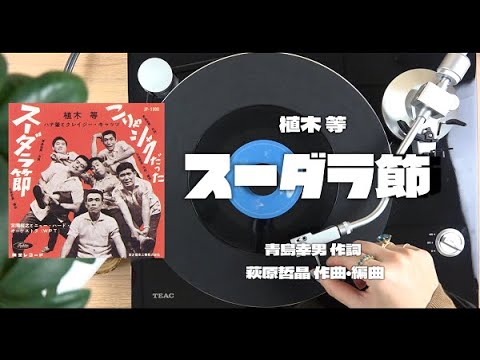
When it comes to “Sūdara-bushi,” it’s one of the most popular classics of the Showa era.
Sung by Hitoshi Ueki and the Crazy Cats, this song has continued to be loved across generations for its catchy melody and down-to-earth, human lyrics.
Playfully poking fun at everyday missteps—like drinking too much, blowing money on horse races, or heartbreak—it’s a timeless tune that resonates with listeners.
Since its 1961 release, it has frequently appeared in films and commercials, and in 1990 it was re-released as “Sūdara Densetsu,” becoming a hit again.
With a modest vocal range and an easy-to-sing style, it’s perfect for older audiences as well.
If you want to deliver a song at karaoke that evokes the Showa era, this is a great choice.