

![[For Seniors] Enjoy Simple Songs with Handbells: Easy Pieces for Beginners to Try](https://i.ytimg.com/vi/cB2baDbgrwQ/sddefault.jpg)
[For Seniors] Enjoy Simple Songs with Handbells: Easy Pieces for Beginners to Try


The clear tone of handbells gently wraps around the heart, doesn’t it? As a recreation activity in senior care facilities and also for moments at home, handbells bring the joy of making music.
Humming along to familiar children’s songs and traditional tunes while keeping the rhythm naturally brings smiles and is said to help stimulate the brain.
This time, we’re introducing songs that are easy for older adults to enjoy and perform.
They’re all classics that evoke nostalgic memories, so please enjoy the time creating beautiful harmonies together with your companions.
[For Seniors] Simple Handbell Pieces to Enjoy: Beginner-Friendly Songs Introduced (1–10)
Little Brown Jug
With its lively tempo and rhythmic, upbeat feel, “Little Brown Jug” is best played energetically while riding the groove.
Since many sections of the melody repeat, assigning parts can help the piece feel more cohesive.
Adding piano accompaniment may make the handbell performance even more exciting.
Keep the tempo in mind, learn the exact timing for ringing each bell, and enjoy playing.
For the day of the performance, brighter-colored outfits are recommended.

When the Saints Go Marching In

With its fun, friendly rhythm, this classic makes both performers and listeners smile naturally.
It’s easy even for beginners to play, and by ringing each bell carefully, a beautiful harmony emerges, giving a real sense of accomplishment.
Thanks to the song’s lively feel, performing it with friends or family naturally sparks conversation and makes playing even more enjoyable.
Plus, humming along while you play can bring back nostalgic memories and old recollections, creating a warm, heartwarming moment.

hometown

How about performing the beloved classic “Furusato,” a song that naturally makes you think of your hometown, on handbells? It might seem difficult, but you can express it using just these seven notes: Do, Re, Mi, Fa, So, La, Ti.
Reading standard notation can be challenging for children and older adults, so color-coded sheet music is recommended.
If the score’s colors match the bell colors, everyone can see their part at a glance.
Work together to play and share the joy of making music as a group.

Song of the Frog

The song “Kaeru no Uta,” which even preschoolers know, is perfect for handbell performance.
It can be played with eight notes, and since it’s a short piece, it’s easy for beginners to try.
That said, starting out by holding two handbells at once can be difficult.
In that case, have each person play just one note first so they can perform comfortably.
For those who can’t read music, it’s helpful to prepare a lyric sheet and mark the spots where the bells should be rung.
Please consider trying it as a piece to help you get used to handbells.
Ode to Joy

Ludwig van Beethoven’s grand and powerful “Ode to Joy” is perfect for performance on handbells.
When you play it, the piece builds magnificently toward the latter half, so be mindful of the tempo and bring out the climactic sections as you make the bells sing.
Letting the final note resonate can add even more depth to the piece.
It’s also recommended to use dynamic contrasts in the swelling sections.
Although the title is written as “Ode to Joy,” it is also known by the alternate name “Hymn to Joy” in Japanese (Kanki no Uta).
Grandfather’s Clock
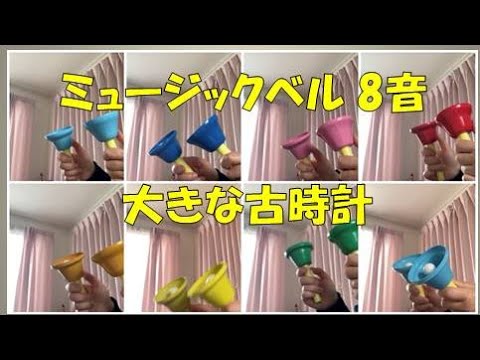
Would you like to try playing the classic song “Grandfather’s Clock” on handbells? It originally comes from the United States, with lyrics and music by Henry Clay Work.
In Japan, it was released before World War II under the Japanese title “Ojīsan no Tokei” (Grandfather’s Clock), but the lyrics were completely different from the ones known today.
In 1962, it was broadcast with the current lyrics on the NHK program “Minna no Uta,” which led to its widespread recognition.
This piece can be expressed with just eight notes, and the rhythm is slow, making it approachable even for beginners.
maple leaves

Perfect for the autumn season! Why not try performing the classic song “Momiji” on handbells? With a method called “hiragana performance,” even those who can’t read sheet music can play.
You determine when to ring the handbells by the marks written in the lyrics.
Sing the song and ring your assigned bell wherever its mark appears.
The piece is short, and since you’re singing as you play, it’s easy to keep the rhythm.
Enjoy the beauty of autumn while listening to the lovely tones of the handbells.