

[For Seniors] Enjoy Brain Training with English Trivia Quizzes and Fun Facts

Trivia quizzes and fun facts about English are perfect for brain exercises and conversation starters.
By choosing questions that are neither too hard nor too easy, you can enjoy lively chats while having fun.
Using your brain in moderation also benefits your mental and physical health.
English includes many familiar words, making it approachable even for seniors.
In this article, we’ll introduce plenty of questions everyone can enjoy together—ones that will make you smile and think, “I see!” Be sure to find your favorite questions and try hosting a quiz event.
- [For Seniors] Trivia Quiz & Fun Facts for Everyday Life
- For Seniors: Useful Trivia Questions! Introducing Fun Facts Quizzes You'll Want to Share
- [For Seniors] Fun and Informative! Trivia and Quizzes Introduced
- [For Seniors] Boost Your Knowledge! Fun Trivia Quiz
- [For Seniors] Fun and Informative Trivia Quiz Collection
- [For Seniors] Lively two-choice trivia quiz. Handy to know and tidbits you'll want to share with others
- [For Seniors] Perfect Brain Training! Fun Trivia
- [For Seniors] Fun and Informative! Health Trivia Quiz
- [For Seniors] Fun and Lively! Recommended Quiz Questions
- [For Seniors] Fun Food Trivia Quizzes You'll Want to Share
- [For Seniors] Lively True-or-False Quiz: Fun Questions You Think You Know but Don’t
- [For Seniors] Sports Trivia Quiz & Fun Facts. Easy and Entertaining
- [For Seniors] Super Amazing Trivia Quiz! Introducing Practical Tips for Everyday Life
[For Seniors] Enjoyable Brain Training with English Trivia Quizzes & Fun Facts (1–10)
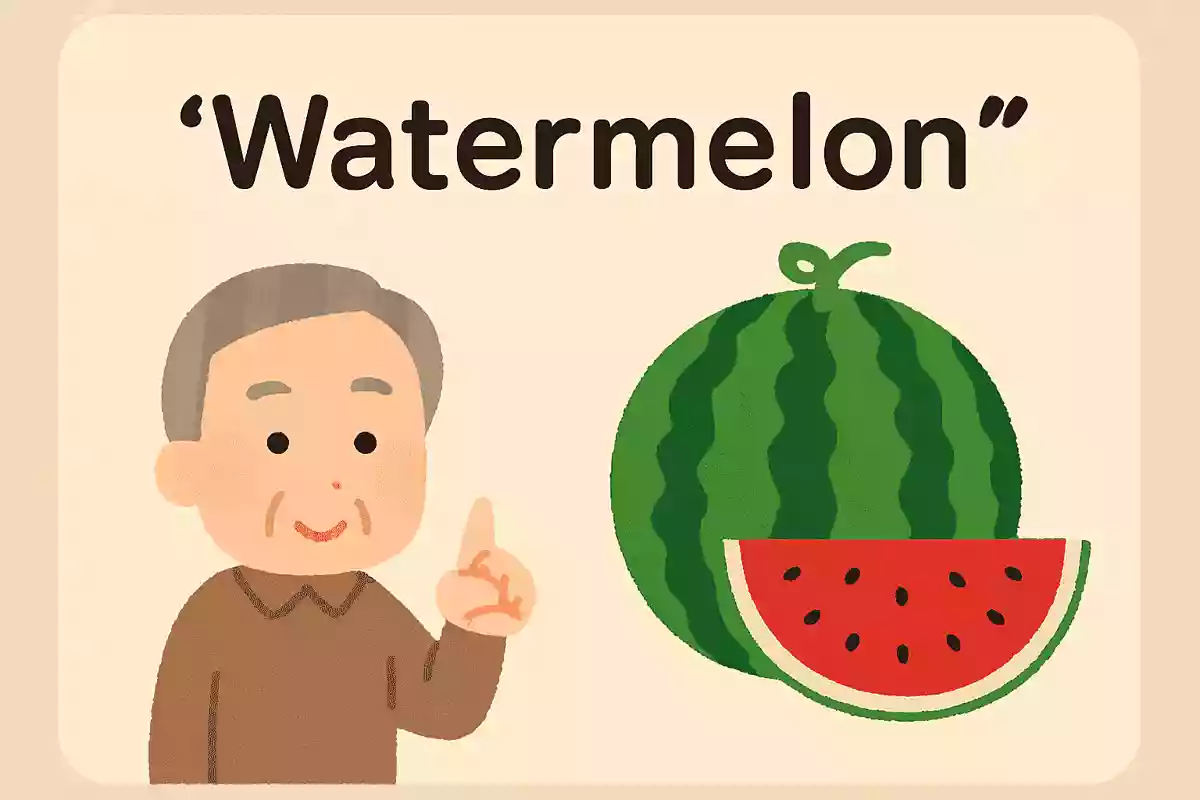
What fruit is “Watermelon” in Japanese?
- melon
- watermelon
- grapefruit
See the answer
watermelon
“Watermelon” (ウォーターメロン) refers to suika in Japanese. Suika is a quintessential summer fruit, and because it’s packed with water, it’s popular as a perfect hydrating fruit for hot days.
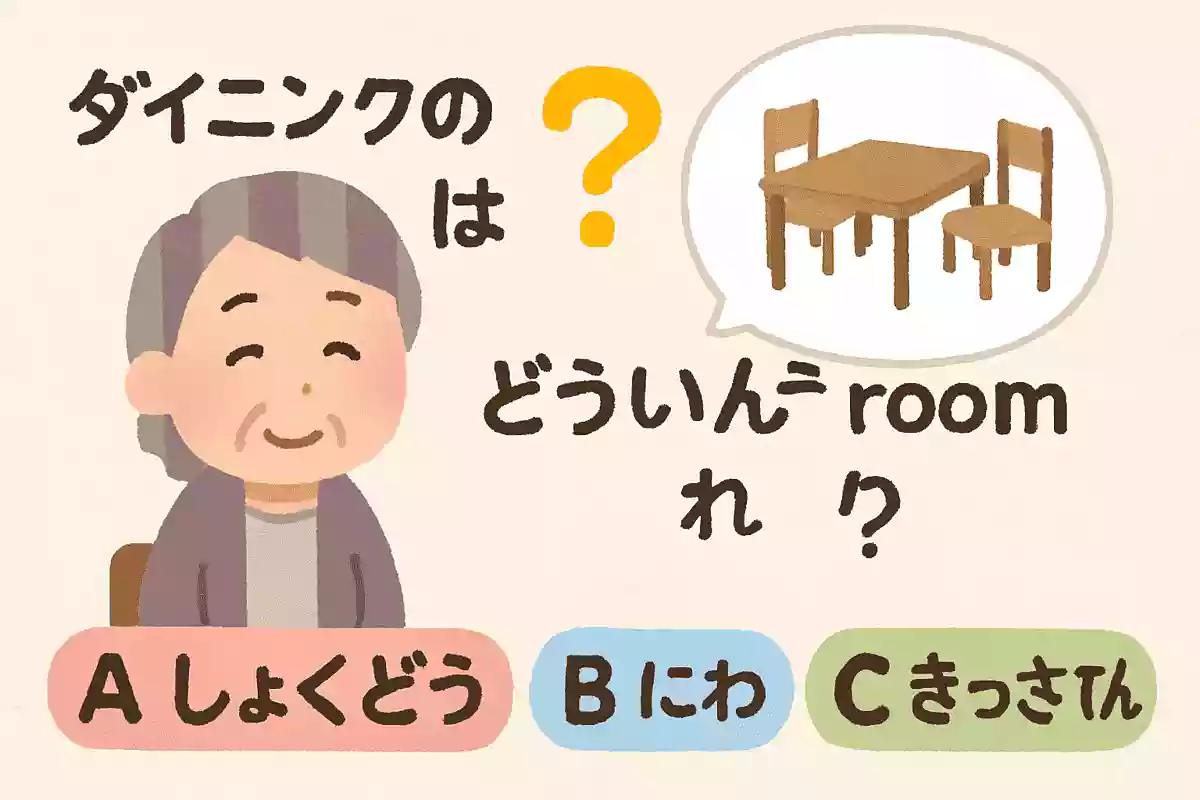
Which one would “dining room” be in Japanese?
- bedroom
- kitchen
- dining room / a room for eating meals
See the answer
dining room / a room for eating meals
“Dining room” means “shokudō” (a dining hall) or “a room for eating” in Japanese. “Dining” comes from the verb “dine,” meaning “to eat a meal,” and combined with “room,” it refers to a room used for eating.
Which one would “lost” be in Japanese?

- Lost
- Found
- I won
See the answer
Lost
“Lost” is the past tense and past participle of “lose,” mainly used to mean “lost” (no longer possessed) or “strayed.” For example, “I am lost.” means “I’m lost (I’ve lost my way).”
[For Seniors] Enjoy Brain Training with Fun English Trivia Quizzes & Tidbits (11–20)
Which one would be “math” in Japanese?
- Arts and Crafts
- Science
- Mathematics
See the answer
Mathematics
“Math” means “mathematics” in English. Strictly speaking, it’s an abbreviation of “mathematics,” and it’s commonly used in American English. In the UK, it is often expressed in the plural form as “maths.”
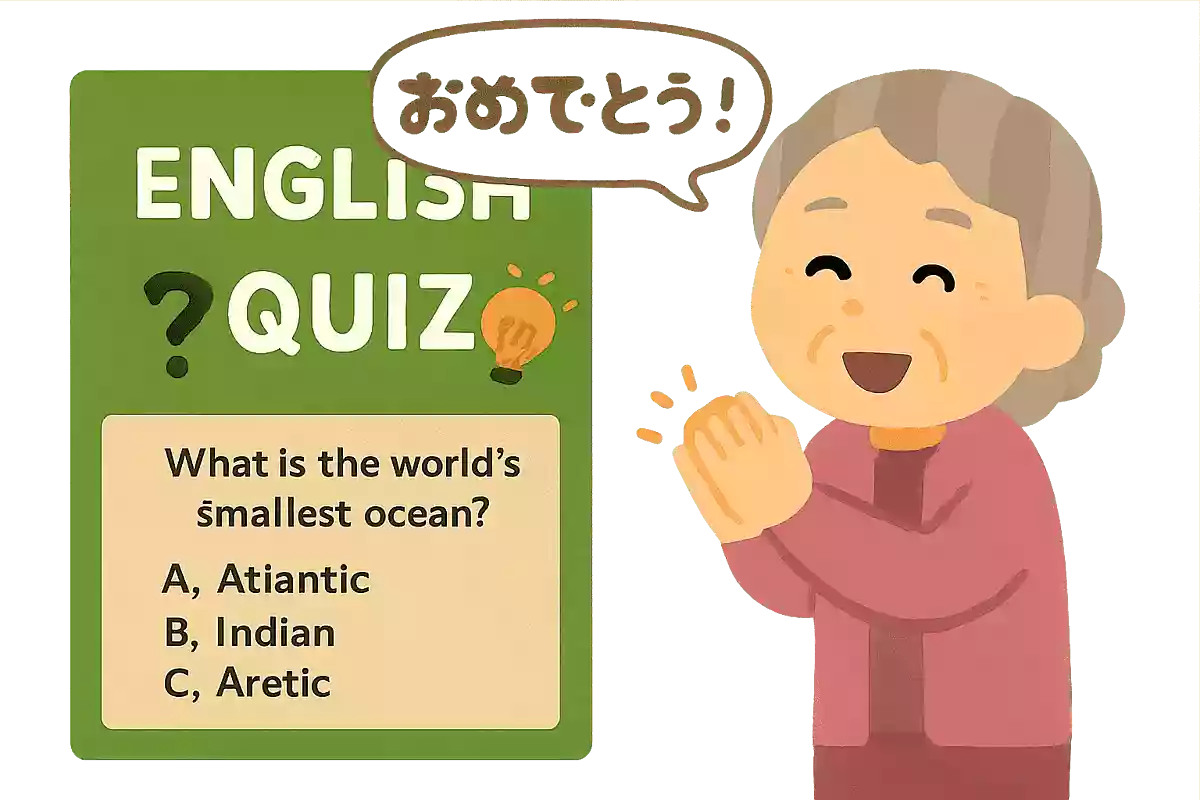
Which one is saying “Congratulations!”?
- Thank you!
- Congratulations!
- Good luck!
See the answer
Congratulations!
"Congratulations!" corresponds to the Japanese "おめでとう!" It's an expression used in celebratory situations like birthdays, weddings, and passing an exam. "Thank you!" means "ありがとう," and "Good luck!" means "がんばってね!" or "幸運を祈る."
Which one is saying, “I play tennis.”?

- I like tennis.
- I play tennis.
- I watch tennis.
See the answer
I play tennis.
"I play tennis." corresponds to the Japanese "テニスをします." The verb "play" is used with sports and musical instruments to mean "do" or "perform," and "tennis" is simply "テニス."
Which one is saying, “It’s raining”?
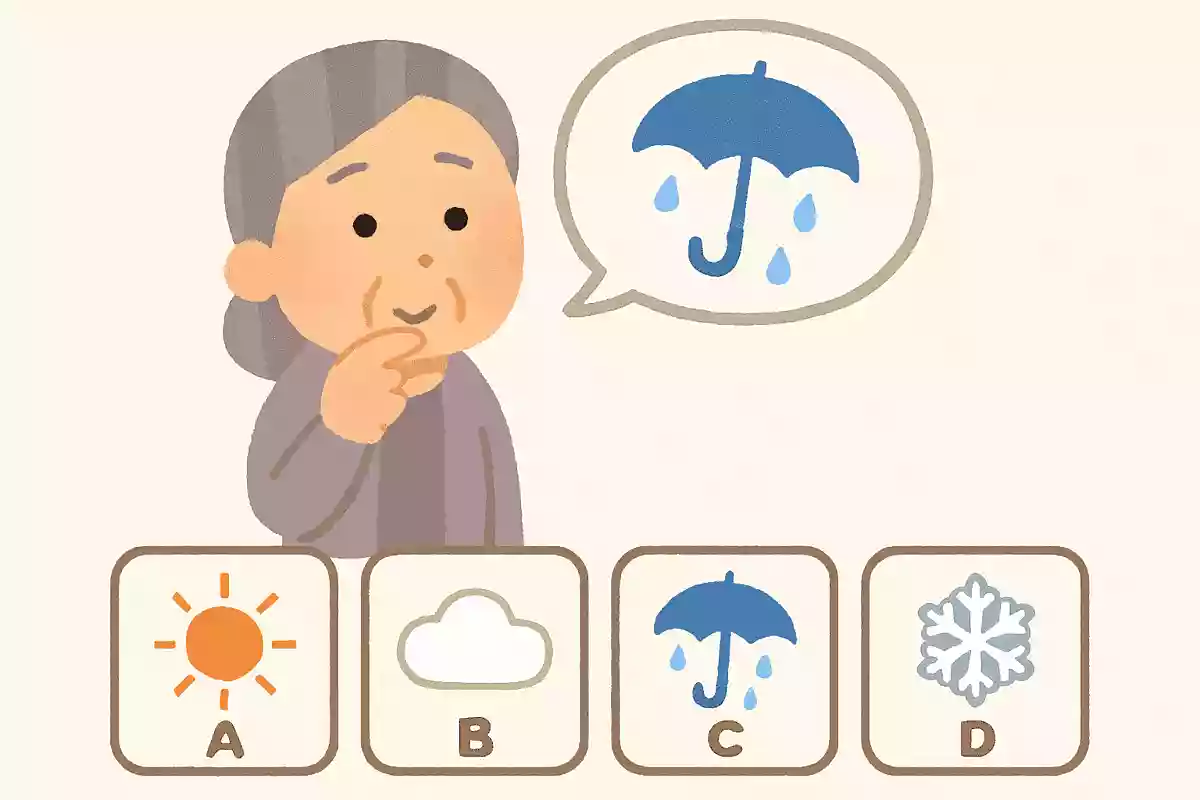
- It is sunny.
- It is raining.
- It is cloudy.
See the answer
It is raining.
"It is raining." corresponds to the Japanese "雨が降っている." "Raining" is the present continuous form of "rain," indicating that the action of "rain falling" is happening right now.