

![[For Seniors] Enjoy Brain Training with Fill-in-the-Blank Shiritori!](https://media.ragnet.co.jp/img/1200__png__https://www.studiorag.com/files/2025/05/79ca06f49996475553dda36f88d140b7.webp)

Many older adults likely played Shiritori when they were young or with their families.
Shiritori is a familiar game, but this time let’s change things up a bit and try “fill-in-the-blank Shiritori”!
In fill-in-the-blank shiritori, for example, you might give a prompt like “とけい → 〇〇〇 → ゴリラ,” and come up with the answer “イチゴ.”
In fill-in-the-blank Shiritori, the rule is that specific words must fit both before and after.
It requires more thinking than regular Shiritori, so it may help prevent cognitive decline.
It can be played with several people, so it should be fun to collaborate and come up with answers together.
Let’s enjoy some brain training by coming up with lots of answers in a cheerful atmosphere!
- For seniors: Fun shiritori—enjoyable and easy to play
- [For Seniors] Perfect for Brain Training! Themed Hiragana Fill-in-the-Blank Quiz
- [For Seniors] Brain Training with a Whiteboard! Fill-in-the-Blank Exercises & Quizzes
- [For Seniors] Guaranteed to Liven Things Up! A Collection of Brain Training Activities That Will Spark Laughter
- [For Seniors] A Brain-Training, Crowd-Pleasing Word Search Game
- For seniors: Fun, crowd-pleasing word association game ideas
- [For Seniors] Brain-Training Recreation Using a Whiteboard
- [For Seniors] Liven Things Up with Trick Riddles You Answer!
- [For Seniors] Exercise Your Brain with Fun Logic Puzzles!
- [For Seniors] Lively Wordplay Game: Fun Recreation for Elderly Care
- [For Seniors] Fun Riddles That Stimulate the Brain
- [For Seniors] Nostalgic quizzes that bring back memories! Showa-era entertainment and sports questions
- [For Seniors] Fun Recreational Activities Without Equipment
[For Seniors] Enjoy Brain Training with Fill-in-the-Blank Shiritori! (1–10)
Desk → 〇〇〇 → Go board stones → 〇〇〇 → Sunken hearth → 〇〇〇 → Panda
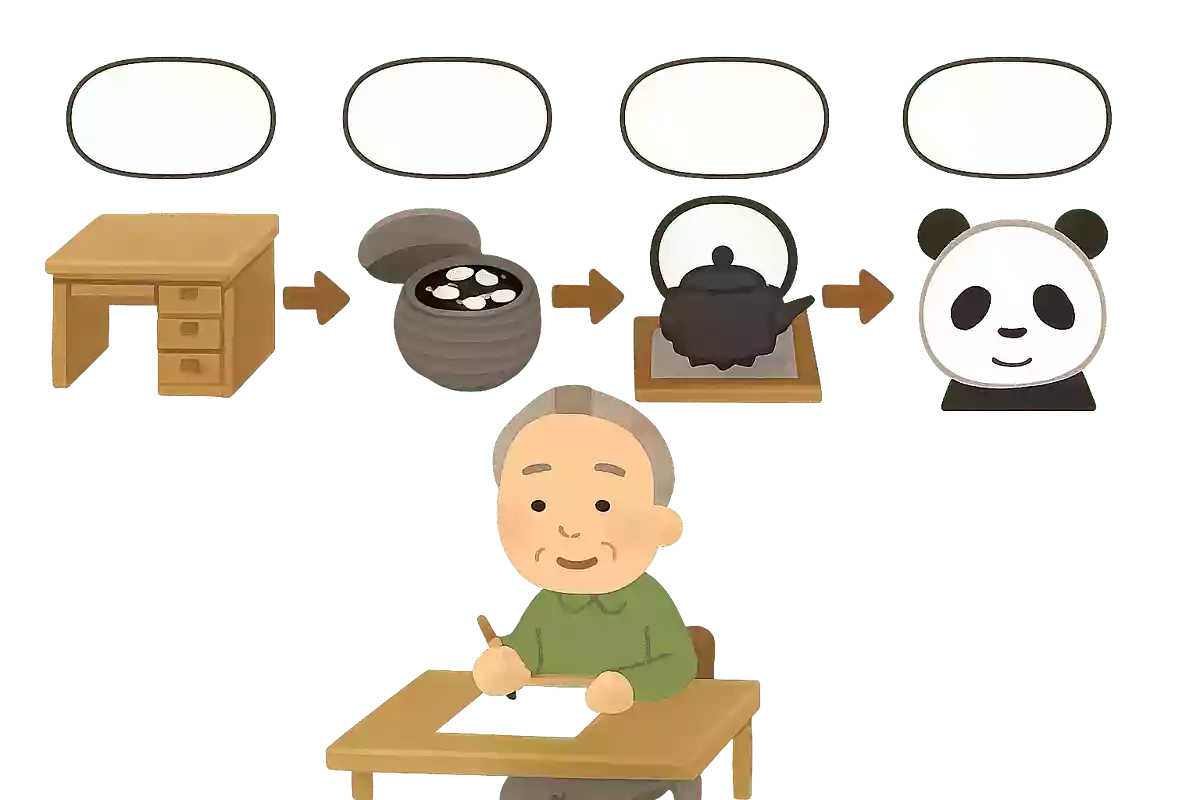
See the answer
1: English, 2: match/game, 3: splendid/noble
One word that starts with “e” and contains “go” is “Echigo.” Other words that start with “shi” and end with “i” include “shikii” (threshold) and “shikai” (chairperson). As for words that start with “i” and start with “pa,” there is “lymph” (rinpa/lymph), i.e., “lymphatic.”

Tomato → 〇〇〇 → Crow → 〇〇〇 → Medaka (Japanese rice fish) → 〇〇〇 → Mage
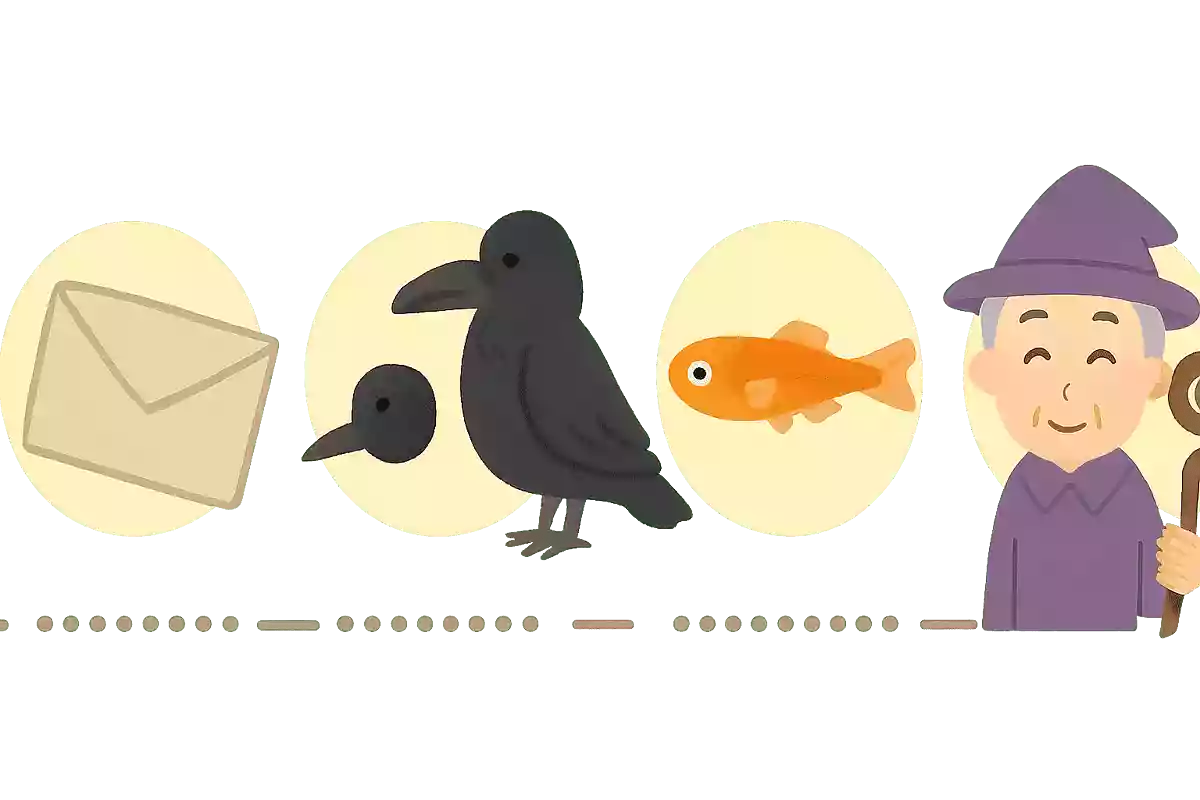
See the answer
1st: comb, 2nd: sparrow, 3rd: seagull
For the word that starts with “to” and ends with “ka,” there is tooka (the 10th day of the month). For words that start with “su” and end with “me,” there are surume (dried squid) and sujime. Sujime refers to a distinct line or pattern, the logical course or sequence of things, and also lineage or pedigree passed down through generations. Finally, for a word that starts with “ka” and ends with “me,” there is kawame, which refers to the skin part of chicken or fish.
Hydrangea → 〇〇〇〇 → Doodle → 〇〇〇〇 → Extra edition → 〇〇〇〇 → Three-dimensional

See the answer
1: squid, 2: raspberry, 3: chestnut burr
Let’s think of words that have four letters! For the first one that starts with “i” and ends with “ra,” there are words like “iegara” (family background) and “itazura” (mischief). For the second one that starts with “ki” and ends with “go,” there’s also “kyūgo,” which means helping someone in need. For the last one that starts with “i” and ends with “ri,” “igusuri” (medicine) also fits.
Medaka → 〇〇〇 → Menko → 〇〇〇 → Moufu → 〇〇〇 → Match
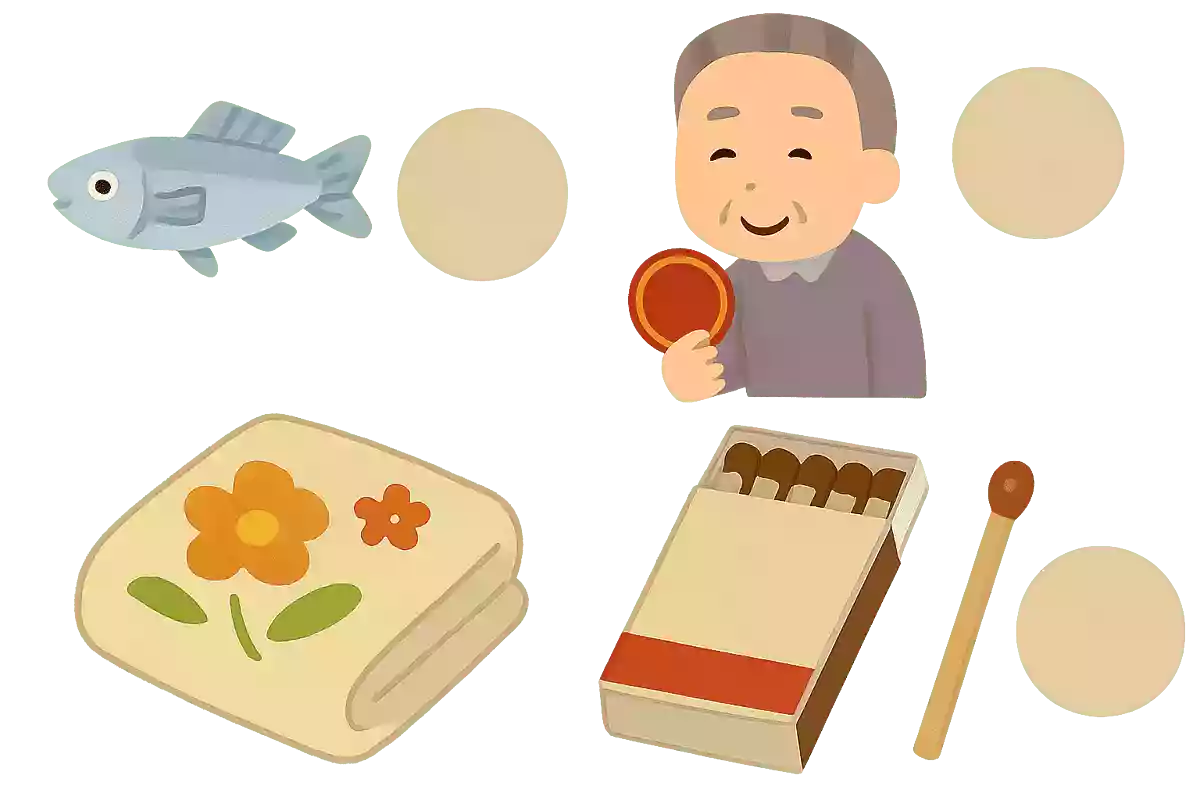
See the answer
1st: seagull, 2nd: menko (traditional Japanese card/slap game), 3rd: fusuma (sliding paper door)
All the answers are three letters, right? For the first one, a word that starts with “ka” and ends with “me” is “kaname.” For the second answer, words that start with “ko” and end with “mo” include “cosmo” and “koimo.” For the last one, words that start with “fu” and end with “ma” include “futama” and “furima.”
Zuroosu → 〇〇〇〇 → Earth → 〇〇〇〇 → Mercury → 〇〇〇〇 → Pencil
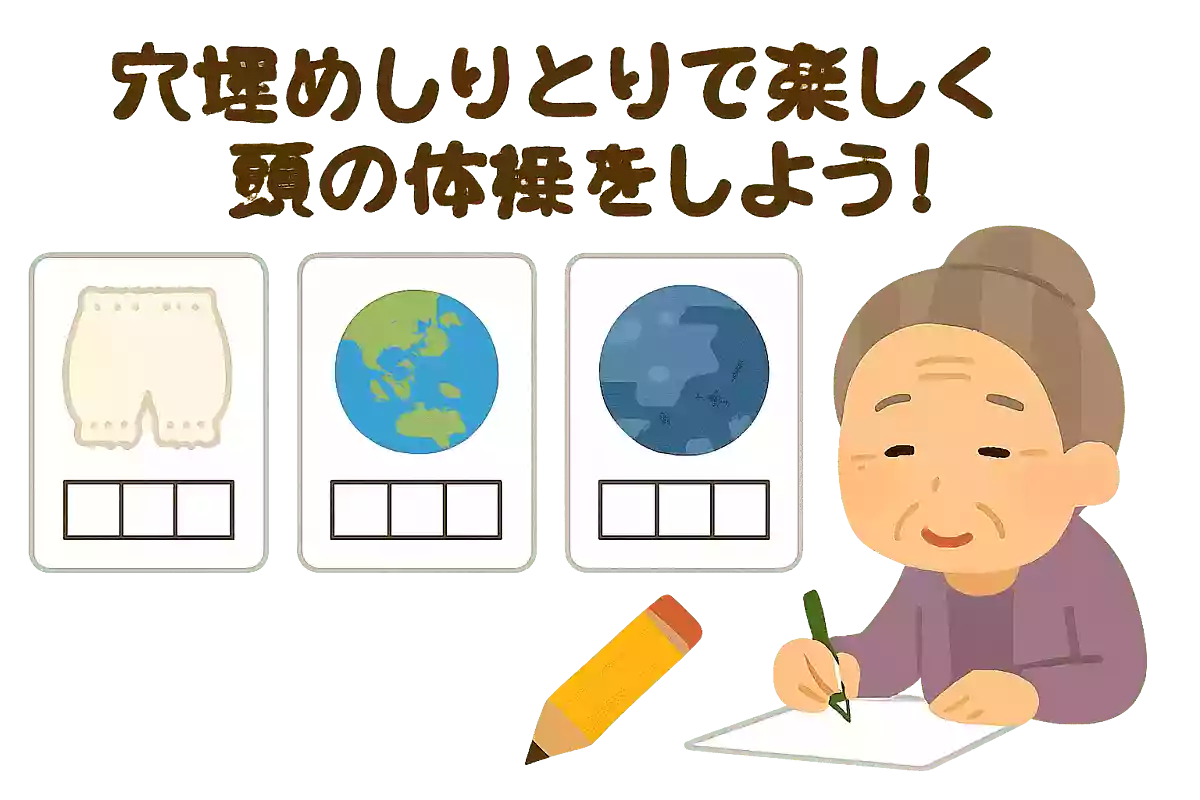
See the answer
1: switch, 2: bush warbler (Japanese bush warbler/uguisu), 3: chef (itamae/sushi chef)
For the first word that starts with “su” and ends with “chi,” examples include “suekichi” and “sujimichi.” For the second word that starts with “u” and ends with “su,” there’s “uirusu” (virus). As for the third word that begins with “i” and ends with “e,” another example is “ishizue.” By the way, it seems that the word in the question, “zuroosu,” used to refer to women’s underwear in Japan.
Polar bear → 〇〇〇〇 → Auspicious day → 〇〇〇〇 → Hand washing → 〇〇〇〇 → Virus
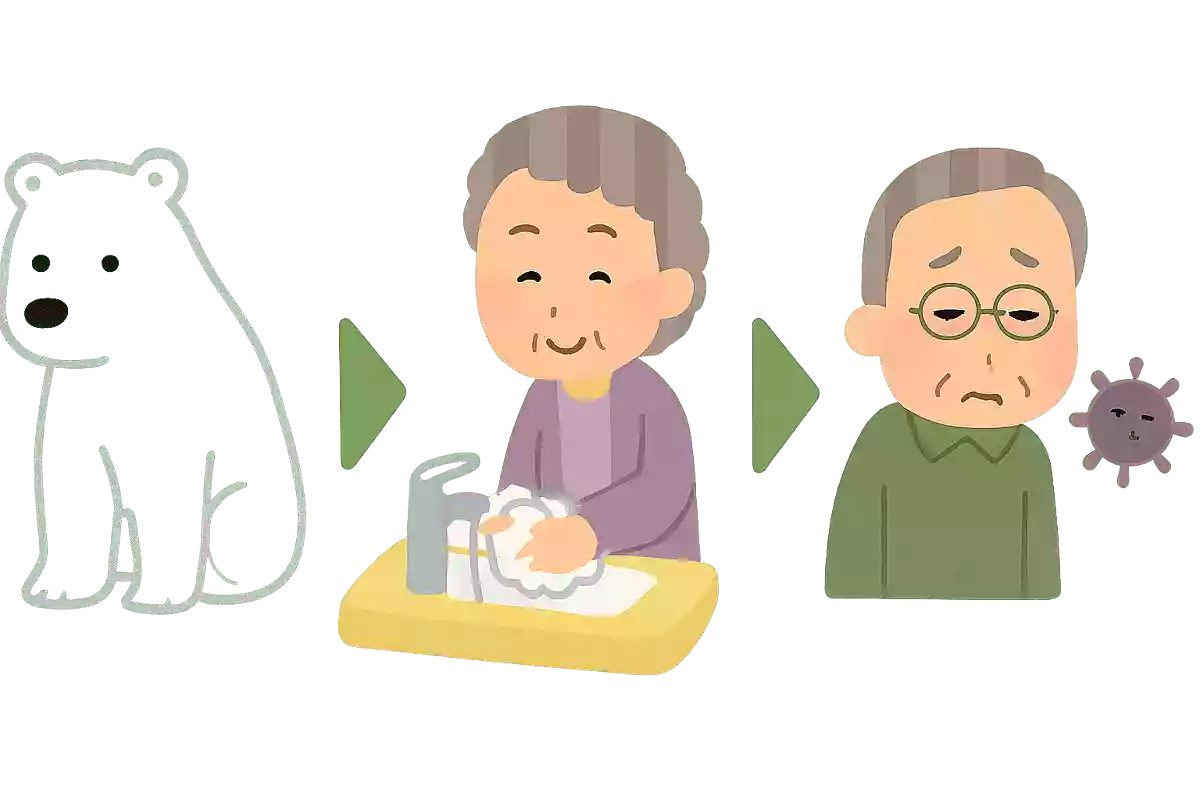
See the answer
1) Every month; 2) Accumulation (installment saving/investing); 3) Migration (relocation)
For the first one, let’s look for a word that starts with “ma” and ends with “ki”! Besides “matataki” (blink) and “matagiki” (overhearing), there are other answers too. For the second one, words that start with “tsu” and end with “te” include “tsuitate” (screen) and “tsukurite” (maker/creator). For the third one, words that start with “i” and end with “u” include “ikaiyō” (gastric ulcer) and “ikumō” (hair growth).
Ice → 〇〇〇 → May → 〇〇〇 → Mushroom → 〇〇〇 → Motorcycle

See the answer
1st: apple, 2nd: building blocks, 3rd: words
Another word that starts with “ri” and ends with “go” is “ritsugo.” “Ritsugo” refers to a phonetic or prosodic form used in classical Chinese texts and haiku. For words that start with “tsu” and end with “ki,” there are “tsūki” and “tsudzuki.” For words that start with “ko” and end with “ba,” “kotaba” and “kohaba” fit.