

For Seniors: A Collection of Four-Character Idioms with Cool Meanings and Stylish Look—Great as Personal Mottos Too

Four-character idioms that exude elegance and gravitas are an important aspect of cultural literacy that can enrich conversations with older adults.
Don’t you ever find yourself exclaiming, “How cool!” when you hear expressions packed with the nuances of life, such as “yūō-maishin” (pressing forward with courage), “ifū-dōdō” (majestic and dignified), or “shippū-keisō” (the strong grass that stands firm in a gale)? The world of four-character idioms, woven from years of experience and wisdom, carries profound messages for those of us living today.
This time, we present cool four-character idioms that you can use casually in everyday conversation and that will resonate in the hearts of those who hear them.
- [For Seniors] Beautiful four-character idioms: Introducing words whose appearance and meanings are elegant, expressed with rich nuance
- [For Seniors] Uplifting four-character idioms: Introducing beautiful, heart-touching words
- [For Seniors] Interesting Four-Character Idioms: Introducing four-character idioms whose appearance, words, or meanings are uniquely entertaining
- [For Seniors] Beautifully Resonant and Memorable! Popular and Stylish Four-Character Idioms
- [For Seniors] Recommended for Kakizome! Introducing Popular Four-Character Idioms and Their Meanings
- Four-Character Idiom Slogans That Resonate with Seniors: A Collection of Beloved Quotes for Facilities and Communities
- Four-Character Idioms for Seniors as New Year’s Resolutions: A Collection of Uplifting, Heartfelt Words
- Four-character idioms for seniors that express goals, effort, and aspirations: words that stir the heart
- Four-character idioms expressing the spirit of perseverance for seniors: encouraging words that give you a gentle push forward
- [For Seniors] Four-character idioms that wish for happiness: auspicious, lovely words to gift to someone special
- For Seniors: Four-Character Idioms that Embody Resilience—Inspiring Words of Perseverance
- [For Seniors] Four-character idioms that include numbers. How many do you know?
- For seniors: A four-character idiom quiz perfect for brain training. A collection of problems that will refresh both mind and spirit.
For Seniors: 4-Character Idioms With Cool Meanings and Look—Great as Personal Mottos (21–30)
A boundless journey ahead (literally: a future that stretches for ten thousand miles)

It is a four-character idiom that means the road ahead stretches as far as ten thousand li, filled with great hope.
It has long been used as an expression wishing for future prosperity and forward-looking progress, conveying a prayer that the recipient’s path ahead will be brilliant.
When given to an elderly person, it both honors the life they have led and offers encouragement that “many wonderful days still lie ahead.” It is also a fitting phrase for younger generations to express respect and congratulations.
It is an auspicious and beautiful expression that gives shape to wishes for longevity and happiness.

supreme delight; utmost joy

This is a four-character idiom that expresses the utmost joy and overflowing delight.
“Daikei” signifies a highly auspicious event or happiness, and “shigoku” means the ultimate state; together, they symbolize the highest form of joy.
Even reading it gives a bright, warm impression, and using it for special occasions or milestones—such as in congratulatory messages or New Year’s cards—conveys a sense of happiness and gratitude.
It evokes a feeling of savoring life’s joys deeply and is cherished as a cheerful, auspicious expression.
Immeasurable happiness

“Kōfuku” signifies inner richness and joy, while “Muryō” denotes boundlessness; together they express happiness that stretches without limit.
When given to an elder, these words are appreciated as a blessing that honors a life well lived and prays that their days ahead remain wrapped in smiles.
Added to milestone celebrations, commemorative gifts, or letters, they convey congratulations with greater depth.
The term “Muryō” also carries a Buddhist nuance, offering a gentle, reassuring resonance that lingers in the heart.
It is an auspicious phrase, ideal when you wish for a dear person’s life to be long filled with peace and joy.
Perseverance wears down even stone.
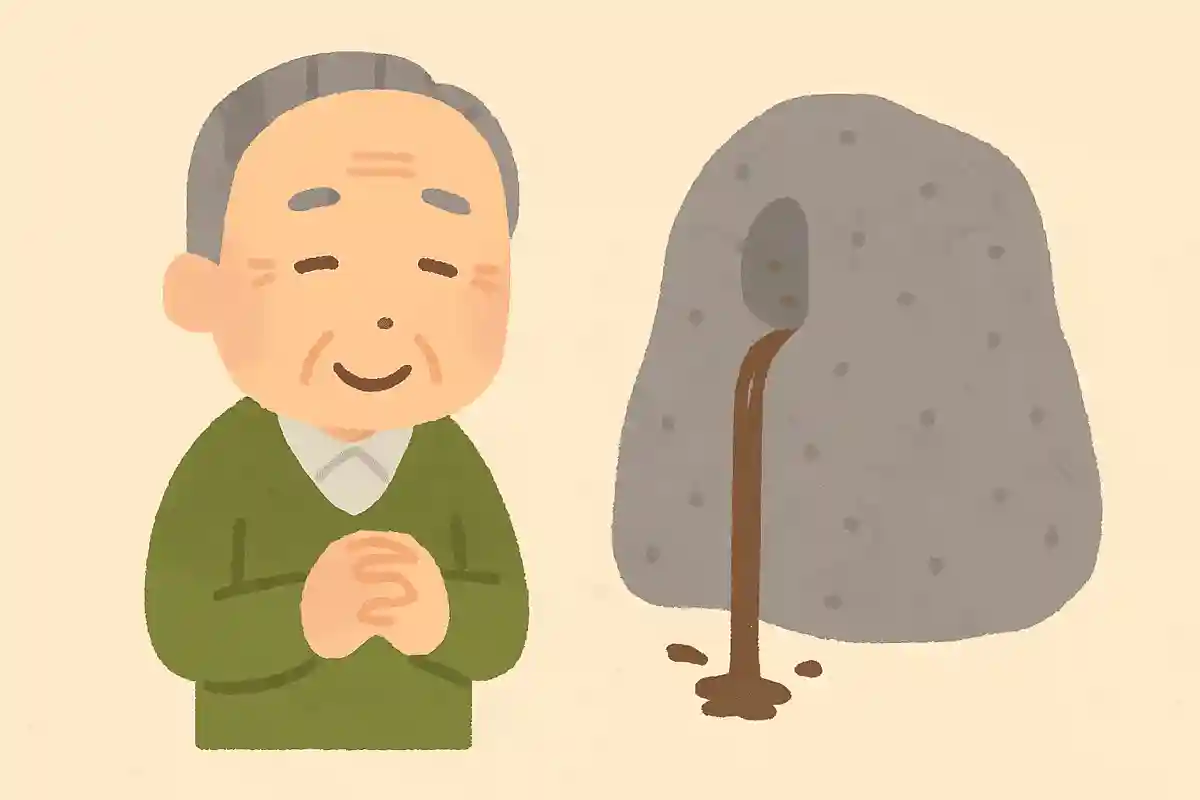
This is a four-character idiom that shows any hardship can be overcome with a strong will.
It conveys the idea that “if the heart is firm, even rock can be pierced,” symbolizing the power of effort and perseverance.
The message is that by not giving up in the face of difficulties and acting with conviction, one can achieve results.
It resonates as a phrase that reflects the tenacity and positive attitude of those seasoned by life’s experiences, and is also known as a saying that conveys courage and hope to others—beloved as a slogan that speaks to many hearts.
A dull horse traveling ten days (i.e., a slow but steady effort can compensate for lack of talent)
@hiroaki946 Doba Juga Shorts Short videos Mini videos Idioms Four-character idioms Proverbs Japanese Language meaning Wordplay Learning Education Trivia Japanese culture Time-killers Study Knowledge Trivia Everyday life Power of words VOICEVOX: Shikoku Metan Hard work pays off four-character idiom “Doba Juga.” Do you know what it means? First, an example sentence: Mr. Tanaka wasn’t particularly talented, but he never neglected to study steadily every day. He kept studying even while other students were playing. As a result, he achieved excellent scores on the university entrance exams and was admitted to his first-choice university. Those around him praised his success as “doba juga,” noting that even without innate talent, a path opens if one continues to work hard. Meaning: “Doba Juga” (dobajūga) means that even someone with little talent can, through sustained time and effort, catch up to and even surpass someone more gifted. The phrase comes from an old anecdote that the distance an ordinary horse (doba) runs in ten days is equivalent to what an excellent horse can run in a single day. It teaches that persistent effort can bridge differences in natural ability. That’s all.
Original song – hiroaki946 – hiroaki946
This four-character idiom comes from an old story: even a slow-footed horse can catch up to a fast one if it keeps moving for ten days.
It encourages us that, even without confidence in our talent or physical strength, steady, persistent effort will surely lead to results.
As we age, we may feel that we can’t learn as quickly as before or that our bodies don’t move as we want.
Yet this saying warmly supports us in those moments.
It teaches that if we don’t rush and keep moving forward—however slowly—we will surely get closer to our goals.
The Foolish Old Man Who Removed the Mountains

This four-character idiom comes from the story of an old man (the Foolish Old Man) who kept trying, little by little, to move a great mountain, and it expresses the inner strength to keep challenging any difficulty without giving up.
As we grow older, we more often think, “Maybe I can’t do it anymore,” but this phrase turns such feelings into courage.
It teaches that even a huge goal will open a path if you tackle it step by step, and it applies to daily life as well.
A tenacious, persevering attitude like the Foolish Old Man’s conveys the value of striving without giving up regardless of age, and it will surely support and encourage you to keep taking on challenges.
painstaking effort; hard struggle

It is a four-character idiom that describes pouring your heart into accomplishing something and working hard with dedication.
It praises the attitude of facing difficulties not by giving up, but by repeatedly applying ingenuity and effort, and it can be a powerful encouragement for older adults as well.
As we age, various limitations arise and things don’t always go as planned, but this phrase reminds us that “the process of effort itself has value.” It encourages an attitude of taking on challenges without fearing hardship, even starting from small steps, and gives meaning to everyday efforts.