

For seniors: A four-character idiom quiz perfect for brain training. A collection of problems that will refresh both mind and spirit.

Along with fond memories of familiar words, four-character idiom quizzes—which also serve as brain training—are popular as a fun recreational activity that naturally livens up conversations with older adults.
We’ve gathered a wide range—from commonly used expressions like “喜怒哀楽 (joy, anger, sorrow, and pleasure)” and “一期一会 (a once-in-a-lifetime encounter)” to classical idioms.
Since they’re fill-in-the-blank questions, seniors can join in easily.
The time spent thinking of answers engages the imagination, stimulates the brain, and may help prevent dementia.
Let’s all take on these four-character idiom challenges together—enjoy learning while sharing the joy of solving them!
[For Seniors] Perfect Four-Character Idiom Quiz for Brain Training: A Refreshing Set of Problems for Mind and Spirit (1–10)
Anger, sorrow, and joy
- Worry
- joy
- bark
See the answer
joy
Kidoairaku is a four-character idiom that categorizes human emotions into four types. Ki means joy, do means anger, ai means sadness, and raku means pleasure, each representing a basic human emotion. It is also said that having these four emotions in good balance is important. When someone is described as having rich kidoairaku, it means they express their emotions clearly.

101st Association
- period
- times
- point
See the answer
period
Ichigo ichie is often used as a guiding principle in the tea ceremony and means “a once-in-a-lifetime encounter.” Because no meeting between people will ever be exactly the same again, it teaches us to cherish each and every encounter. Many older adults also resonate with this phrase, finding in it a reminder to value human connections throughout their lives.
Ten people, ten circles
- face; surface; aspect; mask; side (of a die); noodles (as a word fragment); honor (as 面目). Common translation in isolation: “face” or “surface,” depending on context.
- color
- minute
See the answer
color
Jūnin toiro literally means “ten people, ten colors,” expressing the idea that everyone has their own individuality, preferences, and ways of thinking. It’s often used positively to suggest that it’s natural for people to have differing opinions, and it’s a common expression in everyday conversation.
to sleep on brushwood and taste gall; to endure hardship and persevere for future revenge/success
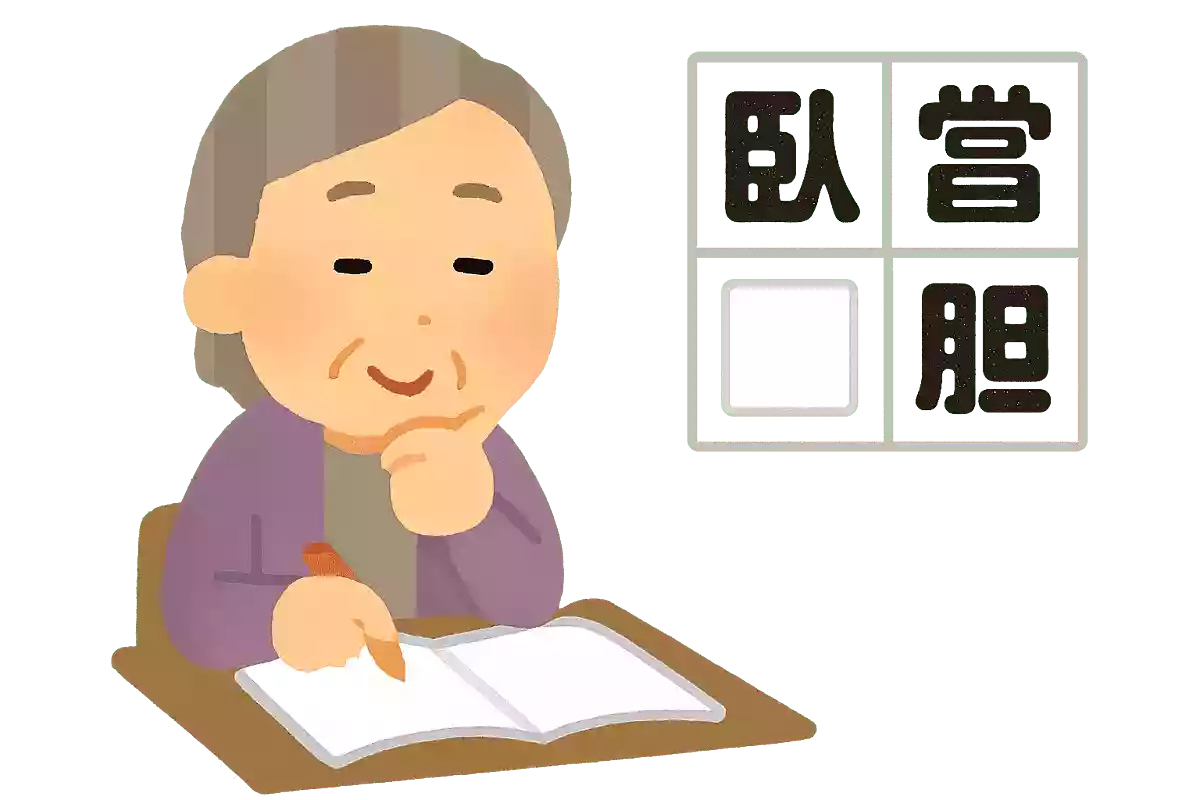
- firewood
- water
- bamboo
See the answer
firewood
Gashin-shōtan is a four-character idiom that means to endure hardships continuously so as not to forget past failures or frustration in order to achieve one’s goal. “Gashin” means “to endure pain to the extent of sleeping on firewood,” and “shōtan” means “to lick a bitter gallbladder to spur oneself on.” Both parts express a strong will to overcome hardships and difficulties to reach one’s objectives. It is also a phrase that can be used when older people recall their past experiences and efforts.
Learning new things by reviewing the old
- old; ancient
- new
- warm
See the answer
warm
Onko chishin, originating from the Analects, means to study things of the past thoroughly and thereby discover new knowledge and principles. For older adults as well, it expresses the importance of valuing one’s experiences and memories while continuing to learn new things. It also conveys the lesson that in both work and daily life, it is vital to develop by making use of past experiences.
Kill two birds with one stone
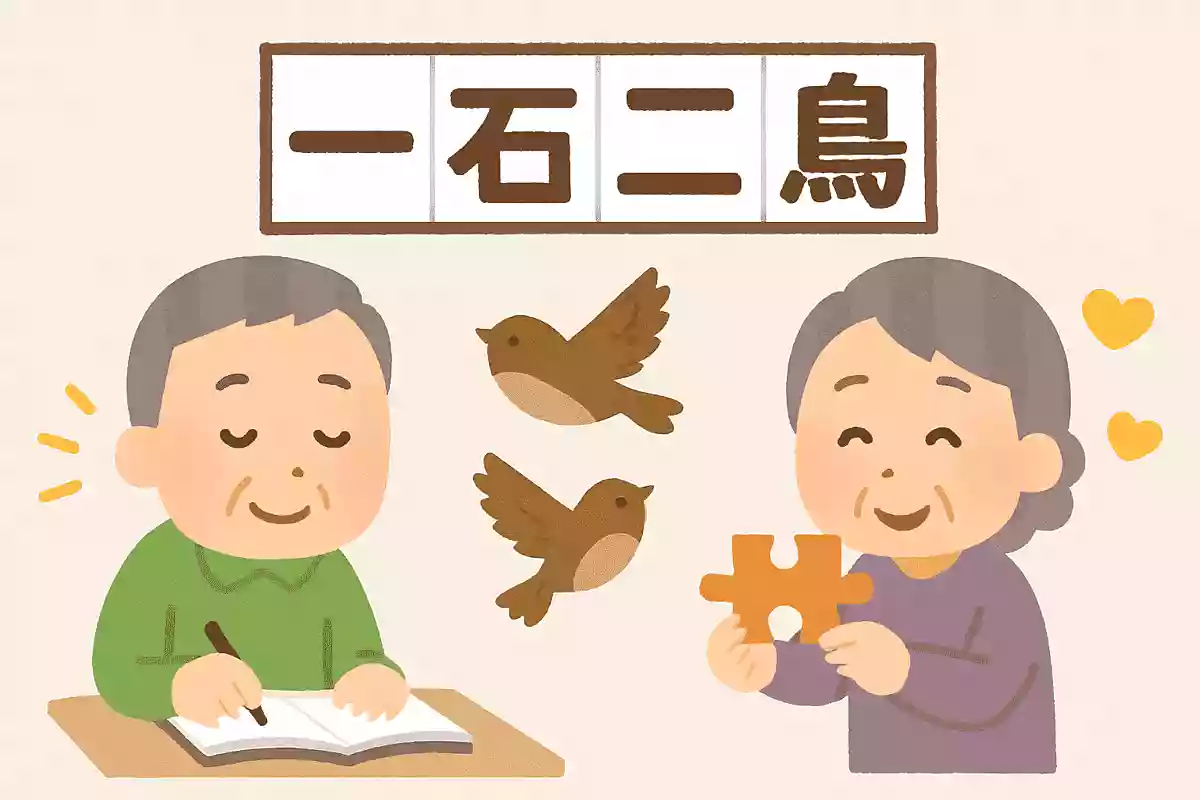
- three
- one
- ten thousand
See the answer
one
The correct answer is “kill two birds with one stone.” It comes from the idea of “bringing down two birds with one stone” and expresses doing one thing and gaining two results or benefits. For example, talking with a friend while taking a walk lets you get some exercise and socialize at the same time. It’s a common expression in daily life, so it’s useful to remember.
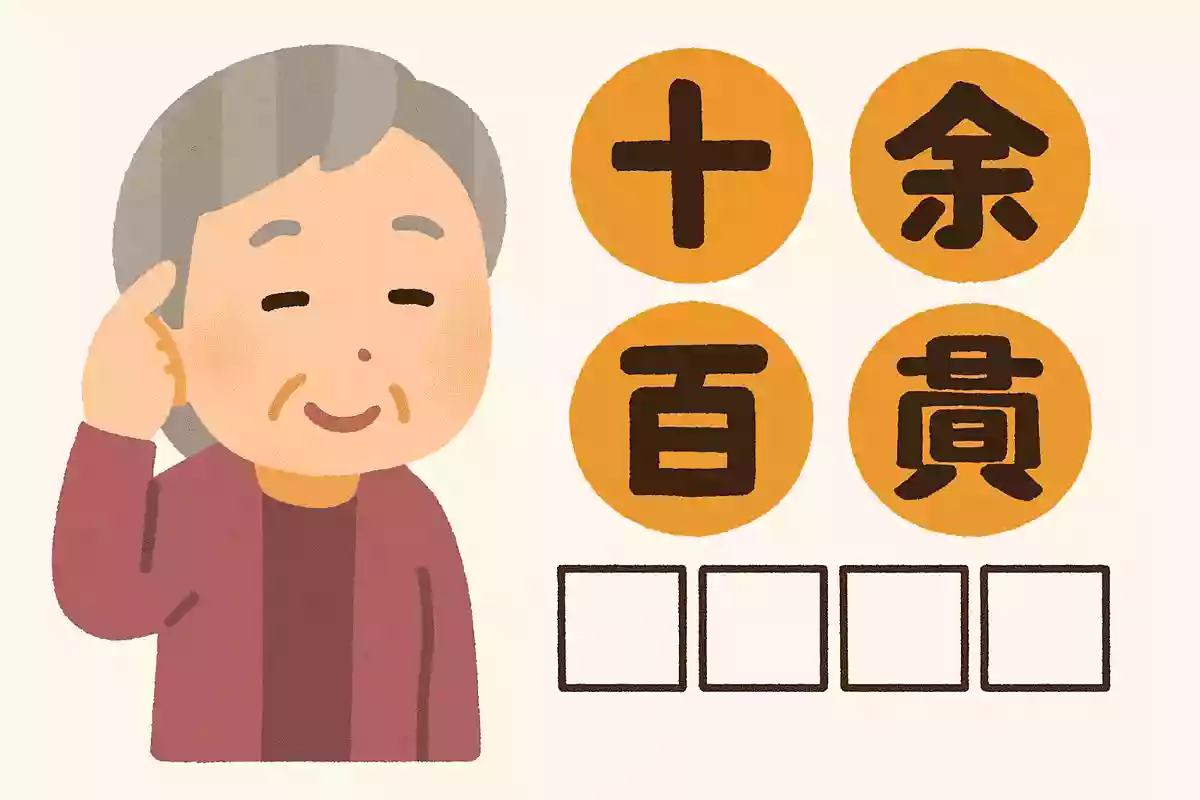
headlong charge
- wild boar
- horse
- tiger
See the answer
wild boar
Chototsu-moshin (lit. “charging straight ahead”) is used to mean pushing forward single-mindedly without considering your surroundings. It comes from the image of a wild boar dashing straight toward its target at full speed. Because of this, it can also describe someone who proceeds with things in a straight line without any planning, so it may be a term that even older people have heard in everyday conversation.