

For seniors: A four-character idiom quiz perfect for brain training. A collection of problems that will refresh both mind and spirit.

Along with fond memories of familiar words, four-character idiom quizzes—which also serve as brain training—are popular as a fun recreational activity that naturally livens up conversations with older adults.
We’ve gathered a wide range—from commonly used expressions like “喜怒哀楽 (joy, anger, sorrow, and pleasure)” and “一期一会 (a once-in-a-lifetime encounter)” to classical idioms.
Since they’re fill-in-the-blank questions, seniors can join in easily.
The time spent thinking of answers engages the imagination, stimulates the brain, and may help prevent dementia.
Let’s all take on these four-character idiom challenges together—enjoy learning while sharing the joy of solving them!
- [For Seniors] Enjoyable Brain Training! Proverb Quiz Collection
- [For Seniors] Fun and Exciting! Difficult Kanji Quiz
- [For Seniors] Perfect for Dementia Prevention! Jumbled Kanji Quiz
- [For Seniors] Difficult-to-Read Kanji for Everyday Items: Take on a quiz full of surprises and discoveries
- [For Seniors] Fun Brain Training! A Collection of Tricky Quizzes You’ll Definitely Get Stumped By
- [Brain Training] Lively Word Quiz for Seniors
- [For Seniors] Recommended for Brain Training! Nostalgic Showa-Era Quiz
- [For Seniors] Challenging but Exciting! Kanji Quiz
- [For Seniors] Interesting Four-Character Idioms: Introducing four-character idioms whose appearance, words, or meanings are uniquely entertaining
- [For Seniors] Perfect for Brain Training! Themed Hiragana Fill-in-the-Blank Quiz
- [For Seniors] Challenge Your Brain with Super-Hard Quizzes! A Collection of Tough Questions That Feels Great Once You Know the Answer
- Recommended for seniors’ brain training! Kanji quiz workbook of fish names
- [For Seniors] Uplifting four-character idioms: Introducing beautiful, heart-touching words
[For Seniors] Perfect Four-Character Idiom Quiz for Brain Training: A Refreshing Set of Problems for Mind and Spirit (1–10)
headlong charge
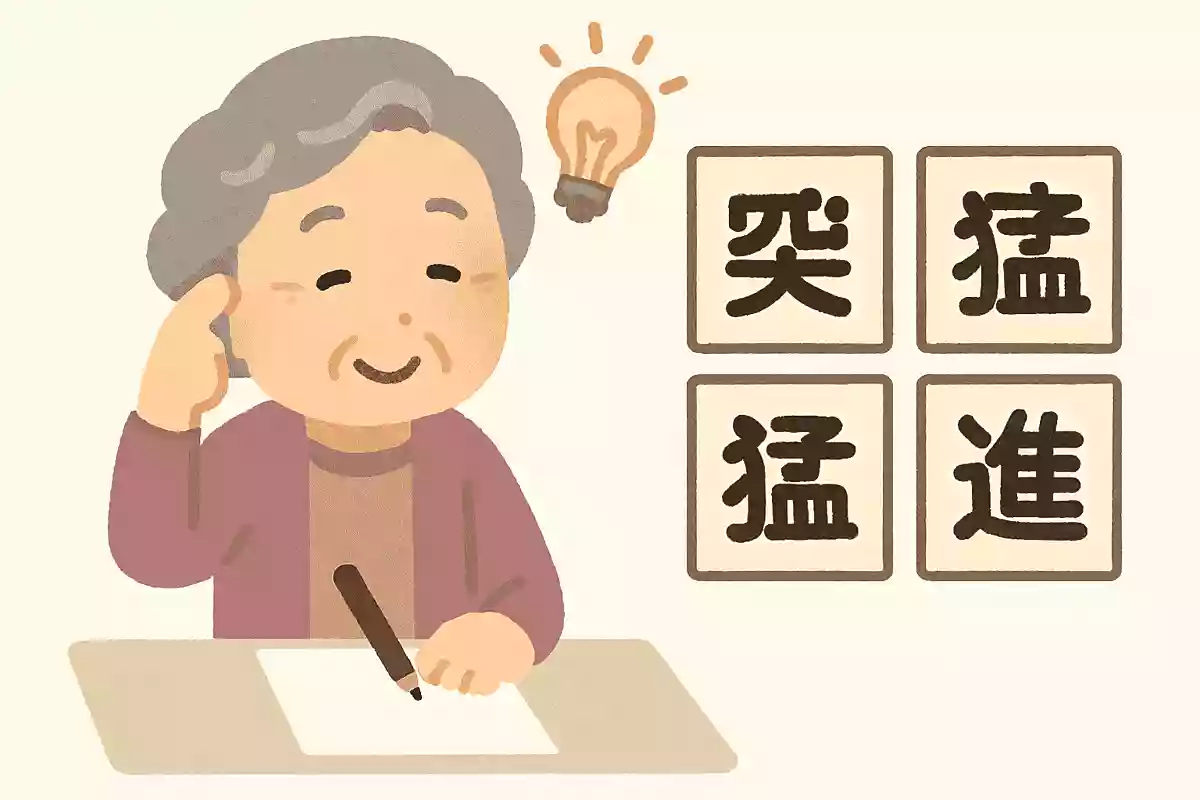
- violence
- wild boar
- cow
See the answer
wild boar
Chototsu moushin describes charging straight ahead like a wild boar, without regard for your surroundings. It’s often used when someone pursues a goal or objective while lacking caution. Sometimes it can be a compliment, but it can also imply recklessness or acting without thinking, so be mindful of context when using it.

Forty Songs of Chu
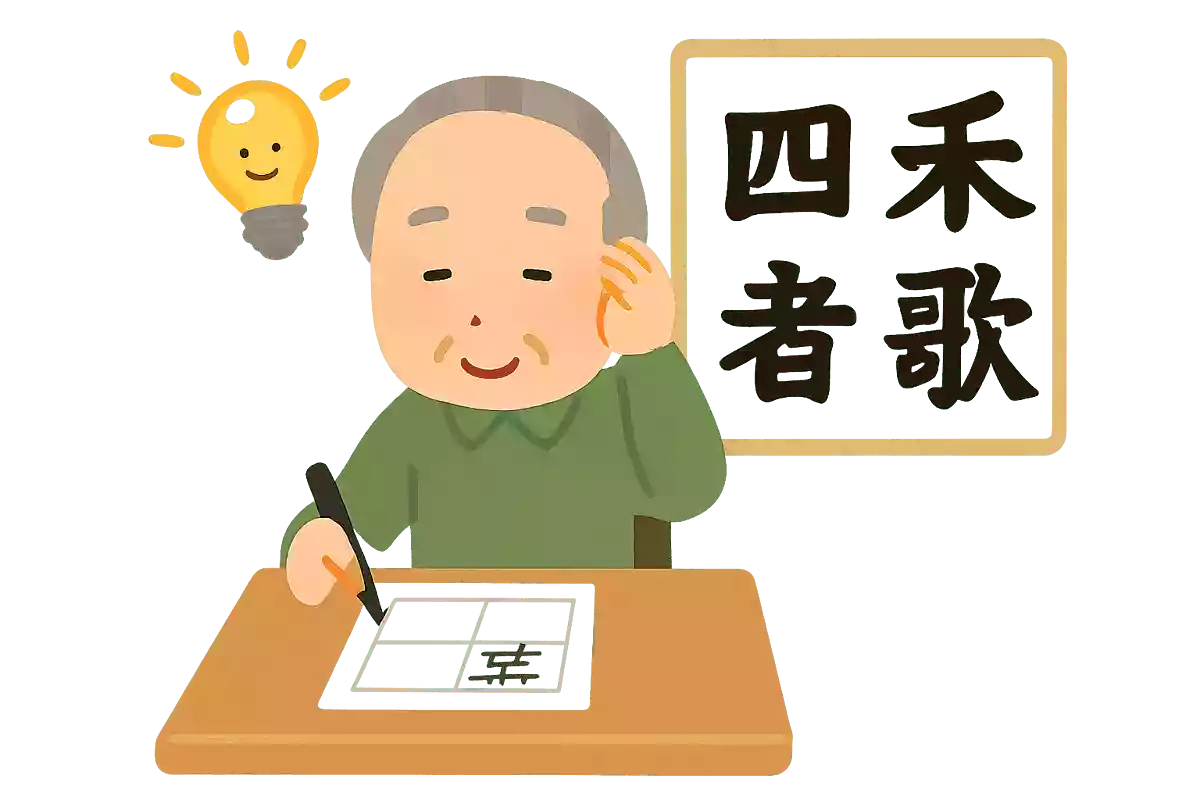
- face; surface; aspect; mask; side (of a die); noodles (as a word fragment); honor (as 面目). Common translation in isolation: “face” or “surface,” depending on context.
- person; way; direction; method (context-dependent)
- suffering
See the answer
face; surface; aspect; mask; side (of a die); noodles (as a word fragment); honor (as 面目). Common translation in isolation: “face” or “surface,” depending on context.
Shimen Soka (“surrounded on all sides”) is an expression that describes a situation where you are encircled by enemies on every side and left isolated. “Soka” comes from a story in China’s Warring States period: when Xiang Yu was surrounded by enemy forces, they sang songs of Chu to exert psychological pressure on him. From this, the phrase came to mean being hemmed in on all sides with no room to move, or being left without allies and isolated. In everyday life, it’s also used to describe situations—such as in personal relationships—where you have no one to rely on.
Daily progress and monthly improvement
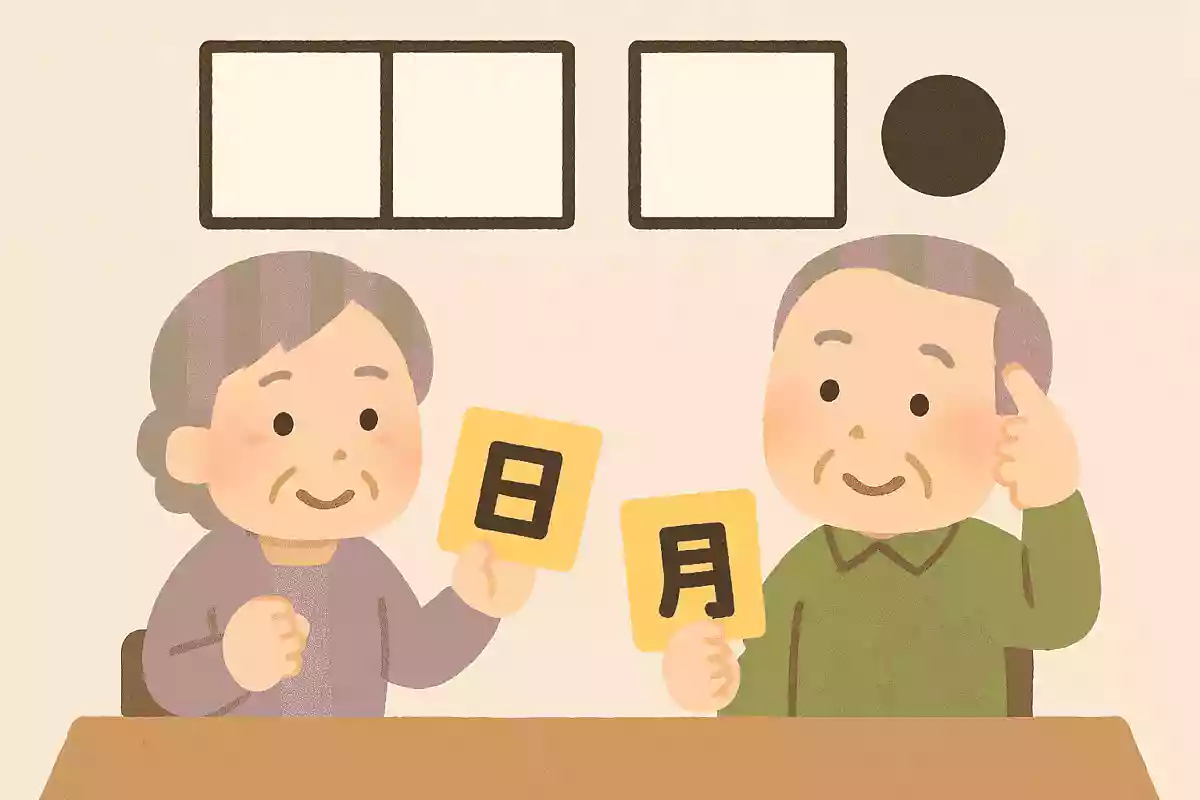
- heart
- new
- advance
See the answer
advance
Nisshin-geppo refers to remarkable progress and development occurring day by day and month by month. Originally, it described the rapid advancement of technology, scholarship, and everyday life. It is also used today to capture the swift pace of societal change and how quickly things move in the modern world. The four-character idiom combines the meanings of “nisshin” (advancing by the day) and “geppo” (advancing by the month). It’s a phrase that can also resonate with older adults when reflecting on how much the world has developed compared to the past.
[For Seniors] Perfect Four-Character Idiom Quiz for Brain Training: A Refreshing Problem Set for Mind and Spirit (11–20)
Sound health and peaceful rest
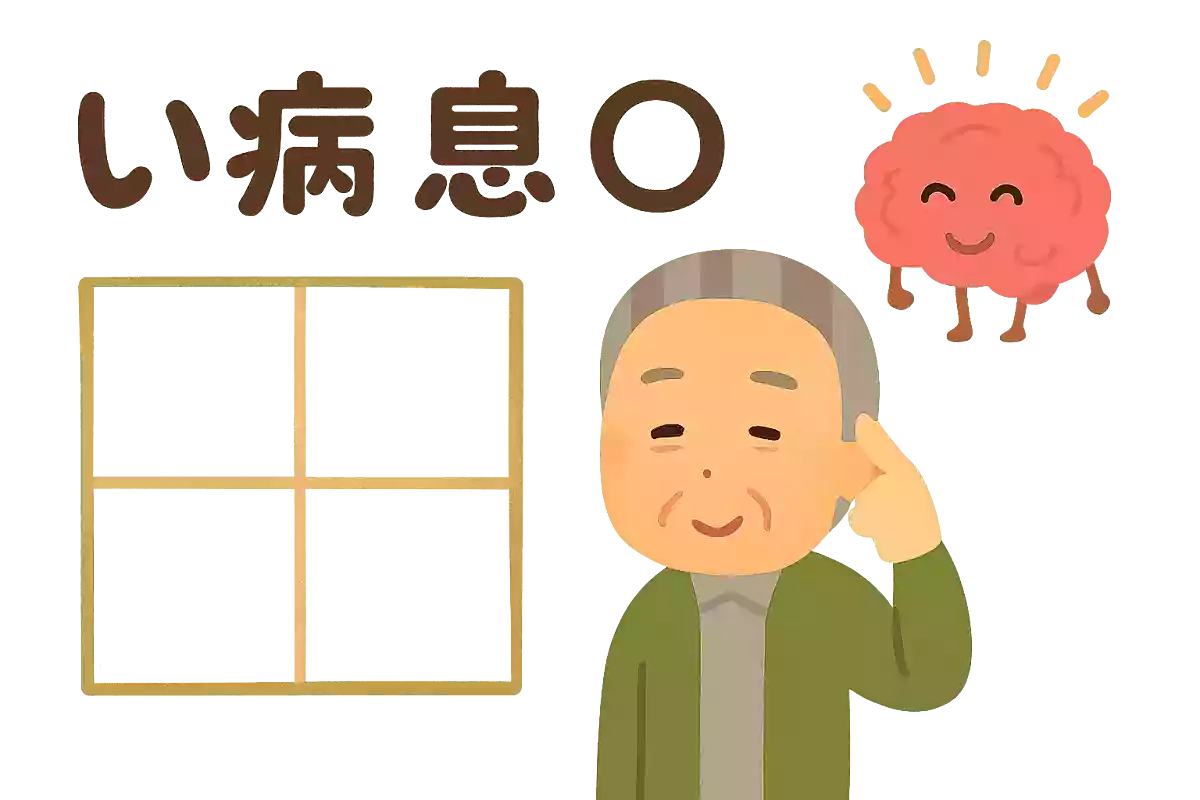
- disaster
- Fortune
- chief
See the answer
disaster
“Mubyō-sokusai” is a four-character idiom meaning to live safely and in good health without illness. It is often used in daily greetings and New Year’s messages to wish that elderly people stay healthy and live long. “Sokusai” refers to being safe and healthy. Therefore, the correct kanji to fill in the circle is 災.
in one fell swoop
- hit
- pass; street; avenue; expert; common; to go through (context-dependent)
- hit
See the answer
hit
Ichimōdajin refers to catching everything in one go—originally from casting a single net to catch all the fish—and by extension means apprehending every last wrongdoer in a single action or crackdown. It’s often used to describe sweeping away criminals or solving a problem all at once. In everyday conversation, saying “to round them up in one go” or “to take them all down at once” conveys the idea of handling things collectively.
three-legged race

- three
- pair
- four
See the answer
three
Ninin-sankyaku (three-legged race) refers to a competition in which two people tie their adjacent legs together with cloth and run while cooperating. In other words, the character for “three” is used because the pair runs as if they had three legs. This four-character idiom also conveys the importance of cooperation and mutual assistance, and it is the name of an event enjoyed by people of all ages at sports days and similar occasions.
Three in the morning, four in the evening
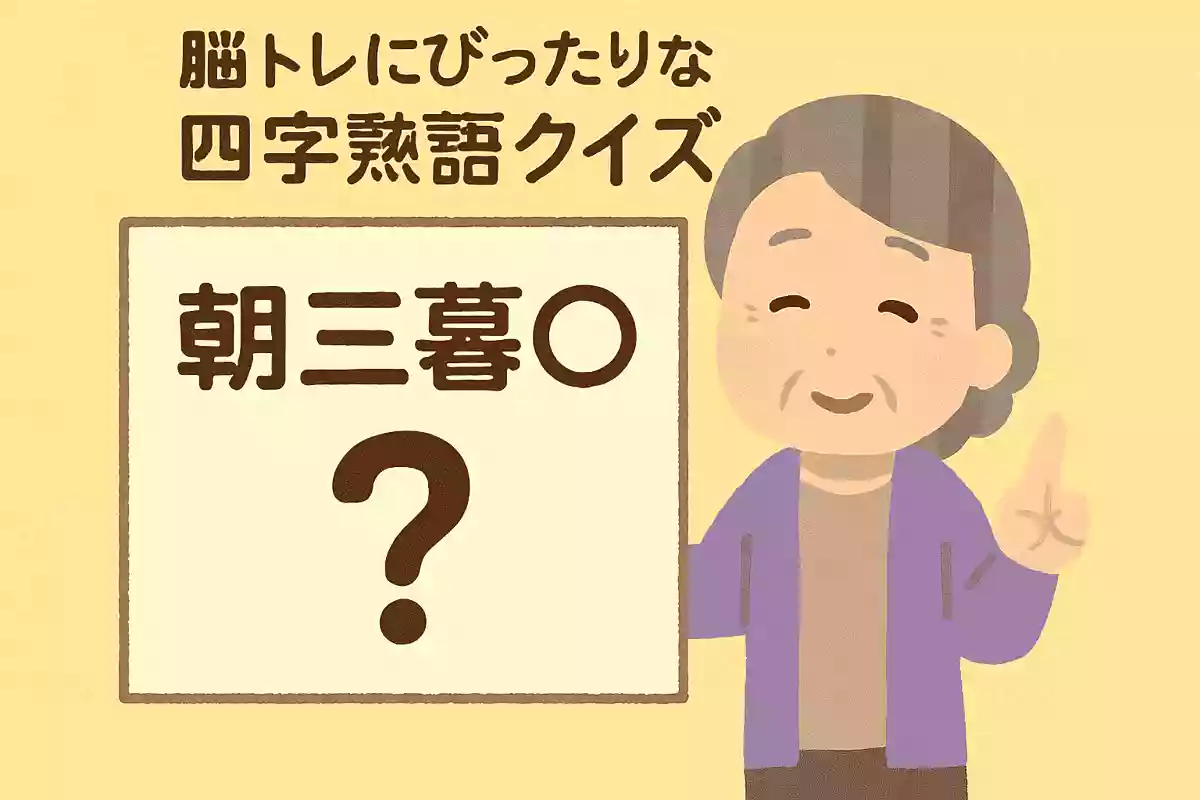
- five
- four
- ten
See the answer
four
“Chōsanboshi” (literally, “three in the morning, four in the evening”) originates from a story in the Chinese classic Zhuangzi. A monkey keeper told his monkeys he would give them three chestnuts in the morning and four in the evening; when they complained, he rephrased it to four in the morning and three in the evening, which made them happy. The total is seven either way, but the story is used as an example of clever sophistry—deceiving people with a superficial change in appearance or wording.