

![[For Seniors] Challenge Your Brain with Super-Hard Quizzes! A Collection of Tough Questions That Feels Great Once You Know the Answer](https://media.ragnet.co.jp/img/1200__png__https://www.ragnet.co.jp/files/2025/10/d42e292e3e911c5509be873a8a454a64.webp)
[For Seniors] Challenge Your Brain with Super-Hard Quizzes! A Collection of Tough Questions That Feels Great Once You Know the Answer

Here’s a set of super-difficult quizzes perfect for stimulating your brain.
This time, we’ve gathered a variety of challenging quizzes that seniors can enjoy.
Packed with trivia that everyone thinks they know but actually don’t! From the secret of a camel’s eyelids to Japanese traditions, food culture, and handy everyday tips, surprising puzzles await you.
How many can you answer? Try them out for fun conversation with friends and family, or enjoy them during leisure time at a facility—challenge yourself and have fun!
[For Seniors] Challenge Your Brain with Super-Hard Quizzes! A Collection of Tough Questions That Feel Great Once You Know the Answers (1–10)
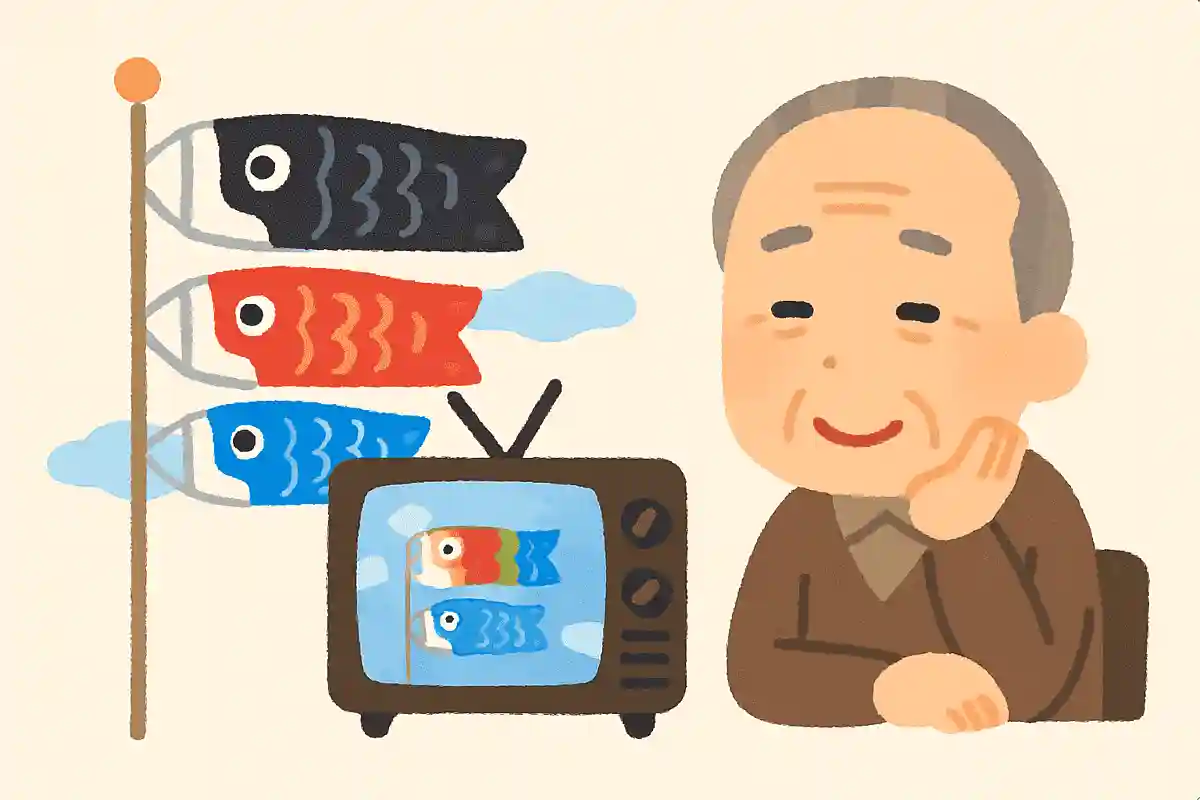
Originally, black was the mainstream color for koinobori (carp streamers). They became colorful after a koinobori craftsman was inspired by something he saw on television. What was that “something”?
- traffic light
- rainbow
- Olympic rings
See the answer
Olympic rings
It is said that the reason carp streamers became colorful was that a carp-streamer craftsman was inspired after seeing the Olympic rings on television during the Tokyo Olympics. The Olympic emblem features five rings—blue, yellow, black, green, and red—and, taking a cue from their vivid colors, he began using a variety of colors for carp streamers. Because of this background, modern carp streamers are known for their colorful designs. Before that, black was the standard color, but under the influence of the Olympic emblem, they evolved over time into more vibrant designs.

In which historical period of Japan were rice balls (onigiri) first eaten?

- Jōmon period
- Yayoi period
- Heian period
See the answer
Yayoi period
The origin of onigiri is very old. Excavations and other archaeological research have revealed that as early as the Yayoi period, rice was already being molded into shapes similar to today’s rice balls. At a Yayoi-period site in Ishikawa Prefecture, Japan, charred lumps of rice have been discovered, and these are considered the oldest onigiri in Japan. It is thought that the practice of shaping rice by hand arose at the time for ease of preservation and portability. Therefore, the beginnings of onigiri are said to date back to the Yayoi period.
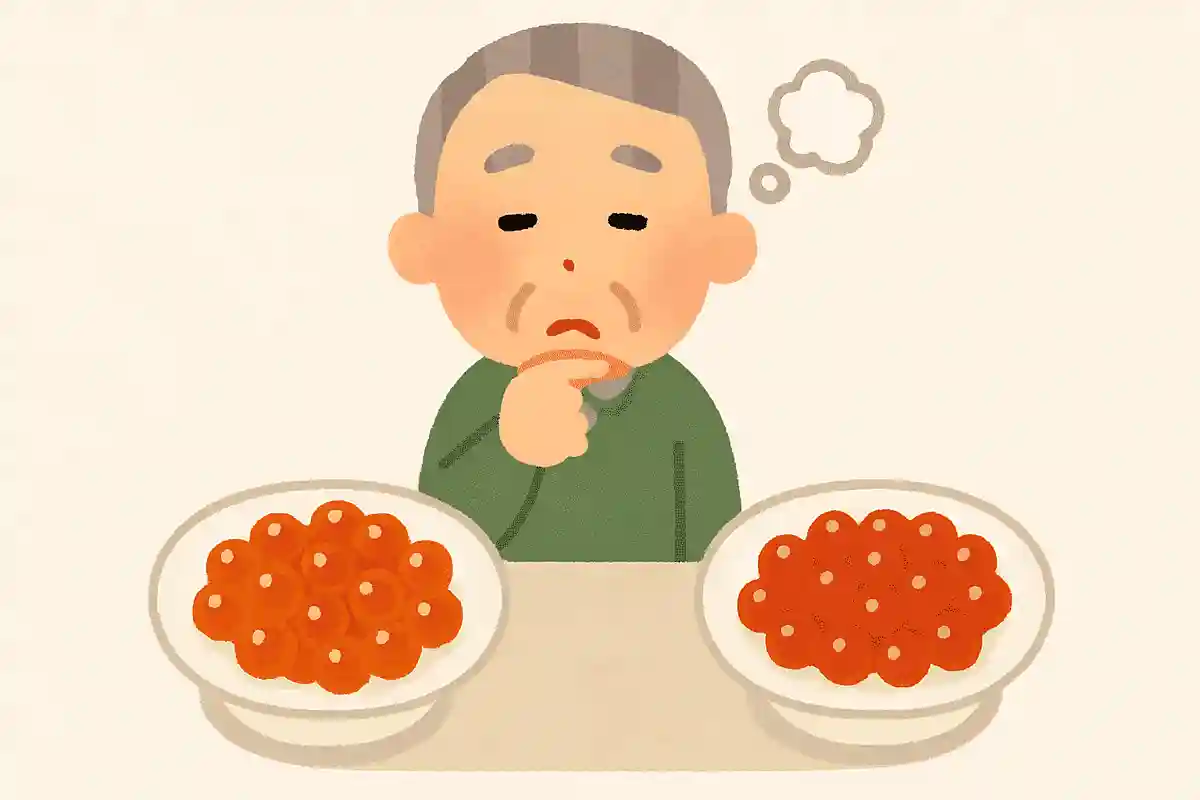
Real salmon roe vs. artificial salmon roe: which of the following is the easy way to tell them apart?
- pour hot water
- Chill in the refrigerator
- sprinkle salt
See the answer
pour hot water
When you pour hot water over real salmon roe (ikura), the surface turns white from the heat, a membrane forms, and the color deepens. In contrast, artificial ikura shows little visible change when hot water is applied, but oil and coloring start to separate and float out. This difference makes it easy to distinguish real from artificial. This method is especially useful for people, such as the elderly, who may find it hard to tell them apart by appearance alone.
Which of the following is the correct description of the salinity of seawater?

- It varies greatly depending on the location.
- It varies greatly by season.
- kept constant at all times
See the answer
kept constant at all times
The salinity of seawater is maintained at an average of about 3.5% worldwide. This is because the global water cycle and the circulation of salts work over long periods to even things out. Although it can temporarily change due to factors like precipitation and river inflow, it remains nearly constant over large areas. As a result, there is rarely a drastic difference in saltiness when you swim in the sea.
It’s said that a certain figure from the Meiji era played a major role in the creation of nikujaga. Who was that person?

- Hirobumi Ito
- Togo Heihachiro
- Soseki Natsume
See the answer
Togo Heihachiro
Admiral Heihachiro Togo, a naval officer of the Meiji era, played a major role in the creation of nikujaga. While studying in the United Kingdom, he couldn’t forget the taste of the beef stew he ate there, and after returning to Japan he instructed a chef to recreate it. However, due to ingredient limitations, it was adapted into a Japanese-style simmered dish using beef, potatoes, onions, and the like, and this is said to be how nikujaga was born. As this anecdote spread, it came to be cited as the background for how today’s nikujaga became popular.
What was the name of the cat that Natsume Soseki kept?

- Micke
- cat
- Tama
See the answer
cat
The correct answer is “Neko” (Cat). The cat who is the protagonist of Natsume Sōseki’s I Am a Cat is not given an official name, and in the novel it says, “I am a cat. I have no name yet.” However, the pet cat was called “Neko” by Sōseki himself and his family.
What’s the difference between crescent-shaped and diamond-shaped croissants?

- The difference between butter and margarine
- Difference in fermentation time
- Ingredients inside
See the answer
The difference between butter and margarine
In France, it is recommended by law that croissants made only with butter be diamond-shaped, while those made with fats other than butter, such as margarine, be crescent-shaped. In other words, the crescent shape traditionally uses fats other than butter, and the diamond shape is generally made with 100% butter. The difference in shape is not just about appearance; it originated as a way to make it easier to distinguish the ingredients used.