

![[For Seniors] Perfect for Dementia Prevention! Jumbled Kanji Quiz](https://media.ragnet.co.jp/img/1200__png__https://www.ragnet.co.jp/files/2025/04/fcd13391d35c0c054055f7afc239b602.webp)
[For Seniors] Perfect for Dementia Prevention! Jumbled Kanji Quiz

Quizzes and brain-training activities are often used as recreation in senior care facilities.
Using your brain helps activate it, doesn’t it?
So this time, we’re introducing a Kanji Scramble Quiz.
It’s a game where a single kanji character is broken into parts, and you guess the original character.
Because it uses kanji, it’s easy to try and easy to join in.
As we age, our spatial recognition abilities—such as judging distance, width, and height—tend to decline.
This can lead to issues like bumping into things while walking or getting lost.
The Kanji Scramble Quiz is said to train not only spatial cognition but also memory and visualization skills.
By all means, have fun and give the Kanji Scramble Quiz a try!
[For Seniors] Perfect for Dementia Prevention! Jumbled Kanji Quiz (1–10)
“Sun” + “Speech” + “Ten” + “Temple” =
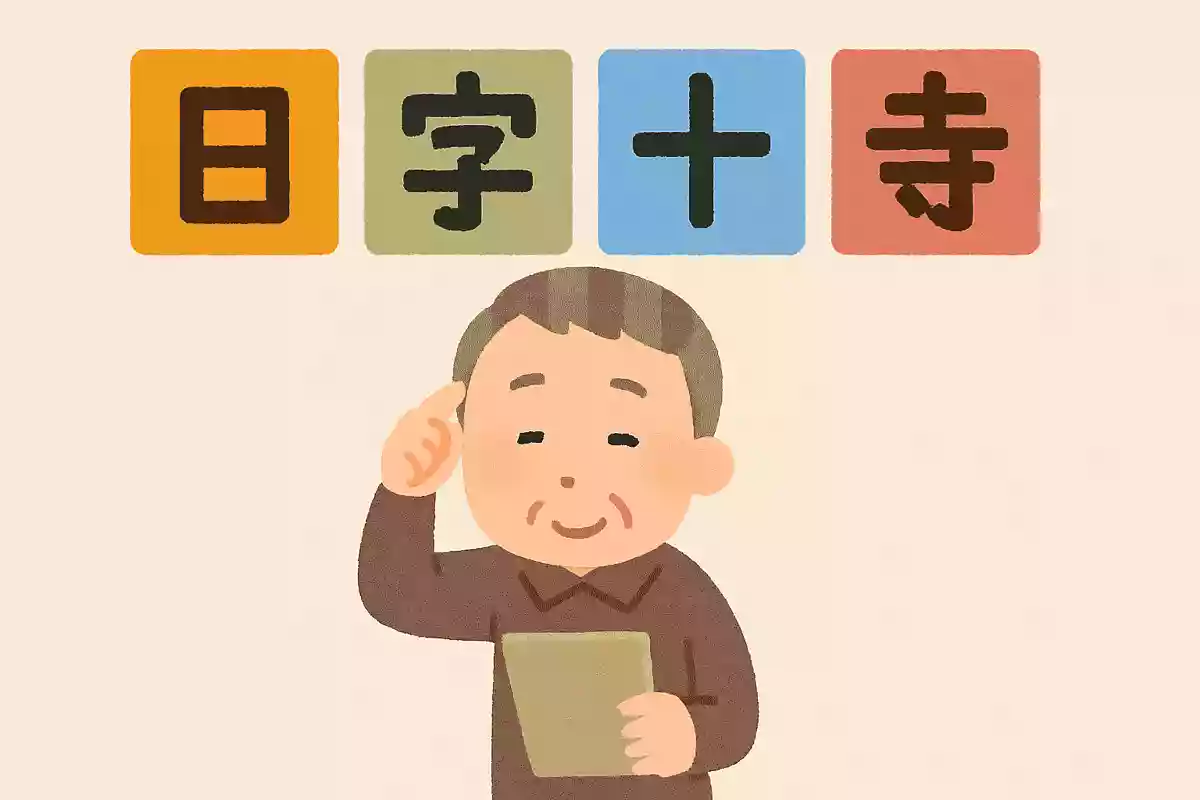
Let’s think of words that can be formed by combining the parts “日” (sun/day), “言” (speech), “十” (ten), and “寺” (temple).
If we focus on the more complex parts, “言” and “寺,” and think about where to place the other parts around them, it becomes easier to arrive at the answer.
The answer is “時計” (clock/watch).
It’s a simple pattern where the parts are placed side by side horizontally, so if someone can’t come up with the answer, offer that arrangement as a hint.
A tricky point is that when '計' is on the right, the '十' takes on an elongated form, which changes its appearance and makes the puzzle harder to spot.

“立” + “木” + “耳” + “門” + “斤” = “職” (These radicals/parts combine to form the kanji “職,” meaning “job/occupation.”)
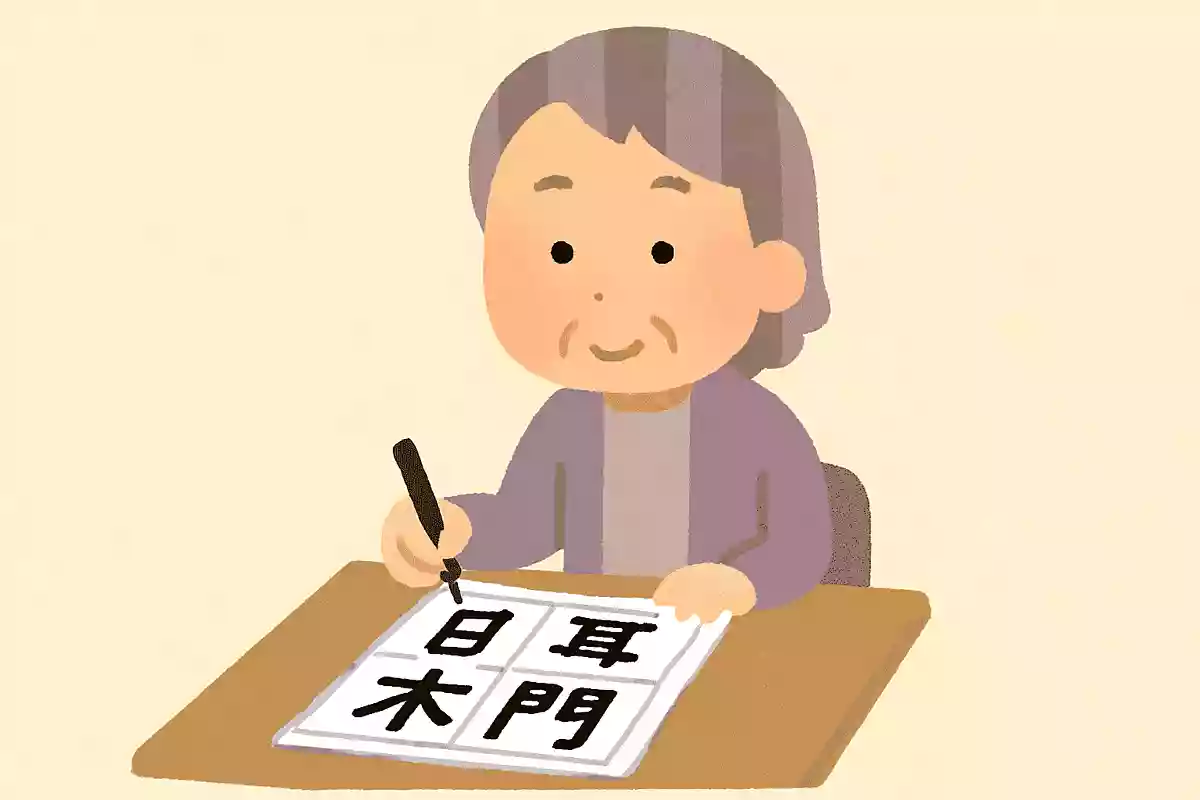
What can be made from the five characters “立” (stand), “木” (tree), “耳” (ear), “門” (gate), and “斤” (axe)? Many older people might say they see this every day.
Since '門' is often seen as a radical, you might be able to form a single character from it.
As hints: it’s something that delivers lots of news in written form, and the number of readers is gradually decreasing.
The answer is, precisely, “新聞” (newspaper).
"Shin" is formed from "立 (stand)," "木 (tree)," and "斤 (axe)," and "bun" is formed from "門 (gate)" and "耳 (ear)," together making "新聞 (newspaper)."

“Insect” + “World” + “Tree” =

Let's think of a kanji that is completed by combining three parts: '虫' (insect), '世' (world), and '木' (tree).
It’s important to consider which part serves as the radical and how to arrange them so they form a valid kanji.
The answer is “蝶” (butterfly).
Of course, noticing that the “虫” radical is used is key, but it’s also crucial to realize that the part placed next to it can form “葉” (leaf).
When you’re tempted to use “木” as the radical, noticing that the other parts can’t be formed that way will help you arrive at the correct answer!
“thread” + “book” + “meeting” =
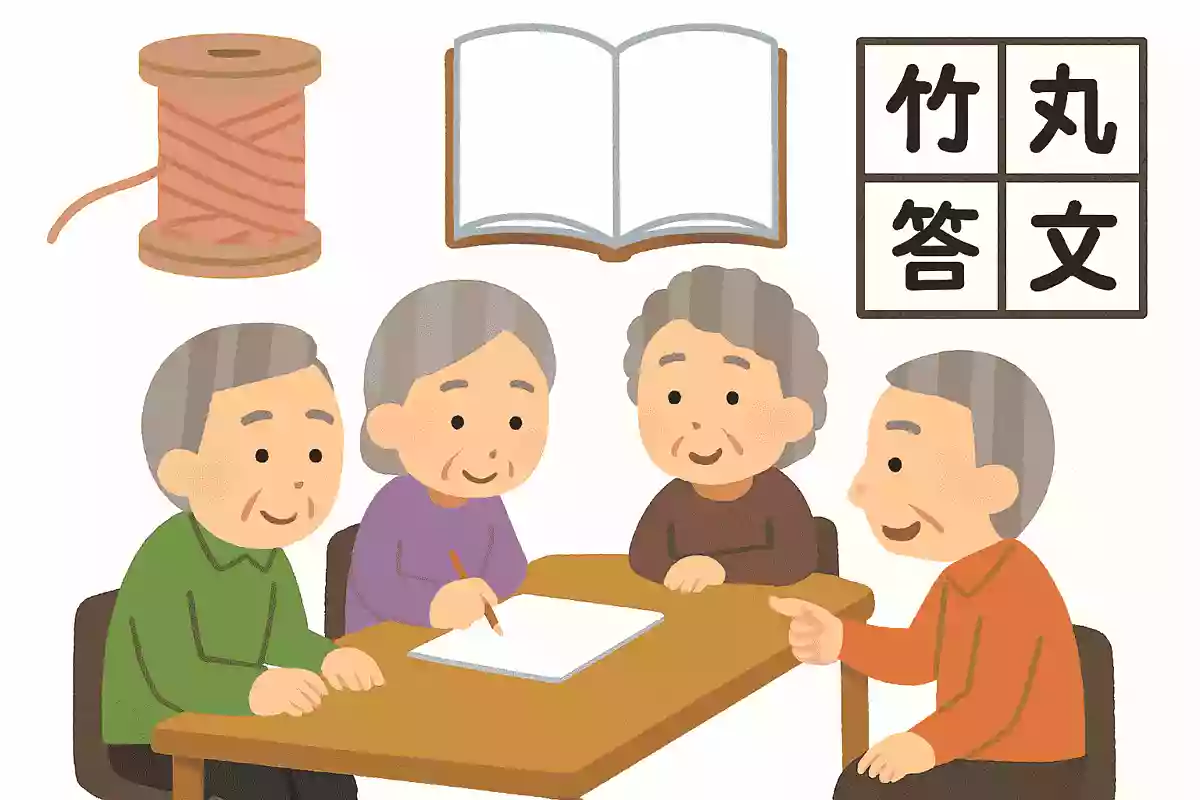
Combine “糸” (ito), “本” (hon), and “会” (kai) to complete a word.
You’re not making a single character, but forming a word.
It’s important not only to think about placement but also which parts to choose.
The answer is “Ehon” (絵本), meaning a picture book.
It’s a quiz that trains the brain by trying various patterns—creating kanji while deciding which parts to keep.
It seems easier to start by not insisting on using all parts; instead, think about which kanji can be formed from the given parts.
“Sun” + “sword” + “mouth” + “grain” + “mouth” =
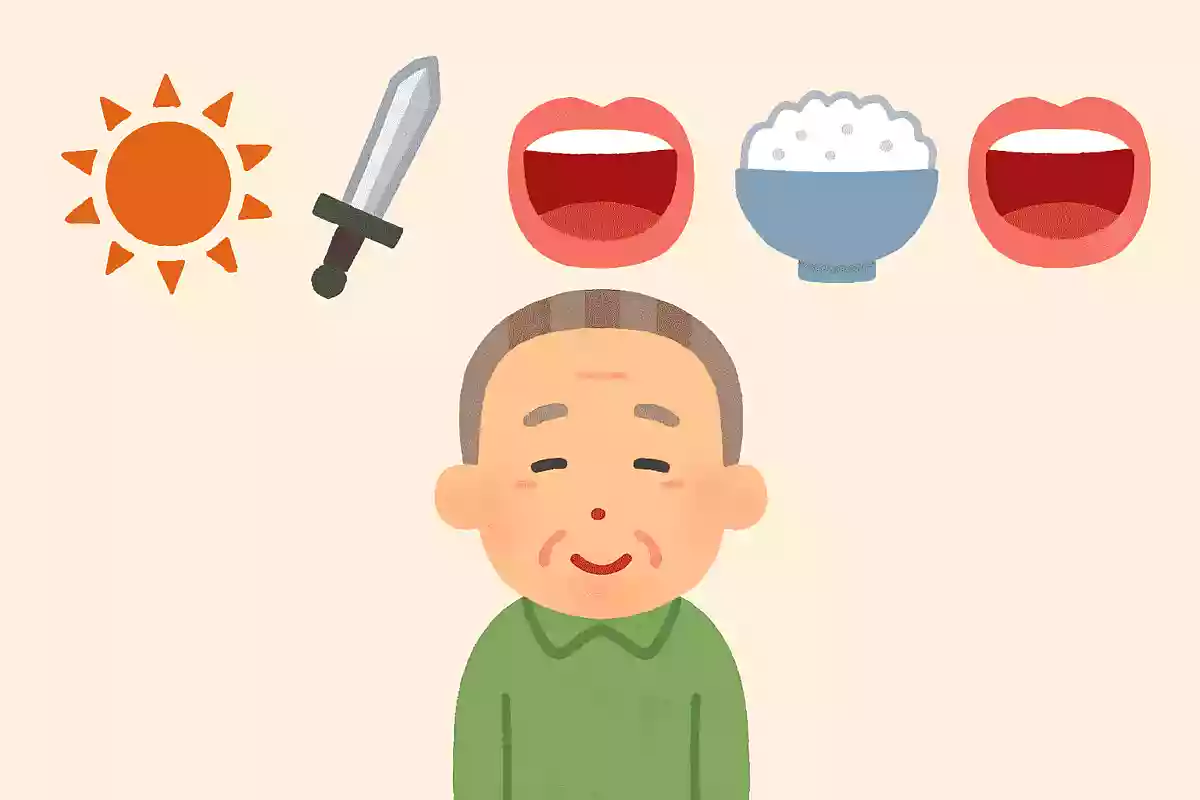
What compound character can be formed using these components: “日” (sun), “刀” (sword), “口” (mouth), “禾” (grain), and “口” (mouth)? Since “日” and “禾” often appear as radicals, it might be helpful to start from those.
It represents an era that many elderly people lived through—there’s your hint.
The answer is, precisely, “Showa.”
Place '刀' and '口' to the right of '日' to form '昭,' and place '口' to the right of '禾' to form '和,' yielding '昭和.'
“field” + “power” =
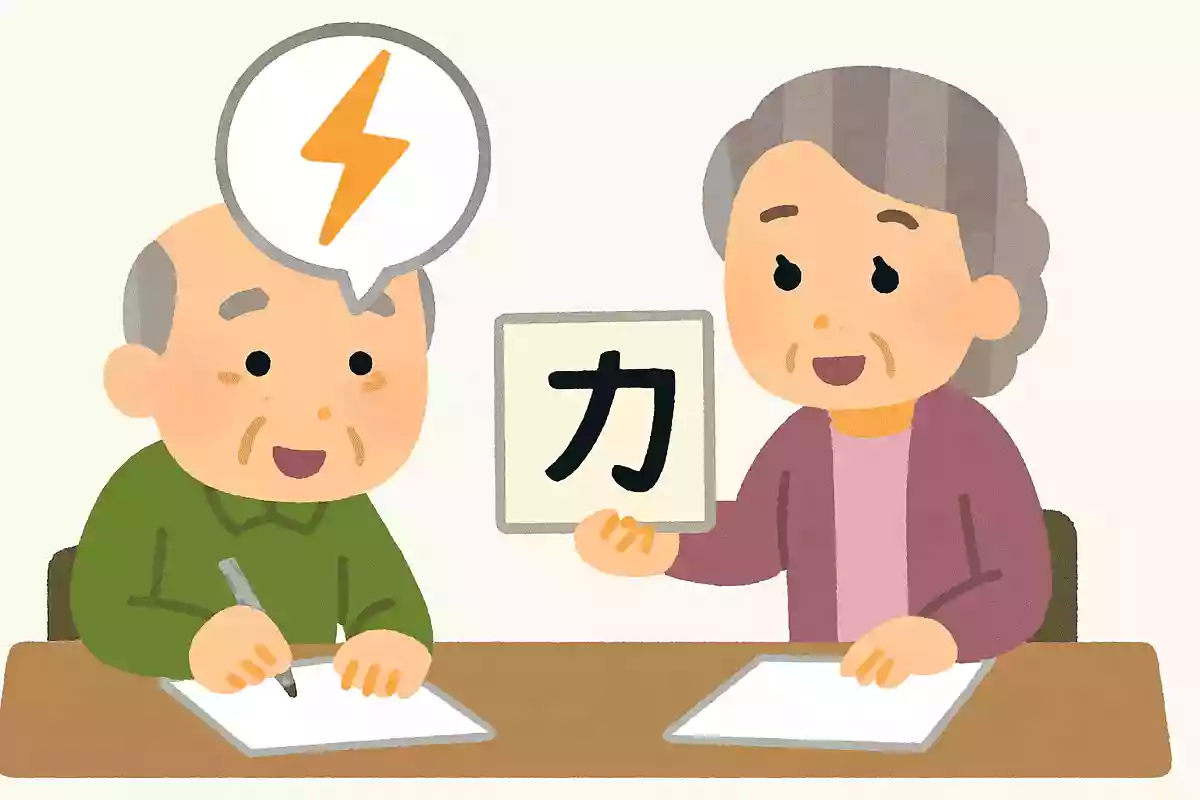
Let's think of a kanji made by combining 田 and 力.
Because the parts are simple, their placement is the key to this puzzle.
The answer is man.
Realizing that it’s a vertical (top-and-bottom) arrangement is the key that leads you to the correct answer! Since simply stacking them from top to bottom forms the kanji 男, you can raise the difficulty by presenting the parts in the order “力 and 田.” Because the components are simple, it’s also interesting that different arrangements can still look like plausible kanji.
“立” + “木” + “見” + “子” =
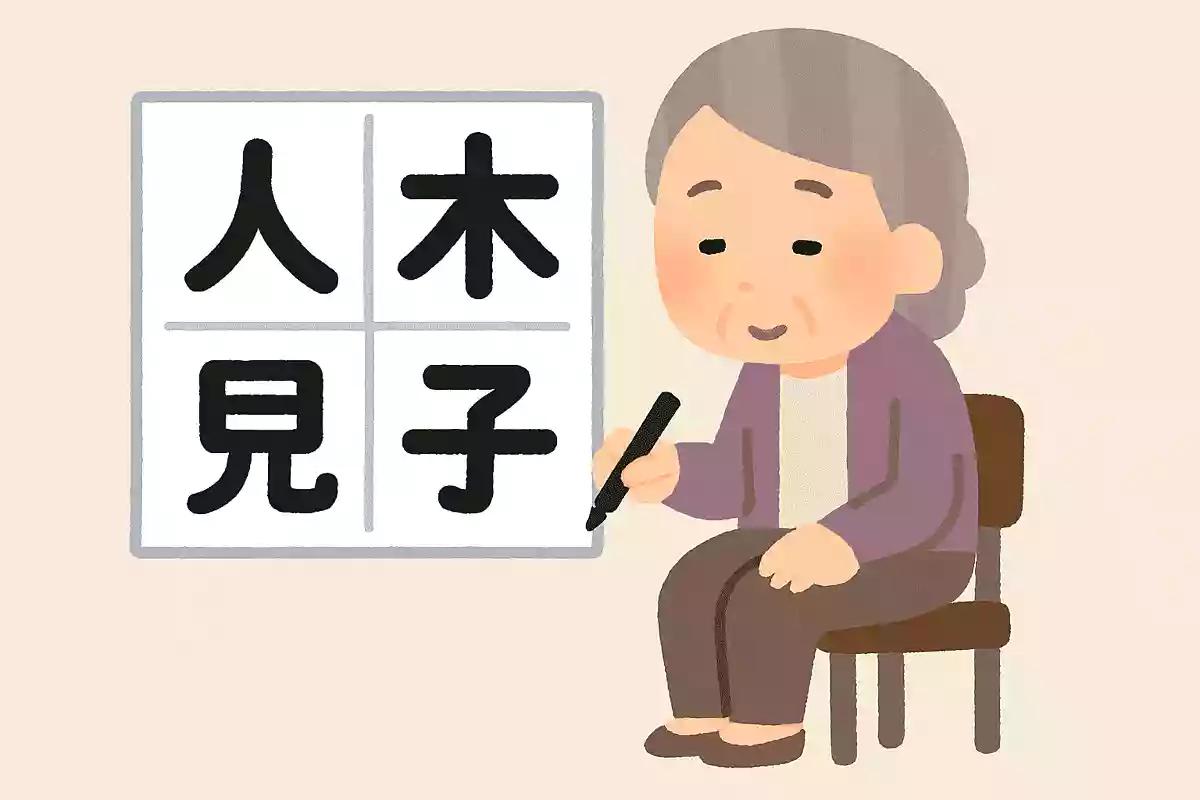
This is a puzzle where you combine the kanji “立” (stand), “木” (tree), “見” (see), and “子” (child) to complete a word.
The process of figuring out how many parts to use to form a single character and how to combine them is likely what stimulates the brain.
The answer is “parent and child.”
これは厄介な問題です。というのも、三つの部品を組み合わせて作られる「親」という文字(parent)にたどり着かなければならないからです。
A helpful approach is to start with “見,” which has the most strokes, and then think about how to arrange the other parts around it.