

[For Seniors] Perfect for Dementia Prevention! Jumbled Kanji Quiz

Quizzes and brain-training activities are often used as recreation in senior care facilities.
Using your brain helps activate it, doesn’t it?
So this time, we’re introducing a Kanji Scramble Quiz.
It’s a game where a single kanji character is broken into parts, and you guess the original character.
Because it uses kanji, it’s easy to try and easy to join in.
As we age, our spatial recognition abilities—such as judging distance, width, and height—tend to decline.
This can lead to issues like bumping into things while walking or getting lost.
The Kanji Scramble Quiz is said to train not only spatial cognition but also memory and visualization skills.
By all means, have fun and give the Kanji Scramble Quiz a try!
- [For Seniors] Challenging but Exciting! Kanji Quiz
- [For Seniors] Fun and Exciting! Difficult Kanji Quiz
- [For Seniors] Kanji Decomposition Quiz: Assemble the scattered characters
- [Brain Training] Lively Word Quiz for Seniors
- [For Seniors] Perfect for Brain Training! Themed Hiragana Fill-in-the-Blank Quiz
- [For Seniors] Brain Training! Recall Quiz Collection!
- [For Seniors] Find daily brain training. Today’s recommended brain workout.
- [For Seniors] Quiz on Kanji with Many Strokes
- Hand games that liven things up for seniors—also great brain training
- [For Seniors] Fun and Lively! Recommended Quiz Questions
- For seniors: Fun, crowd-pleasing word association game ideas
- [Fun Brain Training!] Introducing a quiz on the world’s least-stroke-count kanji
- [For Seniors] Difficult Country Names Kanji Quiz
[For Seniors] Perfect for Dementia Prevention! Jumbled Kanji Quiz (11–20)
“Power” + “Ten” + “Power” + “Power” + “Power” =
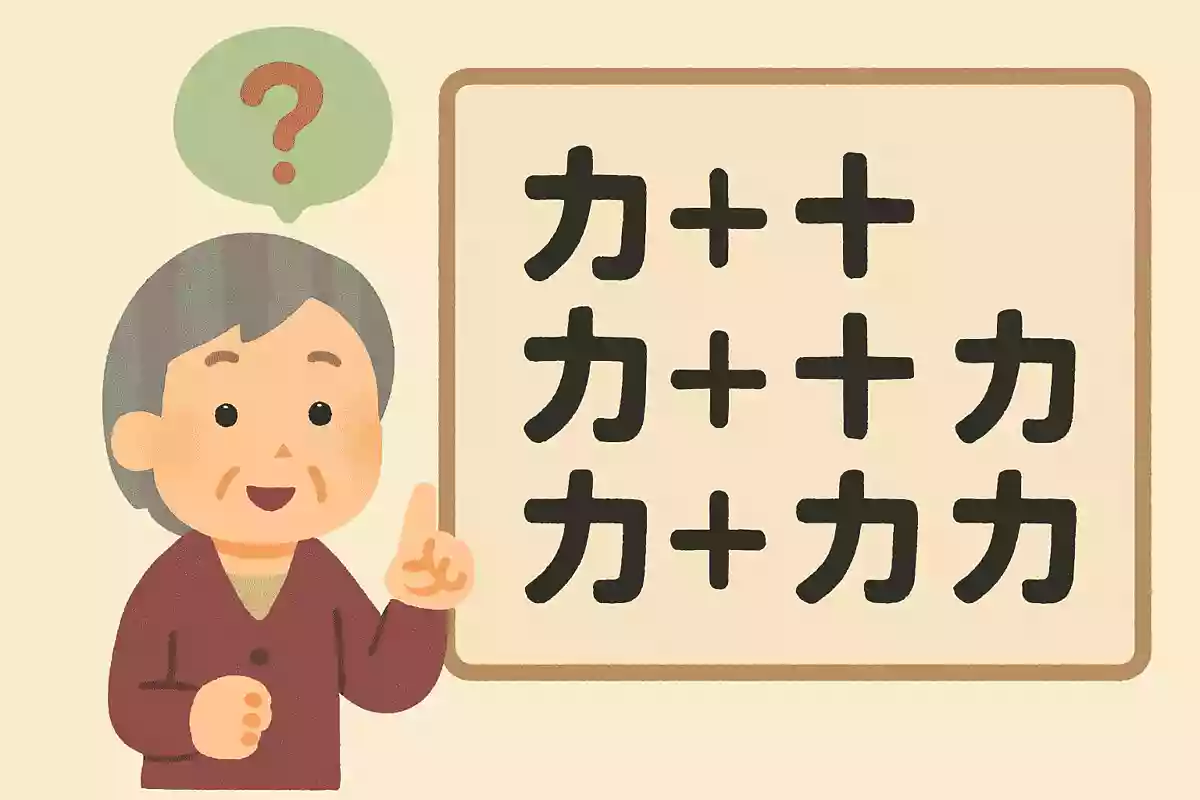
What compound word can be formed using the characters “力,” “十,” “力,” “力,” and “力”? Since there are many instances of “力,” it might be best to start by looking for a single character that contains multiple “力” components.
You could give hints like “doing something together,” for example.
The kanji you can make from these characters is, precisely, 協力 (cooperation).
First, by using “十” as the radical and placing three “力” to its right, you form 協.
Then, combining it with the remaining “力,” you get the compound 協力.

The character formed by combining イ (person radical), 口 (mouth), and 古 (old) is the kanji 咎, which means “fault,” “blame,” or “to reproach.”
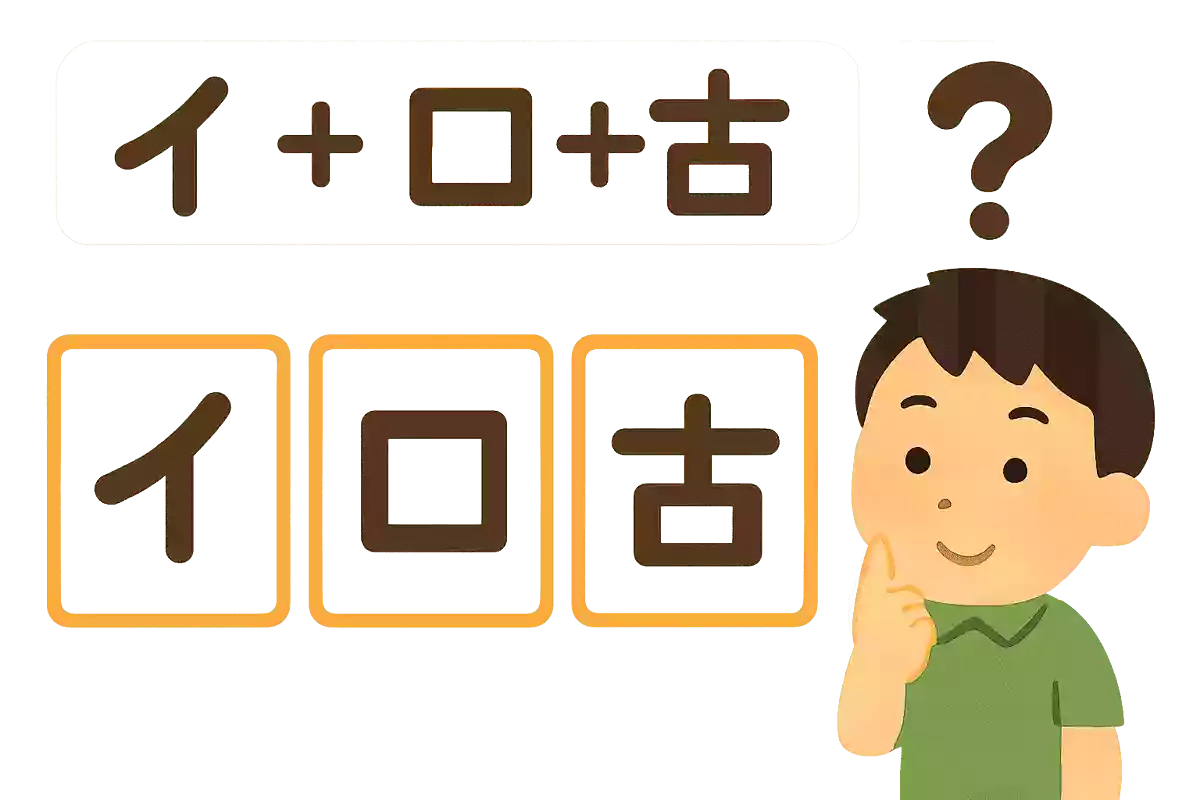
You use it when counting something.
See the answer
piece
With イ, 口, and 古, the kanji 個 is formed. イ is said to represent the shape of a person seen from the side; it’s also known as the “ninben,” the person radical. The character 固 next to イ conveys the meaning of a hard helmet. In other words, from a strong, independent person comes 個, which carries the meaning of “one person” or “individual.”

Shaku + Day/Sun + One
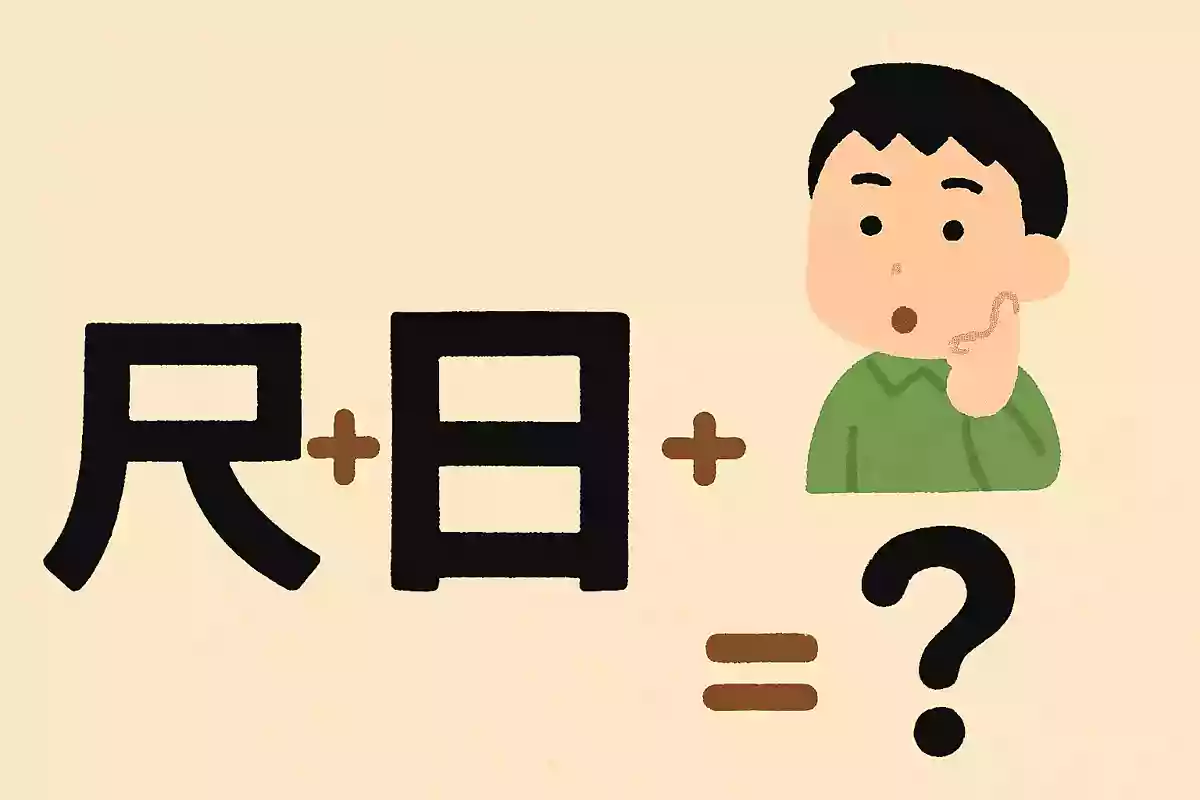
The bright time when the clock points to twelve o’clock.
See the answer
noon
Daytime, the time when many people are active, is written with a character composed of the elements for “sun,” “measure,” and “one.” If you break the character for daytime down, you might wonder, “Why do we use this character?” The origin of the character for daytime comes from an associative compound. An associative compound combines the meanings of existing characters to create a new character with its own meaning. The character for daytime is formed from the sun and an older character that means to divide or separate. Among the periods of time divided by the sun’s rising and setting, it represents the span when the sun is above the horizon.
Tree + Eye + Heart
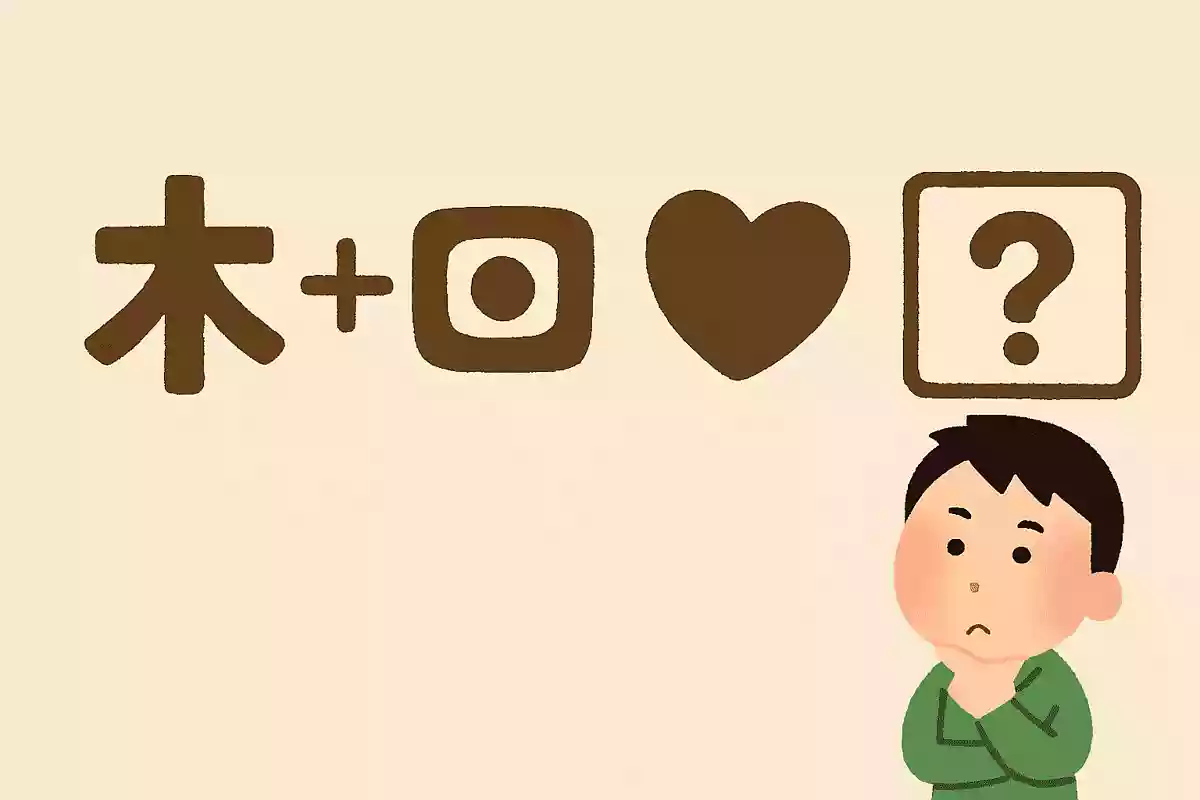
You use it when you think about someone with your heart.
See the answer
thought
The character 想 is made up of the kanji for “tree,” “eye,” and “heart.” Since it contains the “heart” radical, it perfectly matches the image of what 想 expresses. 想 describes the act of calling to mind someone else. You can sense the image of picturing a person’s form or appearance in your heart. Compared to 思う, which is read the same way (“omou”), 想 is used when stronger feelings or emotions are involved.
step + earth/soil + sun (measurement unit)
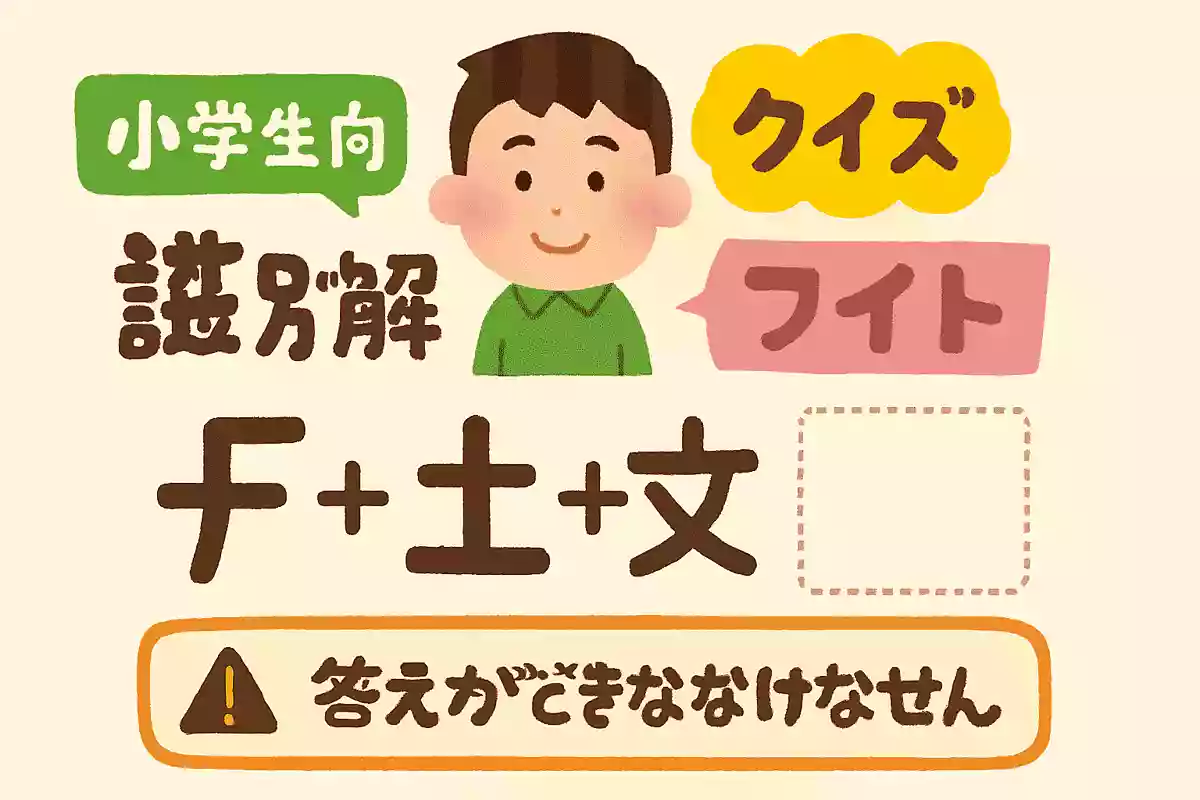
You can use this when you’re thinking, “I wonder if they’re still not here yet?” or “Are they not here yet?”
See the answer
wait
The kanji 待 is made up of the components 彳, 土, and 寸. Inside 待, you can see the kanji 寺, right? 寺 carries the meaning of holding something and remaining in that state—being stopped. 彳 is the “gyōninben” radical, which represents a road, and it depicts the image of someone’s feet stopping along the way while holding something in their hand.
I + stand + sun/day + heart
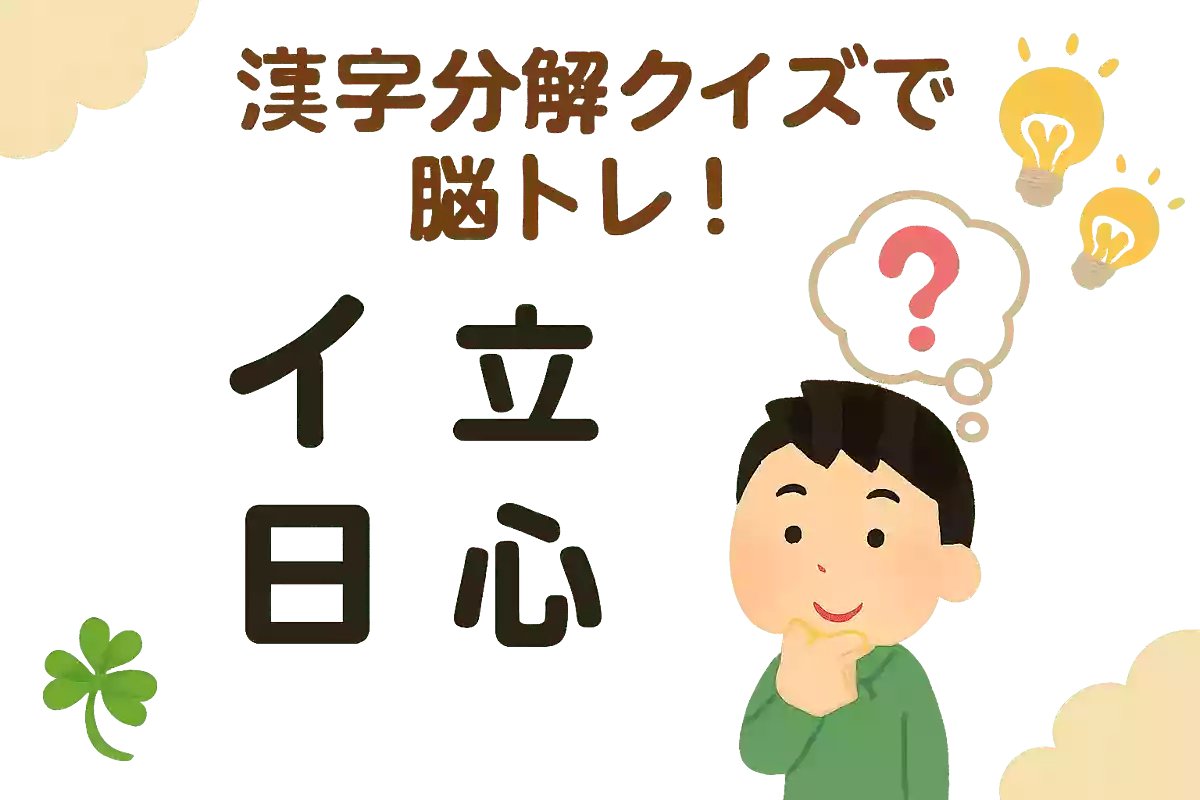
You use it when expressing a very large number.
See the answer
hundred million
How far can you say the digits of numbers? There’s an impressive kanji used to represent large numbers: 億 (oku, one hundred million). 億 is made up of the components イ, 立, 日, and 心. But 億 is used for more than just place values in numbers. Written as 億る, it can also be read oshihakaru, meaning to “guess” or “suppose,” reflecting a person’s feelings. The character 億 is composed of the person radical ninben (亻) and the character 意, which carries meanings related to thinking or the heart/mind. For that reason, the original sense of 億 is connected to the feeling of thinking various things about people.
[For Seniors] Perfect for Dementia Prevention! Jumbled Kanji Quiz (21–30)
“sword” + “one” + “horn” + “stop” + “cow”
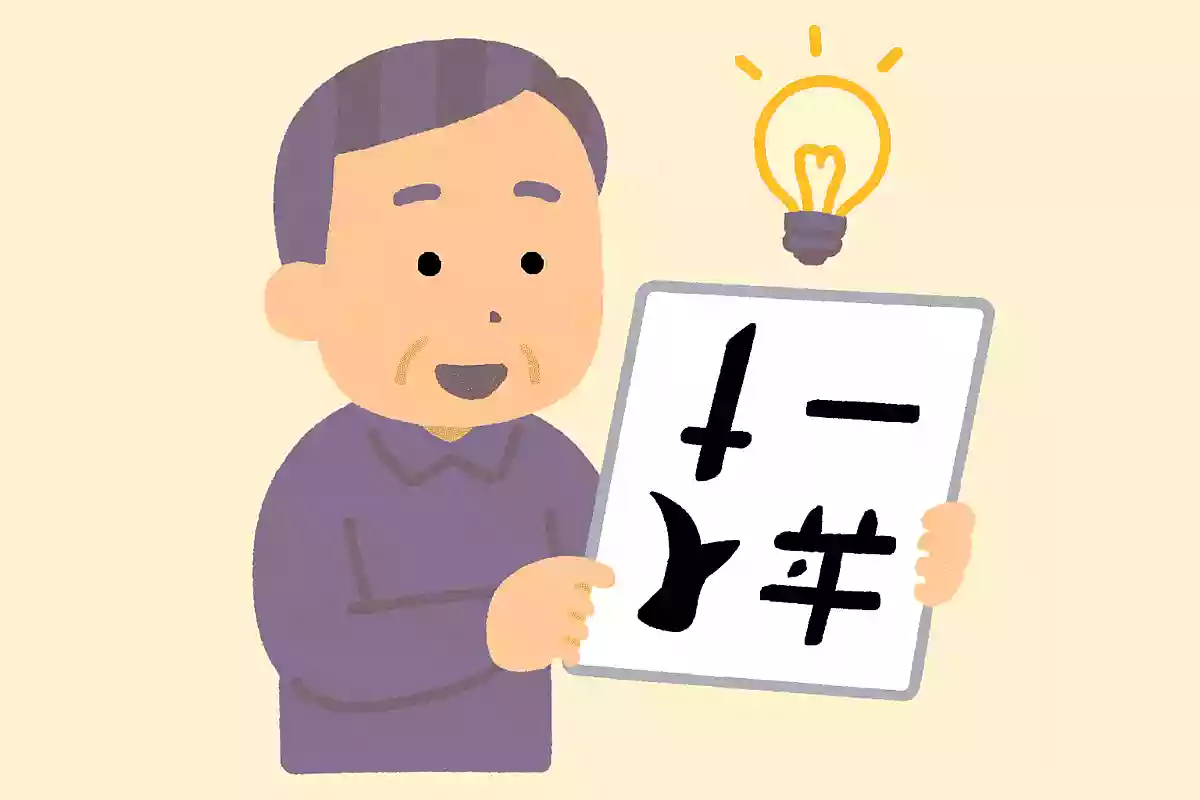
Here’s a puzzle that makes you want to say, “You’re splitting it there!?” when you see the answer.
要点は、「一」と「止」を組み合わせて一つの漢字を作るということです。
Yes, those two together form “正.”
Not many people realize that the character '正' can be viewed as being composed of two characters, so it was probably hard to notice.
After that, you put the remaining parts together—but this is another point where many people might think, “I feel like there was a kanji like this, but what was it again…?” The answer was 正解 (correct answer).
