

[For Seniors] Perfect for Dementia Prevention! Jumbled Kanji Quiz

Quizzes and brain-training activities are often used as recreation in senior care facilities.
Using your brain helps activate it, doesn’t it?
So this time, we’re introducing a Kanji Scramble Quiz.
It’s a game where a single kanji character is broken into parts, and you guess the original character.
Because it uses kanji, it’s easy to try and easy to join in.
As we age, our spatial recognition abilities—such as judging distance, width, and height—tend to decline.
This can lead to issues like bumping into things while walking or getting lost.
The Kanji Scramble Quiz is said to train not only spatial cognition but also memory and visualization skills.
By all means, have fun and give the Kanji Scramble Quiz a try!
- [For Seniors] Challenging but Exciting! Kanji Quiz
- [For Seniors] Fun and Exciting! Difficult Kanji Quiz
- [For Seniors] Kanji Decomposition Quiz: Assemble the scattered characters
- [Brain Training] Lively Word Quiz for Seniors
- [For Seniors] Perfect for Brain Training! Themed Hiragana Fill-in-the-Blank Quiz
- [For Seniors] Brain Training! Recall Quiz Collection!
- [For Seniors] Find daily brain training. Today’s recommended brain workout.
- [For Seniors] Quiz on Kanji with Many Strokes
- Hand games that liven things up for seniors—also great brain training
- [For Seniors] Fun and Lively! Recommended Quiz Questions
- For seniors: Fun, crowd-pleasing word association game ideas
- [Fun Brain Training!] Introducing a quiz on the world’s least-stroke-count kanji
- [For Seniors] Difficult Country Names Kanji Quiz
[For Seniors] Perfect for Dementia Prevention! Jumbled Kanji Quiz (21–30)
“求” + “里” + “王” + “予” = “御” (the character formed by combining these parts; read as 'go' or 'o' in Japanese)
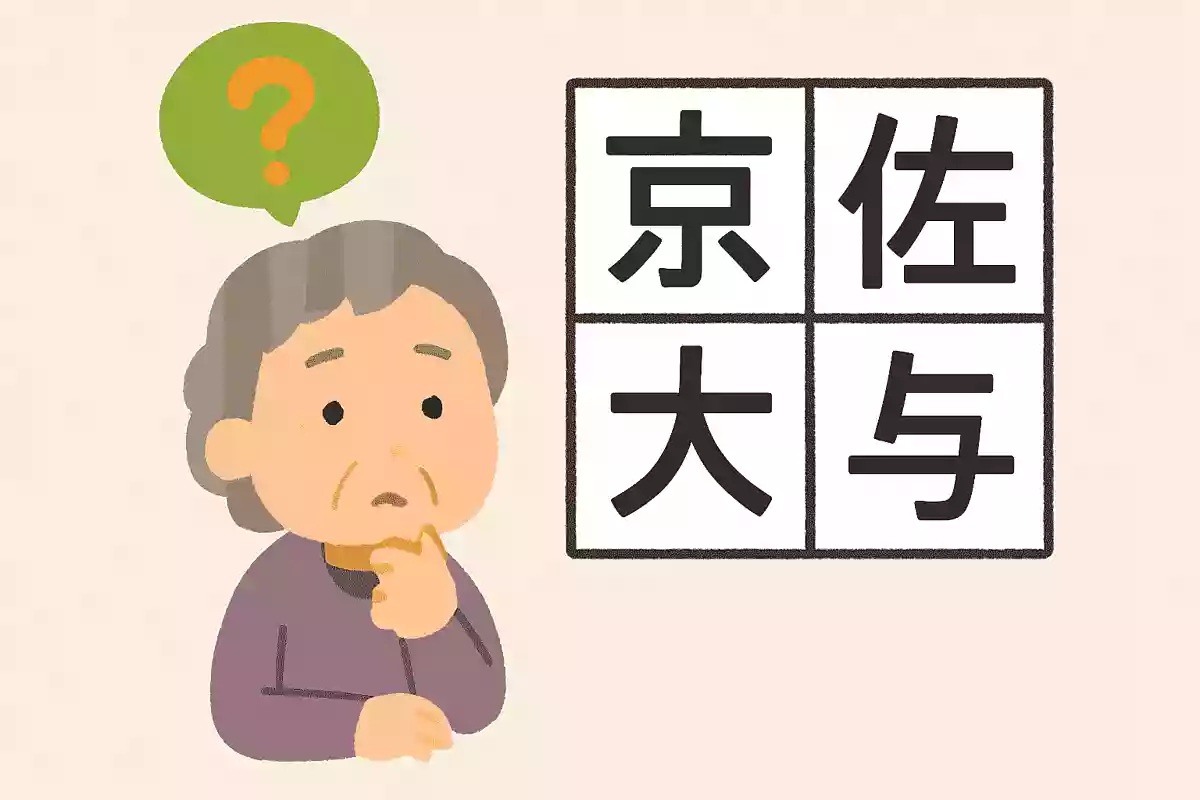
In this puzzle, the key to finding the answer is whether you can form the correct kanji using “里.”
You can form two kanji by combining the parts given in the problem with ‘里’: one is ‘理’ and the other is ‘野’.
If we consider the case of '理', the remaining parts, '求' and '予', don’t seem to form proper kanji when combined.
However, if we use the 'no' pattern, combining '求' and '王' gives '球', which leads to the answer '野球' (baseball).
When there are many possible kanji you can form like this, it broadens the scope of thinking and increases the difficulty.

"言" + "頁" + "川" + "周" =
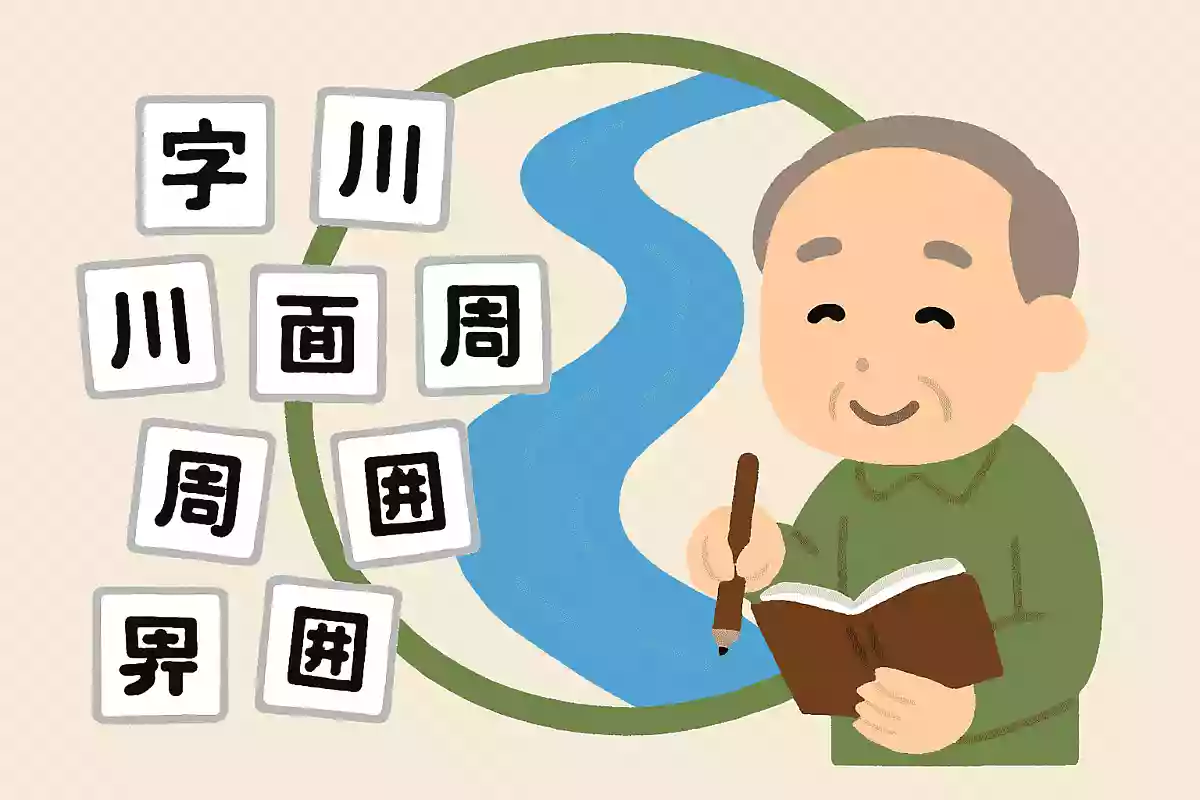
It’s a two-character word made up of four parts: “言” (speech), “頁” (page), “川” (river), and “周” (circumference).
Can you figure out the answer? The hint is that the key lies in how “頁” is used.
The correct answer is “順調” (smooth/going well), formed by combining “川” with “貢” and “言” with “周.” While “頁” by itself is the kanji for “page,” as a radical it’s called “おおがい” (oogai).
もしそれに気づいて「川」と組み合わせれば、答えにたどり着けたはずです。
The important thing is to identify how to use the distinctive part among the components given in the puzzle.
[For Seniors] Perfect for Preventing Dementia! Mixed-Up Kanji Quiz (31–40)
“village” + “tongue” + “speech” + “stand” =
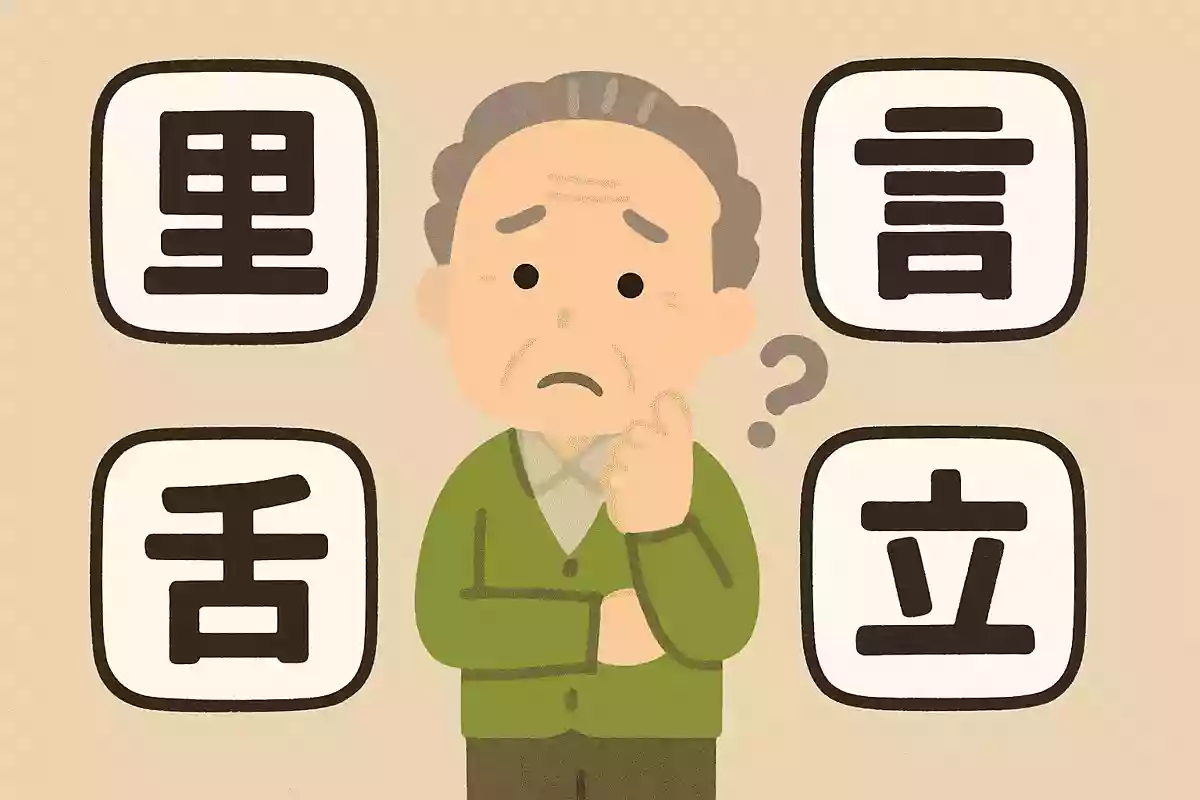
This puzzle has many distinctive parts like “里” and “舌” that seem like good clues to consider. If we set aside “言,” which looks like it could be a radical, and look for characters we can form by combining what remains with “立,” we get “童” by pairing it with “里.” Then the remaining “言” and “舌” make “話,” leading us to the answer “童話” (fairy tale).
もちろん、私が説明した方法ではなく、まず「話」を見つけることから始めることもできます。
It’s the kind of problem where the answer seems to emerge as you gaze at it.
“cloud” + “mouth” + “car” + “mouth” =
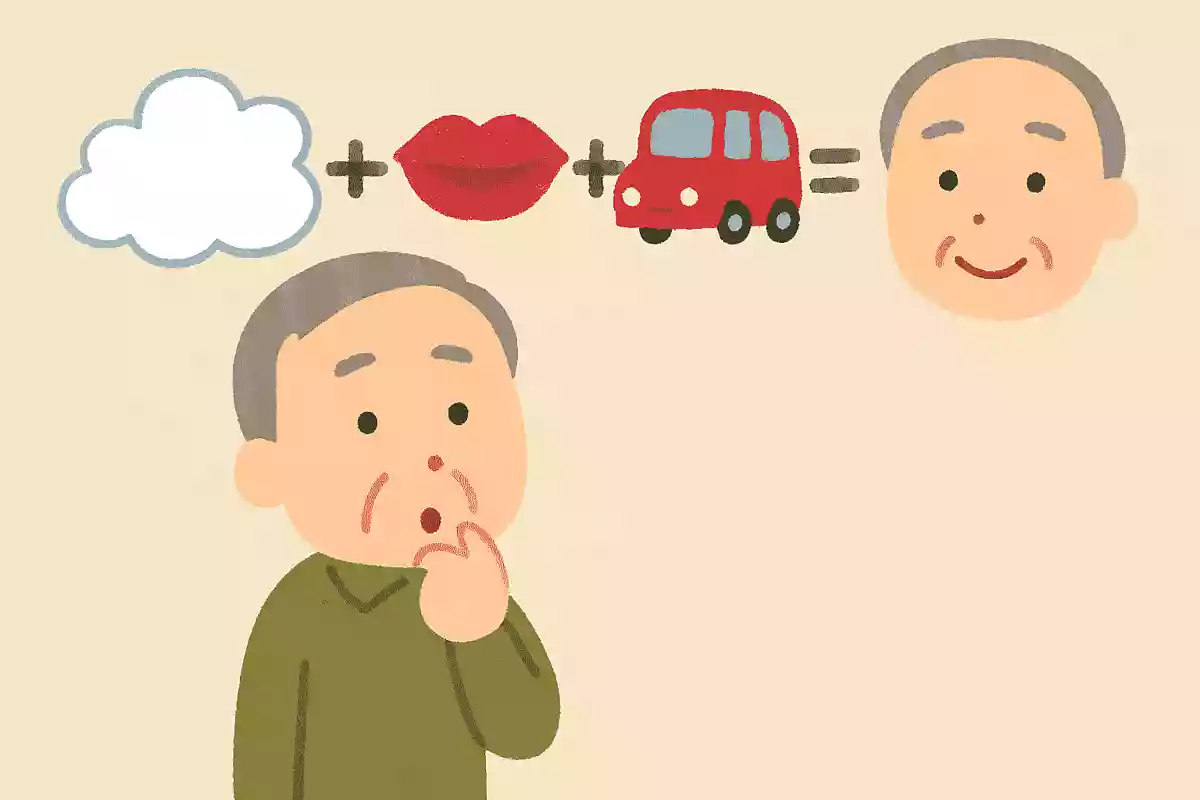
When you see two '口' characters alongside '云' and '車', many people will first think of the character '転'.
That leaves two '口' characters remaining, which might make some worry, “Maybe I’m wrong.” But that answer is actually correct.
When we try to combine two kanji into one, we tend to place them vertically or side by side, but this time the correct move is to place one ‘口’ inside the other ‘口’.
In other words, the answer is “回転” (rotation).
The key was whether you could recognize ‘口’ as the ‘kunigamae’ (enclosure) radical.
“sword” + “tree/wood” + “tree/wood” + “horn/angle” + “altar/show” + “cow/ox” =
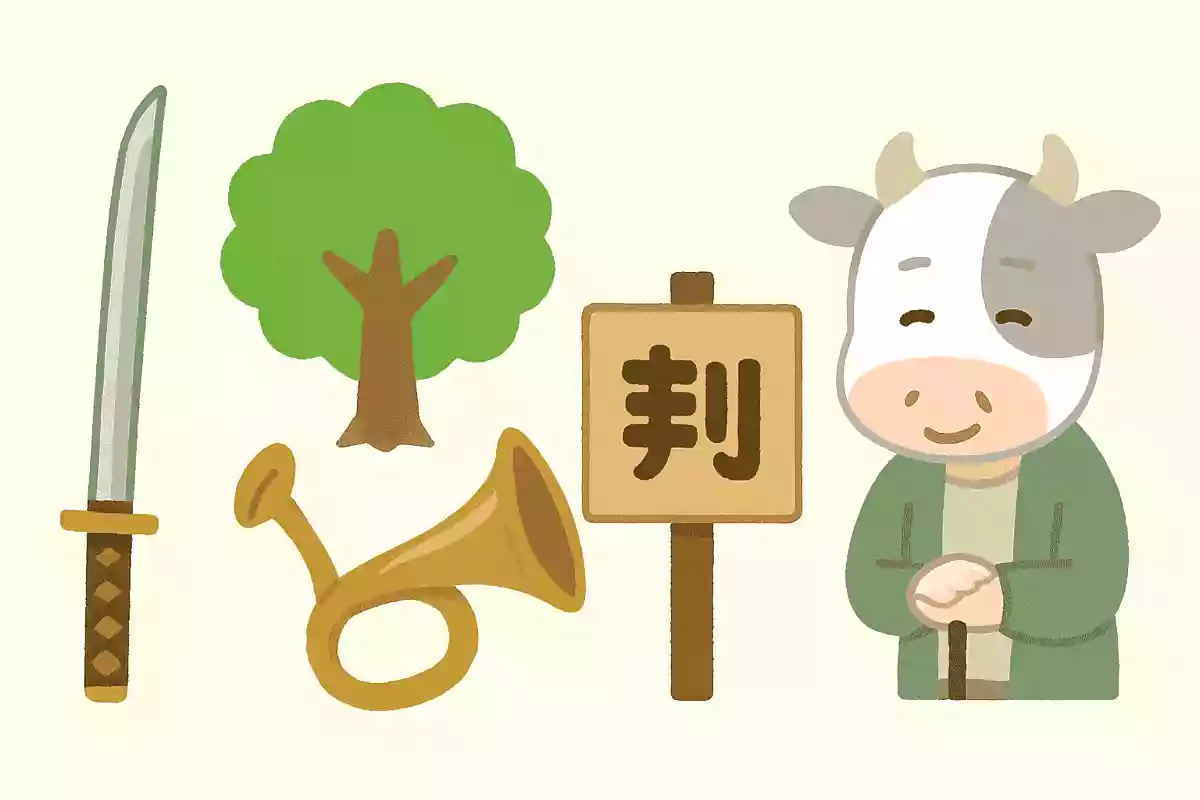
‘Sword,’ ‘tree,’ ‘tree,’ ‘horn,’ ‘altar,’ and ‘cow’—six components with relatively many strokes lined up make this look like a tough puzzle.
Since these combine into a two-character word, we can expect each character to have a considerable number of strokes.
The hint is that ‘horn’ and ‘altar’ each serve as the radical of one character.
That leads to the answer: “解禁” (lifting a ban).
In 解, the right side of the character is divided into an upper and a lower part, and in 禁, the upper part of the radical is divided into left and right.
It was a problem that required a flexible mental image of kanji structural patterns to solve correctly.
“mouth” + “heart” + “blade” + “arrow” + “speech” =
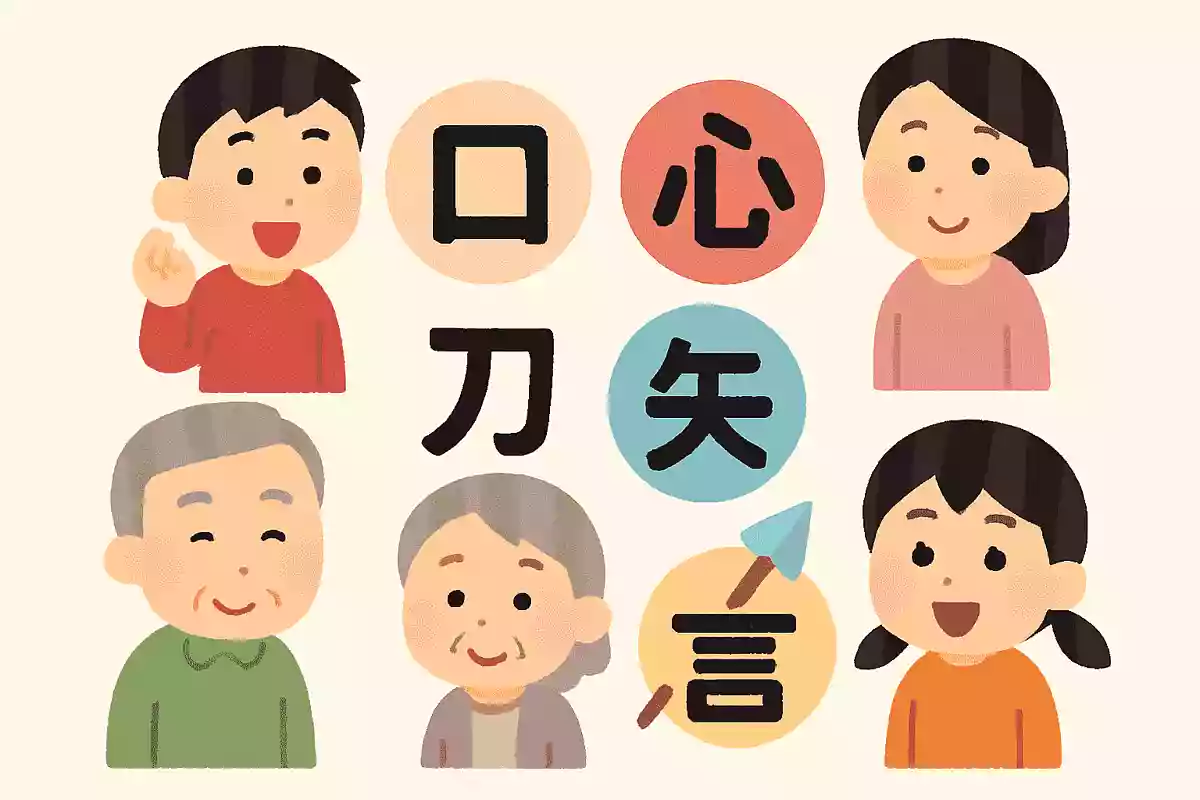
If we go with the standard approach and focus on an easy-to-understand radical, I think “言” would be a good candidate, but there are so many kanji with the ‘gonben’ radical, and among the pieces in this puzzle, not many really fit, right? So, shifting perspective a bit and looking at the components listed in the problem, you can spot “知” from “矢” and “口.” Once you get that far, among the remaining parts, “言” serves as the gonben, and “刃” plus “心” makes “忍,” and combining those two gives you “認.” So the answer is “認知” (ninchi, meaning “cognition”).
It was a bit of a tricky puzzle, wasn’t it?
“color” + “mouth” + “mouth” + “mouth” + “thread” =
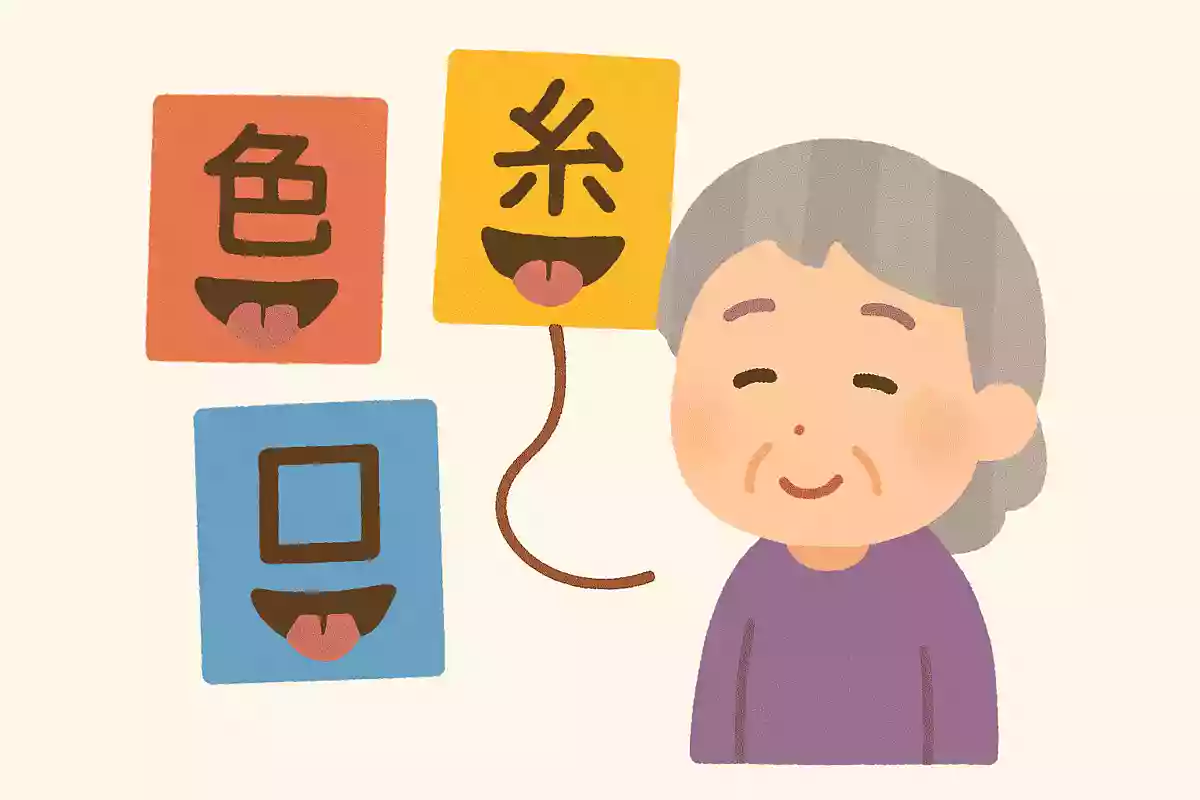
This one might be confusing because it has so many parts.
Besides “color” and “thread,” it notably includes three instances of the character for “mouth.” The hint is that if you combine the three “mouth” characters into the single kanji 品… the answer is 絶品 (zeppin, “exquisite” or “superb”).
Because the parts in the puzzle are arranged out of order, many people may not be able to form the character 絶 at first.
If you give the hint to combine the three “mouth” characters into 品, more people will likely get it right.
It was a problem that required being aware that there are kanji like 品, not just ones made of a left-hand radical and a right-hand component.
In conclusion
A kanji jumbled-word quiz that lets you train your brain while having fun. The answers use many kanji familiar to older adults, so they should be easier to solve. When creating quizzes, try designing them with various ideas in mind—such as seniors’ hobbies, familiar objects, favorite mottos, or personal creeds. Please make good use of this for brain training!