

[For Seniors] Perfect for Dementia Prevention! Jumbled Kanji Quiz

Quizzes and brain-training activities are often used as recreation in senior care facilities.
Using your brain helps activate it, doesn’t it?
So this time, we’re introducing a Kanji Scramble Quiz.
It’s a game where a single kanji character is broken into parts, and you guess the original character.
Because it uses kanji, it’s easy to try and easy to join in.
As we age, our spatial recognition abilities—such as judging distance, width, and height—tend to decline.
This can lead to issues like bumping into things while walking or getting lost.
The Kanji Scramble Quiz is said to train not only spatial cognition but also memory and visualization skills.
By all means, have fun and give the Kanji Scramble Quiz a try!
- [For Seniors] Challenging but Exciting! Kanji Quiz
- [For Seniors] Fun and Exciting! Difficult Kanji Quiz
- [For Seniors] Kanji Decomposition Quiz: Assemble the scattered characters
- [Brain Training] Lively Word Quiz for Seniors
- [For Seniors] Perfect for Brain Training! Themed Hiragana Fill-in-the-Blank Quiz
- [For Seniors] Brain Training! Recall Quiz Collection!
- [For Seniors] Find daily brain training. Today’s recommended brain workout.
- [For Seniors] Quiz on Kanji with Many Strokes
- Hand games that liven things up for seniors—also great brain training
- [For Seniors] Fun and Lively! Recommended Quiz Questions
- For seniors: Fun, crowd-pleasing word association game ideas
- [Fun Brain Training!] Introducing a quiz on the world’s least-stroke-count kanji
- [For Seniors] Difficult Country Names Kanji Quiz
[For Seniors] Perfect for Dementia Prevention! Jumbled Kanji Quiz (1–10)
“feather” + “white” + “thread” + “east” =
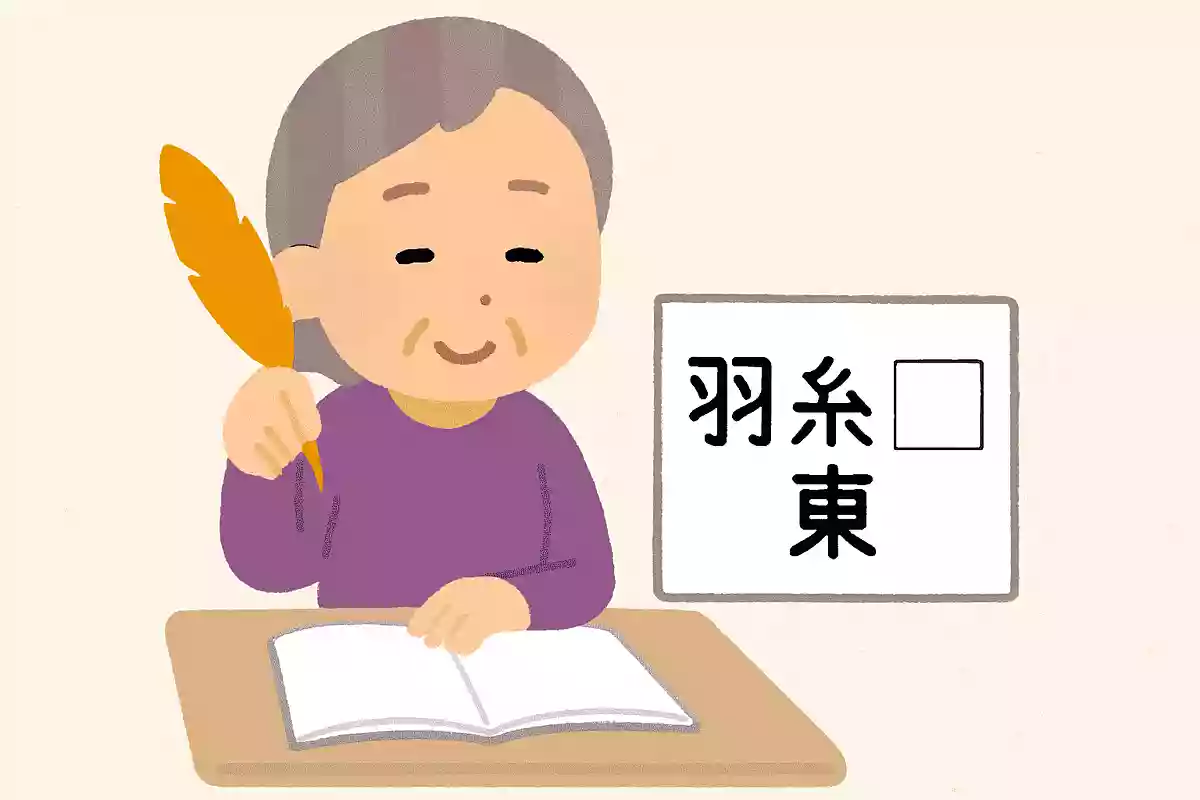
Combine the kanji 羽 (feather), 白 (white), 糸 (thread), and 東 (east) to complete a word.
Which parts you choose and how you arrange them are the key points.
The answer is 練習 (practice).
By thinking about the difference in arrangement—placing the parts horizontally to make 練 and vertically to make 習—you really get your brain working.
Because it’s a simple pattern of just arranging parts, you can enjoy trying various combinations and feeling yourself get closer to the answer.

“Ha” + “Mu” + “Day/Sun” + “Month/Moon” + “Correct” + “One” + “Person”
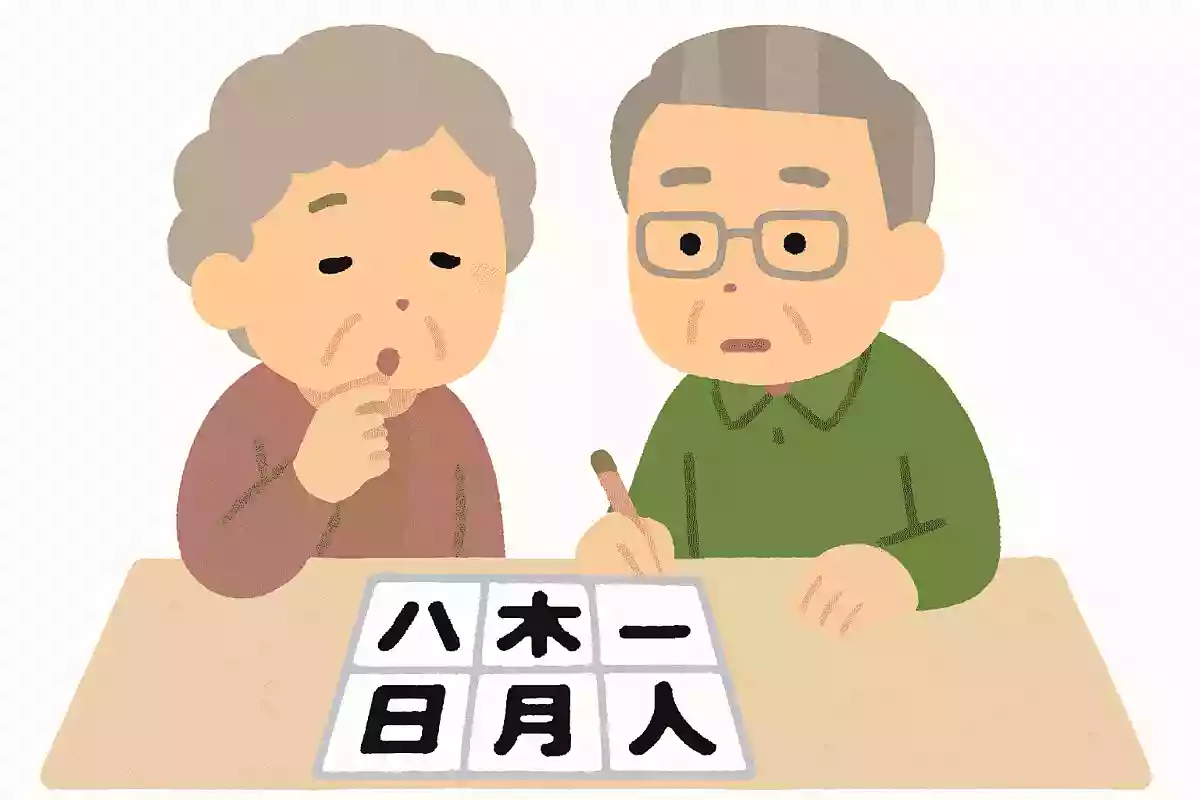
This is a puzzle where you consider combinations of multiple kanji to complete a four-character idiom (yojijukugo).
Even though there’s a hint that it’s a four-character word, there are many possible combinations, so I think it’s a difficult problem.
It seems clearer if the arrangement of the parts in the puzzle serves as a hint, rather than the questions being completely random.
The answer is “fair and square.”
It’s also interesting that the ways of combining the components differ: stacking them vertically for 公, arranging them horizontally for 明, leaving 正 as is, and embedding a component inside for 大.
Speech + Mouth + Myself + Jewel =
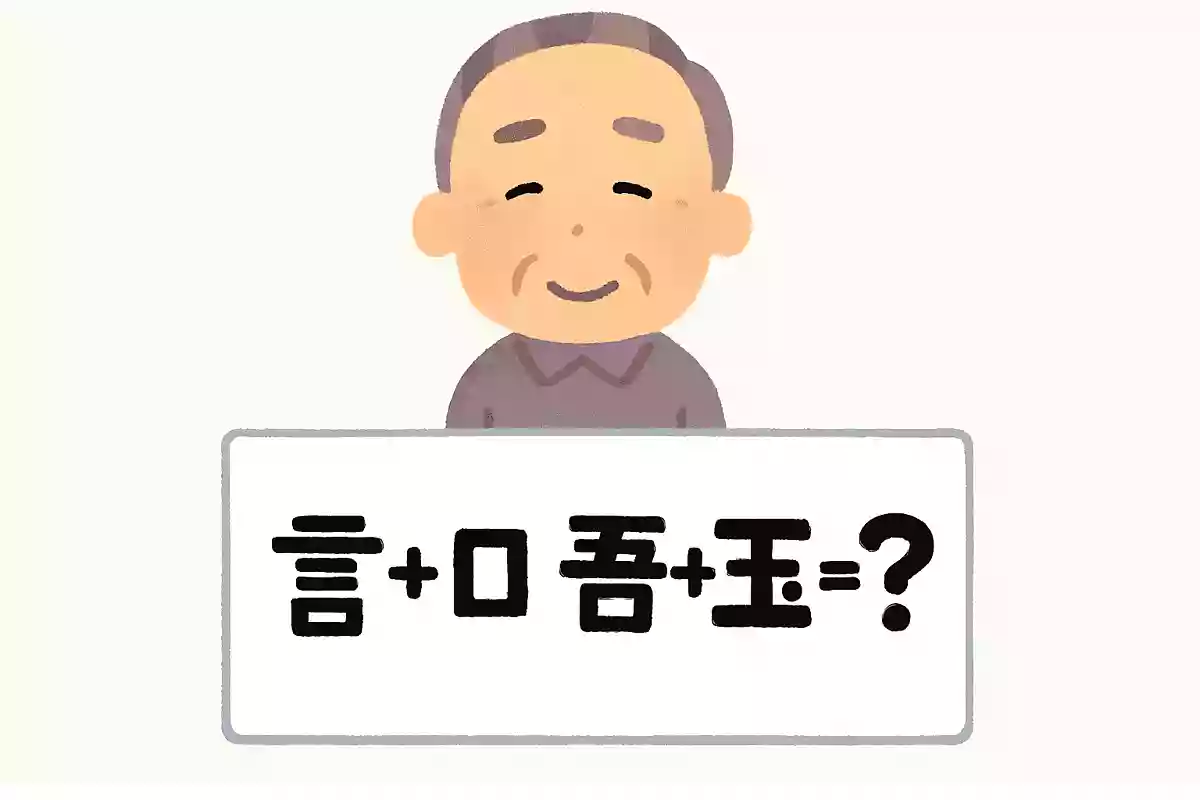
Let’s think of a word formed by combining the four kanji: 言 (speech), 口 (mouth), 吾 (I), and 玉 (jade).
This puzzle involves creating two kanji and then forming a word from them, so the process of considering various combinations makes for good brain training.
The answer is “kokugo” (national language/Japanese), and the key point is whether you can arrive at the idea of placing the character for “jade/ball” (玉) inside the character for “mouth” (口).
このパズルは部品を組み合わせるコツが必要なので、最終的にできる漢字では「言」と「口」が部首として使われることを示すヒントを与えると役立ちます。
To make it even more challenging, it might be interesting to break 吾 into the components 五 and 口 when presenting the problem.
[For Seniors] Perfect for Dementia Prevention! Jumbled Kanji Quiz (11–20)
“Now” + “King” + “Spring” + “Thread” + “King” =
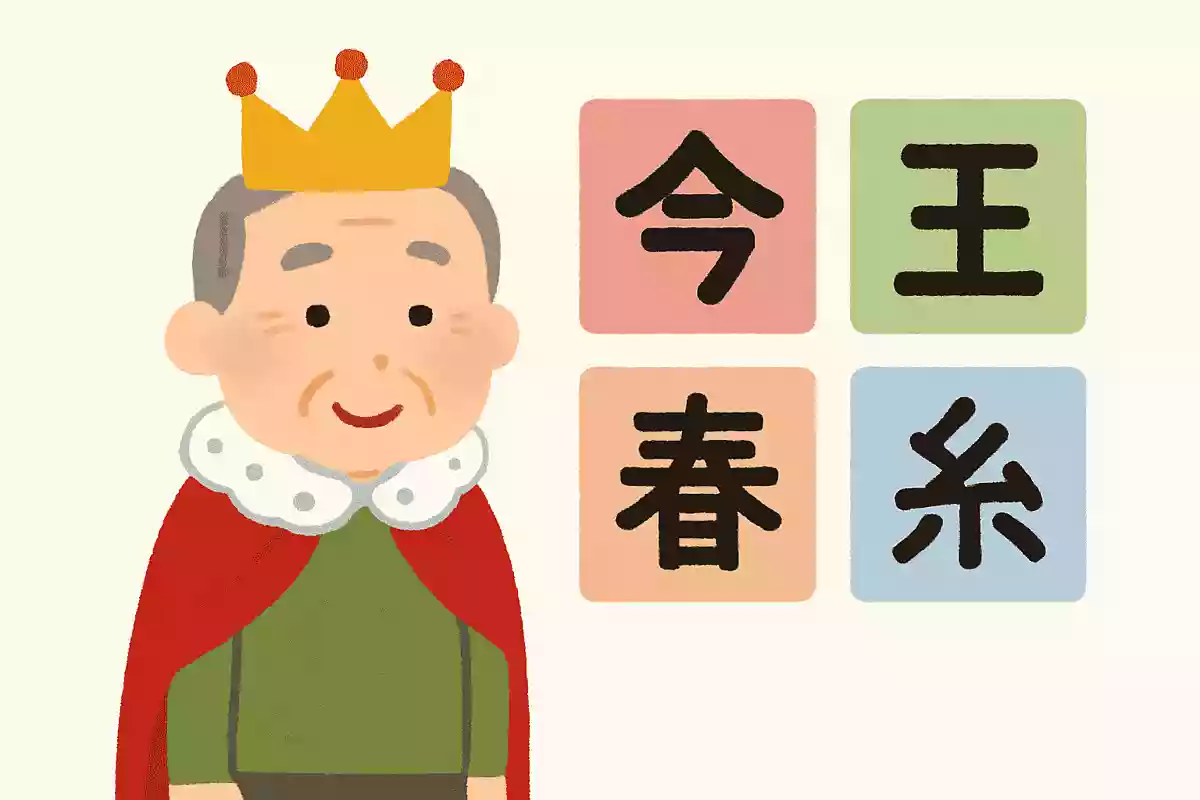
Let’s think about combining the five given kanji to form a complete word.
A key point is that two instances of the kanji '王' are lined up, and figuring out how to use them will bring us closer to the answer.
The answer is “kinsen,” a word that expresses the subtle emotions hidden deep in the heart, often seen in the expression “to strike a chord” (kinsen ni fureru).
Without knowing the word, it might be hard to arrive at the answer, so we should also consider how to craft effective hints.
"合" + "竹" = "box"
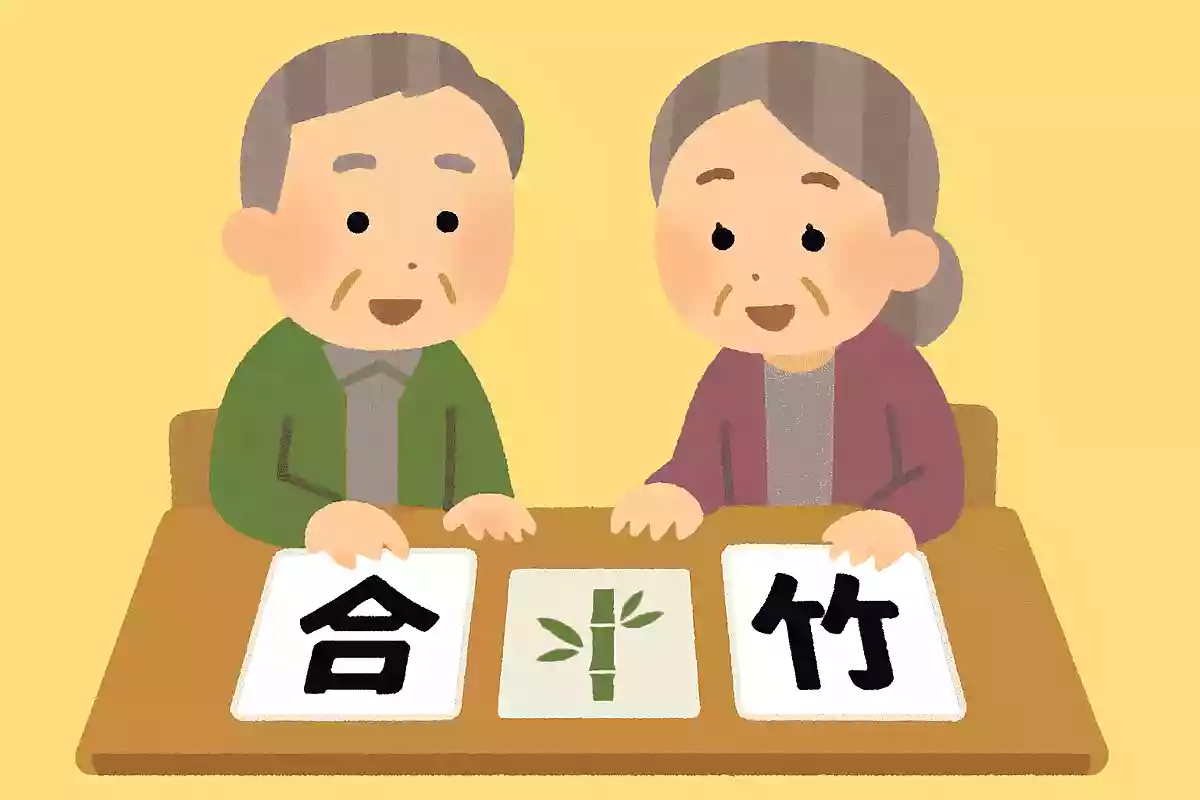
Let's think of a kanji that can be completed using '合' and '竹.' It's important to try different placements—top and bottom or left and right.
In this case, the correct arrangement is top and bottom, and once you notice that “竹” is the radical, the answer will come into view.
The answer is the kanji “答.” Also note how “竹” changes slightly because it’s used as a radical.
The key is realizing it’s a top-and-bottom combination, so if you present the question in horizontal writing, it slightly increases the difficulty—recommended for making it a bit more challenging.
“Seven” + “car” + “mu” + “two” + “eight” + “run” + “oneself” =
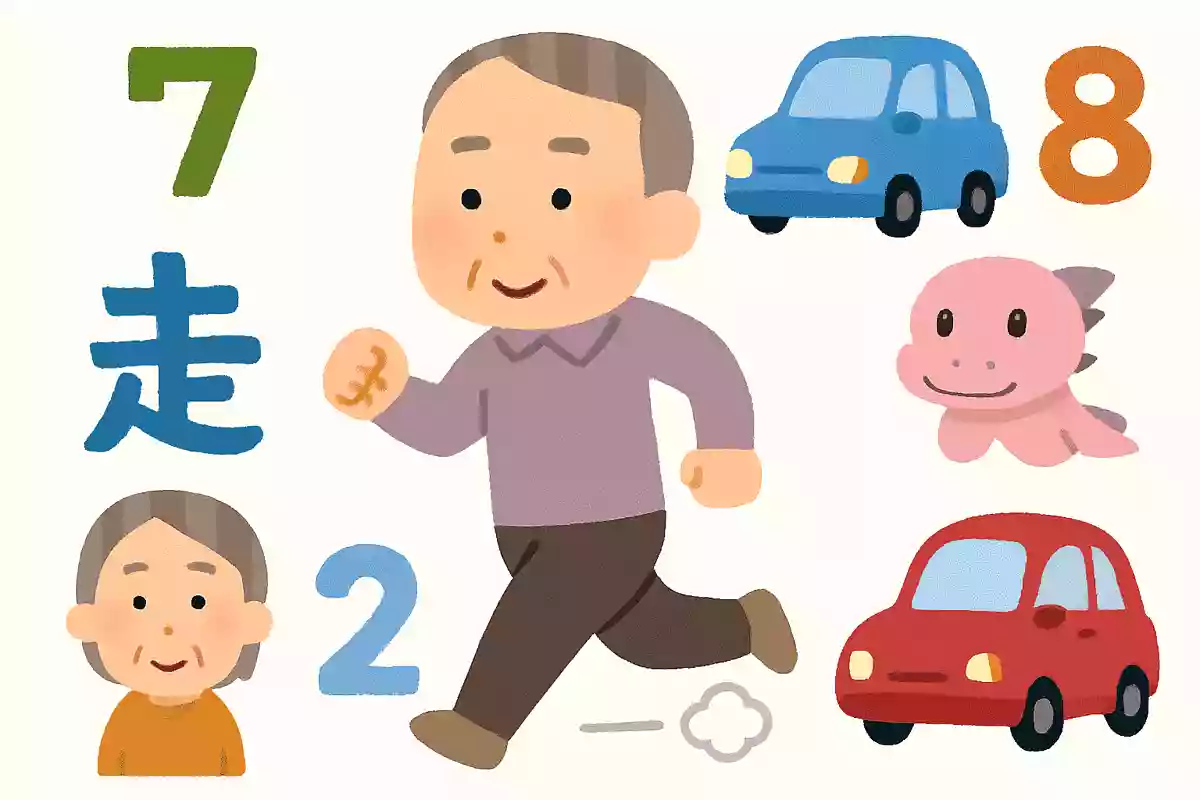
This is a puzzle where you complete a four-character idiom by combining the given parts.
A tricky point is how the parts are combined and that some parts are used as-is as complete kanji.
It might be important to make the arrangement of parts in the problem and which kanji are used as-is clear, and to consider how the questions and hints are presented.
The answer is “Shichiten Hakki” (七転八起), meaning “fall down seven times, get up eight.” It could also be interesting to use the meaning of the idiom as a hint.
Reaching the kanji 起, where the “走” component is subtly altered, is an especially difficult point!
“Ten” + “Ten” + “Sun/Day” + “Moon/Month” + “Sun/Day” =
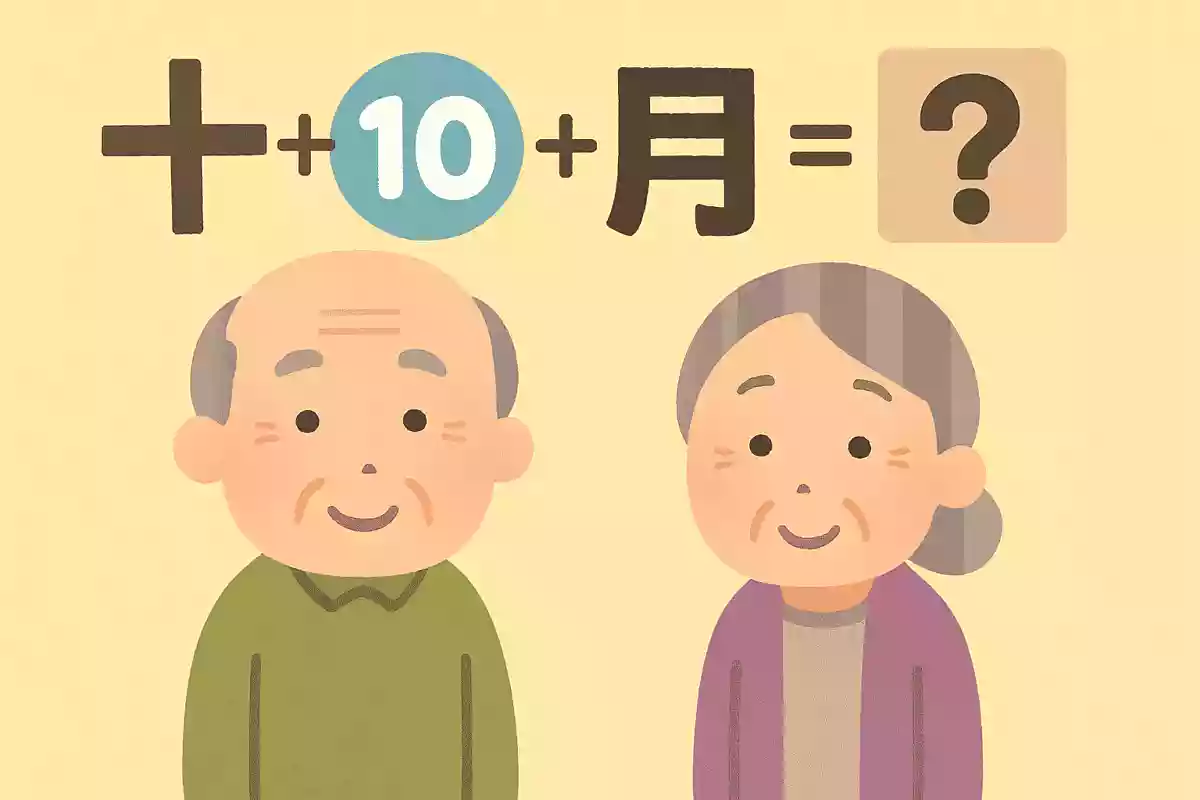
Let’s think of a word formed by combining multiple kanji.
Because the parts are simple, the process of considering different combinations becomes brain training.
The answer is “asahi” (morning sun).
Since there are two of each kanji, “十” and “日,” the key point is how to arrange them.
It may be difficult to come up with the idea of forming a kanji by placing two “十” around a “日,” and then using the remaining “日” as is.
As a hint, it might be easiest to say that the word combines “a kanji made by combining four parts” with “a kanji that uses a part as is.”