

![[For Seniors] Kanji Decomposition Quiz: Assemble the scattered characters](https://media.ragnet.co.jp/img/1200__png__https://www.ragnet.co.jp/files/2025/04/b5c3985514678b53574c1b0378c27c6d.webp)
[For Seniors] Kanji Decomposition Quiz: Assemble the scattered characters

The Kanji Decomposition Quiz is a brain-training activity where you break down kanji into their radicals and parts, then infer and reconstruct the original character.
For older adults, recalling kanji they learned long ago can stimulate memory and activate the brain in a fun way.
It’s not too difficult, and there are small hints, so anyone can try it casually!
If you work on it with family or friends, it will spark conversation and create more smiles.
It’s a great quiz for recreation and for helping to prevent cognitive decline!
[For Seniors] Kanji Decomposition Quiz: Put the Scattered Characters Together (1–10)
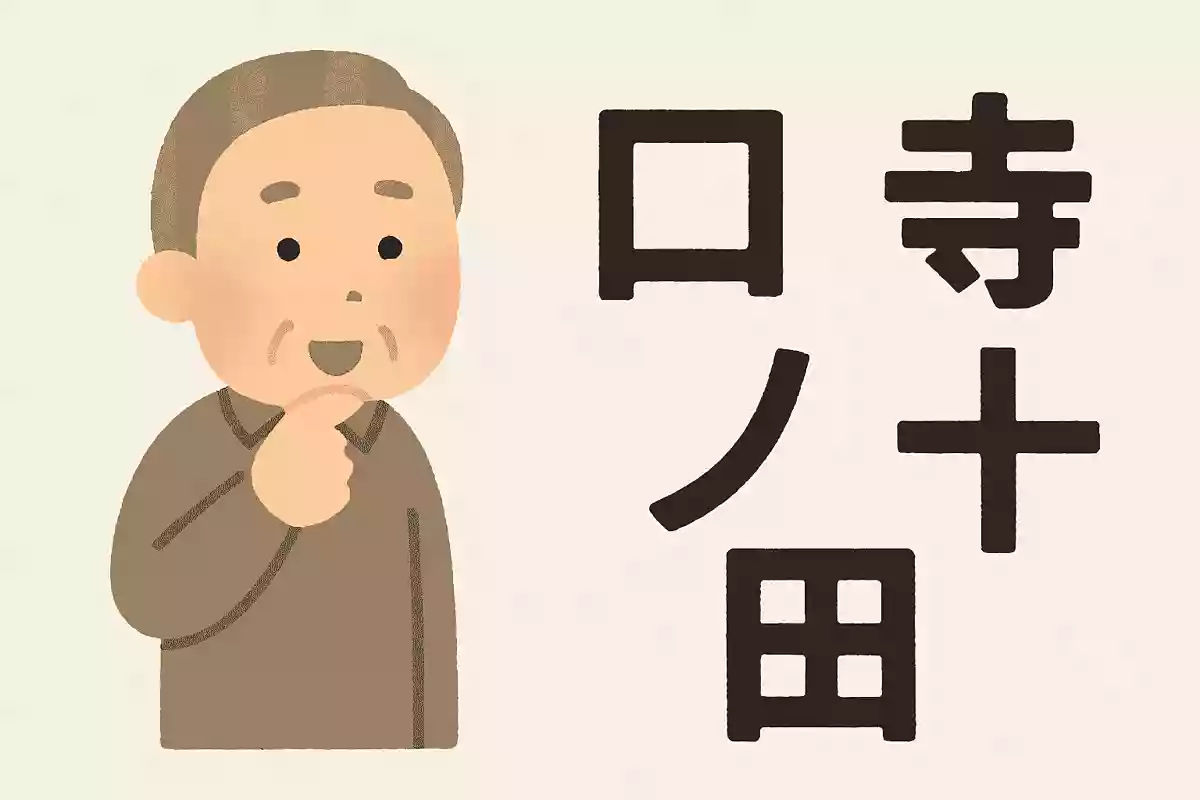
“mouth” + “katakana no” + “ten (ten)”
One word
See the answer
tongue
In this puzzle, you combine the three kanji “口” (mouth), “ノ,” and “十” to form a word. The answer is “舌” (tongue). Combining “口” and “ノ” creates the main part of the character “舌,” and “十” influences the overall shape to complete it. “舌” refers to the organ inside the mouth that helps chew food and sense taste.
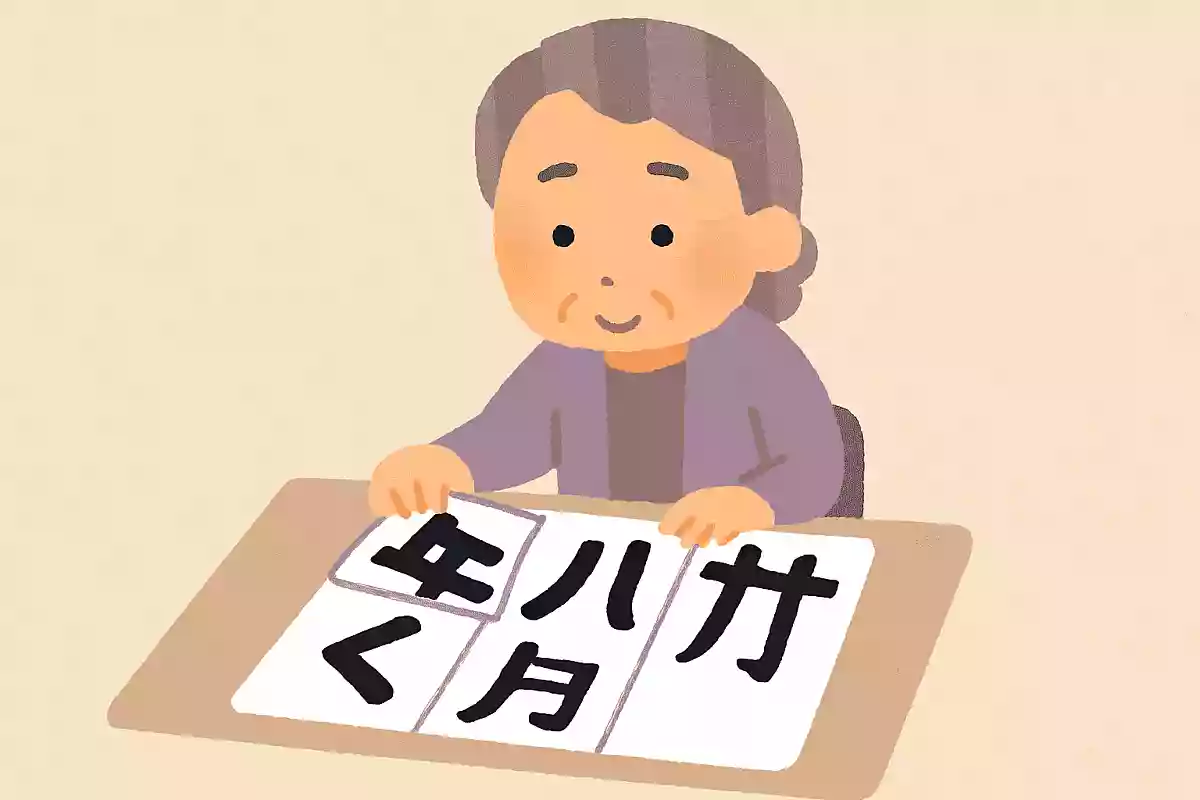
“Mu” + “Hi” + “Hi” + “Moon”
One word
See the answer
Noh
In this puzzle, you combine the four kanji components “ム,” “ヒ,” “ヒ,” and “月” to form a character. The answer is “能.” Combining “ム” and “ヒ” creates the “ノ” part of “能,” and combining “ヒ” and “月” completes the remaining parts. “能” is a kanji that means ability or talent.
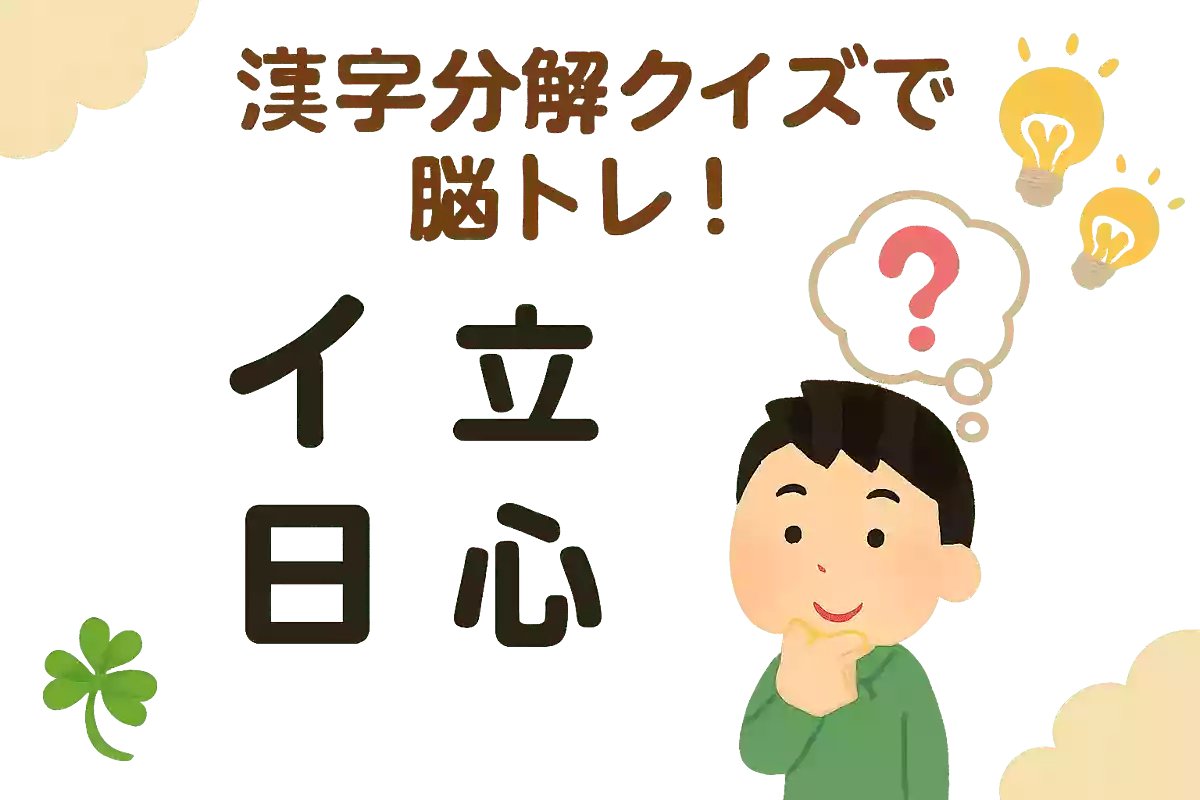
I + stand + sun/day + heart
You use it when expressing a very large number.
See the answer
hundred million
How far can you say the digits of numbers? There’s an impressive kanji used to represent large numbers: 億 (oku, one hundred million). 億 is made up of the components イ, 立, 日, and 心. But 億 is used for more than just place values in numbers. Written as 億る, it can also be read oshihakaru, meaning to “guess” or “suppose,” reflecting a person’s feelings. The character 億 is composed of the person radical ninben (亻) and the character 意, which carries meanings related to thinking or the heart/mind. For that reason, the original sense of 億 is connected to the feeling of thinking various things about people.

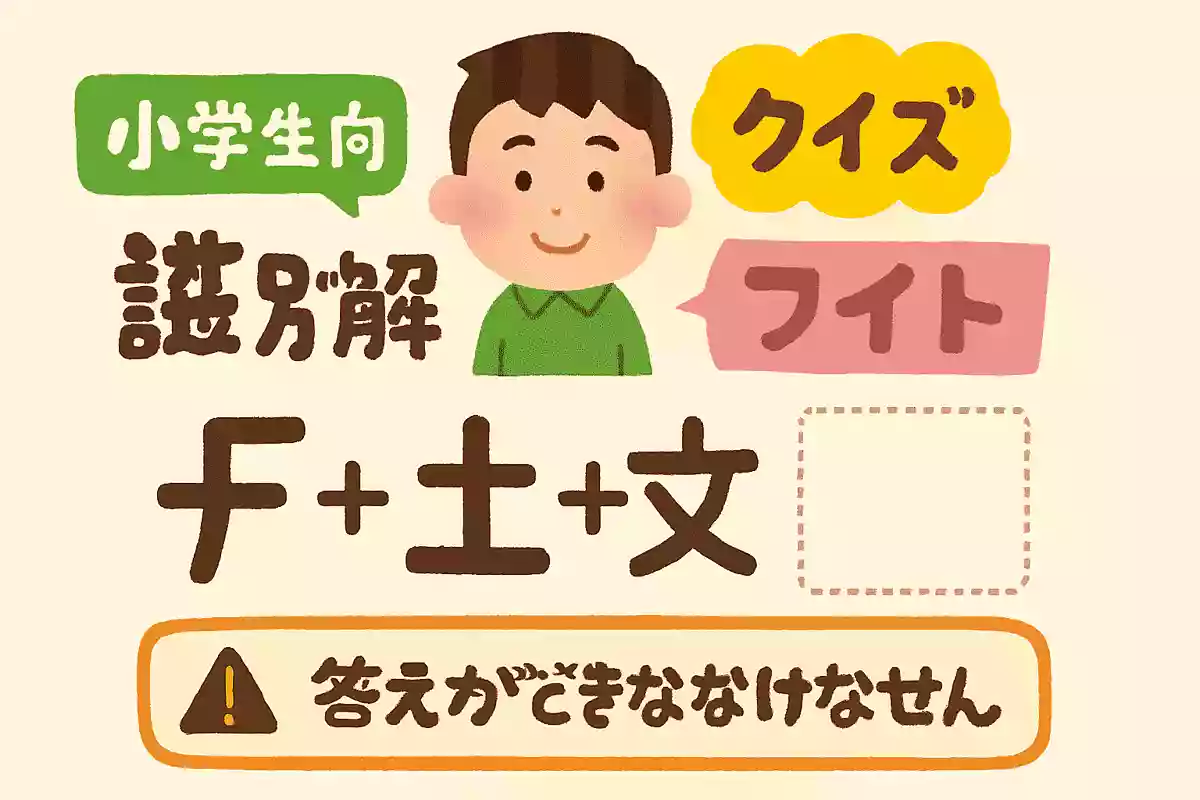
step + earth/soil + sun (measurement unit)
You can use this when you’re thinking, “I wonder if they’re still not here yet?” or “Are they not here yet?”
See the answer
wait
The kanji 待 is made up of the components 彳, 土, and 寸. Inside 待, you can see the kanji 寺, right? 寺 carries the meaning of holding something and remaining in that state—being stopped. 彳 is the “gyōninben” radical, which represents a road, and it depicts the image of someone’s feet stopping along the way while holding something in their hand.
Tree + Eye + Heart
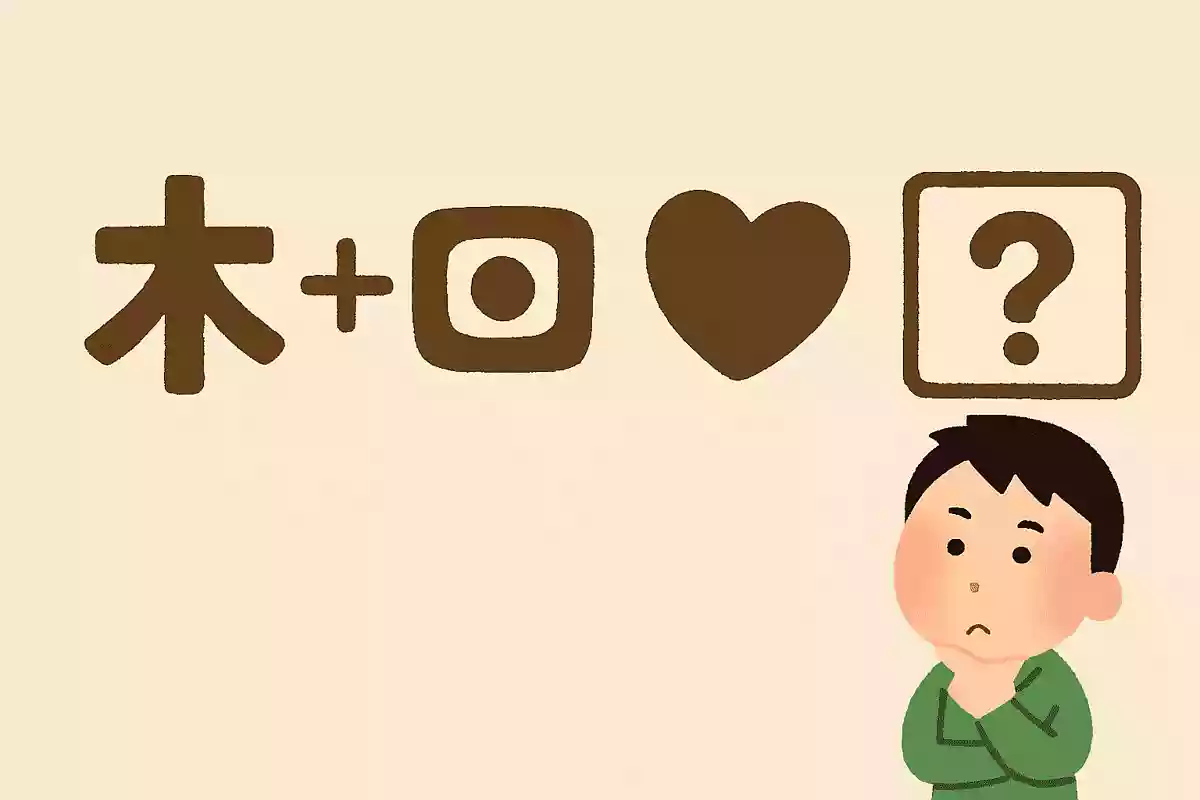
You use it when you think about someone with your heart.
See the answer
thought
The character 想 is made up of the kanji for “tree,” “eye,” and “heart.” Since it contains the “heart” radical, it perfectly matches the image of what 想 expresses. 想 describes the act of calling to mind someone else. You can sense the image of picturing a person’s form or appearance in your heart. Compared to 思う, which is read the same way (“omou”), 想 is used when stronger feelings or emotions are involved.
Moon + Life/Birth + Day/Sun + Day/Sun
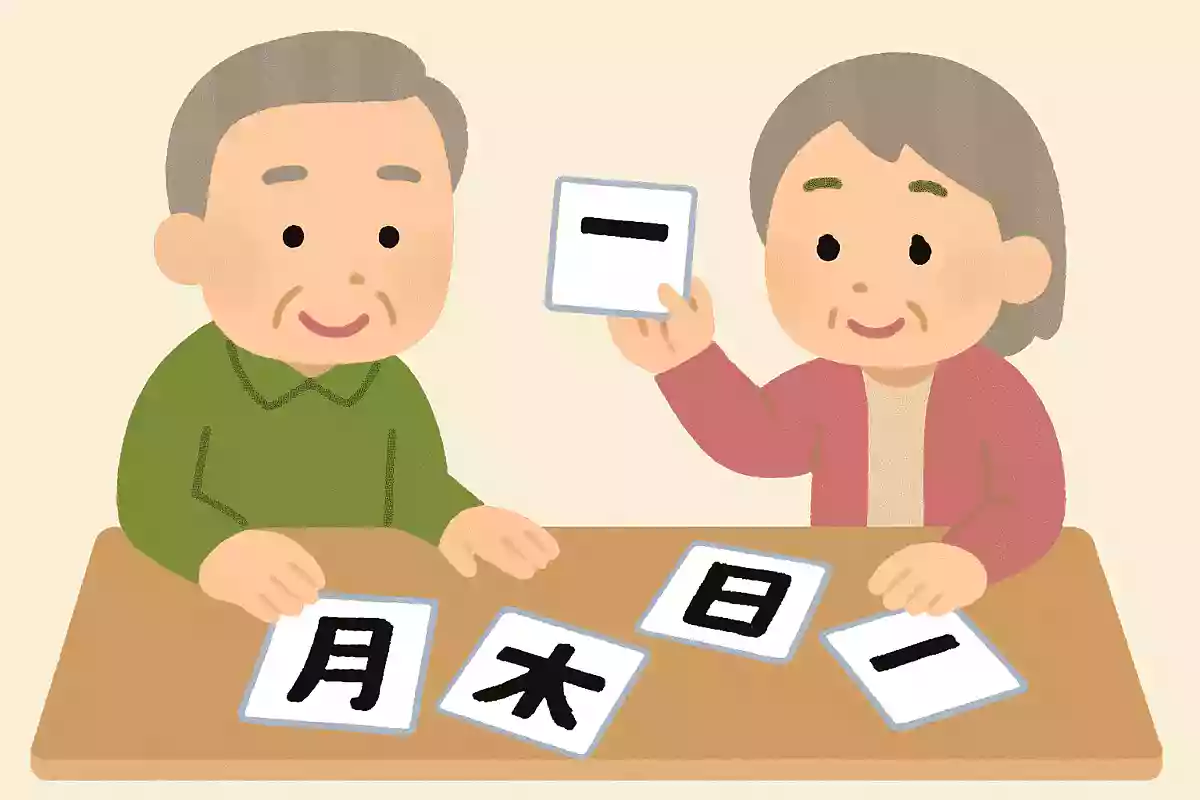
Translation
See the answer
Morning star
In this problem, you combine four kanji—“月” (moon), “生” (life), “日” (sun/day), and “日” (sun/day)—to form a word. The answer is “明星.” Combining “月” and “生” gives “明,” and combining “日” and “日” gives “星.” Putting these together forms the word “明星.” Myōjō (明星) refers to a bright star shining in the night sky, especially the bright star seen in the early morning (the morning star).
“husband” + “husband” + “shell (money)”
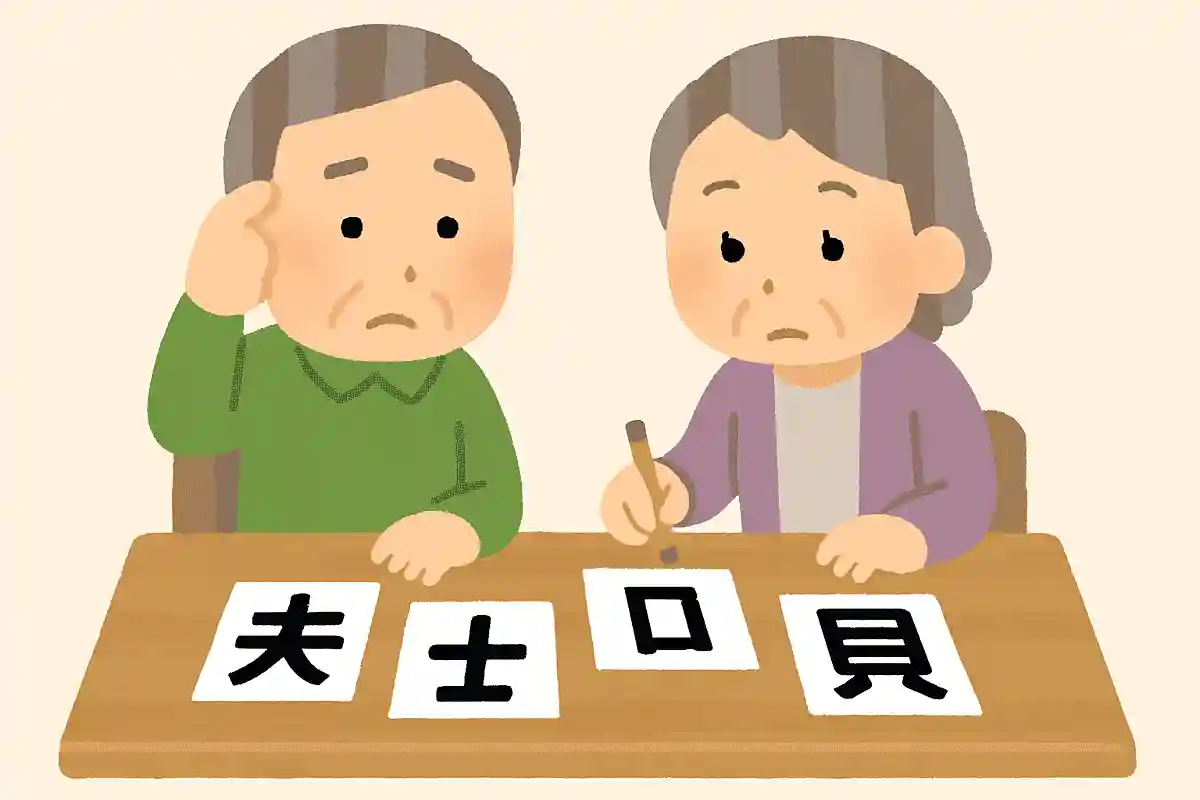
One word
See the answer
eulogy; praise; commendation
In this problem, you combine three kanji—“夫,” “夫,” and “貝”—to form a word. The answer is “讃.” Combining “夫” + “夫” creates the component found in “賛.” Adding “貝” places it above that component, completing the kanji “讃.” “讃” means to praise or to commend something.