

![[For Seniors] A locomotion exercise anyone can join. Introducing simple and fun exercises you can do while seated.](https://i.ytimg.com/vi_webp/GEQ7Rhz93Ek/maxresdefault.webp)
[For Seniors] A locomotion exercise anyone can join. Introducing simple and fun exercises you can do while seated.

We all want to keep walking energetically on our own feet for as long as we can, don’t we? Locomotive exercises, which help maintain leg and hip strength and balance, are great for supporting everyday health.
Locomotive syndrome refers to a condition in which the ability to stand and walk declines due to age-related muscle weakness or illness.
The exercises introduced here are all designed so that older adults can do them comfortably at their own pace.
Move your body to the rhythm and make them part of your daily routine to help maintain your health!
[For Seniors] A locomotion exercise anyone can join. Simple and fun seated exercises (1–10)
Asahi Locomotive Syndrome Prevention ExercisesNEW!

This is an exercise program designed to prevent locomotive syndrome and maintain a body that can stand and move.
It features full-body movements within a comfortable range, based on everyday actions such as standing, walking, and supporting.
Despite the simple motions—like light squats, marching in place, and balance exercises involving weight shifts—the program is structured to effectively stimulate the lower-body muscles and the core.
No special equipment is required, making it easy to continue as part of your daily routine.
By starting while you still feel “I’m fine,” you can help protect your ability to live independently in the future.

Locomo exercises anytime, even on a chairNEW!

The “locomotive” exercises you can do seated in a chair anywhere are an easy way to get moving and are highly recommended.
For the side-step movements, swing your arms forward and back and move your body rhythmically to the music.
When lifting your heels or toes, raise and lower them slowly.
When stepping in place and opening your feet outward, spread them only as far as you comfortably can.
For exercise music, choose tracks with a moderate tempo that aren’t too fast so you can keep a steady rhythm and enjoy yourself.

Cross Gymnastics: Loco-Tore CourseNEW!

Cross-body exercises are also key for activating the brain and improving overall balance.
When sitting in a chair, sit toward the front edge and straighten your posture to get ready.
To stretch your calves, lift one leg at a time while seated and stretch thoroughly.
When doing squats, placing your hands on a table or similar support may help you move more steadily.
For shoulder and neck stretches, relax your muscles and focus on calm, relaxed breathing.
Move your body only to a comfortable extent and enjoy the routine.
Locomotive Syndrome Prevention Exercises: Strengthening the Thighs and Abdominal MusclesNEW!

A “locomotive” exercise that strengthens your abs and thighs, making your gait more stable and going out or taking walks more enjoyable.
Raise your thigh so that your knee comes up to navel height.
It’s also important to practice lifting one leg without letting the sole of your foot touch the floor.
For any movement, lightly rest your hand on a chair or similar support to help stabilize your balance so you can exercise with confidence.
It’s easy to fit in while watching TV or before meals, so give it a try.
Locomo Exercises: Anytime, Anywhere EditionNEW!

This program aims to help maintain function in an enjoyable way by moving your body to the Locomo prevention song “Lokomo Kashikomo Sabinaide.” The lyrics include relatable, age-related scenarios like “I can’t cross the crosswalk before the light turns red” and “I can’t put on socks while standing on one leg,” making you nod along and think, “So true!” The exercises themselves use simple movements that anyone can try, and by moving to the music, you stimulate muscle strength and balance, putting the brakes on the tendency to give up and say, “It’s just age.” Keep up this fun routine with awareness of your bones and muscles, and enjoy energetic days ahead!
Locomo Exercises: Tenugui EditionNEW!
A locomotion-prevention program that gets your whole body moving while using a tenugui (Japanese hand towel) as an aid.
Holding the tenugui with both hands, you raise and lower your arms, perform pulling motions that focus on the shoulder blades, and do balance exercises combined with marching in place—simple yet effective movements.
The tenugui helps expand your range of motion and makes it easier to adjust the level of effort, making the program approachable even for those who feel uneasy about exercise.
Moving with good posture also helps maintain core and lower-limb strength, which can contribute to preventing falls.
Why not incorporate it into your daily life as a way to maintain a “body that moves”?
Ina Town Locomo Exercise Heel RaiseNEW!
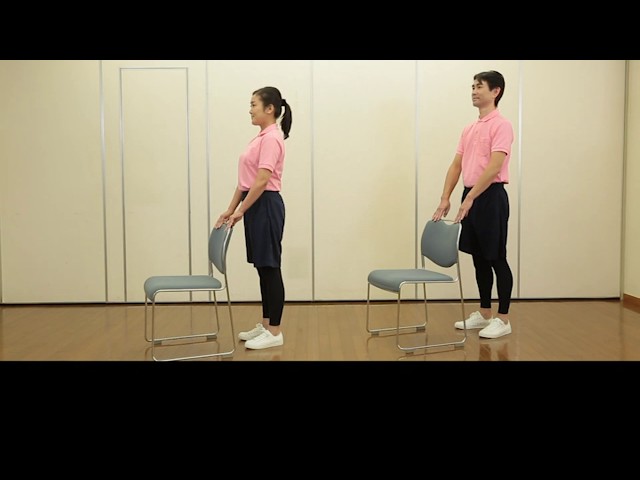
A heel raise from the Locomotive Syndrome exercise set that you can do without straining your body.
When you move, place your feet shoulder-width apart, point your toes straight ahead, and lift your heels.
Be careful not to arch your back—that’s another key point.
If you place your hands on a desk or handrail, your balance will be more stable, so try that if you feel unsteady.
Counting out loud as you go may also be helpful.
It’s an exercise that’s easy to incorporate into daily life, so try it within a comfortable range according to how you feel.