

[For Seniors] A locomotion exercise anyone can join. Introducing simple and fun exercises you can do while seated.

We all want to keep walking energetically on our own feet for as long as we can, don’t we? Locomotive exercises, which help maintain leg and hip strength and balance, are great for supporting everyday health.
Locomotive syndrome refers to a condition in which the ability to stand and walk declines due to age-related muscle weakness or illness.
The exercises introduced here are all designed so that older adults can do them comfortably at their own pace.
Move your body to the rhythm and make them part of your daily routine to help maintain your health!
- [Seated] Fun Health Exercises for Older Adults and Seniors
- [For Seniors] Simple Rhythm Exercises: Recommended Songs and Routines
- [For Seniors] Easy-to-adopt foot exercises for daily life: A healthy habit to keep walking on your ownNEW!
- Summary of exercises for seniors: introducing preventative care movements by body part.
- [For Seniors] Rehabilitation exercises targeting each body part: Introducing easy routines you can incorporate without strain
- [For Seniors] Fun Exercises You Can Do While Seated
- Recommended simple exercises for recreational activities for the elderly
- [For Seniors] Exercises to maintain and improve lower-limb strength. Ideas that can be enjoyed by both large and small groupsNEW!
- For seniors: Enjoyable exercises done while seated, accessible for wheelchair users.
- For seniors: Leg-strengthening exercises you can do without overexertion.
- [For Seniors] A Collection of Simple Exercise Programs Suitable for Beginners
- [With Video] Lower-limb strength training for seniors that can be done in bed
- [For Seniors] Enjoyable While Seated! Ball Exercises and Recreation
[For Seniors] A locomotion exercise anyone can join. Simple and fun seated exercises (1–10)
Ogaki Anywhere Locomo ExercisesNEW!

The “Ogaki Anywhere Locomotive Exercise,” set to friendly calls and music, is full of ideas that make moving your body fun.
Upbeat phrases like “Live long and enjoy life,” “Build your muscle savings,” “Stand up on your own,” and “Let’s walk” flow with the rhythm, getting both body and mind moving.
Centered on simple movements you can do while seated, it’s easy to keep up without strain.
Moving the arms and legs can help maintain muscle strength and improve joint flexibility, positively affecting everyday activities.
Powered by music, it fosters a sense of unity and brings more smiles to participants—an exercise program that connects people.

Full-body exercises to prevent locomotive syndrome that can be done while seatedNEW!

Since these are exercises you can do while seated, even those who feel unsteady on their feet can participate with confidence.
First, let’s work on strengthening the upper body.
When moving your arms forward and backward, it may be even better if you pay attention to your breathing at the same time.
When strengthening your leg muscles, slowly lift your knees while supporting them with your hands, then place the soles of your feet back on the floor.
Finally, take a deep breath to regulate your breathing, and you’re done.
When exercising, the key is to enjoy moving your body within a comfortable range—count out loud and communicate with those around you as you go.

Takahashi City Locomo ExercisesNEW!

Locomotive syndrome exercises to help keep your body healthy.
When lifting and lowering your toes, place a hand on a wall or similar support and move slowly up and down.
This helps prevent stumbling while walking.
For the upper body, slowly move your arms forward and backward while drawing your shoulder blades together.
When raising and lowering your arms, fully extend them and move your body to the point where it feels pleasantly stretched—that’s the key.
These exercises can be done either standing or sitting, so it’s also helpful that you can adjust them to how you feel that day.
[For Seniors] Locomotive exercises anyone can join. Simple and fun exercises you can do while seated (11–20)
Kashiwa Loko-Training!NEW!
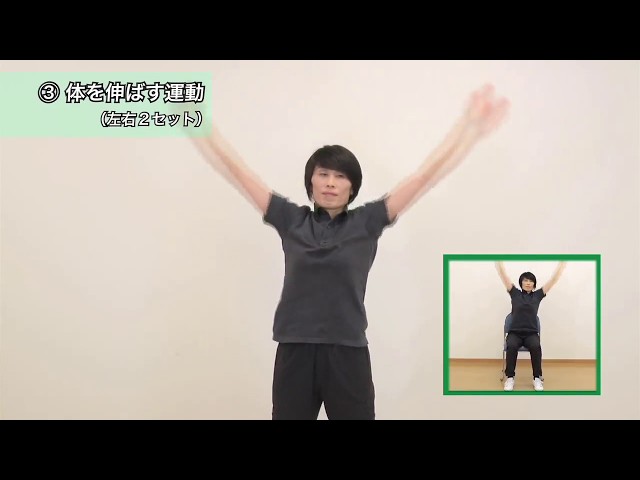
An original locomotion-prevention exercise routine created by Kashiwa City, Chiba Prefecture, as part of its community-wide initiative to prevent frailty.
With the motto “Keep your body and mind energetic” to help residents continue living independently in familiar surroundings, the community is promoting health together.
The routine lasts about six minutes and efficiently incorporates 12 different movements.
The warm-up stretches the whole body and gently loosens the muscles.
The subsequent strength training includes squat-balance exercises to enhance stability in the legs and lower back.
Finally, the cool-down resets the entire body and guides participants into relaxation with mindful breathing.
It can be performed while seated in a chair, making it appealing for participation across generations—from children to older adults—while encouraging broad social interaction.
Kabukki and Locomo ExercisesNEW!
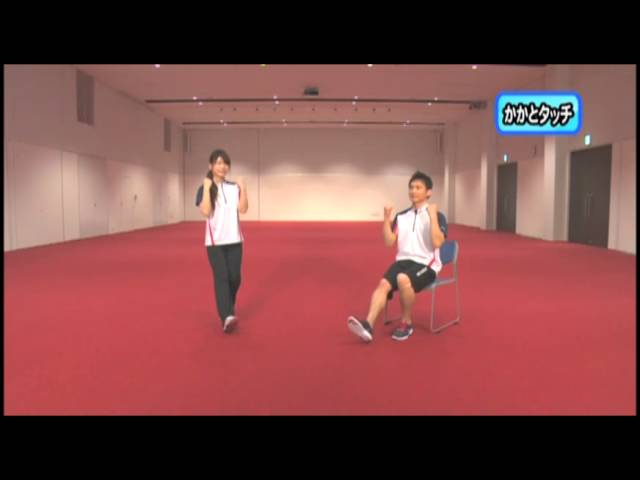
A health exercise program designed to prevent locomotive syndrome by moving your body in a fun way together with Kabukki, the image character of Komatsu City in Ishikawa Prefecture.
Structured to progress with cheerful calls and rhythms, it’s devised to be approachable even for those who aren’t confident with exercise.
The content focuses on movements directly connected to daily life, such as marching in place, squats, and balance exercises using weight shifts.
In addition, by swinging the arms widely, it promotes full-body blood circulation and enhances lower-limb strength and core stability.
Being able to enjoy it together with Kabukki lowers the barrier to exercise and makes it easier to turn into a habit—one of its key attractions.
It is used as a familiar health exercise within the community.
Locomotive Syndrome Preventive ExercisesNEW!
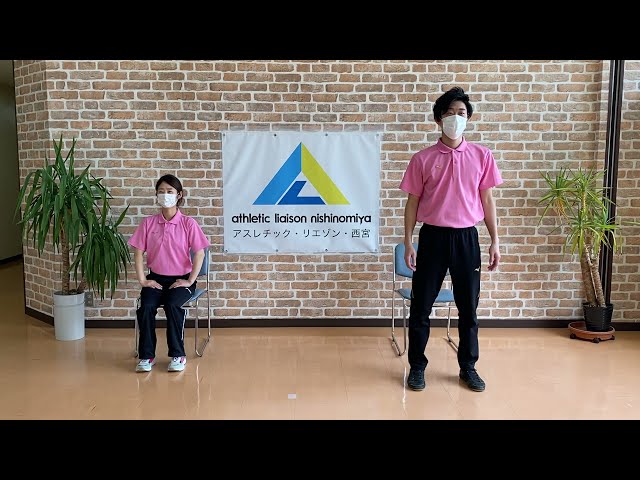
A practical health exercise program developed under the supervision of Professor Nagata at Mukogawa Women’s University.
By performing it to the locally beloved song “The Song of Nishinomiya, the Cultural and Residential City,” it enhances accessibility to exercise and promotes continuation.
In addition to full-body movements such as marching in place and arm swings, it also incorporates elements of abdominal exercises and core training, providing a structure that comprehensively strengthens balance and muscle strength.
Although the song is short, its tempo is somewhat quick, adding a light aerobic component and resulting in a fairly solid exercise intensity.
The basic form is performed standing, but it can also be done seated in a chair depending on one’s fitness level.
It is a highly practical routine that helps prevent falls and maintain walking function.
Seated Locomotive Syndrome Prevention ExercisesNEW!
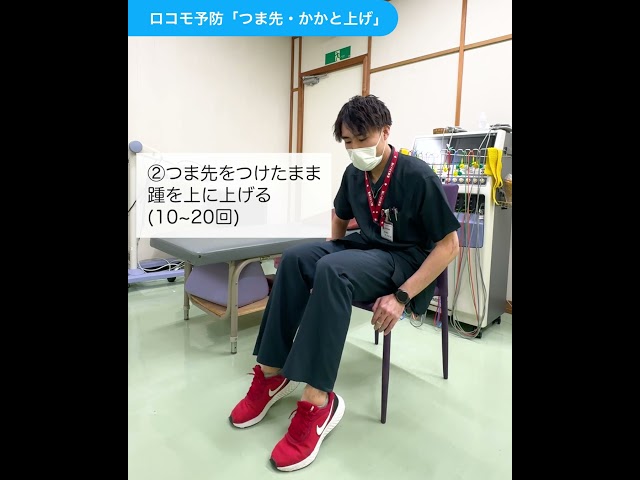
A simple exercise program designed to maintain lower-limb strength effortlessly in daily life.
The first is lifting your toes while keeping your heels on the floor.
This stimulates the shin muscles and helps prevent tripping while walking.
The second is lifting your heels while keeping your toes on the floor, which helps maintain calf strength.
The third is a forward lunge with one foot stepping out; be careful not to let your knee touch the floor and not to let your knee go past your toes.
Doing these exercises morning and evening for about 10 to 20 repetitions can train the entire lower limbs and the core at the same time.
If you’re not used to them, perform them while holding onto a wall or handrail.