

![[For Seniors] Recommended Brain Training! Classic Riddles](https://media.ragnet.co.jp/img/1200__png__https://www.ragnet.co.jp/files/2025/05/f13ab8374e706bbb2808c45c6e19745f.webp)
[For Seniors] Recommended Brain Training! Classic Riddles

Riddles (nazokake) are also very popular among older adults.
They’re a traditional Japanese wordplay, familiar to many through rakugo performances and comedy segments like ogiri.
As a brain-training activity, many facilities enjoy turning the “sono kokoro wa?” part of nazokake into a quiz.
However, it can be difficult to find nazokake topics that suit older adults.
So this time, we’ll introduce nazokake prompts that older adults will find relatable.
Thinking them through helps with brain training and strengthens creativity, vocabulary, and language manipulation skills.
Even those who find it difficult to stand or move their bodies can participate, so everyone, please give nazokake a try together!
[For Seniors] Recommended Brain Training! Classic Riddles (1–10)
A riddle: What do a daifuku (sweet rice cake) and a teacher who took care of me have in common? The answer: both are wagashi—Japanese sweets—and also “my master” (wa-gashi sounds like ‘waga shi,’ meaning ‘my teacher’).
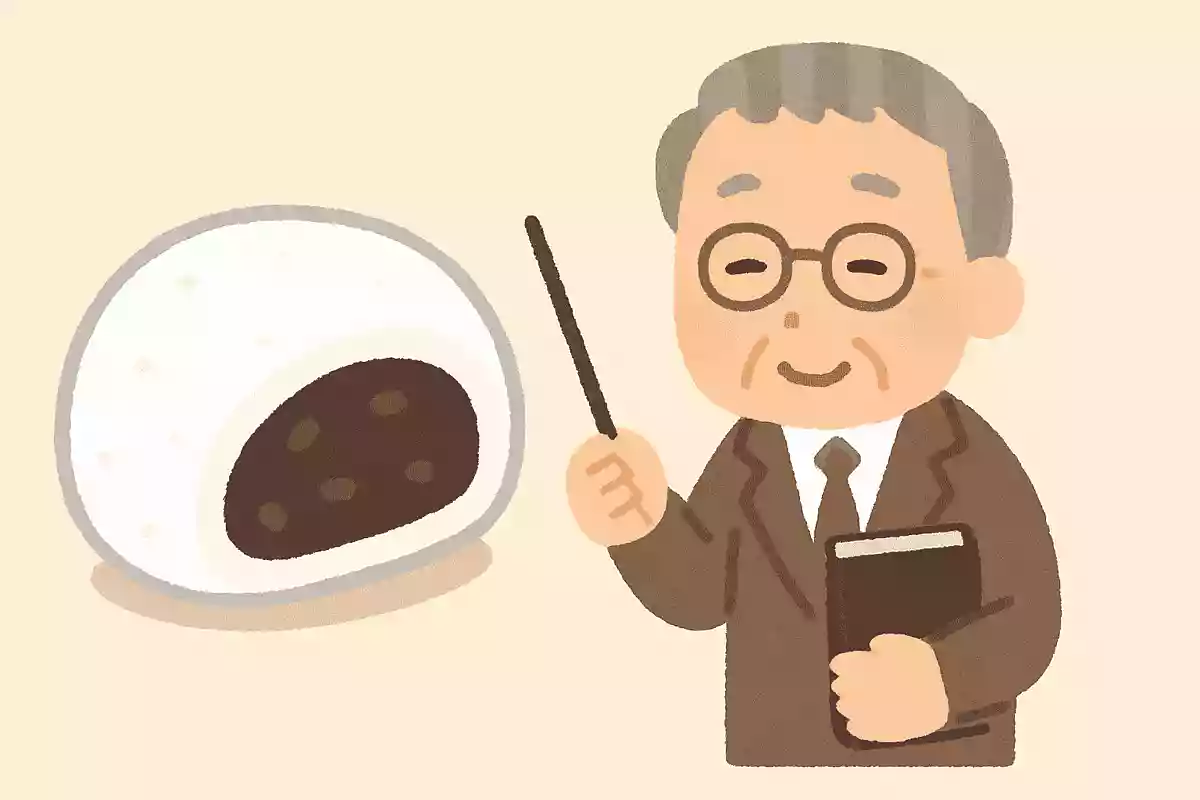
This is a riddle that asks you to think about what daifuku—one type of confectionery—and a teacher have in common.
The key to solving it is how you rephrase “teacher.” For those who can’t come up with it, the classic graduation song “Aogeba Tōtoshi” could serve as a helpful hint.
Daifuku belongs to the category of wagashi (traditional Japanese sweets).
A teacher you’re indebted to can be rephrased as “waga shi” (my master).
Therefore, the shared point is the word “wagashi,” making it the answer to the riddle.

A play on words: ‘What do a liquor store and eyeglasses have in common?’ The punchline: ‘They both have degrees.’ (In Japanese, ‘do’ can mean alcohol proof/strength and lens prescription.)
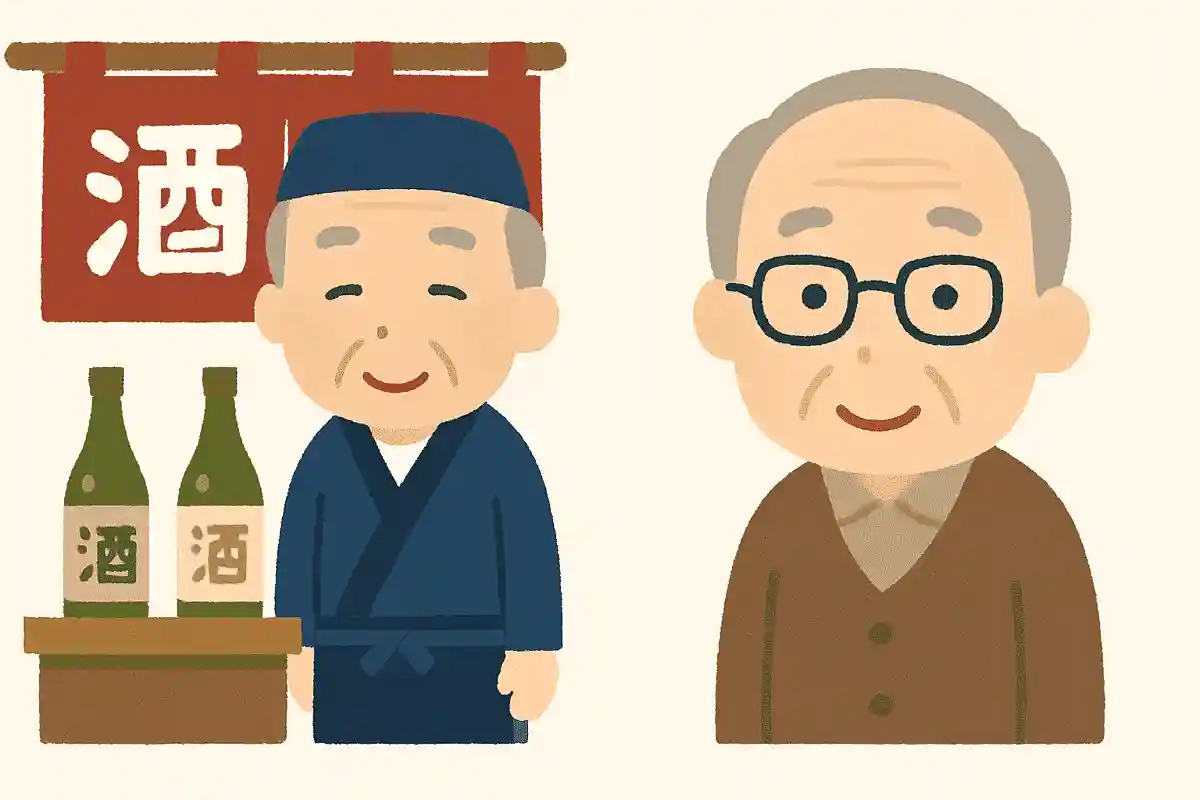
This is a riddle that asks you to think about the common point between a type of shop—a liquor store—and something you wear—glasses.
While it’s possible to imagine a familiar liquor store clerk wearing glasses, in this case you get closer to the answer by considering what each one can’t do without.
At a liquor store, the main items handled are alcoholic beverages, each labeled with its alcohol percentage (degree).
When making glasses, lenses with the appropriate diopter (degree) are used to match one’s vision.
In both cases, “degree” is an essential element—that’s the shared feature highlighted by this riddle.
A smile and two pairs of husband-and-wife rice bowls—what do they have in common? The answer: both are niko-niko (two-and-two, and also “smiley”).
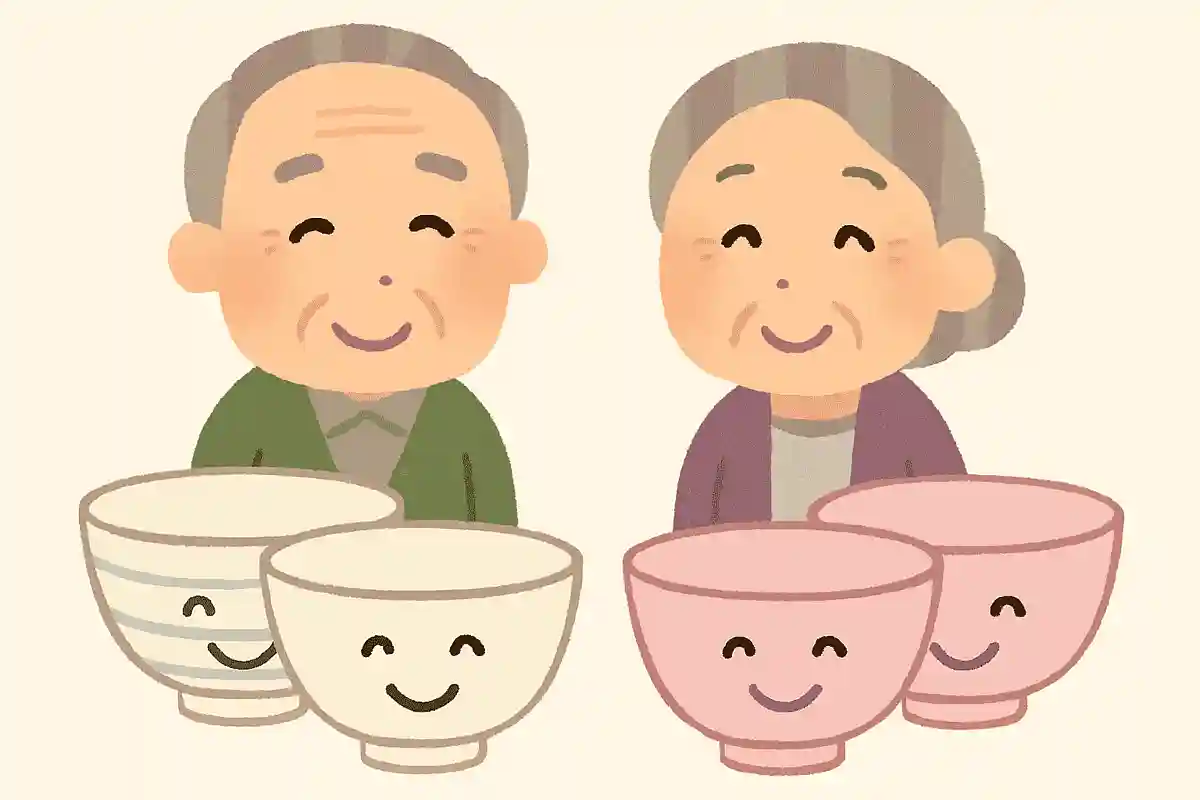
It’s a riddle that conveys a happy image by asking you to consider what a smiling face and two pairs of “meoto chawan” (husband-and-wife rice bowls) have in common.
The key point is that it specifically says there are two pairs, and if you try rephrasing that part, you can cross-check it with a word you associate with a smile to reach the answer.
The onomatopoeic word “nikoniko” expresses a smiling, cheerful look.
Two pairs of meoto chawan—each pair being a set of large and small bowls—gives you two and two.
In other words, “ni-ko ni-ko” emerges as the common word in this puzzle.
A riddle: “What do bread and newspapers have in common?” The answer: “For both, the dough (article) is what matters.” (It’s a pun: ‘生地’ means dough and sounds like ‘記事,’ article.)
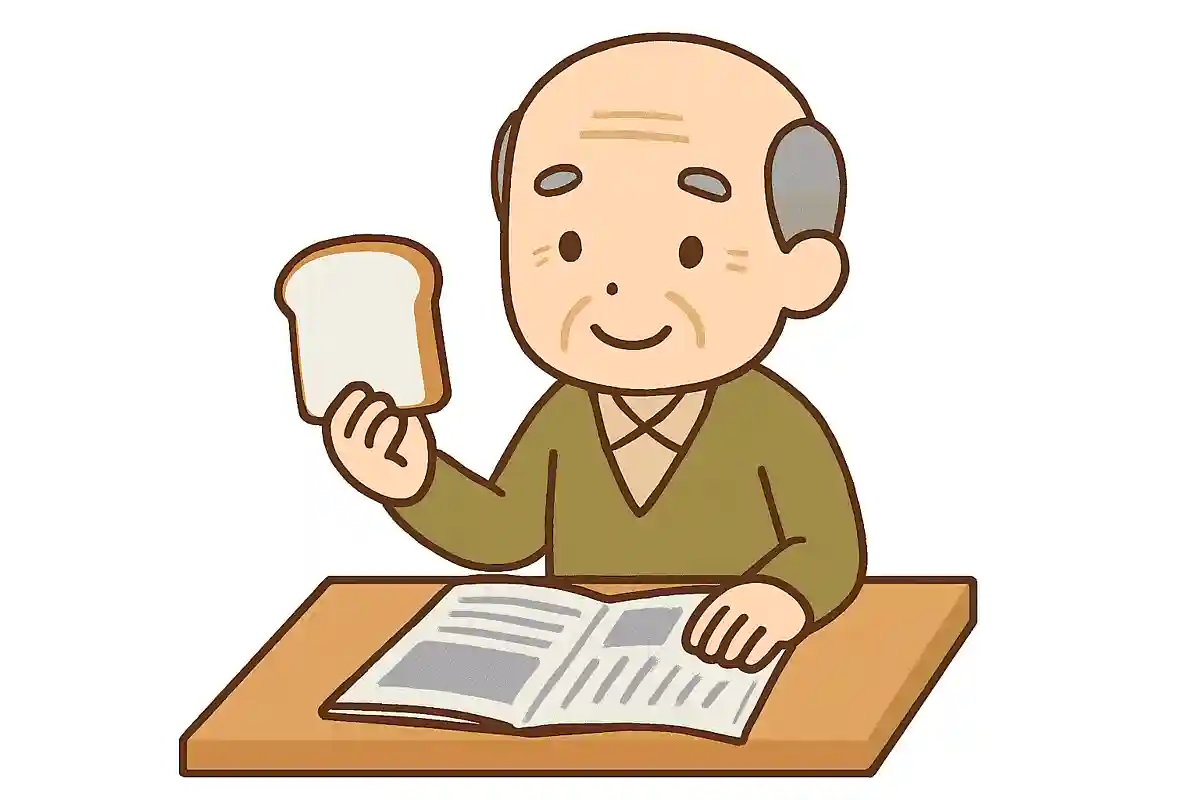
This is a riddle asking you to think about what bread (as food) and a newspaper (as reading material) have in common.
If you consider the steps each one goes through to be completed, you might notice the answer.
To make delicious bread, the preparation before baking—the process of making a good dough—is crucial.
To make a newspaper that attracts readers, it’s important to create compelling articles that draw attention.
In other words, both rely on “kiji” being important—dough (kiji) for bread and articles (kiji) for newspapers.
A play and the first dream of the year—what are they? The punchline: for both, you want to see something with good engi (a pun on engi: performance and engi: good omen).
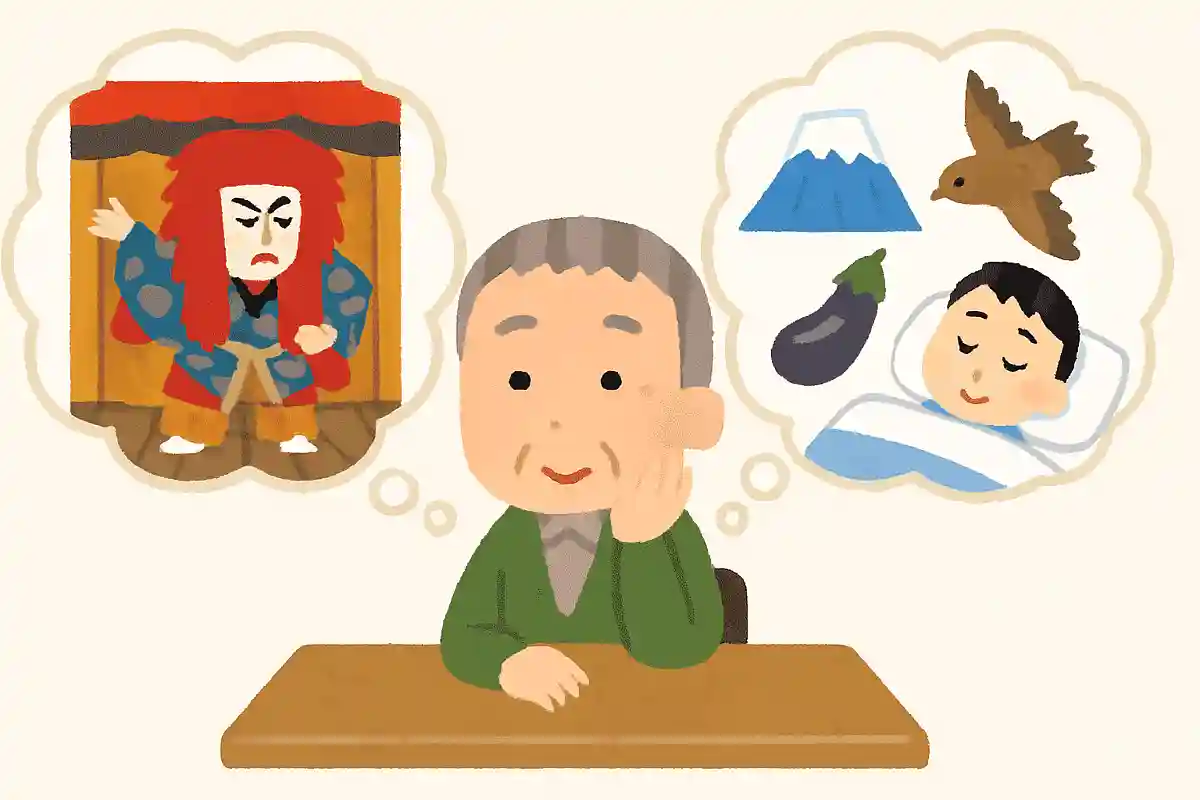
This is a riddle that asks you to think about what stage plays and the first dream you see in the New Year have in common.
For people who have seen many plays or have strong preferences, many words might come to mind, which could make it tricky.
If you consider what is regarded as good in each case, you’ll likely notice the answer.
The better the actors’ performances in a play, the more fulfilling the content feels.
And as the saying goes, “First, Mount Fuji; second, a hawk; third, an eggplant,” people wish to see auspicious things in their first dream of the year.
In other words, both cases point to the desire to see something with good omen—‘engi’—as the answer to the riddle.
A riddle: “What do you get when you compare a car and a house? The punchline: Both are in trouble without ‘hashira’—for a car, it’s ‘hashiru’ (to run), and for a house, it’s ‘hashira’ (pillars).” (It’s a Japanese pun: ‘hashira’ sounds like ‘hashiru’ for cars and also means ‘pillar’ (柱) for houses.)
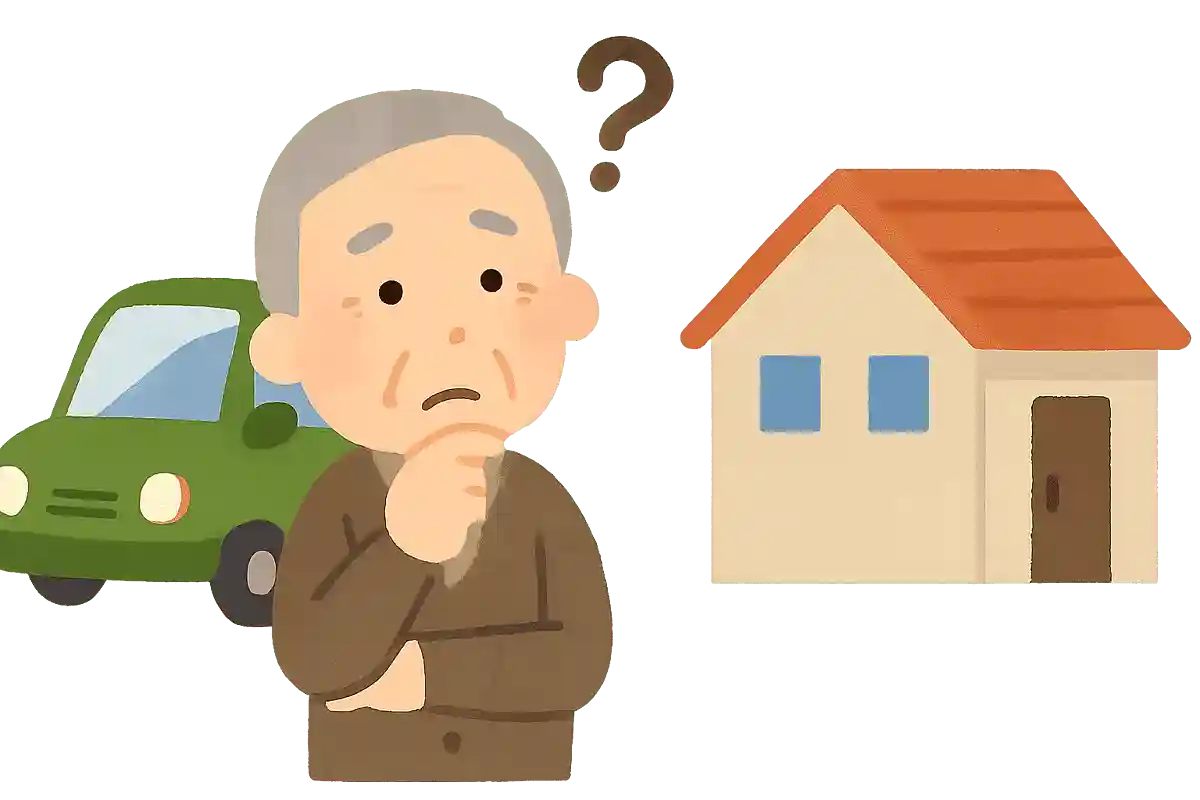
This is a riddle asking you to think of a word common to two everyday things: cars and houses.
By considering the essential functions or indispensable elements of each, you can reach the answer.
A car is an important means of transportation and is useless if it doesn’t run.
To live comfortably in a house, you need pillars; in fact, without pillars, it can’t even be considered a house.
From this, the shared phrase that emerges is something like “you’ll be in trouble if there are no pillars” (hashira-nai to komaru), which plays on the pun between ‘doesn’t run’ (hashi-ranai) for cars and ‘no pillars’ (hashira-nai) for houses.
I have a riddle: What do a poor batter and a rainy day have in common? In both cases, you can’t hit—because it’s “uten,” which sounds like ‘rainy weather’ (uten) in Japanese.
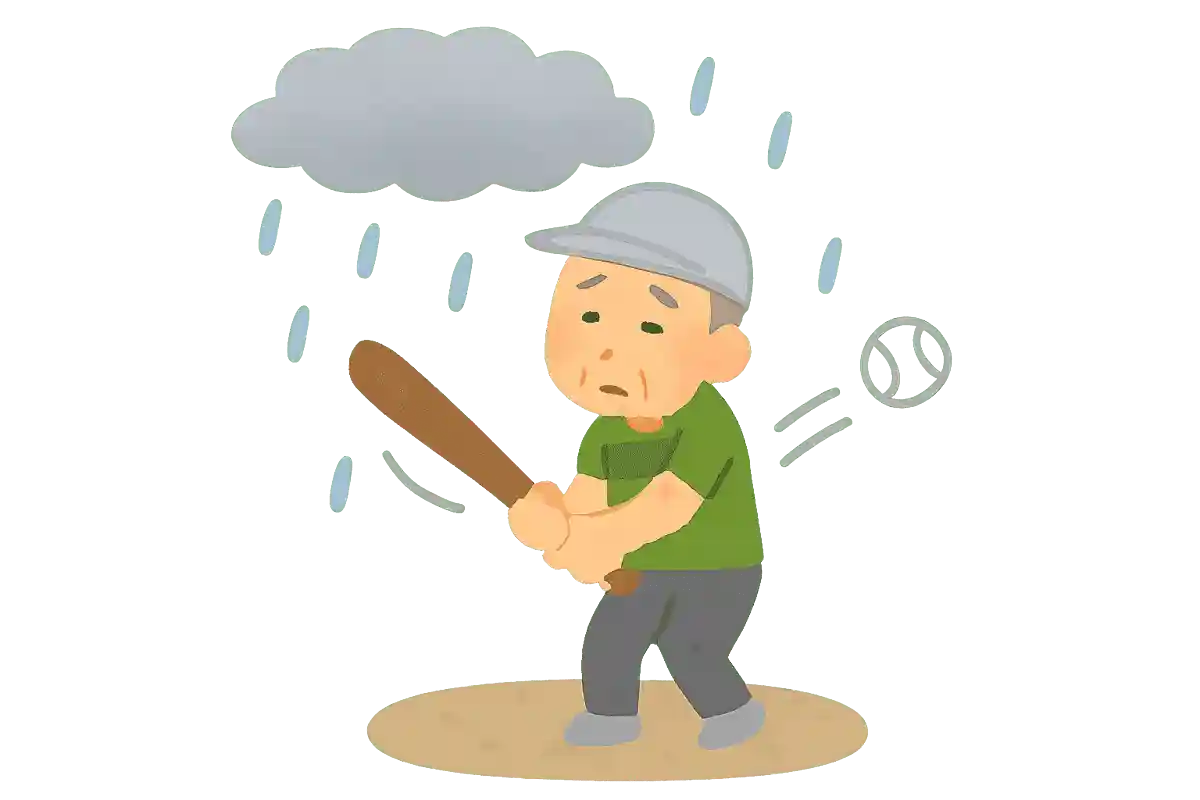
This is a riddle that asks you to find the common point between two phrases that seem incompatible: a poor batter and a rainy day.
Try combining images of states and paraphrasing words.
The key is that it’s not just any batter, but specifically a poor batter—think about what happens when a batter is bad.
If a batter’s skill is low, they can’t hit the ball as they want.
A rainy day can be rephrased as “uten” (rainy weather).
The words uten (rainy weather) and uten (can’t hit) share the same sound in Japanese, and that homophony is the common link the riddle is pointing to.