

[For Seniors] Kanji Decomposition Quiz: Assemble the scattered characters

The Kanji Decomposition Quiz is a brain-training activity where you break down kanji into their radicals and parts, then infer and reconstruct the original character.
For older adults, recalling kanji they learned long ago can stimulate memory and activate the brain in a fun way.
It’s not too difficult, and there are small hints, so anyone can try it casually!
If you work on it with family or friends, it will spark conversation and create more smiles.
It’s a great quiz for recreation and for helping to prevent cognitive decline!
- [For Seniors] Recommended Brain Training! Classic Riddles
- [For Seniors] Perfect for Brain Training! Themed Hiragana Fill-in-the-Blank Quiz
- [For Seniors] A Brain-Training, Crowd-Pleasing Word Search Game
- [For Seniors] Difficult Country Names Kanji Quiz
- [For Seniors] Lively Wordplay Game: Fun Recreation for Elderly Care
- [For Seniors] Perfect for Dementia Prevention! Jumbled Kanji Quiz
- [For Seniors] Difficult-to-Read Kanji for Everyday Items: Take on a quiz full of surprises and discoveries
- [For Seniors] Fun and Exciting! Difficult Kanji Quiz
- [For Seniors] Challenging but Exciting! Kanji Quiz
- [For Seniors] Prevent Dementia with a Look-Alike Kanji Quiz! Introducing Commonly Confused Characters in a Multiple-Choice Format
- [For Seniors] How many can you read? A kanji quiz of familiar things that look readable but aren’t
- [For Seniors] Quiz on Kanji with Many Strokes
- [For Seniors] How many can you read? A comprehensive showcase of difficult food kanji
[For Seniors] Kanji Decomposition Quiz: Put the Scattered Characters Together (1–10)
Shaku + Day/Sun + One
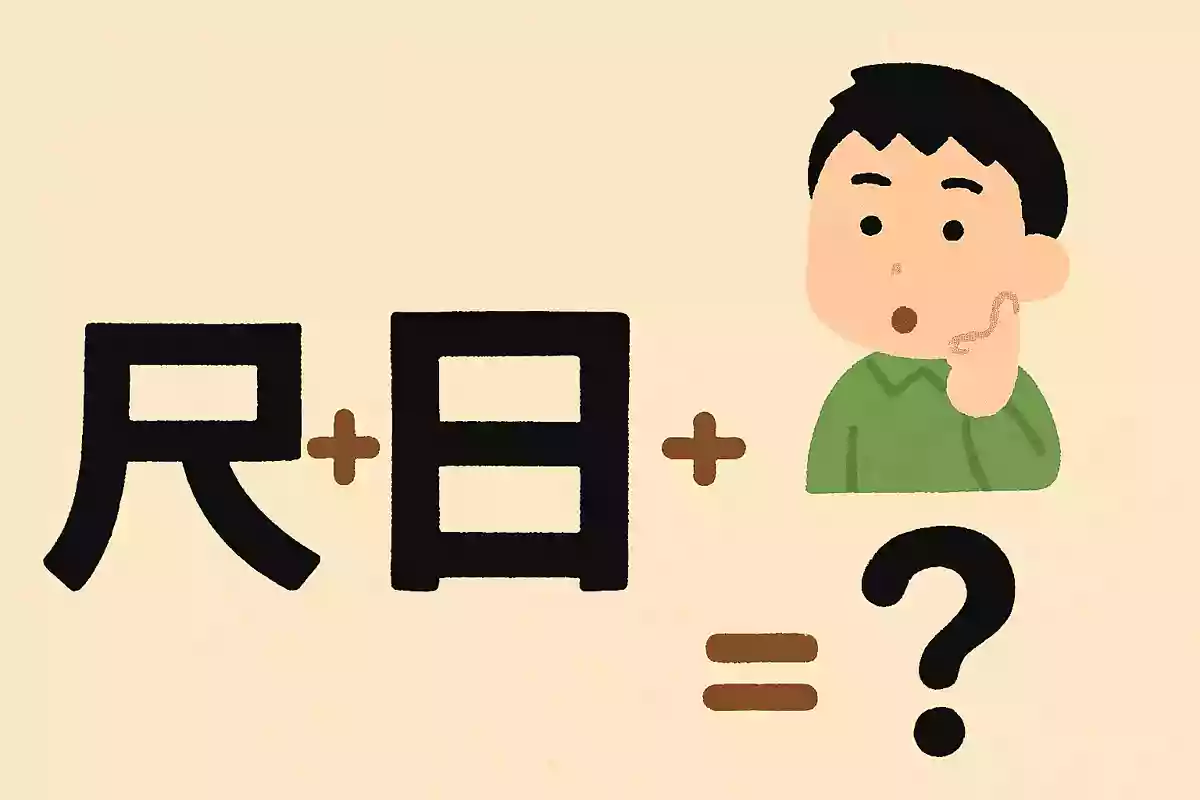
The bright time when the clock points to twelve o’clock.
See the answer
noon
Daytime, the time when many people are active, is written with a character composed of the elements for “sun,” “measure,” and “one.” If you break the character for daytime down, you might wonder, “Why do we use this character?” The origin of the character for daytime comes from an associative compound. An associative compound combines the meanings of existing characters to create a new character with its own meaning. The character for daytime is formed from the sun and an older character that means to divide or separate. Among the periods of time divided by the sun’s rising and setting, it represents the span when the sun is above the horizon.

“husband” + “husband” + “shell (money)”
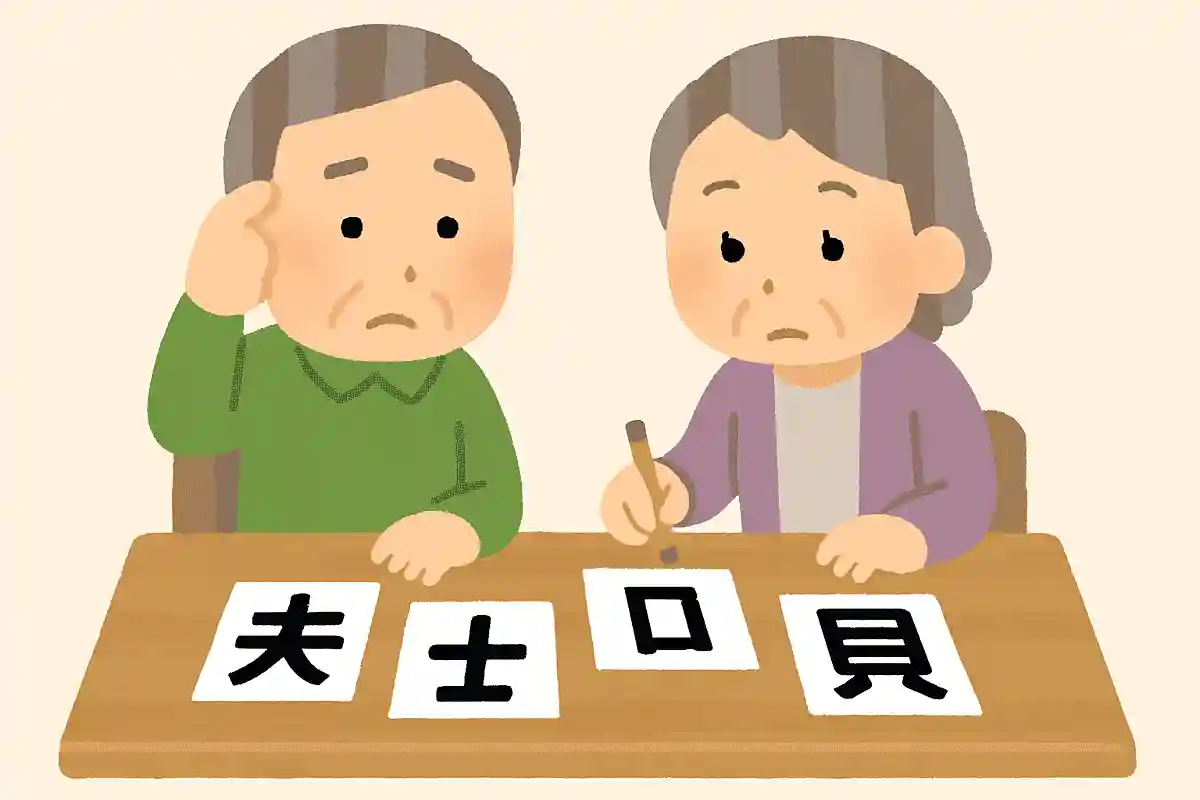
One word
See the answer
eulogy; praise; commendation
In this problem, you combine three kanji—“夫,” “夫,” and “貝”—to form a word. The answer is “讃.” Combining “夫” + “夫” creates the component found in “賛.” Adding “貝” places it above that component, completing the kanji “讃.” “讃” means to praise or to commend something.
"丁" + "十" + "口"
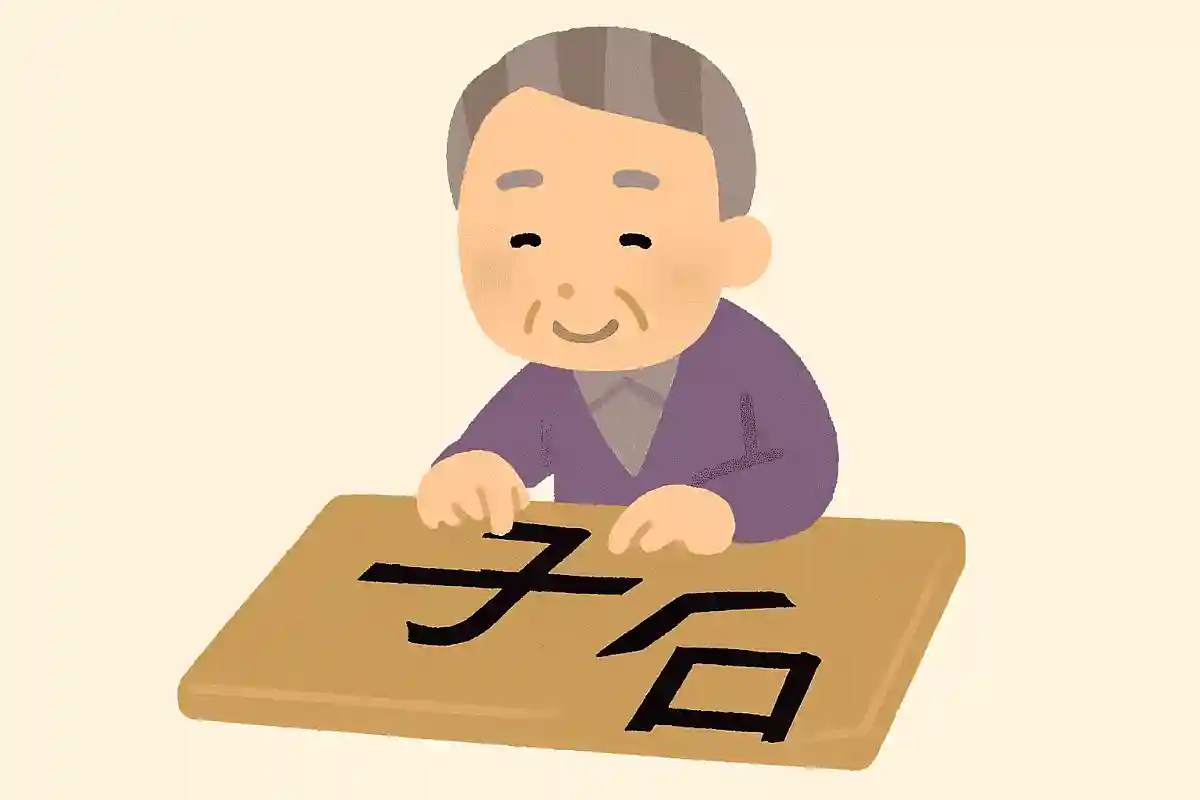
One word
See the answer
town
In this puzzle, you combine the three kanji “丁,” “十,” and “口” to form a word. The answer is “町.” When you combine “丁” and “十,” the “丁” component remains while “十” influences its shape. Adding “口” completes the character “町,” which denotes a town or a small settlement.
[For Seniors] Kanji Decomposition Quiz: Assemble the Scattered Characters (11–20)
“Power” + “cloud/say” + “heavy” + “car/vehicle”
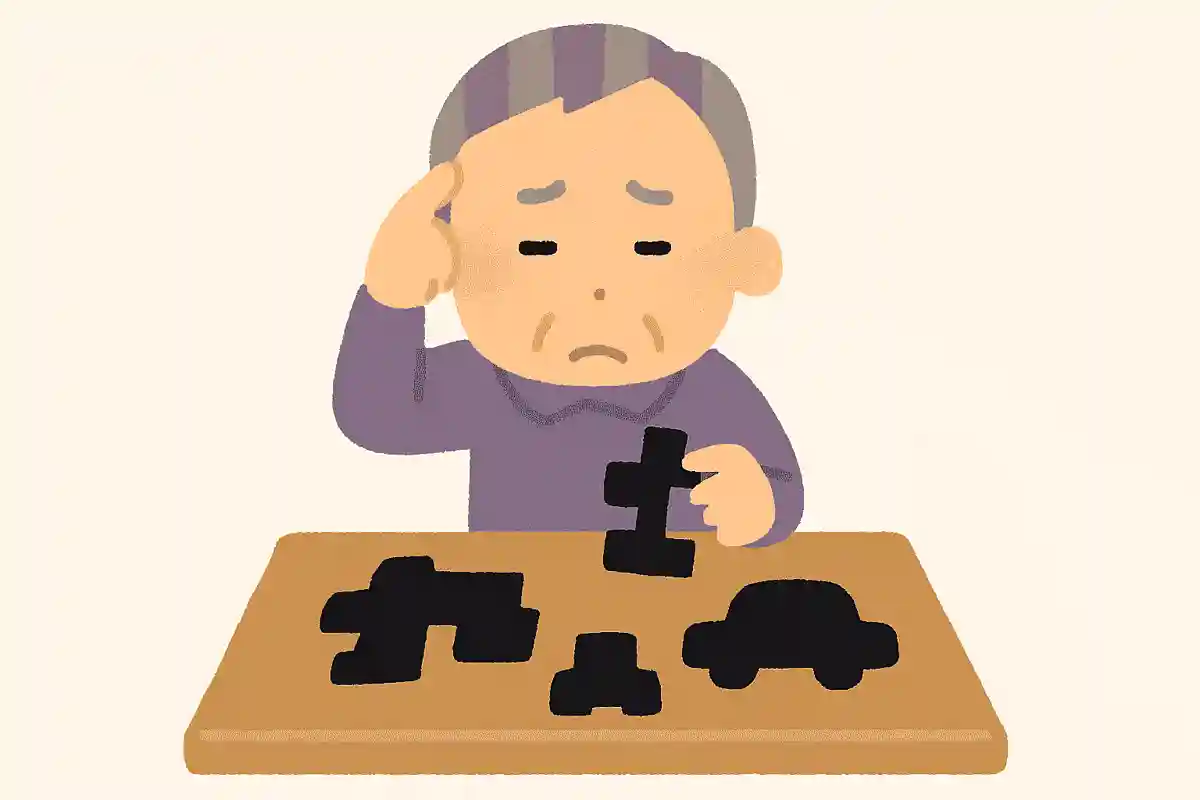
Translation
See the answer
agitation
In this puzzle, you combine four kanji—「力」 (power), 「云」, 「重」 (heavy), and 「車」 (car)—to form a word. The answer is 「動転」. Combining 「力」 and 「云」 gives 「動」, and combining 「重」 and 「車」 gives 「転」. Putting these together forms the word 「動転」, which means losing one’s composure due to surprise or panic.
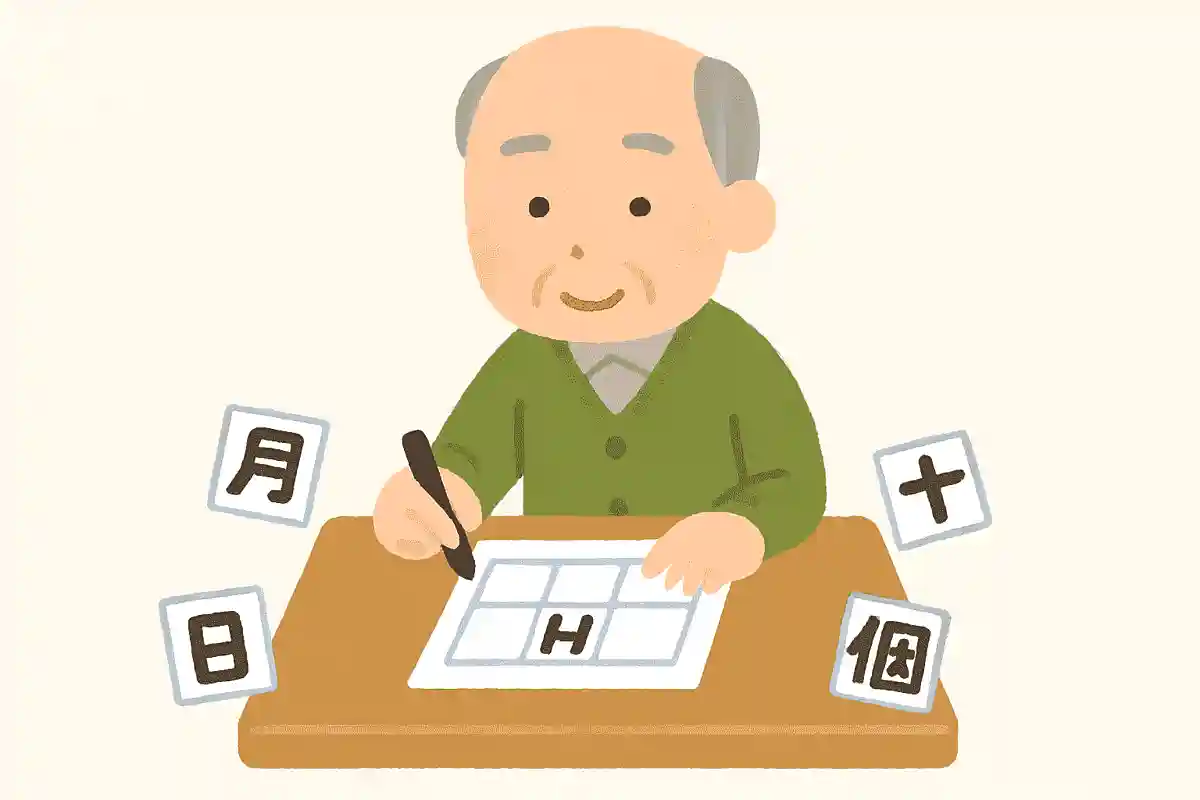
“ten” + “month” + “ten” + “day” + “ten” + “day”
Translation
See the answer
early morning
In this puzzle, you combine six kanji—“十,” “月,” “十,” “日,” “十,” and “日”—to form a word. The answer is “早朝” (early morning). Combining “十” + “月” yields “早,” and combining “十” + “日” + “十” + “日” yields “朝.” Putting these together gives “早朝.” “Early morning” refers to the time just after daybreak, that is, the early hours around sunrise.
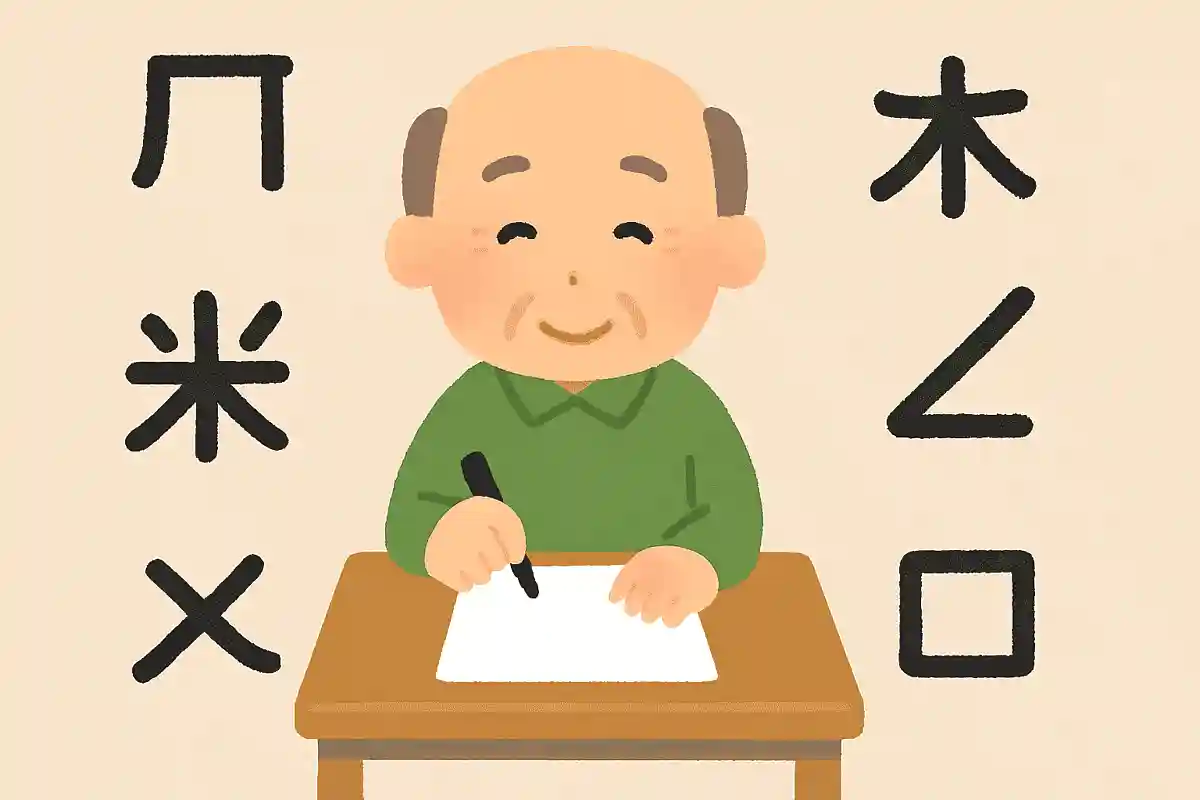
Tang + stone + rice + little
Translation
See the answer
sugar
In this problem, you combine four kanji—「唐」 (tō), 「石」 (stone), 「米」 (rice), and 「少」 (few)—to form a certain compound word. The answer is 「砂糖」 (sugar). First, combining 「石」 and 「少」 yields the kanji 「砂」 (sand). Next, combining 「米」 and 「唐」 yields the kanji 「糖」 (sugar).
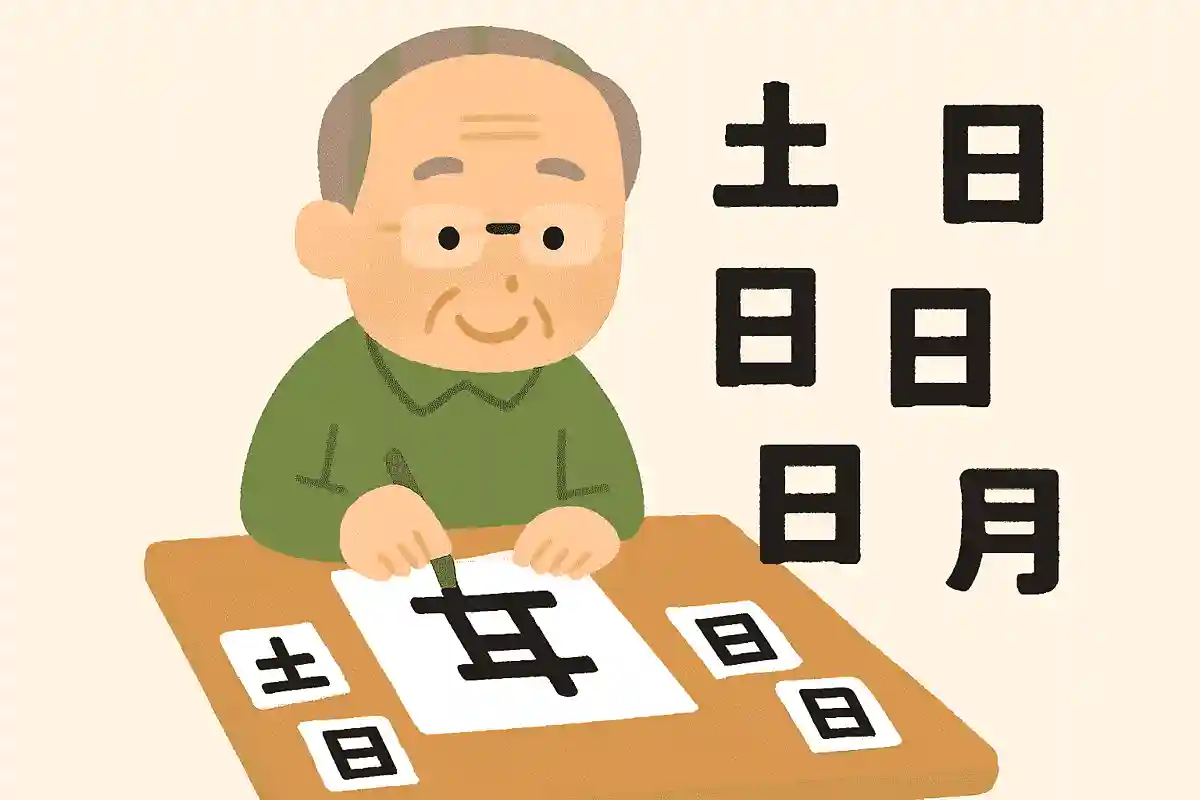
earth/soil + sun/day + sun/day + sun (short measure) + gate
Translation
See the answer
time
In this problem, you create a word by combining the five kanji “土,” “日,” “日,” “寸,” and “門.” The answer is “時間” (time). Combining “土” + “日” forms “時,” and combining “日” + “寸” + “門” forms “間.” Putting these together gives the word “時間.” Time refers to the length or interval during which events occur or progress.