

[For Seniors] Knee exercises to relieve pain: soothing stretches and a variety of movements for prevention

When you have knee or lower back pain, getting up can feel like such a chore, right?Here are recommended knee exercises for older adults.They include plenty of safe ideas you can do with confidence: exercises to relieve knee pain, exercises to prevent it, and soothing stretches that incorporate massage.There are also routines you can do easily while seated, so why not start with the simple ones?If you boost circulation and strengthen your core and balance, everyday movements will become much easier.Relax and give them a try at your own pace!
- Summary of exercises for seniors: introducing preventative care movements by body part.
- [For Seniors] Rehabilitation exercises targeting each body part: Introducing easy routines you can incorporate without strain
- [Seated] Fun Health Exercises for Older Adults and Seniors
- [For Seniors] Stretching Exercises: Easy and Safe to Do
- Recommended simple exercises for recreational activities for the elderly
- [For Seniors] Easy-to-adopt foot exercises for daily life: A healthy habit to keep walking on your ownNEW!
- [For Seniors] Improve Your Body Concerns! A Summary of Exercises for Urinary Leakage
- [Today's Recommendation] Gentle Health Exercises for Seniors
- [For Seniors] DIY Rehabilitation Aids: A Collection of Easy-to-Make Ideas
- [For Seniors] Exercises, Yoga, and Stretching to Balance the Autonomic Nervous System: Try Easy Self-CareNEW!
- [For Seniors] A Collection of Simple Exercise Programs Suitable for Beginners
- [For Seniors] Recommended exercises to relieve constipation.
- [For Seniors] Simple Rhythm Exercises: Recommended Songs and Routines
[For Seniors] Knee exercises to relieve pain. Comfortably stretching stretches and a variety of movements for prevention (1–10)
Dangling knee exerciseNEW!

“Net literacy” is the ability to discern what information online is useful and what isn’t.
With so many claims like “This works for knee pain!” it’s hard to know what to trust.
Here’s a very simple pain-reduction exercise recommended by a chiropractor.
First, sit in a chair.
Lift the painful knee with both hands.
Let that leg swing back and forth.
That’s all—just letting it dangle is easy, right? It seems to be especially effective in the early stages when the pain first appears.
If you’re struggling with knee pain, consider consulting not only a hospital but also a bonesetter/osteopathic clinic practitioner for their advice.
Knee Pain-Reducing Rhythm ExercisesNEW!

There are many exercises that can help reduce knee pain.
The key is simply to stick with something that matches your pain level and how much you can move—but if you’re going to do the same routine, why not make it enjoyable? There are even fun routines that ease pain using playful terms like “rub the back side” and “roll the outer side,” instead of technical words like hamstrings or quadriceps.
These exercises can be done either seated in a chair or on a mat on the floor.
They’re also recommended for people whose knees are still in good shape.
Knee Pain Prevention ExercisesNEW!
I believe that truly useful information is not “tricks to cure a cold quickly,” but rather “prevention methods to make you less likely to catch a cold.” That said, it’s inevitable that our stamina and muscle mass decline with age.
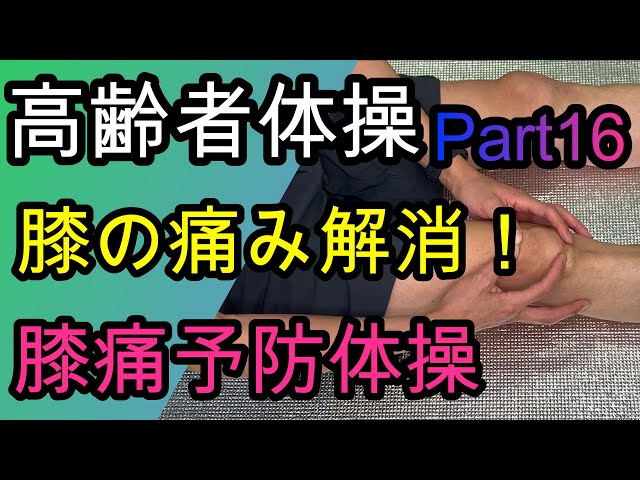
If you want to keep your knees healthy for the long term, I recommend “knee pain prevention exercises.” They’re also effective if you’ve been feeling “a bit of knee trouble lately.” Sit on the floor and place a folded towel under your knee.
Press your leg down as if crushing the towel.
That’s all there is to it, but it’s very effective for strengthening the muscles around the knee.
I also recommend placing a towel between your knees and squeezing it as if to crush it.
[For Seniors] Knee Exercises to Relieve Pain: Comfortably Stretching Stretches and a Variety of Preventive Movements (11–20)
Mat exercise: knee dropsNEW!

This knee drop exercise is an easy routine you can do on a mat, so it’s recommended for older adults.
First, lie on your back and bend your knees.
Spread your arms and look up at the ceiling, then slowly lower your knees from side to side.
Be sure to keep your knees and heels together.
If you feel pain, don’t force the movement—loosen up your body within a range that feels good.
By smoothing the movement of the joints with this exercise, it can help reduce knee pain.
Remember to focus on your breathing and try it while staying relaxed.

Rhythmic gymnastics: lower body exercisesNEW!

Here’s a lower-body exercise you can do to a children’s song.
You can do it while sitting in a chair, so give it a try.
First, open both feet outward alternately to the rhythm.
Next, do leg extensions with a focus on your thighs.
From there, perform the designated moves such as heel raises and foot touches.
Once you finish everything, repeat the sequence, and this time try adding upper-body movements as well.
It’s a gentle indoor workout for the hips and knees, but don’t push yourself if you feel any pain.
Prevent knee pain with knee-focused strength training!NEW!

Let me introduce some simple knee-focused strength exercises you can do indoors.
They take about 10 minutes, so they’re easy to fit into small breaks.
Lift your leg to strengthen the muscles at the front of the knee, and open your leg outward and bend the knee to work the muscles at the back.
If you lift your leg backward and touch your heel, you can target the muscles on the back side as well.
If standing independently is difficult, support your body with a chair back or similar.
If you’re fine without support, try adding upper-body movements too.
Standing-up exercises that don’t strain the knees or lower backNEW!

When you have pain in your knees or lower back, it can be hard to stand up.
Here’s a way to stand with less strain.
First, sit in a chair and place both hands on your thighs.
Then lean your upper body forward as if you’re bowing and lift your hips slightly off the seat.
Finally, press down firmly on your thighs with your hands to raise your upper body.
In addition to this standing technique, we also introduce exercises you can do while seated.
By continuing these, you can strengthen your legs, balance, and core, which should make standing up easier.