

![[For Seniors] Brain Training with Softshell Turtles! Trivia Quiz & Fun Facts](https://media.ragnet.co.jp/img/1200__png__https://www.ragnet.co.jp/files/2025/08/1f537eeb5b3dd0cde17ad43a5323f7fb.webp)
[For Seniors] Brain Training with Softshell Turtles! Trivia Quiz & Fun Facts

We’ll introduce the little-known world of soft-shelled turtles—their surprising ecology and habits—through trivia quizzes and fun facts.
Why do they live for up to 100 years? Why are they nocturnal? Let’s enjoy learning about the curious characteristics of soft-shelled turtles together with seniors.
Taking time to think at a relaxed pace naturally stimulates the brain.
You’ll surely find yourself saying “Wow!” as you discover new sides of the soft-shelled turtle—like how, despite having strong self-defense instincts, it’s actually quite timid.
[For Seniors] Brain Training with Softshell Turtle! Trivia Quiz & Fun Facts Questions (1–10)
What is the characteristic of a soft-shelled turtle’s shell that sets it apart from other turtles?

- The shell is extremely hard.
- No shell
- The shell is soft and lacks hexagonal patterns.
See the answer
The shell is soft and lacks hexagonal patterns.
Unlike other turtles, the softshell turtle’s carapace has few hard, scaly sections and is characterized by a rubber-like softness. Because of this, softshell turtles are said to move easily in water. Also, while other turtles have hexagonal patterns, softshell turtles have no such markings.

What are the particular challenges involved in successfully farming soft-shelled turtles?
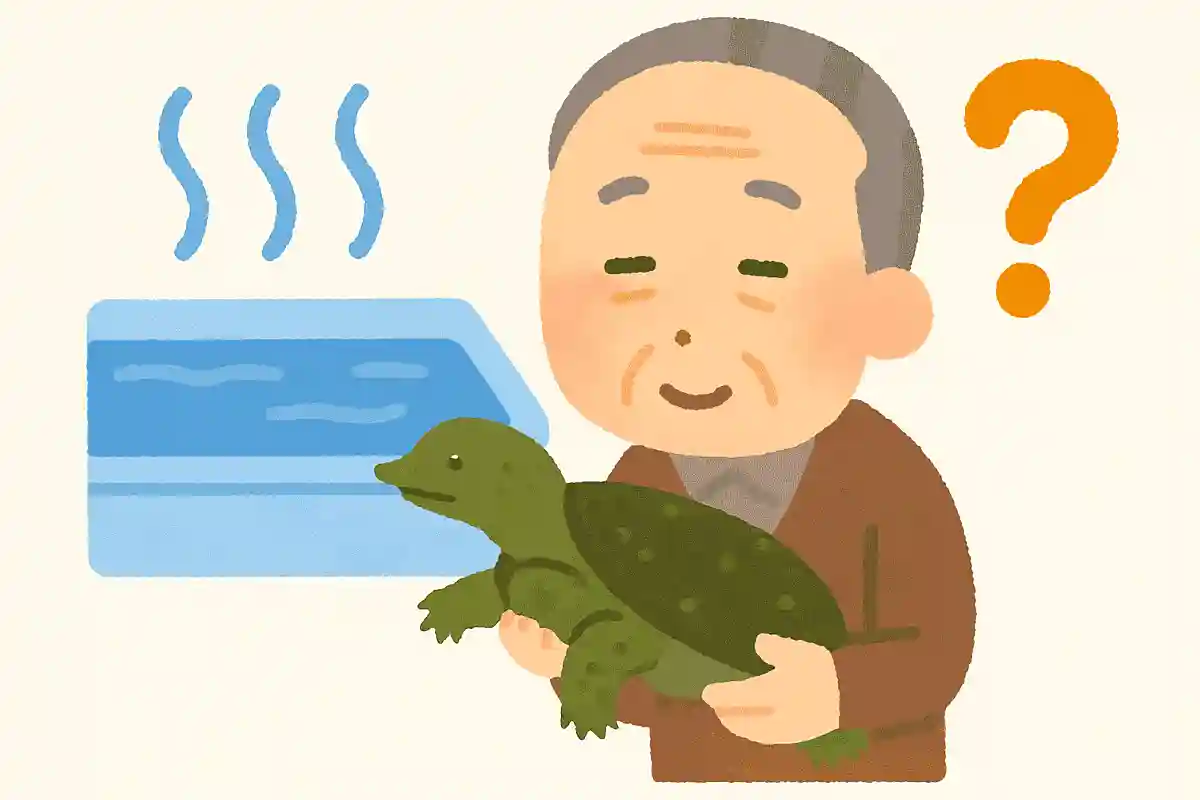
- Water quality management is difficult.
- Feeding time
- Protecting from natural enemies
See the answer
Water quality management is difficult.
Soft-shelled turtles are extremely sensitive to environmental changes such as water quality, water temperature, and vibrations. Even slight deterioration can cause illness or halt their growth. Therefore, maintaining clean water quality and an appropriate water temperature is the most important point in aquaculture.
At what time of day do soft-shelled turtles become active?

- morning
- noon
- night
See the answer
night
The softshell turtle is a nocturnal animal. During the day, it stays still in the water or buried in mud, and at night it becomes active as it searches for food. This behavior is an important adaptation for protecting itself from natural enemies, and it is thought to be active from dusk through the night to avoid predators.
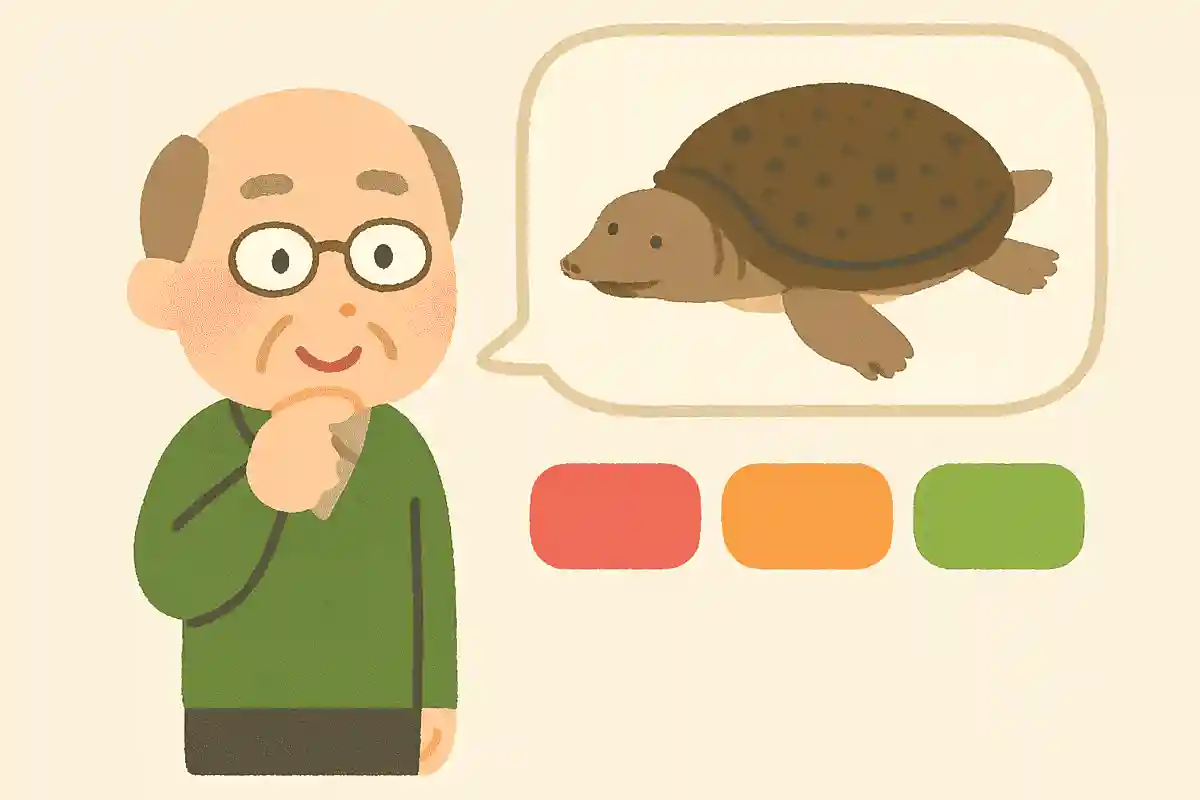
Which of the following correctly describes the soft-shelled turtle’s temperament?
- Aggressive, but does not bite people.
- Very timid, but may bite out of self-defense.
- friendly toward people
See the answer
Very timid, but may bite out of self-defense.
Softshell turtles are often thought to be ferocious based on their appearance and image, but in reality they are very timid. At the slightest noise they quickly flee into the water and reportedly never eat in front of people. However, because they are highly cautious, they can become aggressive when they sense danger and may bite with their sharp teeth. Therefore, care is needed when handling them with bare hands.
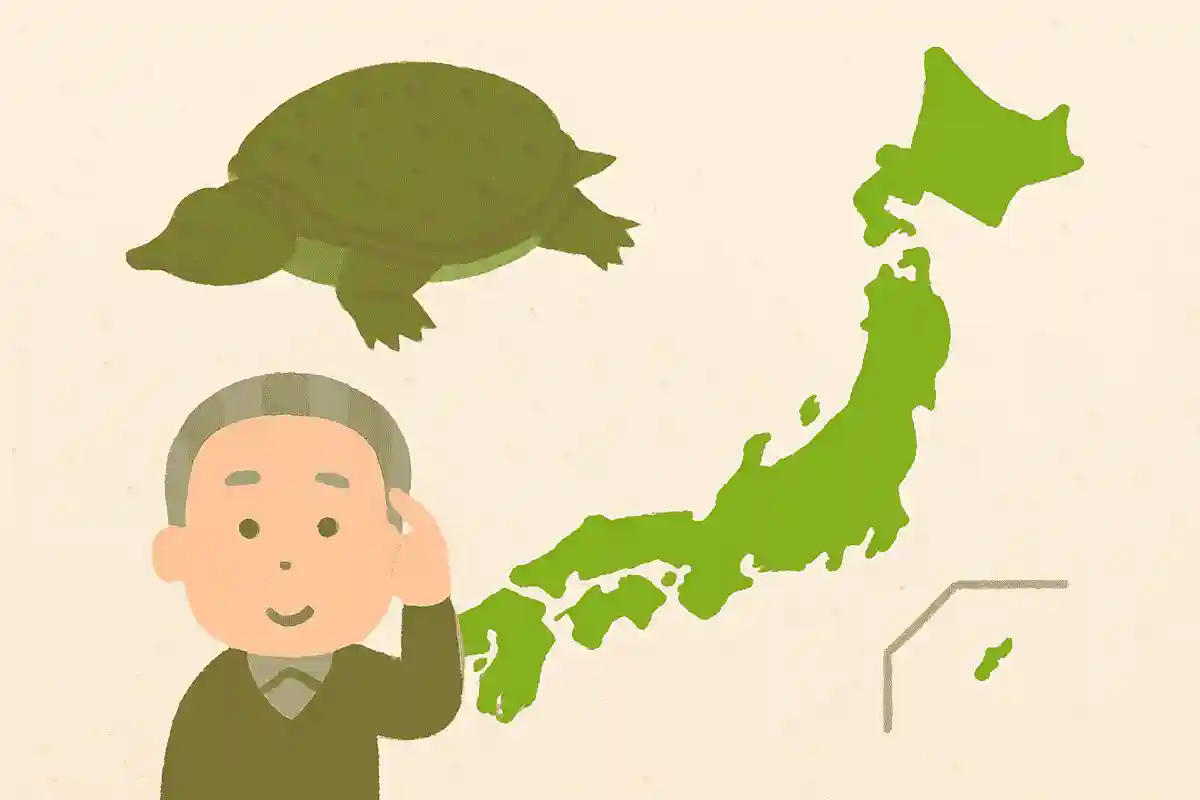
Where do softshell turtles mainly live?
- sea
- desert
- Rivers and ponds
See the answer
Rivers and ponds
The soft-shelled turtle’s habitat extends from Honshu through Shikoku and Kyushu to the Okinawa Islands, and it mainly lives in relatively large ponds and freshwater rivers on flatlands. It is often seen in gentle-flowing waterways. It prefers clean water and is an excellent swimmer.
Soft-shelled turtles have long been known as a nourishing, restorative food, but which of the following is their main benefit?
- Strengthen bones and joints
- Stamina enhancement and fatigue recovery
- Improve eyesight
See the answer
Stamina enhancement and fatigue recovery
Soft-shelled turtle is rich in high-quality protein, vitamins, and minerals, and has long been valued as a food that promotes vitality, boosts stamina, and aids recovery from fatigue. In addition, because it contains a variety of nutrients, it is said to also play a role in immunity and metabolism.
How long is the lifespan of wild softshell turtles?
- about 30 years
- about 50 years
- about 100 years
See the answer
about 100 years
Wild soft-shelled turtles are said to be very long-lived, with lifespans of around 100 years. Because they live so long, they grow slowly, and when raised for food they are reared over many years. In captivity, their lifespan is said to be roughly 20 to 30 years.