

[Western Music] A classic of 90s emocore. One album I want you to listen to first.

Even without knowing its etymology, the expression “emoi” has now become thoroughly widespread among the general public, hasn’t it?
If you’re a Western-music fan in your 30s as of 2022, many of you likely first encountered the word “emo” during the emo boom of the 2000s.
Emo’s origins go back to the 1980s, but it originally emerged from the punk-to-hardcore scene and was called “emotional core” or “emocore.”
In this article, we’ve gathered classic albums released in the 1990s, when the emocore genre spread widely!
Chosen by the author, who experienced ’90s emocore in real time, here’s a beginner-friendly, must-hear first pick—be sure to check it out!
- If you want to listen to Western emo music, start here! A list of overseas emo bands
- [Western music] What is post-hardcore? — Summary of representative bands
- Classic emo masterpieces in Japanese music. Recommended popular songs.
- [Western Music] Hardcore Punk Masterpieces and Popular Songs – Beginner’s Guide
- Intense! A roundup of classic grindcore tracks from Western music
- Fast and cool! A popular melodic hardcore band in Japan
- [Sentimental/Emotional] A Collection of Vocaloid Songs That Shake the Heart [Moving Songs]
- Enduring popularity! Classic emo songs in Western music
- Japanese grunge bands. A roundup of bands influenced by grunge.
- All masterpieces! Western pop ballads that were hits in the ’90s
- Recommended Western alternative rock bands that connect to the modern rock scene
- Japanese metalcore bands. A roundup of J-metalcore bands that have undergone unique evolution.
- Great Western rock classics and hit songs of the ’90s
[Western Music] A classic of ’90s emocore. One must-listen album to start with (1–10)
HolidayThe Get Up kids

Alongside Jimmy Eat World, they might be the most popular ’90s emo band here in Japan.
Hailing from Kansas City, Missouri, The Get Up Kids formed in 1995 when the members were still in high school, stayed active until 2005 before breaking up once, then reunited in 2008 and have continued to work energetically with Japan tours and new releases.
There are likely plenty of Japanese bands who were influenced by them even more than by Nirvana or Weezer.
Their greatest masterpiece—one that won them many fans in Japan as well—is their second album, the classic Something to Write Home About, released in 1999.
Many music fans have surely seen that famous album cover with the charming robot illustration at least once.
From the opener Holiday to the final track I’ll Catch You, there isn’t a single throwaway; the melodies and emotional guitar sound feel like the very embodiment of “emo,” as if youth itself had taken sonic form.
Of course, there’s Matt Pryor’s rich, wonderful vocals and a band ensemble strong enough to handle ballads like the classic Valentine—but pay attention as well to keyboardist James Dewees, whose playing adds even greater variety to The Get Up Kids’ sound.

Why Did Ever We MeetThe Promise Ring
Even young people who use the term “emo” without knowing its origins would find themselves blurting out “so emo!” at this guitar sound that pours out all the sparkle, radiance, and bittersweet ache of youth—it’s just that good! The Promise Ring are a band from Milwaukee, USA, known as one of the emo legends of the ’90s.
Centered around Davey von Bohlen—who served as guitarist and vocalist in the legendary band Cap’n Jazz, a group whose members later became involved in many celebrated emo, post-hardcore, and US indie acts—they formed in 1995 and released four albums before disbanding in 2002.
Their Nothing Feels Good, released in 1997 on the prestigious Jade Tree label, is their second album.
Produced by J.
Robbins, a master who worked on many classic ’90s emocore records, it’s a highly regarded masterpiece praised for its fresh, youthfully vibrant guitar sound and straight-to-the-heart, tear-jerking melodies.
The album title itself radiates that sense of helplessness—the very essence of ’90s emocore—that brings a knowing smile.
While the fast-paced tracks in the first half tend to get most of the attention, it’s really the mid-tempo songs in the latter half where you can feel the true strength of their songwriting.
Gloriamineral
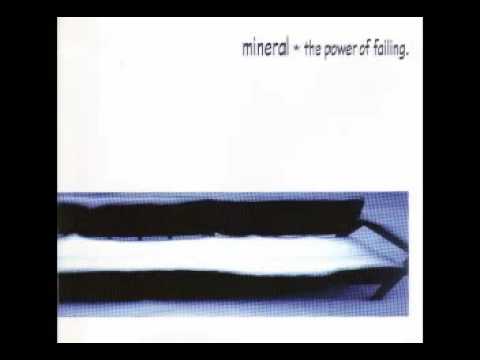
Mineral, the emo legends from Texas who are often mentioned alongside Sunny Day Real Estate and Jimmy Eat World.
During their brief four-year run from their formation in 1994 to their breakup in 1998, they released just two albums.
For a time, their records were out of print and soared in price, cementing their status as a truly legendary band that continued to be talked about for years.
In 2014, they suddenly reunited, reissued their work, and even made a miraculous visit to Japan for live shows.
As mentioned, they only released two albums, and both are indisputable masterpieces, but today I’d like to introduce their landmark debut album, 1997’s The Power of Failing.
Their sound—drawing influence from a wide range of genres, from post-hardcore and UK rock to slowcore and shoegaze—embodies the quintessential “’90s emocore” aesthetic and had a massive impact on the wave of bands that followed in the early 2000s, including the screamo scene.
The distinctive guitar tone that somehow sounds clean at the core despite the distortion, Chris Simpson’s vocals that traverse a fragile contrast between catharsis and melancholy, the band’s ensemble that captivates through quiet-loud dynamics—the dramatic song structures feel like emotions in motion themselves.
If this sound doesn’t pique your interest, you probably don’t have much affinity for ’90s emocore.
On the other hand, if you like what you hear, be sure to check out The Gloria Record, the project the members started later, which leans even more into their UK rock influences!
[Western Music] Masterpieces of 90s Emo-Core: One Must-Listen Album to Start With (11–20)
RiseRainer Maria

1990s emocore is often thought of as a naïve, male-centered genre, but there were a fair number of bands with mixed male-female vocals—like Jejune, who left behind the masterpiece album This Afternoon’s Malady—and bands with women at the front.
Among them, the best-known, and a top-tier three-piece with Japan tour experience, is Rainer Maria.
With the intellectual touch of taking their name from the renowned poet Rainer Maria Rilke, a band ensemble that highlights the intricate interplay unique to a trio, and gorgeous melodic lines as their weapon, they’re a group beloved even among emocore fans here in Japan.
All of their releases on the venerable Polyvinyl Records—a label famed for key US indie and emocore titles—have been highly acclaimed, but let’s focus on their classic second album from 1999, Look Now Look Again.
The raw sound of their debut suddenly became refined; Caitlin De Marrais’s elegant vocals push beautiful melodies to the forefront; and every track—woven from delicate yet aggressive guitar work, singing bass lines, and supple drumming—is absolutely superb.
As a pioneering example of female-fronted emocore, I confidently recommend starting with this one!
Never MeantAmerican Football

Not only in emo but also in genres like post-rock and math rock, American Football has exerted an enormous influence on subsequent bands, and their self-titled album continues to be lauded as a masterpiece born from the US indie scene—remarkably, it was released in 1999.
Formed in 1997 around Mike Kinsella—formerly of the legendary emo band Cap’n Jazz and well known for his solo project Owen—American Football released their self-titled debut album and a single EP before disbanding, long remaining a band spoken of in legendary terms.
Since reuniting in 2014, however, they’ve been steadily releasing excellent new material at their own pace, continuing to win new fans well into the 2020s.
Their debut album features beautifully interwoven guitar arpeggios built around clean tones, and an ensemble that, while rough-hewn, exudes overwhelming originality with hints of jazz and math rock.
Mike’s plainspoken, delicate vocals deliver gentle melodies, paired with lyrics that convey a sense of youthful restlessness.
The album maintains an overall calm atmosphere, yet it’s shot through with a tension characteristic of members who came up through punk and hardcore—which is fantastic!
Do You Still Hate Me?Jawbreaker

It’s true that emo is a highly flexible genre capable of absorbing a wide range of styles, but depending on the listener, it can also feel ambiguous and noncommittal.
The protagonists of this piece, Jawbreaker, were a trio that began in the 1980s.
Though they had bona fide punk pedigree, they gained indie acclaim with a sound that paired that lineage with a distinctive melodicism.
After their major-label debut, however, they were criticized by devoted fans for having sold out, and sadly ended up breaking up.
Even so, major 2000s bands like My Chemical Romance and Fall Out Boy have openly cited Jawbreaker as an influence, and a 2017 documentary about the band’s history helped cement their far-reaching impact among younger music fans.
This time, I’m introducing their third album, 1994’s 24 Hour Revenge Therapy, widely regarded as their pre-major-label masterpiece.
It combines the urgency of melodic punk with unvarnished, indie-rock-like guitar tones, while the rough-hewn sonics characteristic of engineer Steve Albini give it an unmistakably ’90s feel.
With its plaintive melodicism and confessional, almost diaristic lyrics, it may well be the very definition of “emotional core.” For anyone looking to delve deeper into the history of ’90s emocore, both this album and this band are essential listening.
Take On Mecap’n jazz

Saying that bands like Joan of Arc, The Promise Ring, and American Football emerged from this group is no exaggeration—it’s nothing short of a miracle in the history of US indie.
Formed in 1989 around the Kinsella brothers, Tim and Mike, with Davey von Bohlen—who would later become the frontman of The Promise Ring—among its members, Cap’n Jazz is a band so remarkable that simply tracing its members’ subsequent careers leads you to countless great US indie bands.
Although Cap’n Jazz released only a handful of EPs and a single full-length album in 1995, for newcomers I recommend the near-complete discography compilation Analphabetapolothology.
Released in 1998 by the venerable US indie label Jade Tree Recordings and later reissued, this two-disc set captures a raw guitar sound—neither punk, hardcore, nor alternative rock—crafted by band members still in their teens.
Combined with Tim Kinsella’s wonderfully wobbly and wildly distinctive vocals, it’s truly the blueprint of “emocore.” It even includes an achingly bittersweet cover of a-ha’s classic Take On Me.
If you’re interested in ’90s emocore or US indie, every track is essential listening.