

[Western Music] A classic of 90s emocore. One album I want you to listen to first.

Even without knowing its etymology, the expression “emoi” has now become thoroughly widespread among the general public, hasn’t it?
If you’re a Western-music fan in your 30s as of 2022, many of you likely first encountered the word “emo” during the emo boom of the 2000s.
Emo’s origins go back to the 1980s, but it originally emerged from the punk-to-hardcore scene and was called “emotional core” or “emocore.”
In this article, we’ve gathered classic albums released in the 1990s, when the emocore genre spread widely!
Chosen by the author, who experienced ’90s emocore in real time, here’s a beginner-friendly, must-hear first pick—be sure to check it out!
- If you want to listen to Western emo music, start here! A list of overseas emo bands
- [Western music] What is post-hardcore? — Summary of representative bands
- Classic emo masterpieces in Japanese music. Recommended popular songs.
- [Western Music] Hardcore Punk Masterpieces and Popular Songs – Beginner’s Guide
- Intense! A roundup of classic grindcore tracks from Western music
- Fast and cool! A popular melodic hardcore band in Japan
- [Sentimental/Emotional] A Collection of Vocaloid Songs That Shake the Heart [Moving Songs]
- Enduring popularity! Classic emo songs in Western music
- Japanese grunge bands. A roundup of bands influenced by grunge.
- All masterpieces! Western pop ballads that were hits in the ’90s
- Recommended Western alternative rock bands that connect to the modern rock scene
- Japanese metalcore bands. A roundup of J-metalcore bands that have undergone unique evolution.
- Great Western rock classics and hit songs of the ’90s
[Western Music] Masterpieces of 90s Emo-Core: One Must-Listen Album to Start With (11–20)
You Can’t ComeStarmarket

In this article we’re featuring many American bands from the birthplace of emo-core, but there were also excellent emo-core bands in Europe during the same era.
Starmarket, the band we’re introducing today, is one of Sweden’s quintessential and finest emo bands.
Formed in 1995 around guitarist and vocalist Fredrik Brandström, they released their self-titled debut that same year.
Before disbanding in 2004, they put out five albums, and interestingly, they were often more highly regarded here in Japan than in their home country.
Among their works, the 1997 sophomore album Sunday’s Worst Enemy—widely considered their masterpiece—lines up track after track that reconfirms emo-core’s roots in punk and hardcore through aggressive guitar sounds, paired with melodies steeped in the kind of wistful melancholy that particularly resonates with Japanese listeners.
Before they shifted toward a more melody-forward, refined indie-rock direction, Starmarket crafted a uniquely theirs sound where raw, high-velocity energy coexisted seamlessly with the cool, Nordic chill—a landmark record that essentially established Swedish emo.
When they reunited in 2018, a remastered, paper-sleeve reissue was released in Japan, so if you’re interested, be sure to seek it out.

Tired Of SexWeezer
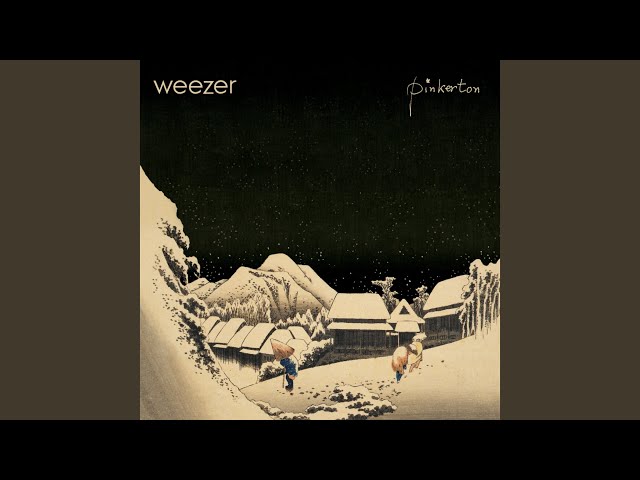
I’m well aware there’s debate about putting Weezer in the emo category, but I still want to highlight their albums: they’re emblematic of “crying” melodies, had a huge influence on the emocore scene, and were often discussed alongside it at the time.
A world-renowned rock band born in 1990s America and led by the genius singer-songwriter Rivers Cuomo, Weezer are also known for their deep love of Japan and their strong bond with Japanese fans.
In particular, their second album, Pinkerton, released in 1996, is packed with Japanese elements—from an album cover that incorporates ukiyo-e with a distinctly Japanese feel to lyrics featuring Japanese characters—and it actually became a bigger hit in Japan than in the U.S.
Compared even to their historically acclaimed debut, Pinkerton’s guitars snarl more aggressively, and the irresistibly catchy melodies carry lyrics that feel like an unflinchingly candid outpouring of emotion, as if wrestling with the gap between the dream of being a rock star and the reality of it all—truly “emotional,” in every sense.
It’s no surprise that Weezer’s musical persona—foregrounding off days and an uncool self-image, in stark contrast to American machoism—was so warmly received in Japan, and it makes perfect sense that they’re hugely popular among the more sensitive emocore crowd as well.
SavoryJawbox

As you delve into the history of ’90s emocore, you’ll notice that not only band members but also producers and engineers played crucial roles.
J.
Robbins, the central figure of Jawbox who had been active even before emocore, is also known as a skilled producer behind numerous classic emocore records.
Robbins formed Jawbox in Washington, D.C., in 1989, after making his mark as the bassist for Government Issue, a legendary band from the so-called DC hardcore scene of the ’80s.
After forming Jawbox, he released four albums before the band split in 1997 and even made a major-label debut.
From those four albums, let’s spotlight their third record, For Your Own Special Sweetheart, their major-label debut and widely regarded as a masterpiece.
While it wasn’t a massive commercial success, its taut, thrilling guitars; rhythm section that generates a distinctive groove; melodies with a finely tuned sense of songcraft that never tip into saccharine sweetness; and a band interplay brimming with the tension characteristic of hardcore roots all had an immeasurable impact on later post-hardcore and emocore outfits—indeed, even on math rock bands.
It’s both a landmark of ’90s alternative rock and a cornerstone of post-hardcore.
If you haven’t heard it yet, you should definitely give it a listen!
Different TimesSense Field

Formed in California in 1991, Sense Field was one of the pioneering ’90s emocore bands led by Jon Bunch—who later gained charismatic popularity as the third vocalist of Further Seems Forever but sadly passed away in 2016.
With members who came from hardcore roots, their muscular sound resonated with the alternative rock of the time and had a profound influence on later post-hardcore and emocore acts.
Their second album, Building—released on Revelation Records, a prestigious hardcore/punk label—firmly established the band’s own sound and stands as a crucial classic that bridged alternative/grunge and post-hardcore.
Among ’90s emocore acts, Bunch’s vocals leaned strongly into rock, carrying a solid presence and expressive delivery that showcased his rare talent as a singer.
Overall, rather than the emo-typical melancholy, mid-tempo focus, and quiet-loud dynamics, many of their songs share a structure closer to the alternative rock of the era, as noted above.
It’s an album whose straight-ahead rock dynamism, superb melodic sense, and powerful guitar riffs can simply be called cool.
The HandsJanne Da Arc
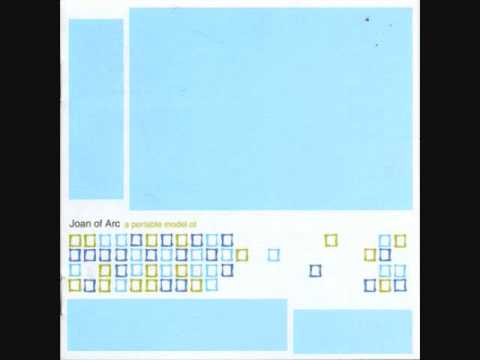
After the breakup of Chicago legends Cap’n Jazz, the band Joan of Arc was started in 1995 by the group’s central figure, Tim Kinsella.
With the exception of Tim, the lineup has essentially been fluid; within the Kinsella family, his younger brother Mike Kinsella—known for American Football and Owen—has also taken part.
If you dig into the comings and goings of the members around this circle, it starts to feel like a family tree of emo’s history, so if that interests you, definitely check it out.
Joan of Arc, however, is a band with a musical identity distinct from so-called “emo,” often discussed alongside post-rock and experimental/electro-acoustic scenes.
Their work can be challenging and, to be frank, not exactly straightforward; that tendency became more pronounced with each release.
Even so, their 1997 debut album, A Portable Model Of …, introduced here, strikes a miraculous balance between experimentation and a unique pop sensibility, making it highly recommended for first-time listeners.
Tim’s freaky melodies, floating electronic tones, and ensembles that depart from traditional rock formats weave a sonic world that, if anything, feels stylish when heard now, well into the 2020s.
It may seem hard to approach at first, but once you grasp the depth of these sounds, your world will undoubtedly expand.
Shoulder To The WheelSaves the Day

Saves the Day hail from New Jersey and play a driving, melody-soaked sound influenced by melodic punk, but without any of the melocore-style sportiness—what stands out instead are the wistful, vulnerable vocals and melodies.
Formed in 1997 when they were teenagers and now centered around Chris Conley, the sole remaining original member, the band initially channeled the melodic hardcore of hometown legends Lifetime.
They gradually shifted toward a poppier approach that showcased Chris’s exceptional songwriting, and their third album, Stay What You Are (2001), became a masterpiece that sold over 100,000 copies in the U.S.
despite being an indie release.
Since this article focuses on works from the ’90s, I’d like to spotlight their classic second album, Through Being Cool (1999), where punkish momentum intersects with bittersweet melodies.
It’s a record that hints at the pop direction they’d later embrace, pairing the youthful, aggressive guitar sound of their college-age lineup with tangy, emotional melodies that land squarely in the realm of pure adolescence.
And don’t forget: it was released on Equal Vision Records, a hardcore institution that went on to put out many post-hardcore and metalcore classics in the 2000s and beyond.
In conclusion
Since the emo boom of the 2000s, the people who deliberately use the term “emocore” are mostly limited to those who remember that era, but by listening to the ultra-emo masterpieces introduced this time, you’ve probably gotten a sense of what 1990s “emocore” sounded like. Given that “emocore” is a nebulous genre to begin with and many titles are out of print, I recommend digging deeper in search of even more emo goodness!