

Recommended songs for eurhythmics. Let's enjoy music using our bodies!


Eurhythmics, which involves moving the body in time with music and sounds, is said to have very positive effects on children’s development—not only nurturing musical sensitivity but also fostering expressiveness, cooperation, and independence.
Because it lets children enjoy music up close and have fun with it, many preschools and kindergartens have adopted it.
So this time, we’re introducing recommended songs for eurhythmics.
From timeless classics to tunes that are especially popular with kids, we’ve gathered plenty of songs that will make you want to move your body.
Be sure to get moving to your heart’s content together with the children!
- Have fun on rainy days with eurhythmics! Enjoyable music education for children
- [Childcare] Fun Rhythm Play! Recommended Games and Hand-Clapping/Hand-Play for Kids
- Pretend play in Eurhythmics! Fun music education for children
- Let’s pretend to be sea creatures with Eurhythmics! Fun music education for children
- [For 1-year-olds] Fun Together! Recommended Songs and Hand Play Collection
- [Rhythm Play] A roundup of popular cup songs
- Eurhythmics to help you internalize musical notes. Let’s play with chestnuts and fallen leaves!
- Popular Dance Songs Ranking [2026]
- Popular Songs Ranking for Toddlers
- Kids will love it! A collection of dance song ideas with easy-to-follow rhythms
- Get pumped with kids’ favorite songs! A memorable collection of classics that will make you want to sing along
- Recommended dance music for children. Kid-friendly dance tunes that make you want to move.
- Classic songs for musical chairs. A carefully curated selection of easy-to-walk-to, crowd-pleasing tracks.
Recommended songs for Eurhythmics. Enjoy music with your body! (21–30)
What in the world?! Ninja Festival!Ise Daiki

Let’s all become ninjas and dance together! This is the song used as the ending theme for the hero team series Shuriken Sentai Ninninger, which aired starting in 2015.
With a Japanese-inspired sound that matches the show’s atmosphere, it blends coolness with fun.
Dancing energetically is great, but it’s also nice to have the kids—especially the boys—strike a sharp, cool pose.
And instead of sticking strictly to the choreography, it might be fun to have them express their own idea of ninja moves, too.

Dinosaur Exercisedōyō

Dinosaur Exercise lets you sing along and move your body in fun ways that match the lyrics! You’ll stomp like a sumo wrestler to show a big dinosaur walking, and whirl your arms wide to express a powerful “Gao!” roar.
The key is to fully stretch your arms and legs to make your body look big.
The clear, movement-guiding lyrics make it easy for young children to understand.
It’s great for everyday eurhythmics, and also recommended for performances—try wearing dinosaur costumes for a recital!

A I U E O musicGReeeeN

How about moving your body with energy to a pop beat? Released in 2013, this track by the popular music group GReeeeN—known for producing numerous hit songs—served as the opening theme for the anime “LINE OFFLINE: Salaryman,” which features original characters from the messaging app LINE.
Its lively sound pairs perfectly with lyrics about the happiness of thinking of someone, leaving you with a warm, fuzzy feeling.
Let the music take over and dance as you please!
The Very Hungry Caterpillar SongKashi: Erikku Karu / Yakushi: Mori Hisashi / Sakkyoku: Shinzawa Toshihiko / Henkyoku: Nakamura Nobuyuki

Isn’t The Very Hungry Caterpillar the picture book that both adults and children have seen at least once? The song with lyrics by its author, Eric Carle, is aptly titled “The Very Hungry Caterpillar Song.” It’s a charming number about a tiny caterpillar hatching from an egg and, with a rumbling tummy, setting off to find something to eat.
Not satisfied with just fruits like plums, strawberries, and oranges, it munches on everything from chocolate cake and ice cream to sausage! Come up with choreography to match the story, and sing and dance along to make it even more fun!

Panda, rabbit, koaladōyō

This popular Eurhythmics activity from NHK Educational TV’s “Okāsan to Issho” is said to have first appeared as a song in May 1990.
It’s a simple game where you keep saying the animal’s name and imitate that animal, but instantly acting out the animal turns out to be harder than you’d think, and you might find yourself pausing to think.
As a variation, you can come up with hand motions for other three-syllable animals to make alternate versions, or gradually speed up the tempo for extra fun.

stroll
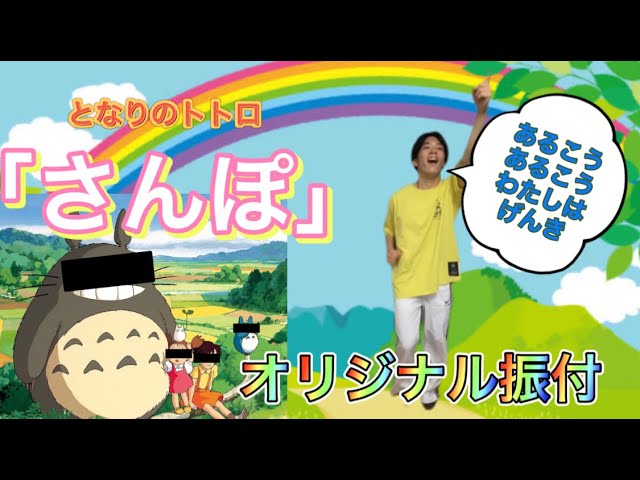
Sampo, the opening theme of Studio Ghibli’s film My Neighbor Totoro released in 1988, is a hugely popular song among children of every generation.
Its bright rhythm that makes you want to start walking, along with lyrics that seem to capture the joys kids discover on a stroll, make singing it feel like going on an adventure! The song is also popular as a dance tune, so it’s fun to come up with choreography that matches the words and try dancing to it.
Perfect as BGM or for dances at school sports days!

Little Ghost-chan DanceKutsuna Mika

This is a Halloween dance song written and composed by Mika Kutsuna, who is also active as a Eurhythmics instructor.
A cute little ghost takes center stage, and other charming characters appear as well.
With its lively rhythm and catchy melody, it’s perfect for moving your body and having fun with kids.
The piece features an upbeat vibe and adorable choreography, and it’s available on the YouTube channel “Niko-Oto Channel.” There are both a normal tempo and a sped-up version, so you can choose based on the level of excitement you want.
Dance with children dressed as ghosts and pumpkins at your Halloween party, and you’re sure to have a time full of smiles.
Drawing on her experience creating over 200 original curricula and teaching more than 2,000 children, Kutsuna crafts her music with kids in mind.