

[Parenting] Parent-child bonding! Hand-play songs and traditional nursery rhymes collection


For children, hand-play songs where they sing and interact with familiar adults and friends are so much fun.
Hand-play songs and traditional nursery rhymes are said to have a very positive effect on children’s brain and emotional development.
It’s something we’d love to incorporate a lot into everyday life.
So this time, we’re introducing hand-play songs and nursery rhymes that parents and children can enjoy together.
From classic tunes everyone has heard to popular songs sung in daycare centers and kindergartens, there’s a lot to choose from!
Please try to find songs you can enjoy together that match your children’s age and interests.
Many of these songs have a good tempo and catchy melodies or phrases, so they’re easy to learn right away!
- Parent–child interactive play. Fun activities popular in childcare settings and at parent–child observation days.
- [For 0-year-olds] Recommended songs for babies: A special feature on bonding play and traditional nursery rhymes
- Baby massage song. A touch-and-play song that parents and children can enjoy together.
- [Hand Play] Popular with kids! A collection of trendy hand-play songs and nostalgic traditional children’s songs
- Get excited! A list of popular and fun hand games that captivate children
- Kids go wild! Popular hand games and fun sing-alongs
- Popular hand games and hand game songs for toddlers and children! Full of ideas for childcare/early childhood education.
- Handkerchief and Towel Play! A Collection of Fun Play Ideas
- [Children's Songs] Cute songs recommended for childcare. List of popular nursery rhymes.
- Nursery rhymes to sing to your baby! Recommended songs enjoyable from 0 months
- Ideas for Performances Recommended for 0-Year-Olds at Recitals and Play Events
- [For 1-year-olds] Fun Together! Recommended Songs and Hand Play Collection
- Snow Songs to Enjoy in Winter! Children's Snow Nursery Rhymes & Hand-Play Songs
[Parenting] Parent-child bonding! Hand-play songs and traditional children's rhymes collection (41–50)
a cat’s child; a kittenSakushi / Sakkyoku: Deguchi Chikara

Blending a gentle, adorable rhythm with hand-play movements, this piece is perfect for interactive play with babies from 0 years old.
Its cat-themed, charming world broadens children’s imaginations.
Satoko Yamano’s clear, transparent vocals combined with Masashi Wakamatsu’s tender arrangement weave a heartwarming melody.
Included on the album “Columbia Kids: Parent and Child Nursery Songs—Enjoy the Rhythm and Words of Songs,” released in June 2018, it is also cherished in early childhood education settings.
By making eye contact with your child and moving hands and fingers together, the circle of communication naturally grows.
It’s recommended for morning meeting time, end-of-day gatherings, and family bonding time at home.
Tonton Tomato-chanSakushi/Sakkyoku: Hamada Rie

The bright, rhythmic tune played on NHK E-Tele’s preschool program is truly charming.
This heartwarming melody, themed around hide-and-seek, is designed to spark babies’ curiosity—much like the peekaboo game “Inai Inai…
Baa!” Its catchy, rhythmic phrases are easy to remember and packed with fun elements that parents and children can hum along to together.
First broadcast in 2009, the song was included on albums such as “Inai Inai Baa! Bun Bun Bukyuun!” As a popular track used in the show’s mini-animation segment, it’s loved by many children.
It’s a highly recommended song for creating warm moments with your child—swaying to the rhythm and clapping along together!
Vegetable SongYamano Satoko

Welcome to the wonderful world of vegetables! This song, hugely popular with children, is full of clever ways to help them learn the names of vegetables in a fun, rhythmic way.
With sounds that express the names and characteristics of veggies like tomatoes and cabbage, just listening will fill you with excitement.
Accompanied by Satoko Yamano’s bright and gentle voice, the vegetables make their appearances one after another.
This piece is included in many children’s music albums.
It’s also recommended for nutrition education time or for singing together with kids who aren’t fond of vegetables.
If you sing while moving your body, it becomes even more fun!
Full Moon Night’s Mochi Poundingwarabeuta

This is “Jūgoya-san no Mochitsuki,” a game you’ll want to play on a beautiful moonlit night.
It’s played in pairs.
One person pounds the mochi, and the other kneads it.
The person pounding claps vertically to the rhythm.
The kneader watches for the moment when the pounder’s hands separate, then flips and kneads the mochi between their hands.
It hurts if your hands get caught, so be sure to feel the rhythm as you play.
Once one person succeeds, switch roles and try again.

DenderaryubaNagasaki-ken warabe uta
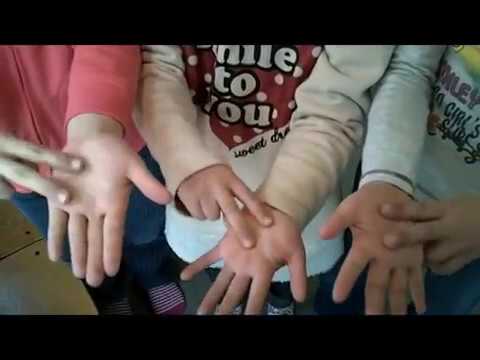
Do you know the children’s song “Denderaryūba”? It’s a slightly complex and fun hand game.
The lyrics have a mysterious sound, almost like a regional dialect, and in fact this nursery rhyme comes from Nagasaki Prefecture.
Along with the chant-like lyrics, the hand motions are also curious and intricate.
In time with the song, you rhythmically change combinations of your knuckles, thumbs, and index fingers on the palm of your other hand.
Start slowly to get used to it, and once you can move smoothly, gradually pick up the pace.
If you can make it through without any mistakes, it’s sure to feel very satisfying.

Let’s clap our handssakushi: kobayashi jun’ichi/genkyoku: cheko minyō

This warm song expresses joy beginning with the simple act of clapping, naturally resonating with children’s hearts.
With Japanese lyrics by Junichi Kobayashi set to a Czech folk melody, it features an easy-to-remember tune and friendly words, and is often sung in nursery schools and kindergartens.
It has also been featured on NHK educational programs and in collections of children’s songs, remaining beloved across generations.
Because the clapping motion helps develop a sense of rhythm and motor skills, it serves not only as a tool for parent-child communication but is also an ideal piece for recreational activities in senior care facilities.
Squeeze, squeeze, kashiwa mochi.Sakushi: Sakura Tomoko / Sakkyoku: Ozawa Tatsuyuki

An adorable children’s song that rhythmically depicts the fun of making kashiwa-mochi.
Its structure lets kids sing while doing hand-play motions, which naturally draws out their body movements and helps develop a sense of rhythm.
Featured in numerous early childhood education books—such as “Instant Hand-Play & Piano Accompaniment for Ages 0–2”—the song is widely used in kindergartens and nurseries.
Try singing it at home with your child while enjoying the hand-play.
And after the fun, how about some real kashiwa-mochi for a snack?