

[For Day Service Centers] February Craft Ideas: Decorations for Setsubun, Valentine’s Day, and the Feeling of Spring

February is a month when you can feel the arrival of spring even amid the cold.
For crafts at the day service, let’s choose activities that engage the hands while reflecting the changing seasons.
Seasonal crafts may make you look forward to spring and spark lively conversations.
February’s unique motifs—Setsubun ogres and ehomaki rolls, camellias and daffodils that bloom beautifully despite the cold, and Valentine’s heart decorations—are all heartwarming.
Crafts made with familiar materials like origami paper, Yakult containers, and felt are easy for anyone to try and bring great joy when completed.
Shall we enjoy creating warm pieces together that help us forget the winter chill?
- [For Seniors] Fun February Crafts: Ideas Inspired by Setsubun, Valentine’s Day, and Other Events
- For Seniors: Wall Decorations to Brighten Up February — Festive Ideas for Setsubun, Valentine’s Day, Plum Blossoms, and More
- [For Seniors] Liven Up Setsubun Crafts! Handmade Ideas Using a Variety of Materials
- Take-Home Craft Ideas for Winter: Perfect for Day Services for Seniors
- [For Seniors] Recommended for day services! Simple and cute small craft ideas
- For Seniors: Fun Activities in February — Celebrate Setsubun, Valentine’s Day, and Snow
- [For Seniors] February Wall Decorations: Setsubun-Themed! Fun Ideas with Oni Demons and Ehomaki Sushi Rolls
- [For seniors] A handmade calendar you’ll want to make in February
- [For Seniors] Enjoy the Cold Winter! Simple, Recommended Crafts
- [For Seniors] Have Fun Making Things Based on Today’s Mood! Today’s Recommended Craft
- [For Seniors] Recommended Events for February: Fun Ideas to Fill Everyone with Smiles
- For Seniors: Auspicious Handmade Zodiac Ornament Craft Ideas
- [For Seniors] Color Your Care Facility’s Spring: Wall Decoration Ideas
For Day Service Centers: February Craft Ideas—Decorations for Setsubun, Valentine’s Day, and the Coming of Spring (21–30)
Handmade Setsubun wreath with yarn
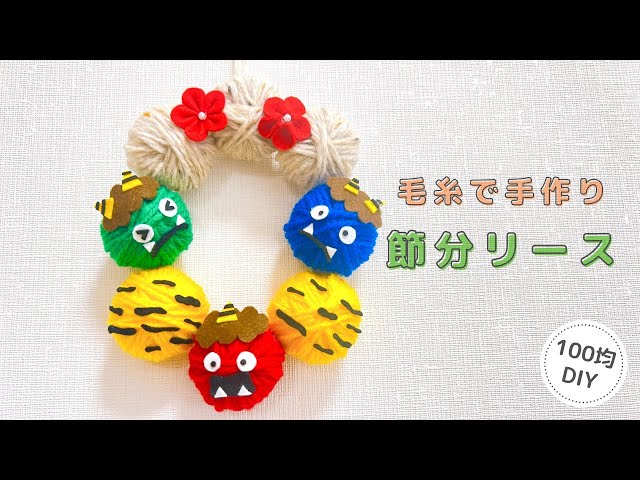
Here’s an idea for making a wreath using yarn balls.
First, crumple tissues into balls and wrap yarn around them.
These will become oni (demon) faces, and you’ll connect the faces to form the wreath, so make as many as needed for your desired size.
Create the oni faces and horns by cutting pieces from felt and gluing them on.
You can make all the balls into oni faces, or mix in designs inspired by their iconic pants patterns and beans.
Finally, add plum blossoms made from felt to finish it off.

A card for quietly confessing your feelings

Let me introduce a Valentine’s Day card with a hot air balloon motif.
In this idea, you create a 3D effect by cutting two pieces of construction paper into heart shapes to form the balloon’s envelope.
Attach the balloon to a backing sheet with clouds drawn on it, and draw the basket area with a pen.
By writing your message in small letters on the envelope part, you can make a quiet, subtle confession.
If you make the heart from dark brown construction paper and write on it with a black pen, it’ll be even harder to notice.
It’s a heart-pounding idea that makes you wonder, “Will they notice it?”
Valentine Fluffy Heart Bear
@pippi_seisaku The new year has begun, and next month is already Valentine’s Day 💝 A day to deliver love to those you care about—this is a perfectly cute craft for the occasion 😊 ★ Tips A sharper heart shape (rather than a rounded one) will show the outline more clearly when you attach the tissue paper. There are many ways to arrange the bear’s face: have the children draw it, prepare parts for them to paste, or even insert photos of their faces. ★ Materials • Tissue paper in 3 colors: 2–3 sheets each • Double-sided tape • Construction paper • Glue • Round stickers (for the eyes) ————————————— 🌷Teacher Pippi Sharing cute, fun craft ideas! ◇ Easy crafts you can make just by copying ◇ Adorable results using familiar materials ◇ Helping busy teachers! 📣 I’d be so happy if you like, save, and follow 💕 —————————————Winter CraftMade in FebruaryEasy to make#Childcare Crafting#Making PlayProduction ideasNursery teacher / Childcare workerChildcare studentNursery School Practicum#100-yen-store DIY#Valentine’s Day CraftHeart production
♬ Magnetic – ILLIT
Let’s make a heart-themed craft that takes advantage of the soft, fluffy texture of tissue paper.
It’s perfect for Valentine’s Day and makes an adorable wall decoration.
Stick double-sided tape onto a heart-shaped piece of construction paper.
Then place crumpled balls of tissue paper onto the adhesive surface.
Using about three different colors of tissue paper is recommended.
Add a paper bear made from construction paper to the fluffy heart, and you’ll have a cute, charming wall display.
The piece may even bring back Valentine’s Day memories for some older adults.

Setsubun wall decoration made with paper plates
https://www.tiktok.com/@buchiko_hoiku/video/7464121566054452500Using a paper plate, you can easily create a wreath-like craft.
This piece uses Setsubun, a major event in February, as its theme.
Cut a circular hole from the center of the paper plate to make a donut shape, then paint it yellow.
Tear black construction paper into long, thin strips and paste them onto the plate.
This completes the base with a distinctive yellow-and-black pattern that looks like an oni’s pants.
Next, make items like an oni (ogre), Okame, a masu (wooden box), and beans using construction paper or origami, and stick them onto the plate.
You’ll end up with a craft perfect for Setsubun.
Since it uses a lot of fine finger movements, it also seems helpful for stimulating the brain.
Simple plum blossoms with origami

Plum blossoms, which herald the arrival of spring, are perfect for February crafts.
Many seniors may be looking forward to the plum blossoms blooming.
First fold the origami, then cut it into the shape of plum petals.
When you glue together five petal pieces, the plum blossom is complete.
Using red, white, or pink origami makes it look even more like a real plum blossom.
Make the stamens from yellow origami and attach them to the flower as well.
As they make plum blossoms, some seniors might enjoy sharing memories of the season when spring arrives.
daffodil

Daffodils, which bloom with white or yellow flowers in winter, are also at their best in February.
Seeing daffodils blooming earnestly in the cold gives a sense of delicacy as well as strength.
Daffodil artworks that, when finished, take on a paper-cutout style express that atmosphere very well.
The process includes steps such as folding construction paper with fine slits and attaching pieces with glue.
Older adults can enjoy making the piece while moving their fingers a lot.
It can also be expected to serve as brain training and finger dexterity practice.
Besides wall decorations, it’s also nice to create them by attaching them to a calendar.
February karakuri wall display: Ehomaki

A whimsical “karakuri hekimen” that surprises and delights viewers.
For February, let’s make a karakuri hekimen with an eho-maki (lucky sushi roll) motif! You can buy felt, magnets, and a sushi rolling mat at a 100-yen shop.
Fold cardboard into a tube and attach magnets inside.
Prepare four of these tubes, then wrap them in red, yellow, light green, and brown felt to create the fillings.
Combine black and white felt for the rice and nori, attach the fillings at equal intervals, and secure the rolling mat—your eho-maki is complete.
Make plum blossoms, an oni (ogre), and beans with a wooden masu box for decorations to fully capture the Setsubun season! A karakuri hekimen that inspires surprise and wonder—why not give it a try?
