

February trivia quiz: three-choice questions on seasonal fun facts like Setsubun and Valentine’s Day


February is packed with seasonal events like Setsubun and Valentine’s Day! But how much do you really know about these occasions? There are plenty of things you might think you know but don’t—like which country originated Setsubun or the origin of Valentine’s name.
In this article, we’ll share plenty of February-related trivia in a three-choice quiz format! It’s perfect as a conversation starter with family and friends or for a quick pastime.
As you work through it, you might even find yourself blurting out “Wow!” at some surprising discoveries.
Give it a try now!
- [For Seniors] Fun Brain Training! February-Themed Quiz
- How many can you get right? A tricky 3-choice trivia quiz you'll want to tell someone about
- Recommended in March! A collection of surprising, little-known trivia that elementary school students will want to share
- February trivia quizzes that elementary school kids will love. Get excited with fun facts about commemorative days.
- So interesting you’ll want to tell someone! December Trivia & Fun Facts Special
- Fun facts you’ll want to share! January trivia and tidbits special
- How many can you solve? Test your spring knowledge with a trivia quiz about March!
- [For Kids] Today’s Quiz Roundup. Let’s play quizzes about today! [May 2026]
- Useful right away in daily life! Surprising trivia and handy tips
- [Childcare] Play and craft ideas to include in February events
- Trivia quiz with useful tips to know: fun facts that come in handy at school or at home [for kids]
- [Trivia] Challenge! Spring General Knowledge Quiz
- September Trivia Quiz & Fun Facts! A Fun Autumn Quiz for Kids
February trivia quiz: Seasonal tidbits like Setsubun and Valentine’s Day presented as multiple-choice (1–10)
What does “Valentine” in Valentine’s Day mean?

- Name of the chocolate
- Name of the alcohol
- a person's name
See the answer
a person's name
“Valentine” refers to Saint Valentine, a Christian saint from ancient Rome. During a time when soldiers were forbidden to marry as a measure to strengthen the military, Father Valentine opposed the decree and, defying the emperor’s orders, conducted many marriages for the soldiers.
When is the bean-throwing for Setsubun done?
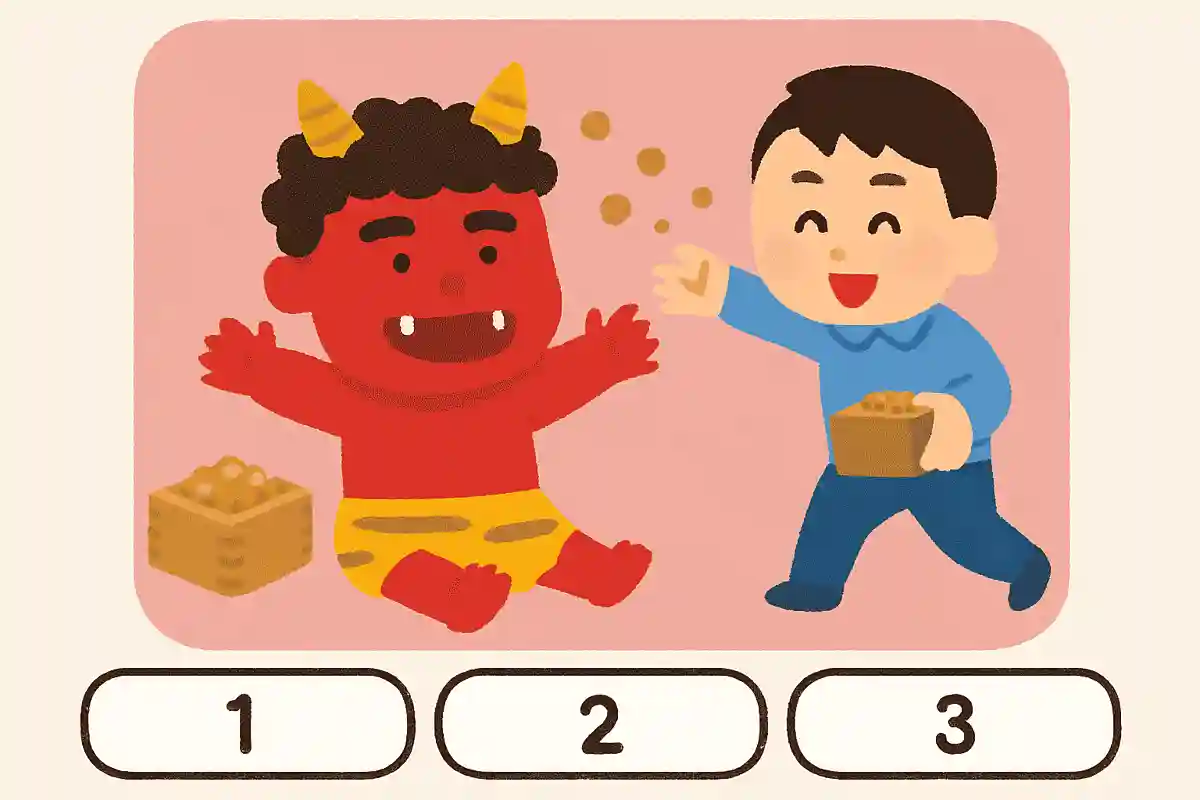
- morning
- noon
- night
See the answer
night
Setsubun bean throwing is generally done at night. The bean-throwing ritual is performed to drive away demons and evil spirits and to invite good fortune into the home. Setsubun often takes place on the day before Risshun, the beginning of spring, and the bean throwing is typically held to coincide with it. By doing it at night, when families can more easily gather, the custom has taken root of praying for freedom from illness and for a good harvest, wishing for health and happiness throughout the year.
What should you avoid doing when eating an ehomaki (lucky direction sushi roll)?
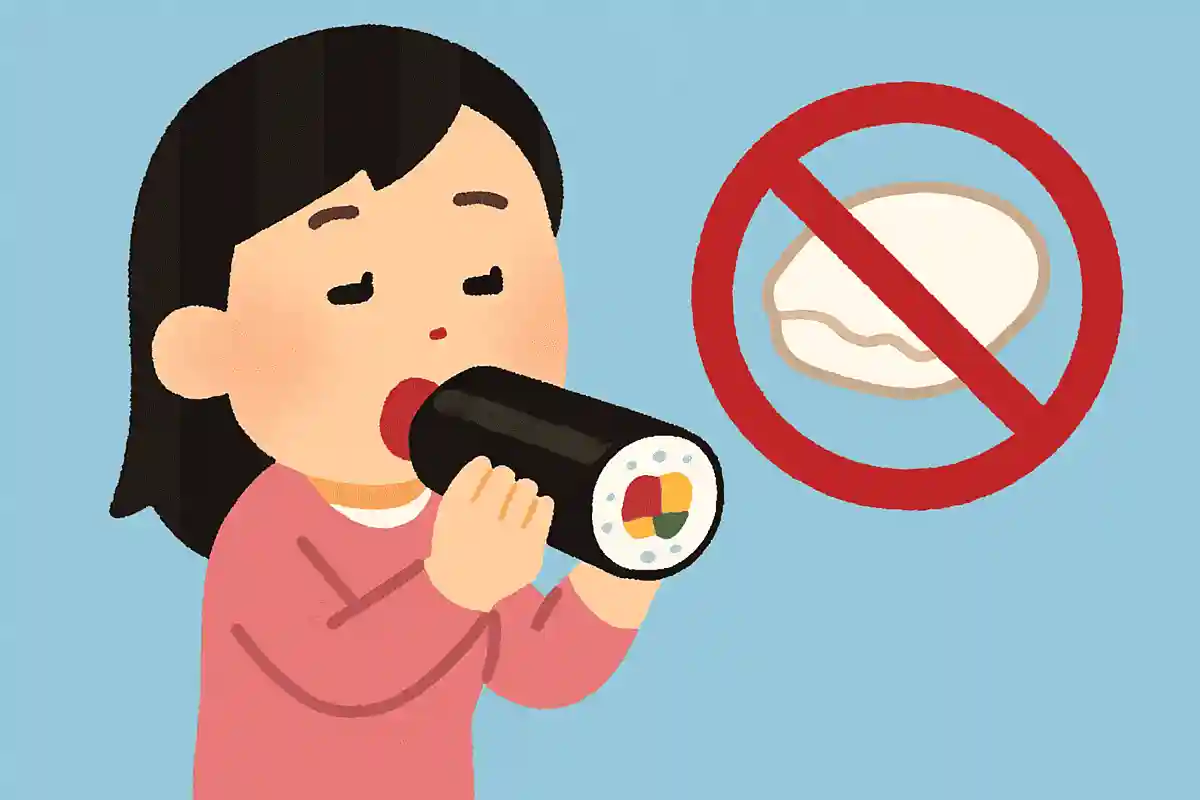
- eat while standing
- Eating while chatting
- Eat it cut into small pieces
See the answer
Eating while chatting
When eating an ehomaki roll, the custom is to face that year’s lucky direction and eat the whole roll in silence. It’s believed that chatting while eating will let your good fortune escape. Mealtime conversation is enjoyable, but on Setsubun, let’s keep quiet so the good luck doesn’t slip away!
February trivia quiz: Seasonal tidbits like Setsubun and Valentine’s Day in a 3-choice format (11–20)
What is another name for February?
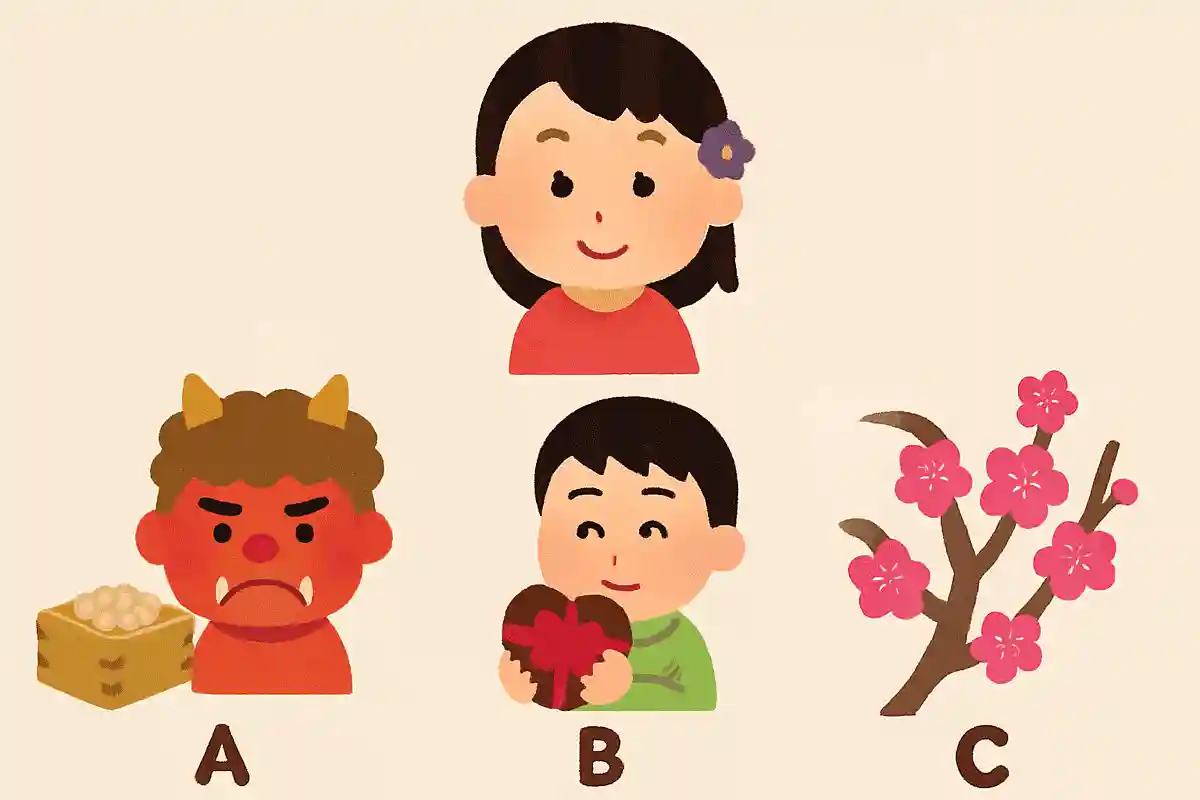
- Yayoi
- Kisaragi (the traditional Japanese name for the second month; February)
- Shimotsuki (the traditional Japanese name for the 11th month)
See the answer
Kisaragi (the second month of the traditional Japanese calendar)
Kisaragi is another name for the second month in the traditional lunar calendar. It is said to come from the practice of layering clothing to keep warm while winter’s chill still lingers. It is also interpreted as a term referring to the quiet period before plants and trees begin to sprout.
Which of the following is incorrect as a zodiac sign for people born in February?
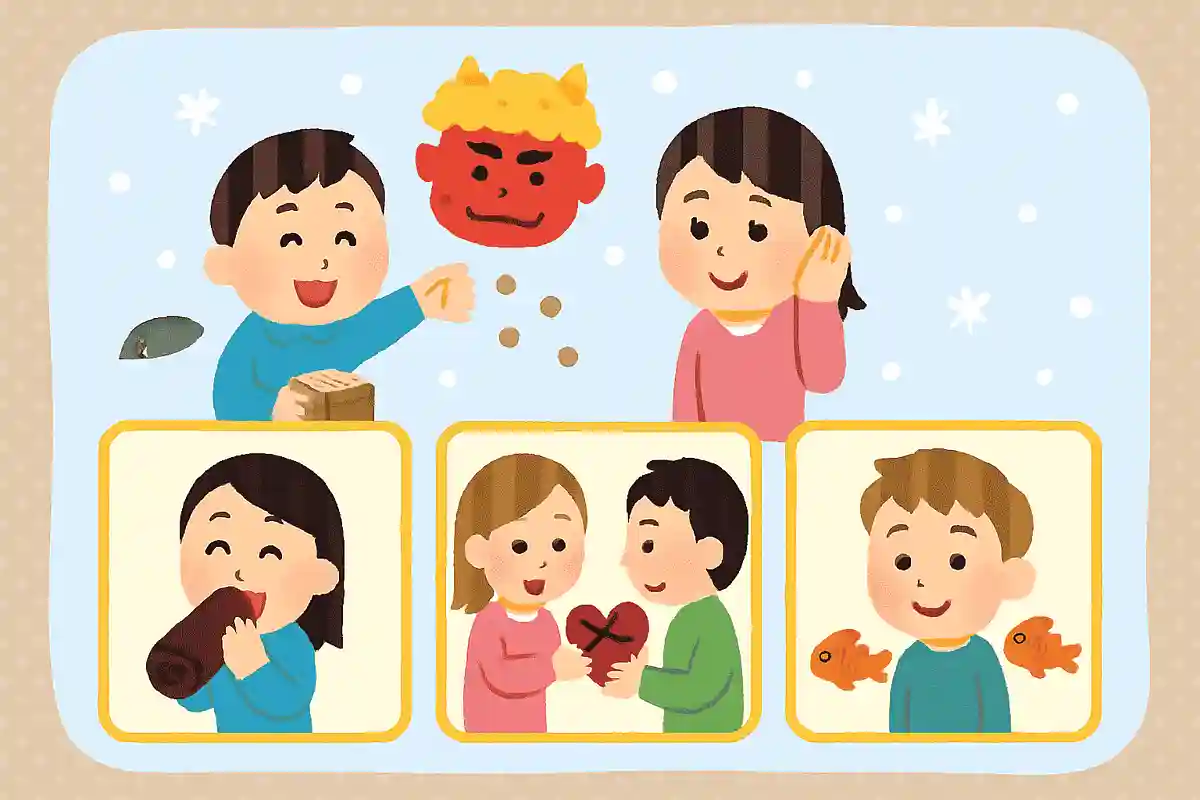
- Aquarius
- Pisces
- Gemini
See the answer
Gemini
People born from January 20 to February 18 are Aquarius, and those born from February 19 to March 20 are Pisces. By the way, Gemini—mentioned among the options—applies to people with birthdays from May 21 to June 21.

Why do people throw beans on Setsubun?
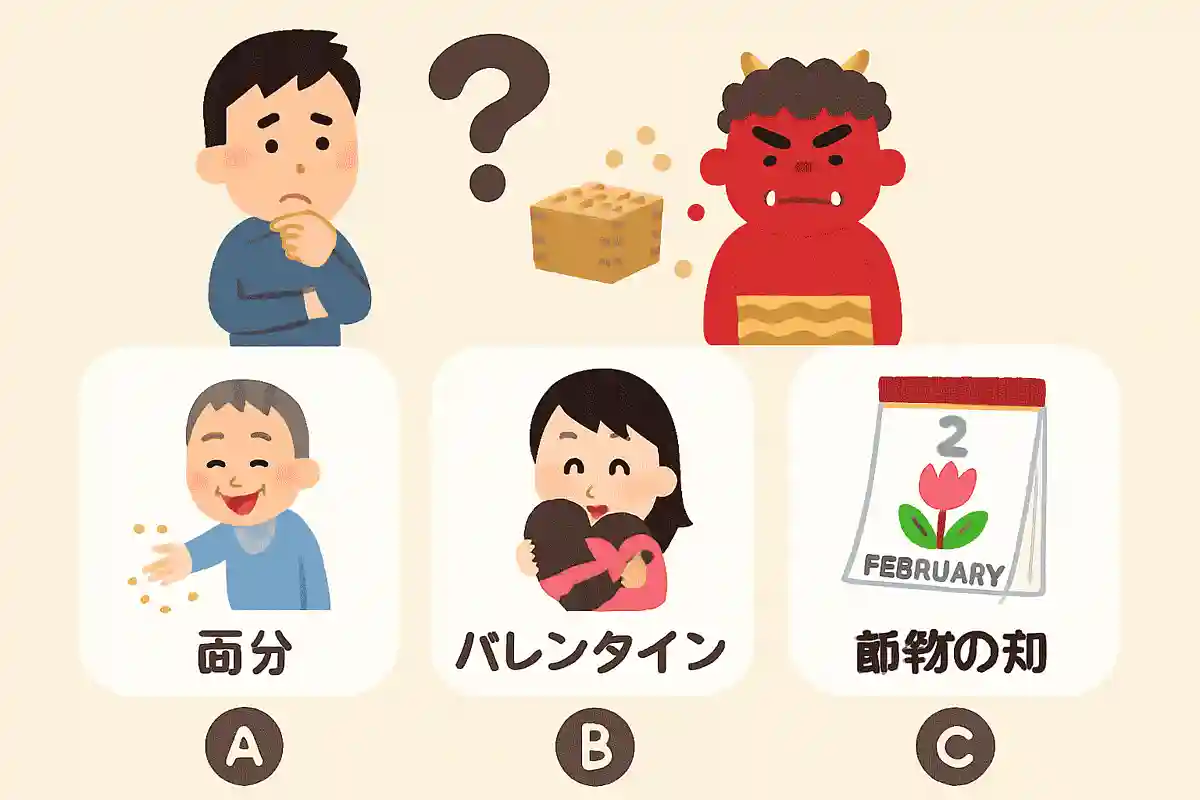
- To clean the inside of the house
- To ward off evil spirits
- To pray for a good harvest
See the answer
To ward off evil spirits
The bean-throwing performed on Setsubun is meant to drive away evil spirits and invite good fortune. Beans are believed to have the power to ward off evil, so they are scattered inside the house and outside the gate to chase away demons and malevolent spirits, while praying for the family’s health and happiness. For this reason, there is a custom of chanting “Oni wa soto, fuku wa uchi” (“Demons out, fortune in”) while throwing the beans.
What is “mugi-fumi,” an activity often performed in February?
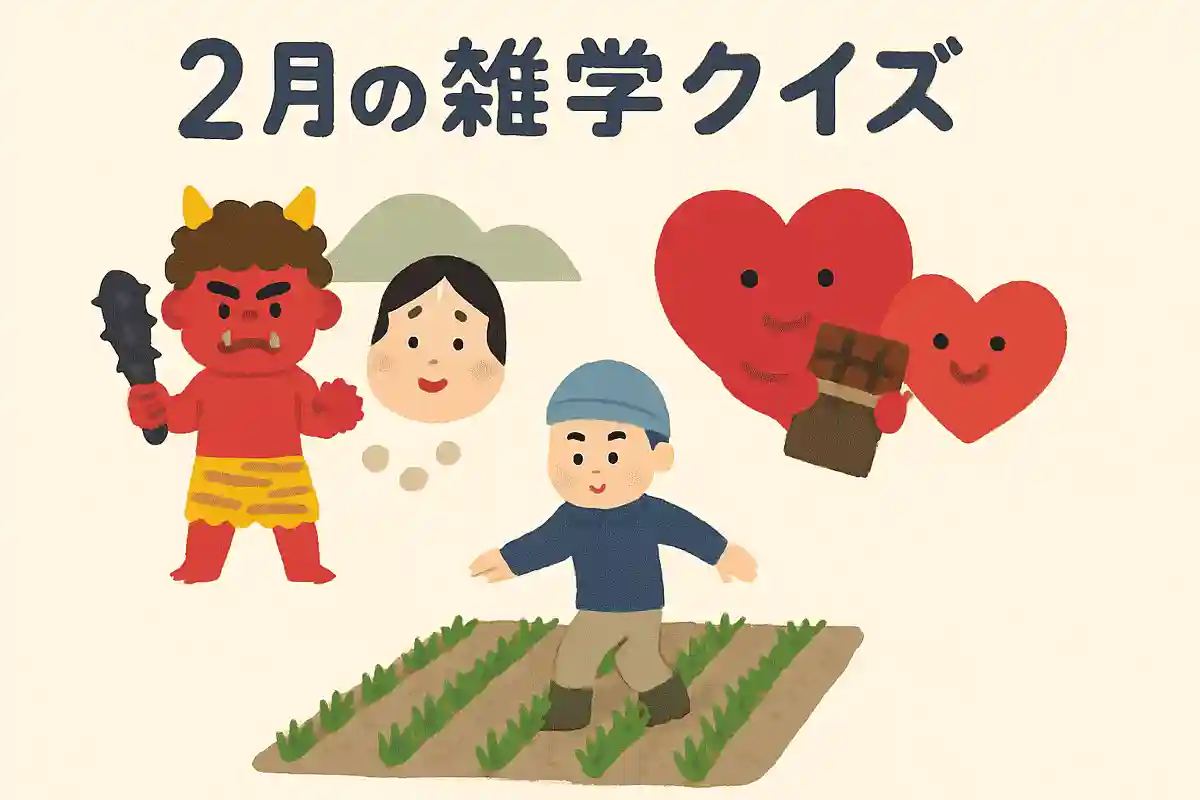
- plowing the soil to sow wheat seeds
- Trampling the wheat so that its roots grow strong.
- To apply insecticide to prevent diseases in wheat.
See the answer
Trampling the wheat so that its roots grow strong.
Mugifumi is a farming practice in which growing wheat is trodden to help its roots anchor firmly in the soil, making the plants more resistant to cold and less prone to lodging, so they grow stronger. Mugifumi is often carried out during the cold period in February and is cherished as a seasonal word for spring.