

Recommended in March! A collection of surprising, little-known trivia that elementary school students will want to share


What comes to mind when you think of March? There are so many events unique to this season, like graduation ceremonies, the Doll’s Festival, and the song of the bush warbler announcing the arrival of spring.
In fact, March has many beautiful alternative names besides Yayoi, such as Sakura-zuki and Hanami-zuki, and there are lots of fun tidbits you’ll want to share—like how the flavor of hina-arare differs between the Kanto and Kansai regions! In this article, we’ll introduce March trivia and topics that even elementary school students can enjoy.
Share them with family and friends, and you might just become a little trivia expert!
Recommended in March! A collection of surprisingly little-known trivia that elementary school kids will want to share (1–10)
A dandelion flower is made up of about 100 to 200 petals.
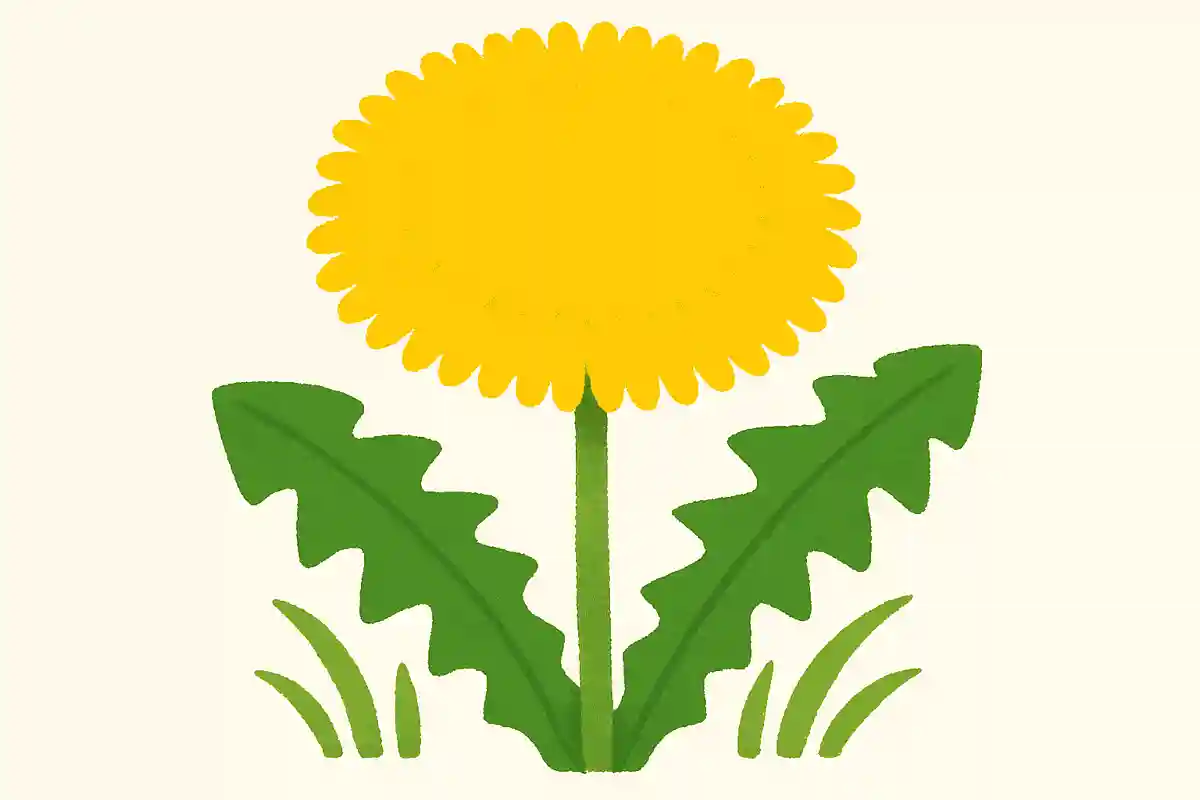
Dandelions are often seen by roadsides and in parks in spring.
They may look small, but they’re actually made up of many gathered petals.
In fact, a single flower has about 100 to 200 tiny petals.
If you look closely, you can see the round yellow florets packed tightly together.
Observing while counting the petals can make you marvel at nature’s intricacy and wonder.
Also, because dandelion seeds drift on the wind and spread, they are an important flower that helps create the spring scenery filled with yellow blossoms.

Cherry trees are often planted along river embankments to strengthen the ground.
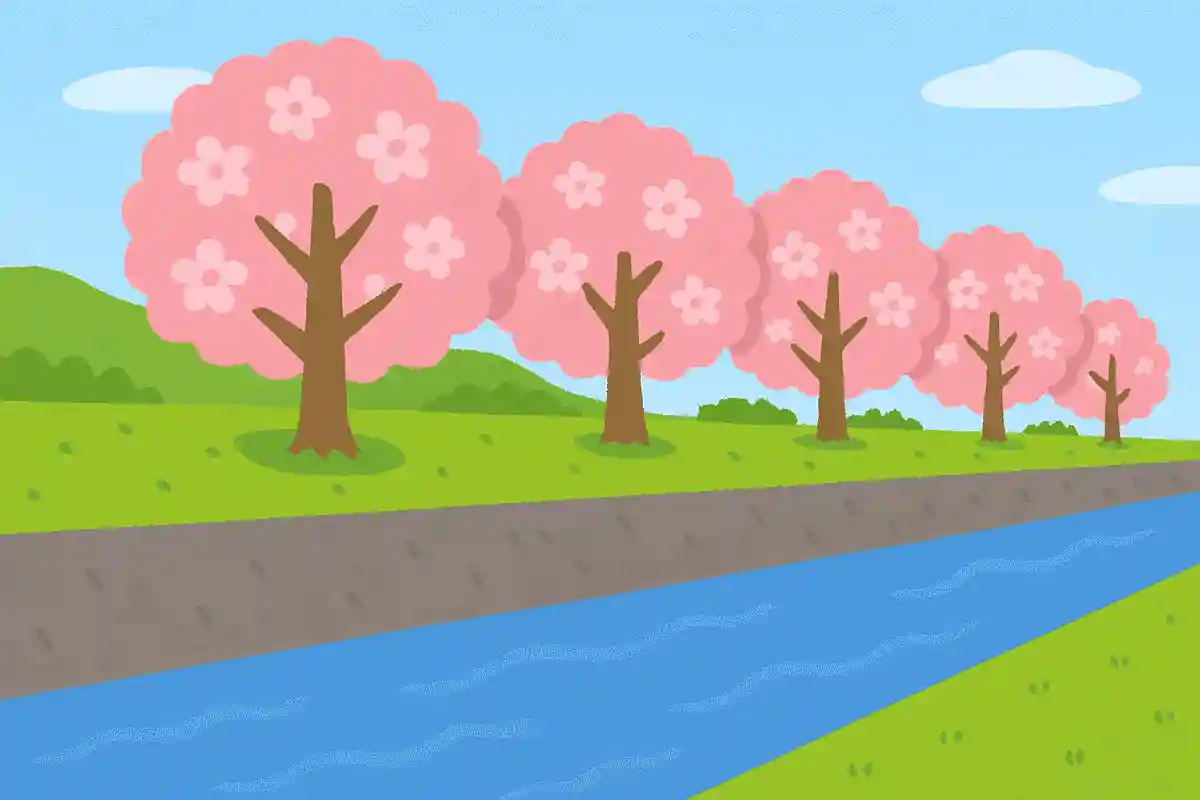
There’s something poetic about cherry blossom petals dancing in the wind and drifting across a river’s surface, isn’t there? We often see cherry trees planted near rivers, and there’s a reason for that.
In fact, many cherry trees were planted along riverbanks to reinforce the ground.
In the Edo period, there weren’t sturdy embankments like we have today, and it seems that floods from typhoons and heavy rains frequently caused levees to collapse.
To prevent breaches, people decided to plant cherry trees so their roots would take hold and stabilize the soil.
There was also the idea that when the cherry blossoms bloomed and crowds came to see them, the foot traffic would help compact the ground even further.
Next time you go out, why not visit a cherry-lined river in spring?

Red sea bream, which is in season in spring, can live for over 30 years.
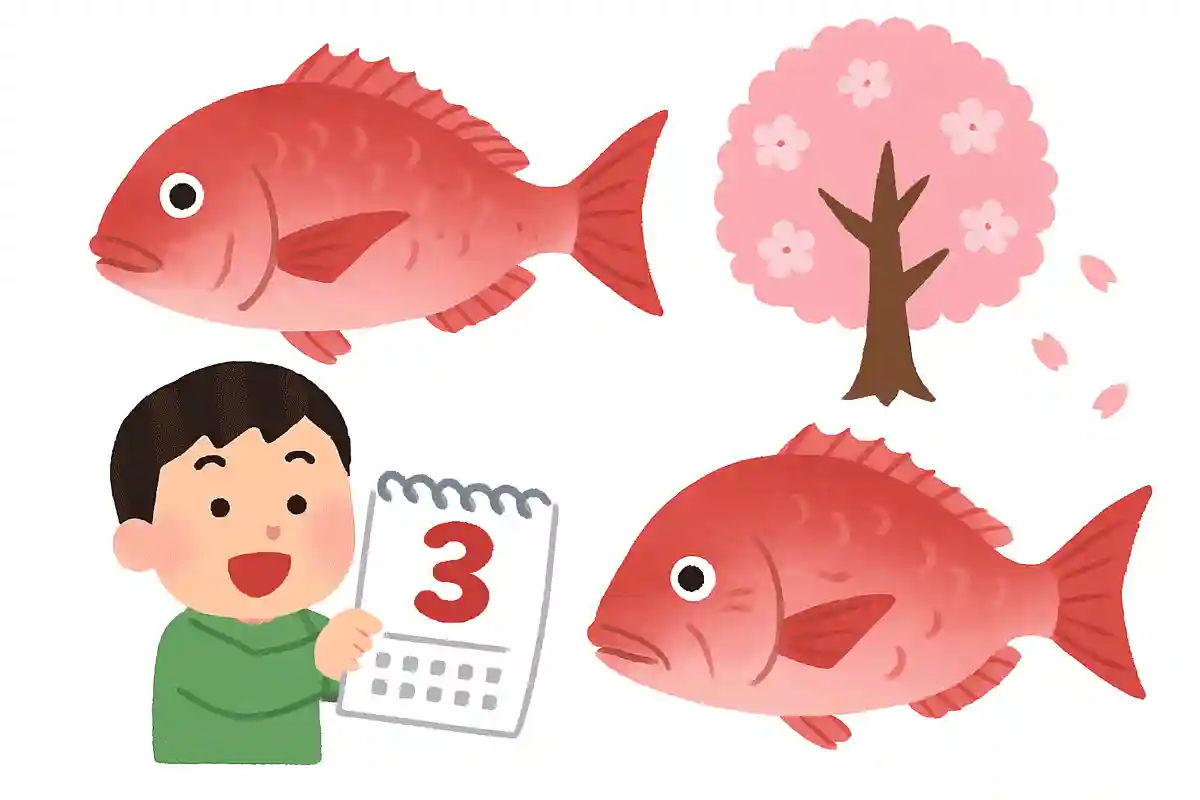
Sea bream dishes are often served at celebratory occasions.
You may also see them at spring events such as the Doll’s Festival (Hinamatsuri) and Children’s Day (Tango no Sekku).
In spring, red sea bream are nearing spawning, so they are rich and especially delicious.
The fish caught in this season have long been cherished and are called sakura-dai or hanami-dai.
The red sea bream is one of the most famous fish in Japan, with a long lifespan of over 30 years—some individuals are said to live as long as 40 years.
Incidentally, it has long been caught in Ehime Prefecture.
Because it is so familiar to local residents, it has been designated as the prefectural fish.
White Day originated in Japan.
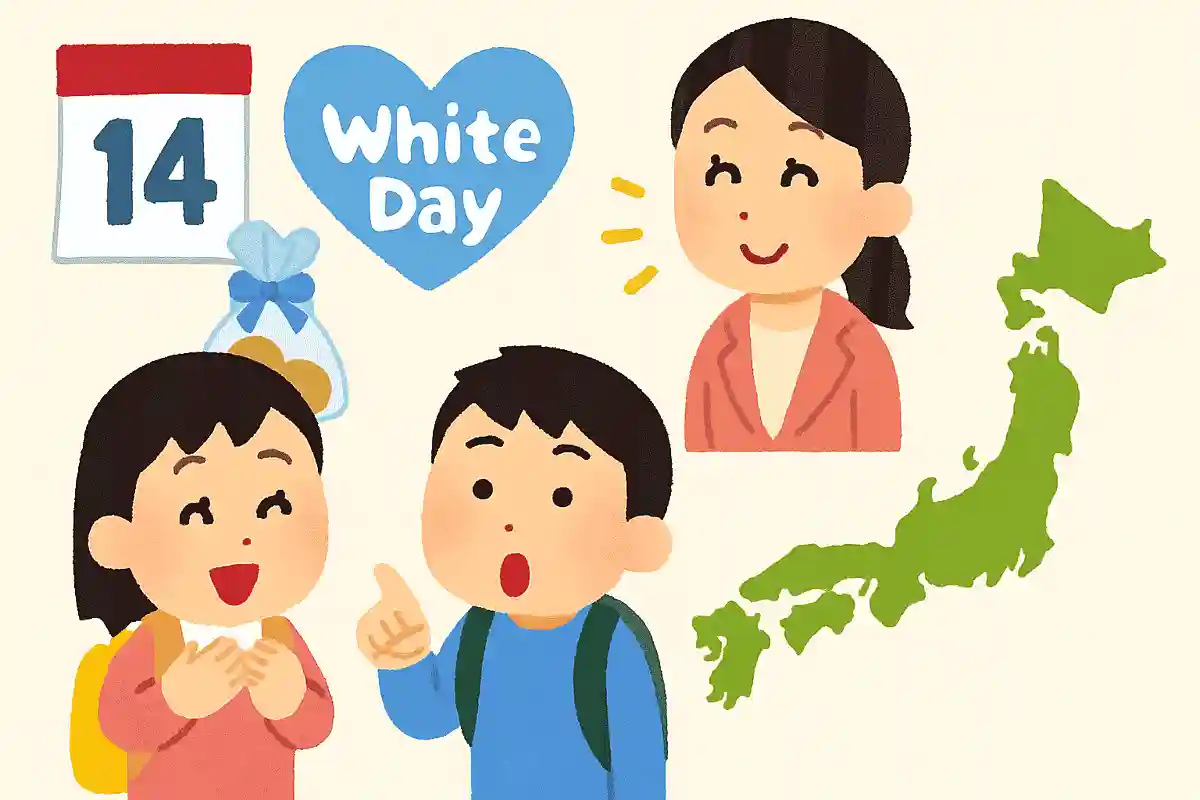
White Day is the day when you return the favor for the chocolates you received on Valentine’s Day, right? As White Day approaches, you may often see store shelves filled with all kinds of sweets.
Did you know that White Day is actually a uniquely Japanese tradition? It’s said that a long-established Japanese confectioner sold a sweet made by wrapping yellow bean paste in marshmallow and coating it with chocolate.
They marketed it as a return gift for Valentine’s Day, and the whiteness of the marshmallow inspired the name “White Day.” Since the day designated as White Day is March 14, it has also been registered with the Japan Anniversary Association.
We eat chirashi sushi on Hinamatsuri (Girls’ Day).
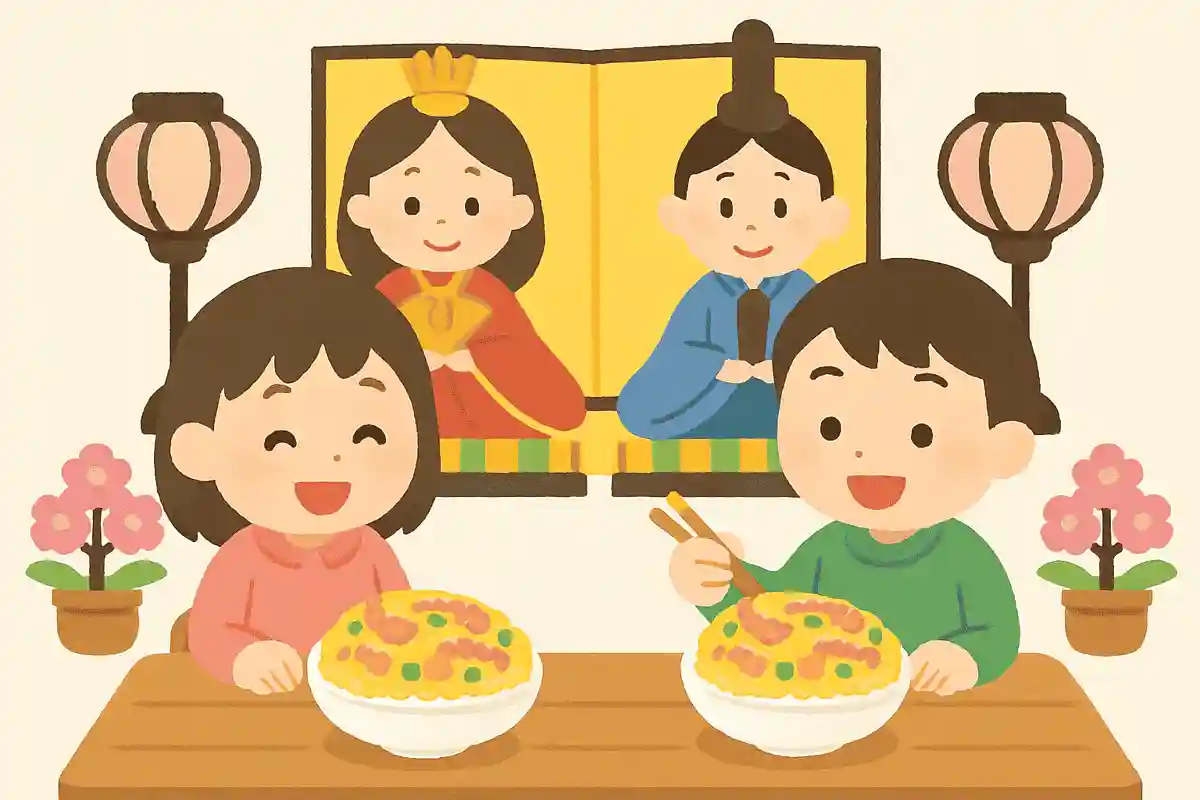
On Hinamatsuri (Girls’ Day), there is a custom of eating chirashi-zushi to wish for girls’ healthy growth.
Chirashi-zushi is topped with colorful ingredients over rice, making it very beautiful to look at.
For example, pink shrimp symbolize long life, green vegetables and beans represent energy and health, and yellow egg signifies happiness.
Talking about the toppings—like saying, “This color means energy!”—makes eating even more fun.
Eating chirashi-zushi on Hinamatsuri isn’t just a meal; it’s an important tradition where everyone celebrates girls’ growth and the family’s happiness together.
Somei Yoshino is a type of Japanese cherry tree and accounts for about 80% of the varieties.
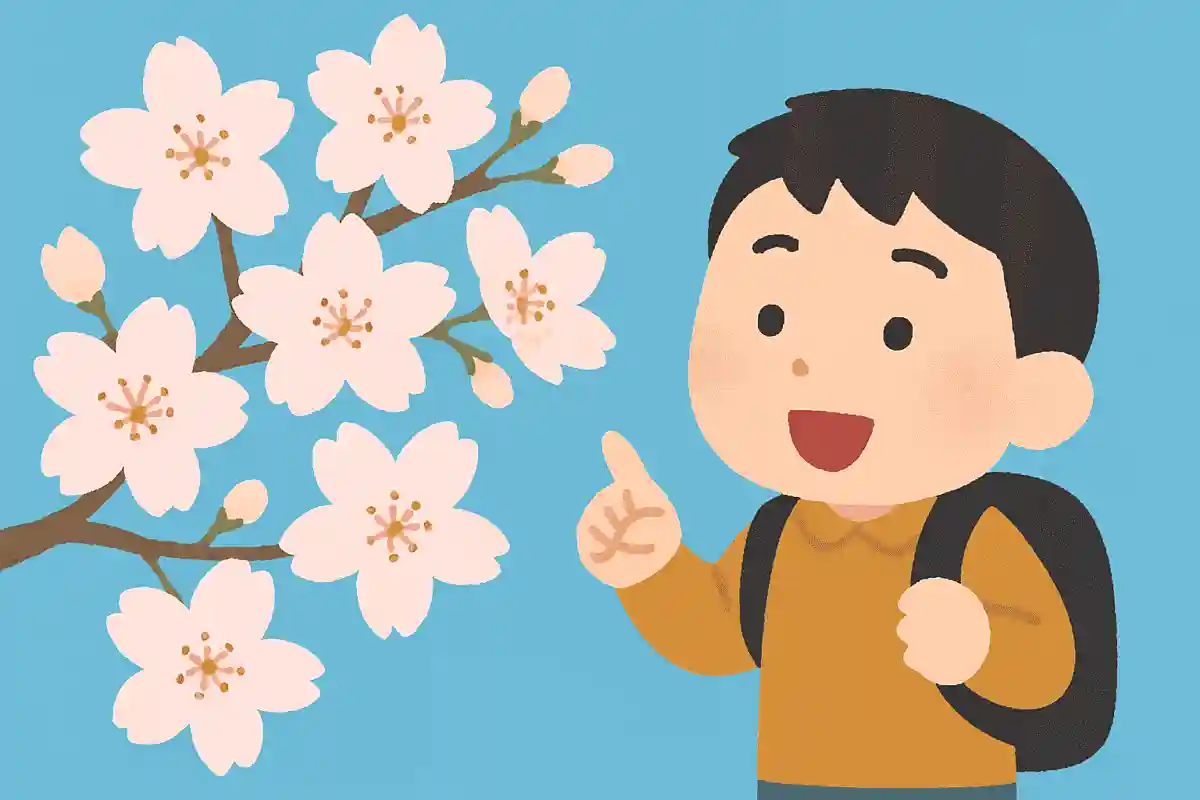
In spring, beautiful pink cherry blossoms bloom in towns and parks, don’t they? Most of those blossoms are a variety called Somei Yoshino, which makes up about 80% of the cherry trees in Japan.
Somei Yoshino originated in the Edo period, and because all the trees are propagated from the same original tree, their blooming patterns and colors are very uniform.
When everyone goes cherry-blossom viewing together, the park’s trees can look like a pink carpet.
When spring comes, try finding Somei Yoshino blooming on your way home from school or near your house, and compare the number and shapes of the flowers!
The order of the three-color dango is pink, white, and green.
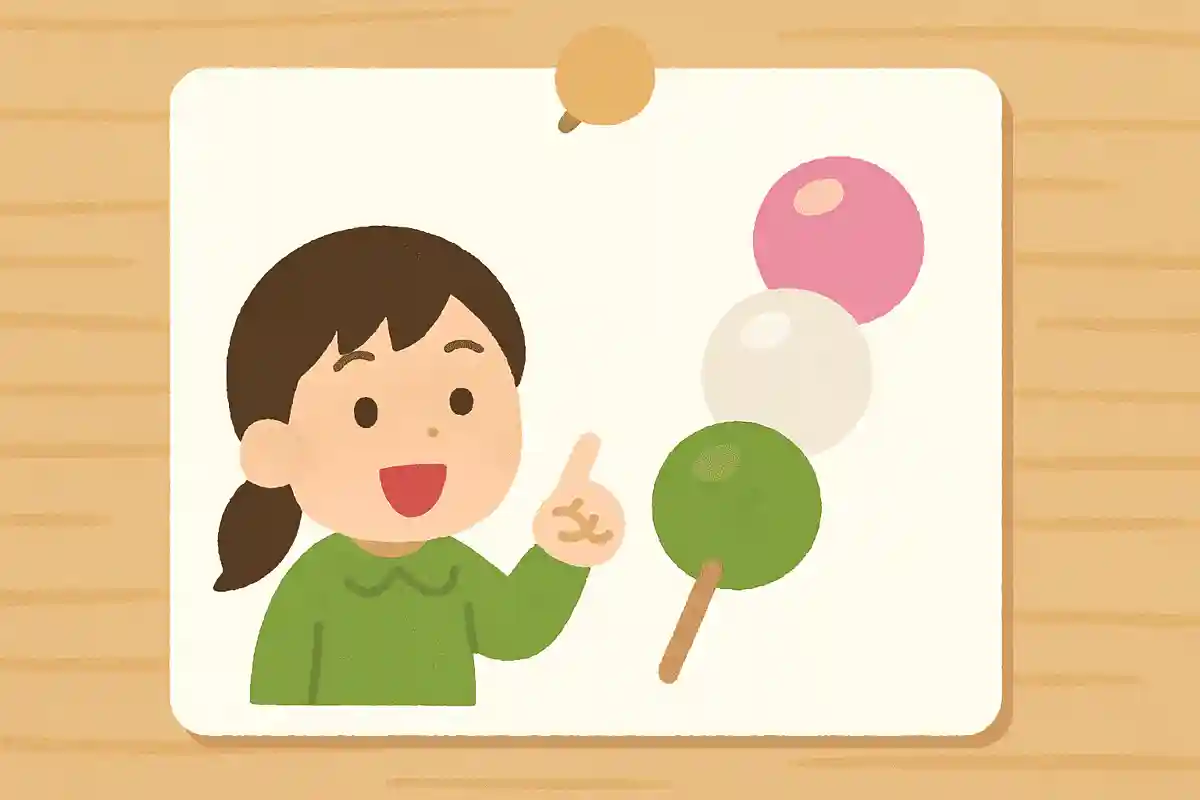
The tricolored dango you often see during spring cherry-blossom viewing are skewered in the order pink, white, and green.
Each color has its own meaning.
Pink represents cherry blossoms, white stands for snow and the lingering traces of winter, and green symbolizes new spring buds and grasses.
It’s a sweet that lets you enjoy the whole season of spring on a single skewer.
As you eat the dango, you can naturally feel the spring scenery—“Ah, the cherry blossoms are pink! The snow has melted and it’s white now, and the leaves are green!” It’s also fun to think about the meaning of spring while sharing tricolored dango with friends and family.