

[For Women] A roundup of enka songs that can score high in karaoke

When you go to karaoke, many people enjoy using the scoring feature, don’t they?
In particular, if you’re confident in your singing or you love karaoke, you might practice regularly to achieve higher scores.
In this article, we’ll introduce karaoke songs that are especially recommended for women and are easier to score high on.
This time, we’ve focused on enka and selected recommended tracks, so please find the songs you feel comfortable singing and aim for a high score!
- [Men] Enka Songs That Can Score High in Karaoke
- Women’s Enka: A collection of classic enka songs expressing women’s emotions
- Classic enka songs you’ll want to sing at karaoke: recommended popular tracks
- Legendary enka songs that fire up the crowd. A song catalog of enka picks you won’t go wrong with at karaoke.
- [2026] Easy Enka Songs for Karaoke: Recommended Picks — Women Singers Edition
- Enka songs that are easy for men to sing: a roundup of tracks to try at karaoke
- 【2026】A Collection of Masterpieces: Enka and Kayōkyoku Duets by Two Women
- A roundup of female enka singers in their 70s: voices that evoke nostalgia
- [For Beginners] Recommended Enka Classics for Karaoke — Women Singers Edition
- A collection of classic enka masterpieces about love: songs that depict the nuances of mature romance.
- Diva of Enka: A roundup of female singers leading the enka world
- [2026] Recent hit enka songs: must-watch popular kayō tracks
- [For Women] Masterpiece Enka Songs with a High Degree of Difficulty
[For Women] Enka Songs That Can Score High in Karaoke (11–20)
Life is full of ups and downs.Shimakura Chiyoko

Chiyoko Shimakura, a female enka singer who gained popularity with her adorable persona and catchy vocals.
When she debuted, Western music was in the spotlight, but her image of donning a kimono and singing solid enka evoked the quintessential Yamato Nadeshiko.
Among her works, the one I especially recommend is Jinsei Iroiro.
While it’s categorized as enka, it also strongly features kayōkyoku elements, so it has fewer kobushi (ornamental vocal turns) than typical enka.
Since kobushi are the toughest part of enka, having fewer of them is a crucial factor when aiming for a high score, don’t you think?

TATSUYATanaka Aimi

Aimi Tanaka is an enka singer known as the beloved disciple of Takashi Hosokawa.
She possesses a remarkably deep voice for someone in her early twenties, and on top of that, her expressive power is extraordinary.
She is undoubtedly expected to play a leading role in the future enka scene, yet she has also released many songs that are easy to sing.
Among them, the one you can especially expect to get the crowd going is “TATSUYA.” While the lyrics are sad, depicting a widow, the melody is powerful and still brings out a feminine quality, so you can expect it to be quite exciting.
It leans more toward kayōkyoku in style, and the absence of difficult pitch movements—such as the dramatic ups and downs often associated with kobushi—makes it notably easy to sing.
North TavernHosokawa Takashi
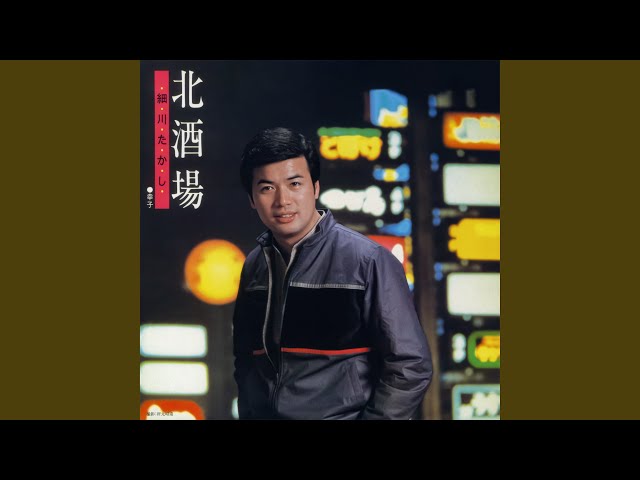
Takashi Hosokawa is one of Japan’s finest vocalists.
Early in his career he pursued a path as an enka singer, but after studying under Michiya Mihashi, who came from a folk song background, his already high-level singing ability grew to a monstrous level.
Among that, he has also actively taken on catchy songs, making him an extremely popular figure among enka fans.
Among Hosokawa’s songs, the one I particularly recommend for its crowd-pleasing energy and ease of singing is “Kita Sakaba.” While the overall range is set on the higher side, the range itself isn’t very wide, so you should be able to sing it if you adjust to the right key.
The song features a structure typical of enka, showcasing scale movements of two notes or more with kobushi (melismatic turns), but since the kobushi don’t continue in rapid succession, their difficulty is relatively low.
Instead of projecting your voice forward, try to produce it with the sensation of it piercing through from the crown or back of your head; doing so will bring you quite close to the original, so give it a try.
Ishikari ElegyTanaka Aimi

Although Aimi Tanaka is strongly associated with kayōkyoku, she’s also outstanding at enka, partly because she’s a disciple of Takashi Hosokawa.
Among her enka-style songs, the one I especially recommend is Ishikari Banka.
It’s authentic enka, but rather than relying on detailed techniques like kobushi, it showcases fundamental vocal skills—such as overtones and dynamics—so the vocal line itself isn’t too difficult.
There are several instances of a slightly flipped tone that’s somewhat similar to the hiccup technique, so keep that in mind when you sing.
Our town was green indeed.Sen Masao

Masao Sen’s classic “Waga Machi wa Midori Nariki” is notable for its gentle melody.
While it is nominally classified as enka, the vocal line strongly reflects the essence of Showa-era kayōkyoku, and the characteristic enka vocal melisma (kobushi) is scarcely present.
The few instances of kobushi are mostly limited to a single scale step up or down, so even those not adept at enka-style phrasing should be able to sing it without difficulty.
If you enjoy songs with a nostalgic, old-fashioned mood, consider adding this one to your repertoire.
From Kyoto to HakataTanaka Aimi

Kyoto kara Hakata made is a memorable piece with a full-fledged enka style suffused with melancholy.
Among Aimi Tanaka’s songs, this one especially emphasizes the low register, with the A melody sustaining low tones that make use of overtones.
The overall range isn’t very wide, so it’s by no means a difficult song; however, if you want to bring out its charm to the fullest, align the key around the A melody rather than the chorus.
Mixing in as much breath as if your lungs were being squeezed makes it easier to acquire overtones, so why not practice that technique while working on this song?
[For Women] Collection of Enka Songs That Can Score High in Karaoke (21–30)
Women’s TavernKobayashi Sachiko

From the very title “Onna no Sakaba,” you can almost smell its essence: a 120% pure, classic enka anthem.
When it was released, many listeners were likely thinking, “This is the Sachiko Kobayashi we’ve been waiting for.” It’s a single from 2011, and since she had been releasing more kayōkyoku-flavored songs around that time—like “Manyō Koika Aa, Kimi Matsuto” and “Shiroi Yuge no Uta”—this track lets you fully savor Kobayashi singing straight-down-the-middle, traditional enka.
It’s quintessential enka from start to finish, so those accustomed to singing the genre should handle it with ease.
For enka beginners, its simple structure makes it a great song to practice and get a feel for the style.