

[Female Singers Edition] The face of New Year’s Eve! Enka singers who appeared on the Kōhaku Uta Gassen


Kōhaku Uta Gassen, NHK’s year-end national music program, has been beloved for many years since it began in 1951.
In recent years, the lineup of performers has grown increasingly diverse, reflecting the times.
Still, across the Shōwa, Heisei, and Reiwa eras, many people would say that the singers they simply can’t see out the year without—the true “faces of New Year’s Eve”—are the enka performers.
In this article, we’ve selected female enka singers who have appeared on Kōhaku.
Please enjoy them along with their signature songs!
- [Male Singers Edition] The face of New Year’s Eve! Enka singers who appeared on the Kōhaku Uta Gassen
- A roundup of leading female enka singers representing the Showa era
- [2026] Amazing if you can sing them! Enka Masterpieces [Women Singers Edition]
- [2026] A roundup of female enka singers in their 60s: Artists who support Japanese enka
- [2026] Active in the enka and kayō world! A roundup of beautiful enka singers
- A roundup of female enka singers in their 70s: voices that evoke nostalgia
- [2026] Compilation of Enka Singers from Kumamoto
- [2026] A roundup of enka singers from Niigata
- [For Beginners] Recommended Enka Classics for Karaoke — Women Singers Edition
- [2026] Easy-to-Sing Enka: From Classic Masterpieces to Recent Hits [Female Singers Edition]
- [Enka] Songs that are easy to sing even for those who are tone-deaf [Female singers edition]
- [Original Endoru] A Collection of Easy-to-Sing Songs by Junko Ishihara [2026]
- [Tears and Alcohol] A Collection of Kaori Kozai’s Easy-to-Sing Songs [2026]
[Female Singers] The Faces of New Year’s Eve! Enka Singers Who Performed on the Red and White Song Battle (21–30)
As I am in love…Akimoto Junko

Junko Akimoto began her career as a singer in a Hawaiian band and has spent many years performing live, mainly Western music such as jazz, Latin, and chanson.
In 2005, she made her major-label debut with King Records, fully stepping into the world of kayōkyoku (Japanese popular songs).
In 2008, she won the Excellence Award at the 50th Japan Record Awards and made her first appearance at the 59th NHK Kōhaku Uta Gassen the same year.
At that time, she set a new record as the oldest first-time performer at 61 years and 6 months, which became a major topic of conversation.
Her appeal lies in a unique expressive power that blends Western-style breathing and sense of rhythm with kayōkyoku melodies, showcasing a style that captivates through phrasing and timing rather than the characteristic kobushi (melismatic ornamentation) of enka.
Because it’s someone I haven’t seen in three years.Harada Yuuri

Yuri Harada is an enka singer from Amakusa City, Kumamoto Prefecture.
She studied music at the Faculty of Education at Kagoshima University and, after graduating, had an unusual career path as an elementary school music teacher.
Inspired by the powerful impact of Saburo Kitajima’s stage performance, she set her sights on becoming a singer and made her debut in June 1982.
Her signature songs include “Kisoji no Onna” and “Tsugaru no Hana,” both long beloved by karaoke fans.
She has won multiple Gold Awards at the Japan Record Awards and appeared in the NHK Kohaku Uta Gassen for three consecutive years.
Her greatest appeal lies in her expressive power, often described as “acting in song.” The time she spent studying kayō rōkyoku under Yuriko Futaba has informed her singing, which delivers lyrics with meticulous care.
Nyōnin KōyaTagawa Toshi-mi

Toshimi Tagawa is an enka singer from Wakayama City, Wakayama Prefecture.
She made her debut in 1992 with the single “Onna…
Hitori Tabi” (Woman…
A Solo Journey), which grew into a nationwide hit about six months after its release.
In her debut year, she swept major music awards, including the Japan Cable Radio Awards’ Best New Artist and the Japan Record Awards’ New Artist Award.
She made her first appearance at the 45th NHK Kohaku Uta Gassen in 1994 and has performed there multiple times since.
Her greatest appeal lies in her stable vocal technique and richly expressive emotion.
With convincing kobushi ornamentation and a solid low register, she exudes the presence of a true traditionalist.
While honoring the classic world of enka, her approachable voice also feels familiar and inviting—highly recommended for those who want to immerse themselves deeply in enka.
Keiko’s Dream Opens at NightFuji Keiko
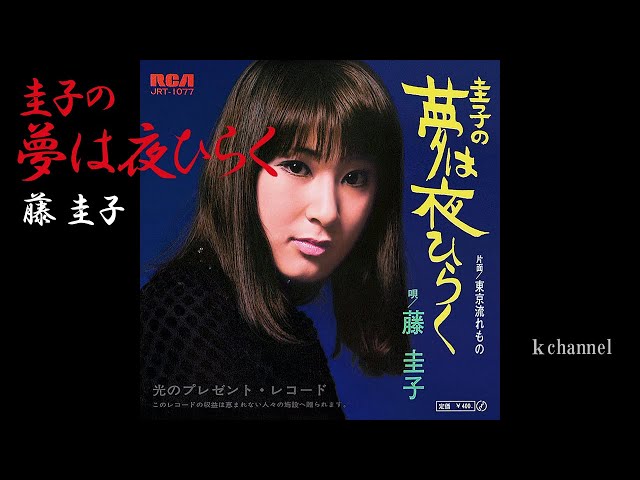
Keiko Fuji, also known as the mother of Hikaru Utada, was a female singer who took Japan’s kayōkyoku and enka scenes by storm from the late 1960s to the early 1970s.
Born to parents who were rokyoku performers, she grew up immersed in the world of entertainment and debuted in September 1969 with “Shinjuku no Onna.” Her low, husky, slightly raspy voice and a singing style packed with uncontainable emotion came to be called “enka of resentment,” and with an expressiveness beyond her teenage years, she quickly gained popularity.
In 1970, she won the inaugural Japan Kayō Awards and received the Popularity Award at the 12th Japan Record Awards, rising to national stardom.
That same year, she also made her first appearance on NHK’s Kōhaku Uta Gassen.
She’s a singer I’d recommend if you want to immerse yourself in a world of wistful, melancholic songs.
The night is crying.Jinno Mika

In 1977, she won TV Tokyo’s “East-West Kids’ Singing Imitation Grand Prix” by performing Harumi Miyako’s “Anko Tsubaki wa Koi no Hana,” after which she was scouted by many talent agencies.
She made her debut as a singer in 1984 after graduating from high school.
Known for her outstanding vocal prowess, she has performed across a wide range of genres, including appearances at rock festivals and at SXSW, one of the world’s largest music and film festivals.
In the United States, she is said to be known as the “Enka Diva.”
Spring-anticipating drizzleMatsubara Nobue

Nobue Matsubara, who debuted in 1979 with “Onna no Defune.” Her charm lies in her straightforward singing style without affectation.
She adds only a light kobushi to bring out the song, and the fresh, clear tone really touches the heart.
She has appeared many times on NHK’s Kōhaku Uta Gassen—seven times in total since 1985! She has also released duet songs such as “Shinjuku Sodachi,” and the male-female back-and-forth feels great, so be sure to give them a listen!

Nagasaki nights are purple.Segawa Eiko

Eiko Segawa, who brightened the Showa era as a diva of the enka world, made her debut in 1967 at age 20 with “Namida no Kageboshi.” The daughter of an enka singer, she was immersed in music from a young age.
After her debut, she steadily built her career and gained attention with “Nagasaki no Yoru wa Murasaki.” In 1986, “Inochi Kurenai” became a million seller and her signature song.
With her rich vocal ability and deeply expressive voice, she captured the hearts of many fans.
She has also appeared four times on NHK’s Kōhaku Uta Gassen.